


Victorian Cranberry Glassware
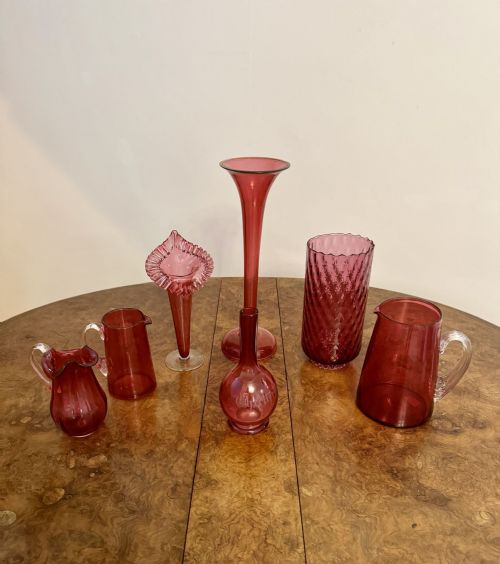
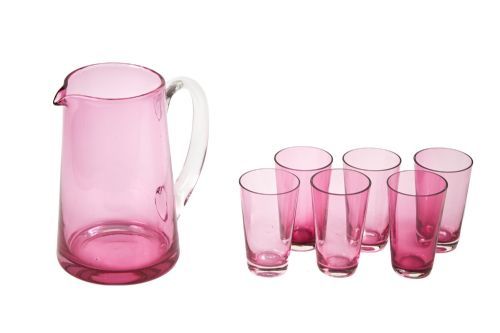
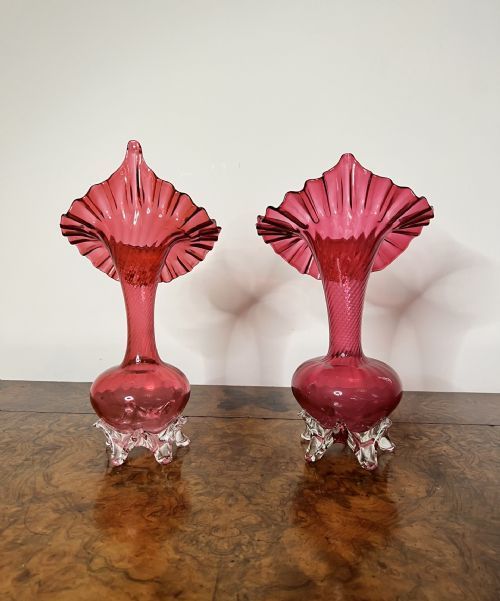
Victorian cranberry glassware brings rich pink and deep red tones to the table through hand-blown vessels, jugs, and decorative pieces.
Victorian Cranberry Glassware
Victorian cranberry glassware encompasses a vibrant range of tableware and decorative objects produced across the nineteenth century. These items span functional wine glasses, decanters, and carafes alongside ornamental vases, epergnes, and bells.
The pieces appearing here lean heavily into Victorian and Edwardian periods, stretching from eighteen fifty to nineteen ten. Wine glasses, jugs, and decanters dominate the current selection, often found in matched sets or pairs.
English workshops and Bohemian makers supply the bulk of the stock, utilising traditional glass-blowing methods. Collectors meet everything from simple pressed glass items to elaborately engraved overlay pieces.
Materials and technique
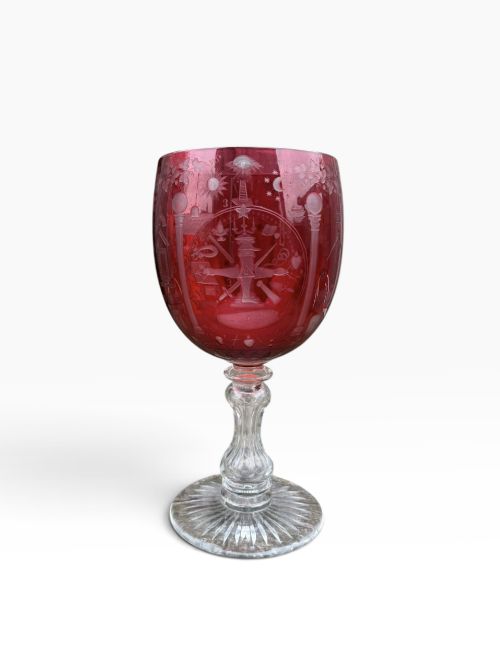
The characteristic colour of cranberry glass relies upon the addition of gold chloride to the molten glass batch during production. Artisans shaped these vessels using hand-blowing techniques, frequently pairing the rich red glass with clear crystal layers.
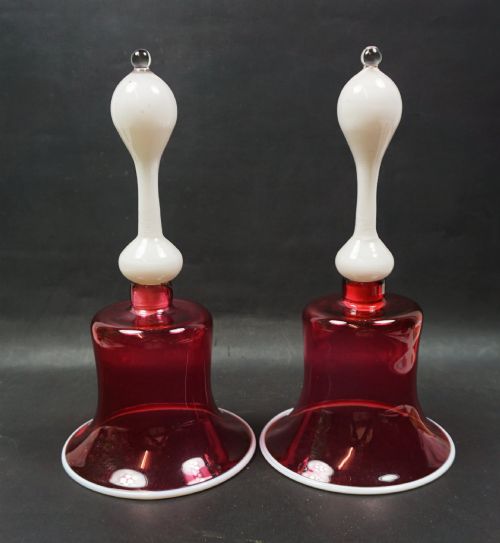
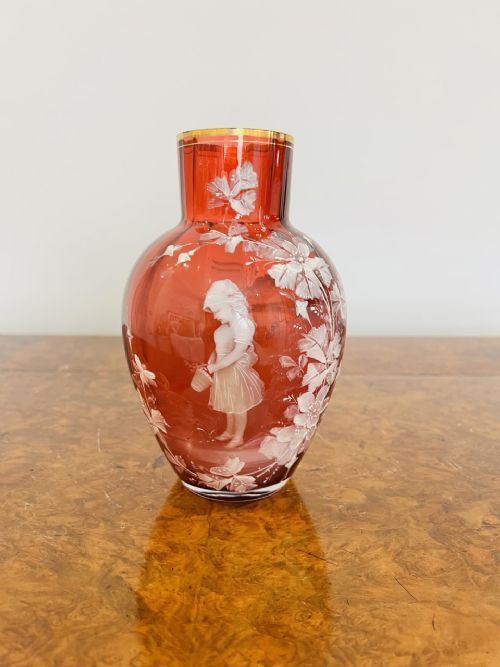
Many items incorporate contrasting elements such as white glass handles, silver-plated mounts, or applied gold leaf gilding. Engraving, enamelling, and white painted figural scenes complete the decorative vocabulary seen across these items.
The listings span periods from eighteen fifty to nineteen ten, incorporating English and Bohemian origins.
Quality distinctions
The standard of execution in engraving and surface decoration separates standard production from finer examples. Crisp wheel-cut details on overlaid crystal reveal a higher grade of craftsmanship than plain blown surfaces.
Completeness and original pairing heavily influence the standing of sets and mounted wares. Jugs with matching sets of glasses or biscuit barrels retaining their original silver-plated mounts hold greater cohesion.
The Victorian Cranberry Glassware Glossary
- Cranberry glass
- A transparent glass coloured with gold chloride, yielding shades from pale pink to deep red. It forms the primary material for the tableware found in this collection.
- Mary Gregory
- A style of glass decoration featuring white enamel silhouettes of children amidst foliage. Pieces bearing this work date mainly to the late nineteenth century.
- Epergne
- A large table centrepiece featuring multiple branching vases or dishes for fruit and flowers. These complex displays often combine cranberry glass horns with clear glass bases.
- Overlay
- A technique involving a layer of coloured glass cased over a core of clear crystal. Cutting through the outer layer reveals the contrasting clear glass beneath.
- Tazza
- A shallow ornamental bowl raised on a stem and foot. These footed dishes often feature gilding or engraved patterns across the rim.
Victorian Cranberry Glassware: Frequently Asked Questions
Were these pieces used daily or displayed?
Many items served practical functions at the dining table, including wine glasses, decanters, and preserve bowls. Sets of wine glasses and carafes saw active service during nineteenth century meals.
Other objects like epergnes, bells, and decorative vases remained purely ornamental. They acted as centrepieces or mantel displays in Victorian and Edwardian homes.
How can I tell Victorian from Edwardian pieces?
Victorian examples typically date from eighteen fifty to nineteen hundred, displaying robust hand-blown forms and heavy engraved decoration. Mary Gregory vases and multi-horn epergnes sit firmly in this era.
Edwardian items generally date after nineteen hundred, often combining cranberry glass with silver-plated mounts for preserve jars and twin bowls.
What is cranberry over crystal?
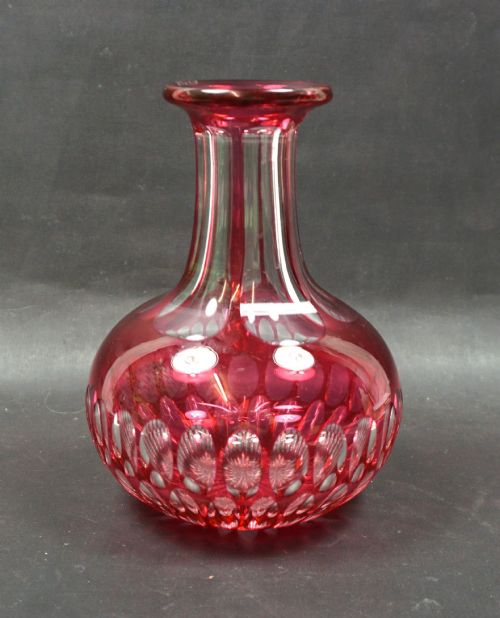
This construction involves fusing a layer of cranberry glass over a core of clear crystal. Artisans then cut away portions of the outer layer to expose the clear glass underneath.
This method creates strong geometric or floral contrasts on decanters, carafes, and champagne coupes.