


Victorian Cranberry Glass Dish
These vibrant pieces of victorian cranberry glass dishware bring a rich, translucent warmth to a table, combining intense pinkish-red glass with polished metal mounts.
Victorian Cranberry Glass Dish
A victorian cranberry glass dish encompasses an array of table wares designed for preserves, sugar, jam, butter, and salt. The selections appearing on this page span the Victorian and Edwardian periods, stretching from the middle of the nineteenth century into the early decades of the twentieth.
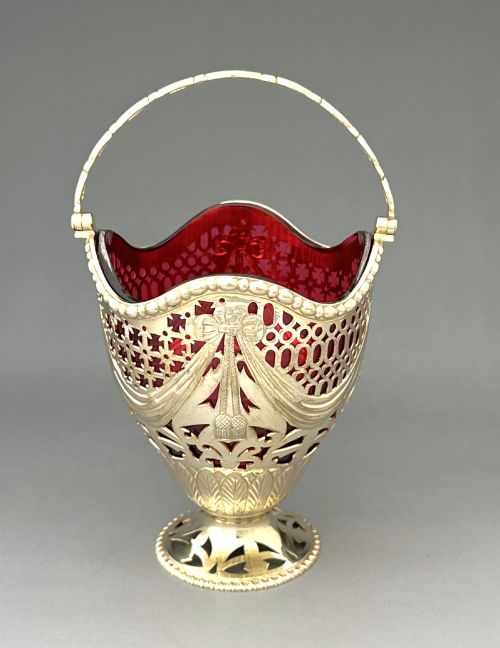
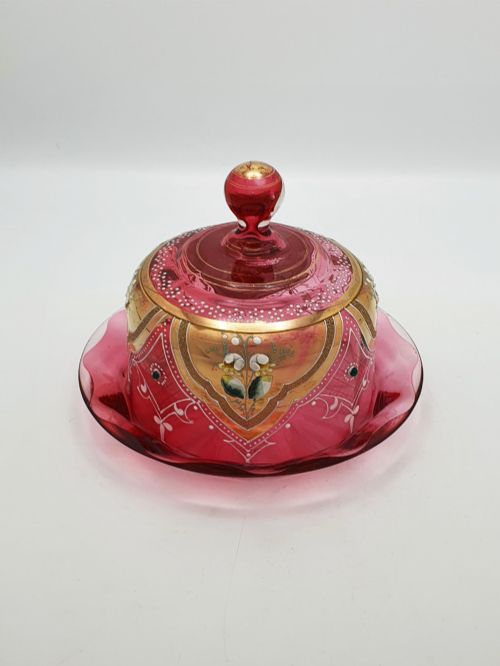
Most examples take the form of open bowls, frilled dishes, tazzas, and covered vessels intended for dining and display. These items frequently appear paired with silver plate, sterling silver, or silver-gilt stands and baskets that cradle the colourful glass insert.
Materials and construction
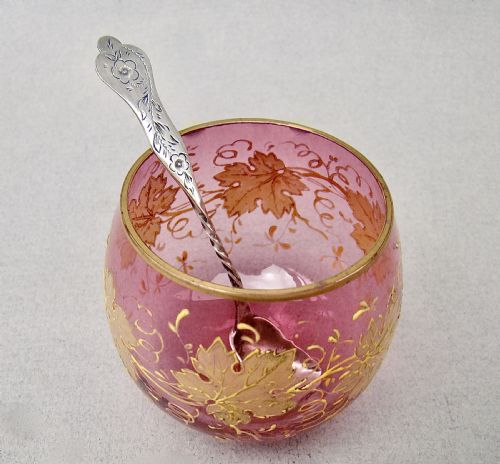
The characteristic colour of cranberry glass derives from the addition of gold to the molten glass batch, creating a range of rich reddish-pink hues when blown. Artisans shaped the hot metal by hand, often adding frilled edges, ribbed patterns, or surface gilding.
Many of these glass vessels were fitted into bespoke metal holders created through silver plating or the use of solid silver and silver-gilt. Pierced metalwork frames securely held the delicate blown glass inserts without adhesive.
Listings demonstrate pieces spanning from the mid-nineteenth century through the Edwardian era, incorporating clear glass, ruby glass, and gold leaf elements.
Distinctions in quality
Quality rests upon the depth and evenness of the colour within the glass and the crispness of any applied hand-finishing or gilding. Superior pieces display a consistent saturation across the vessel rather than patchy or dull tones.
The elaboration of the metal mount provides another measure, where heavier silver plating, substantial silver-gilt mounts, and intricate pierced designs indicate superior manufacture. The harmony between the fitted glass insert and its metal stand determines the overall finish of the piece.
Moser
The Victorian Cranberry Glass Dish Glossary
- Cranberry Glass
- A type of transparent glass coloured with gold chloride, yielding shades from pale pink to deep ruby red. It became immensely popular during the Victorian era for decorative tableware.
- Silver-Gilt
- Silver that has been coated with a thin layer of gold on its surface. This technique provides the rich appearance of solid gold while utilising a silver base.
- Tazza
- A shallow ornamental bowl or cup mounted on a stem and foot. Used historically for serving small sweetmeats or displaying fruit.
- Preserve Dish
- A small container specifically utilised for serving jams, jellies, and fruit preserves at the dining table. They frequently include a matching spoon and stand.
Victorian Cranberry Glass Dish: Frequently Asked Questions
What is cranberry glass made from?
Cranberry glass is created by adding gold to the molten glass mixture during the blowing process. This chemical reaction produces the distinctive pinkish-red tint characteristic of the ware.
The intensity of the colour depends on the precise proportion of gold used and the temperature at which the glass is worked.
How do I date a glass dish?
Dating these pieces relies on examining the style of the glass shaping, the presence of pontil marks, and the design of any accompanying metal stand. Victorian examples often feature hand-blown irregularities and ornate silver-plated frames.
Later Edwardian versions tend toward lighter metalwork mounts while retaining the traditional colour palette established in the nineteenth century.
Were these dishes used daily?
These items were principally produced for formal dining tables to serve preserves, sugar, butter, or salt during dessert and tea courses. Their delicate nature meant they were handled with care rather than subjected to heavy everyday use.
Their inclusion of precious metals and gold-infused glass made them statement pieces for middle and upper-class households.
How should I clean my glass dish?
Cleaning requires mild warm water and a soft cloth to protect both the glass surface and any delicate silver-plated or gilded mounts. Harsh scrubbing or chemical detergents can damage the applied gold leaf or wear away thin silver plating.
Separating the glass insert from its metal stand during washing prevents moisture from becoming trapped between the two materials.