
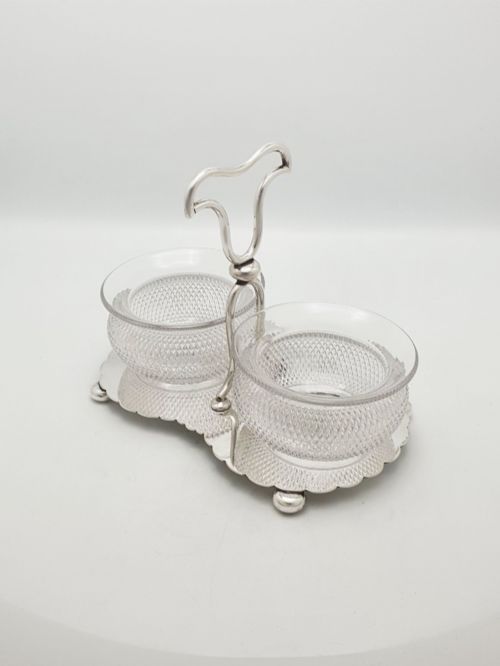


Antique Glass Preserve Bowl
An antique glass preserve bowl brings ruby cranberry tones and brilliant cut crystal to the table, held in silver plate or silver gilt mounts.
Antique Glass Preserve Bowl
When you search for an antique glass preserve bowl, you are looking at table glass and condiment vessels designed for jam, butter and preserves during the Georgian, Victorian and Edwardian periods. These table wares include lidded dishes, jam pots on stands and twin bowls intended to hold sweet accompaniments for breakfast or afternoon tea.
The most common version you will meet on this page is the cranberry glass preserve bowl, frequently paired with a silver plated stand or basket and sometimes accompanied by a spoon. Examples range from simple Victorian vessels to Edwardian twin bowls and occasional Georgian cut glass pieces.
Formations vary from standalone bowls to complex condiment stands and butter dishes with fitted lids. Styles span from Georgian and Regency cut crystal through Victorian cranberry glass to Edwardian and later Art Deco items.
How they were made
Manufacturing methods combine glassblowing, pressing and deep cutting with metalwork such as silver plating and silver gilt. Cranberry glass achieves its distinct red colour through the addition of gold chloride to the molten metal batch during production.
Mounts and stands utilise silver plating over base metal or solid silver gilt frames, often featuring pierced or cast decorative work. Cut glass and lead crystal pieces are shaped while hot and subsequently wheel-cut to create facets that catch the light.
Object forms span simple jam dishes and lidded butter pots to complex twin condiment stands and serving dishes.
What varies in quality
The standard of cutting in the glass and the weight of the metal mounts determine the grade of the piece. Crisp, deep facets on lead crystal and substantial silver plating or silver gilt indicate superior manufacture.
Design complexity also separates standard vessels from finer examples, particularly where stands incorporate twin bowls, pierced metal baskets or matched serving spoons.
The Antique Glass Preserve Bowl Glossary
- Cranberry glass
- A type of transparent red glass coloured with gold oxide, popular in Victorian and Edwardian table wares. It forms the body of most preserve dishes found here.
- Silver plate
- A thin layer of silver applied to a base metal core such as copper or Britannia metal. It provides the shiny finish seen on stands and jam pot frames.
- Silver gilt
- Silver that has been coated with a thin layer of gold on its surface. This technique adds a warm metallic tone to baskets and mounts.
- Lead crystal
- Glass containing a proportion of lead oxide, which increases brilliance, weight and clarity. It is typical of Georgian and Regency cut pieces.
- Condiment stand
- A fitted metal frame designed to hold one or more glass bowls and sometimes spoons. These stands keep preserves and relishes organised on the dining table.
Antique Glass Preserve Bowl: Frequently Asked Questions
What is an antique glass preserve bowl used for?
These vessels were originally placed on the dining or tea table to serve jams, jellies, marmalade or butter. They allowed hosts to present sweet table accompaniments in decorative glass containers.
Today, they function as decorative table centrepieces or practical dishes for serving preserves during breakfast and afternoon tea.
How do I identify a Victorian cranberry preserve bowl?
Victorian cranberry glass is characterised by its distinct pinkish-red colour and is frequently mounted in silver plated stands, wirework baskets or silver gilt frames. Many examples date from the late nineteenth century around the eighteen nineties.
Earlier Georgian pieces tend to feature heavy cut crystal rather than coloured glass, while Edwardian versions often include twin bowls or fitted spoons.
Can I use these antique bowls every day?
While these bowls were made for functional table use, their age and delicate glass or silver plated mounts mean they benefit from careful handling. Hand washing in warm soapy water preserves the finish of both the glass and the metal.
Harsh detergents and dishwashers should be avoided to protect the silver plate and the surface of the cranberry or cut glass.
What is the difference between cut glass and cranberry glass?
Cut glass refers to clear lead crystal shaped with sharp facets by a cutting wheel, which was characteristic of Georgian and Regency periods. Cranberry glass is coloured transparent glass that gained popularity during the Victorian era.
Some pieces combine both qualities by featuring coloured cranberry glass that has been cut with decorative patterns.