
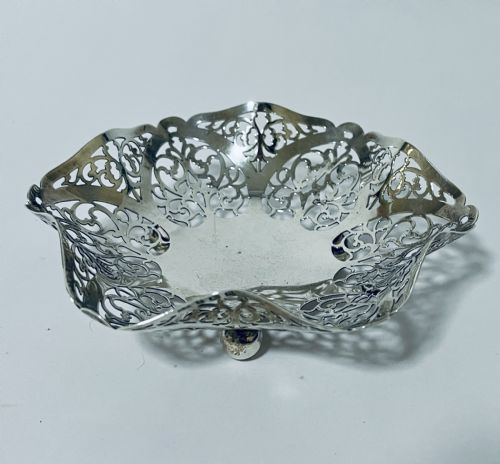


Victorian Tableware Basket
These victorian tableware basket examples bring silver, glass, and ceramic craft to the table, offering a practical centrepiece or serving dish.
Victorian Tableware Basket
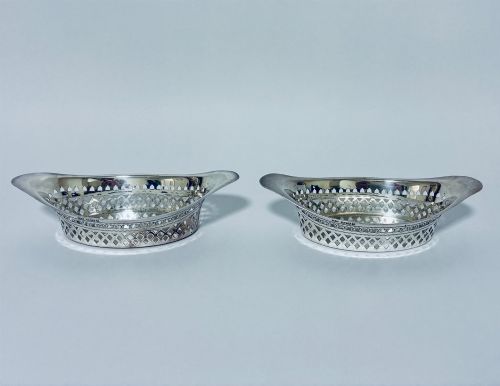
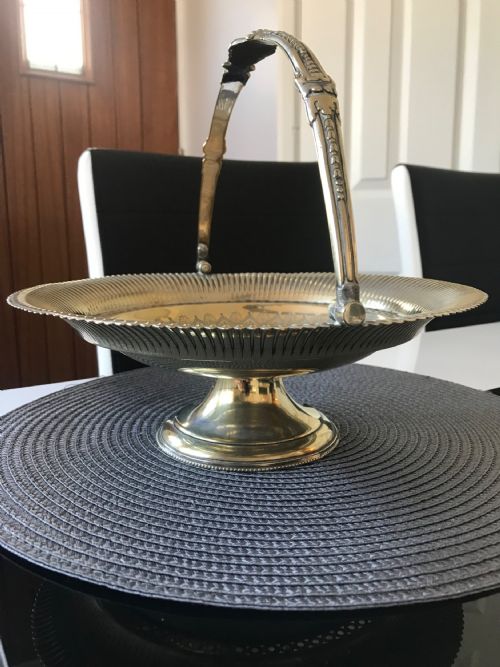
When you search for a victorian tableware basket, you are looking at functional serving vessels designed for sugar, fruit, sweetmeats, and preserves during the nineteenth century and subsequent periods. The pieces appearing on this page span sugar baskets, bonbon dishes, cream pails, and fruit baskets with fixed or loop handles.
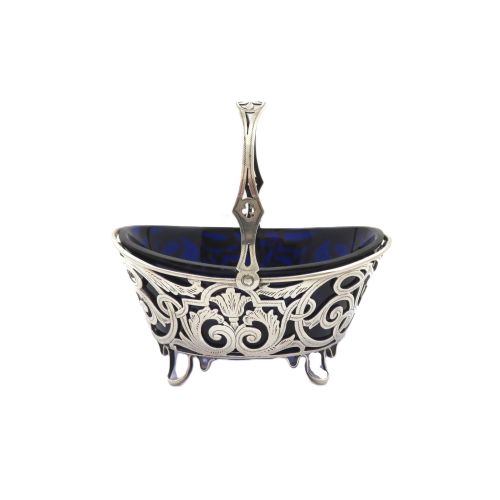
The most common examples you will meet here are silver and silver plated sugar baskets alongside glass preserve dishes fitted into precious metal holders. These forms sit within broader nineteenth-century dining traditions, often featuring pierced metalwork or swing handles designed for passing across the table.
Materials and construction
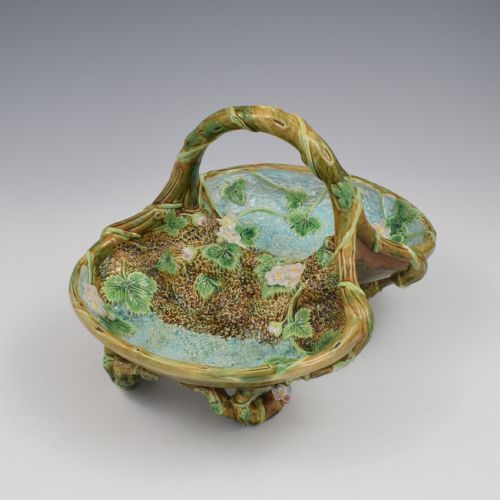
Makers utilised sterling silver, silver plate, and electroplated nickel silver as primary metallic structures, frequently combining them with coloured glass liners in cranberry, cobalt, and vaseline tones. Metal components involved casting, piercing, and silver gilt finishes, while ceramic iterations utilised majolica glazing techniques.
Handles and fittings required specialist silversmithing skills, including cast floral motifs and loop attachments secured to oval or footed bowls. Glass elements were blown and shaped to fit specific metal baskets, creating secure pairings for preserves and sweetmeats.
Object types documented here include sweet stands, cream pails, fruit bowls, and sugar baskets with cast floral handles.
Judging quality and execution
Quality reveals itself in the crispness of cast elements, such as floral handles and pierced bodywork, where finer examples display sharp detail rather than softened edges. The weight of the silver and the precision of the fit between glass liners and metal frames also set individual items apart.
Provenance and maker marks elevate certain pieces, with documented London workshops demonstrating superior finishing in engraving and structural integrity compared to unmarked or heavily plated alternatives.
William Comyns·George Jones
The Victorian Tableware Basket Glossary
- Sterling silver
- A silver alloy containing 92.5 percent pure silver by mass, standard for quality British tableware. This standard ensures durability and longevity in serving vessels.
- Silver gilt
- Silver covered with a thin layer of gold on its surface, often used inside cranberry glass preserve baskets. The gold plating protects the silver from tarnishing due to acidic contents.
- Majolica
- A type of earthenware glazed with tin-opacified glazes, popular during the nineteenth century. George Jones produced notable examples of this colourful ceramic ware.
- Pierced work
- A decorative technique where metal is cut through to create openwork patterns, common in sugar baskets. This method lightens the visual weight of silver vessels.
- Bonbon dish
- A small small container specifically designed for holding sweets or confectioneries. These pieces frequently appear in matched pairs for table service.
Victorian Tableware Basket: Frequently Asked Questions
What is a victorian tableware basket used for?
These baskets served specific dining functions such as holding loose sugar, preserves, sweetmeats, or fruit during formal meals. Hosts passed them around the table or placed them centrally as part of the tableware service.
Over time, their domestic role shifted toward decorative display, though many retain the structural integrity required for modern serving.
How do I identify a sterling silver basket?
Look for hallmarks stamped directly onto the metal surface, which typically include a lion passant, a date letter, and a town mark indicating the assay office. These stamps provide official verification of the silver standard.
Unmarked pieces often rely on silver plating or alternative metal alloys rather than solid precious metal.
Why do some baskets have glass liners?
Glass liners protected metal frames from acidic foods like fruit preserves and jams that could otherwise tarnish or corrode silver. Coloured glass also added visual contrast to the polished metalwork.
Cranberry and cobalt glass were popular choices for these fitted inserts.
How should I clean a silver basket?
Use a specialised silver cloth and mild cleaning solutions designed for antiques to remove tarnish without harming the metal surface. Avoid harsh abrasive dips that strip away desirable patinas.
Glass liners can be washed separately in warm soapy water and dried thoroughly before replacement.