


Gilt Brass Glass Basket
A gilt brass glass basket brings together bright metalwork and sparkling crystal in hanging or tabletop forms that transform a room.
Gilt Brass Glass Basket
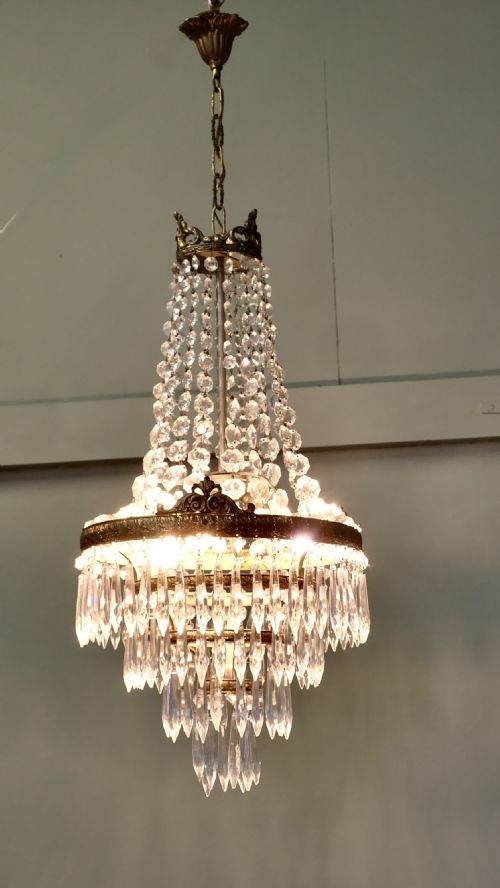
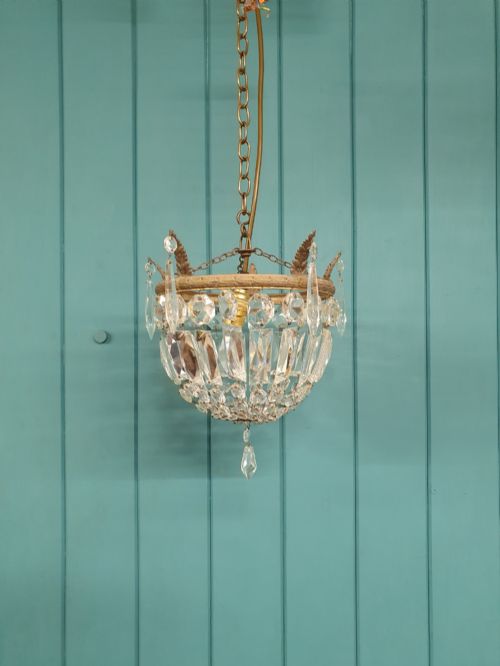
When you search for a gilt brass glass basket, you encounter a distinct group of decorative objects spanning the Victorian era through the early twentieth century. These pieces primarily take the form of ceiling lighting, including bag chandeliers, waterfall chandeliers, and lanterns, alongside tabletop preserve dishes.
The selections on this page demonstrate clear French and British influences, notably French Empire and Edwardian styles. You will find small bag chandeliers alongside larger waterfall designs, each utilising a metal framework to suspend crystal prisms.
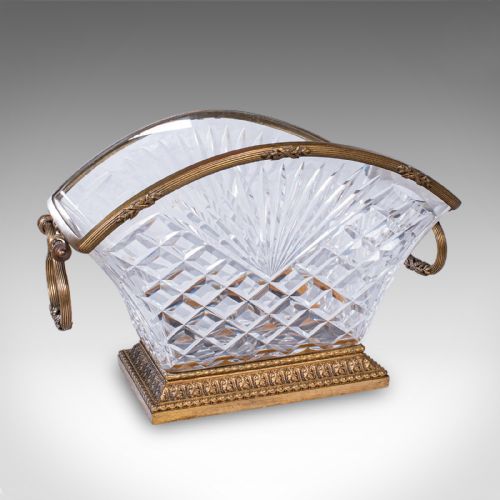
Tableware also appears in the form of preserve dishes featuring glass bowls held within gilt metal or silver gilt baskets. These domestic and decorative items share a common vocabulary of gilded metal and cut crystal.
Materials and construction
The foundation of each piece relies on cast or pressed metal, described variously as brass, gilt brass, ormolu, or bronze. This framework is then gilded to provide a bright, reflective surface that complements the glass elements.
Crystal and cut glass form the hanging prisms, beads, and central bowls suspended from the metal frames. Artisans wired or pinned these glass components together in formations such as tents, waterfalls, and bags to catch and refract light.
Some Edwardian hallways must have sparkled like winter frost under the glow of tiny six-inch bag chandeliers.
Assessing quality and finish
Quality in these pieces rests upon the crispness of the metal casting and the depth of the gilding. Heavier, more detailed bronze and ormolu mounts show superior workmanship compared to simpler stamped brass.
The clarity and cutting of the glass components also dictate the standard of the piece. Deeply cut crystal prisms with sharp facets create a much brighter refraction than plain moulded glass.
The Gilt Brass Glass Basket Glossary
- Ormolu
- Gilded bronze used for decorative mounts and frames. This technique involves applying a gold amalgam to bronze.
- Bag chandelier
- A lighting form shaped like a tapered bag or basket. Countless crystal beads and prisms fill the metal skeleton.
- Waterfall chandelier
- A lighting fixture where crystal strands cascade downwards from a central ring. This creates the visual effect of falling water.
- Tent and bag
- A chandelier style featuring an upper conical tent of glass beads above a lower bag. It originates from the neoclassical period.
- Coffin prism
- A long, flat-backed crystal drop with a pointed tip resembling a coffin. These hang closely together along the rims of baskets and bag chandeliers.
Gilt Brass Glass Basket: Frequently Asked Questions
What is a bag chandelier?
A bag chandelier is a compact hanging light fixture featuring a metal frame enclosed in a dense mesh of glass beads and prisms. The lower section typically gathers into a rounded or basket shape.
These pieces were designed to hang in smaller rooms or hallways where ceiling height was limited, providing maximum sparkle without requiring a large drop.
How do I date these fixtures?
Dating relies on examining the construction of the metal frame, the style of the crystal cutting, and the wiring or suspension fixings. Pieces from the Victorian and Edwardian eras often show distinct casting marks and hand-cut glass details.
Earlier examples from the nineteenth century lean heavily into French Empire taste, utilising heavy bronze ormolu mounts and precise geometric prism arrangements.
Where were these pieces used?
Ceiling lighting versions hung in principal rooms, boudoirs, and hallways of Victorian and Edwardian homes to enhance gas or early electric light. Smaller bag chandeliers suited intimate spaces.
Tabletop preserve dishes served a functional role during dining, holding sweet preserves or fruit within a decorative metal basket on the table.
How should I clean the crystal?
Cleaning requires removing dust with a soft brush and wiping the glass prisms with a weak solution of warm water and mild soap. Each drop should be dried individually to restore its brilliance.
Avoid harsh chemical cleaners on the gilt brass or ormolu framework, as abrasive substances can strip the historic gilding from the metal surface.