


Red Cranberry Glass Dish
A red cranberry glass dish brings deep, translucent colour to a table, combining intense pinkish-red tones with metal mounts or clear glass.
Red Cranberry Glass Dish
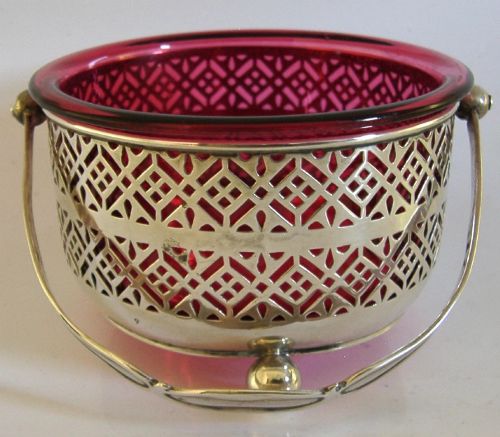
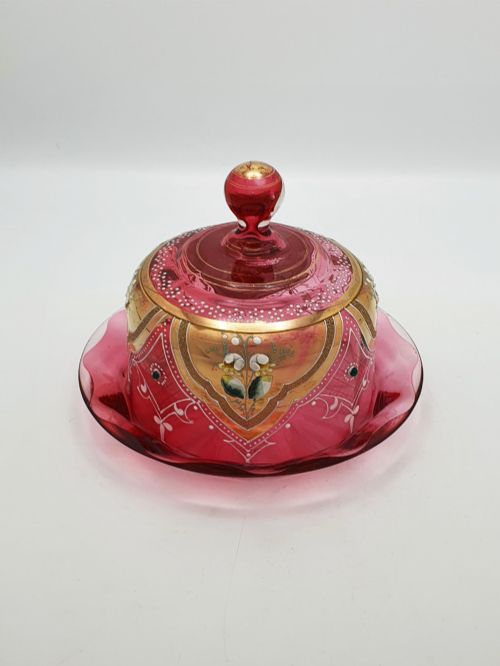
When you search for a red cranberry glass dish, you are looking at small vessels designed for sugar, preserve, butter, cheese, or bonbons, often paired with silver or silver plate. These pieces span the Victorian and Edwardian eras, with nineteenth-century examples appearing frequently in forms such as baskets, bowls, and salts.
The objects listed range from covered butter dishes and lidded trinket boxes to swing-handled sugar baskets and twin preserve bowls. Most examples date from the late nineteenth century to the early twentieth century, reflecting domestic dining and dressing table traditions of those periods.
How they were made
The pieces combine blown glass with metalwork such as sterling silver, silver plate, and silver gilt. Artisans shaped the glass using rich colouring agents, while metalworkers created pierced baskets, hinged lids, and swing handles.
Some items feature additional ornamentation including enamel work, gilding, and gold leaf applied to the glass or metal components. Pierced silver-plated and sterling silver frames securely hold the glass liners and bowls.
Periods represented span from the 1860s through the Edwardian era and up to 1920.
What varies in quality
Quality rests on the depth and evenness of the glass colour and the crispness of any metal piercing or gilding. Pieces featuring fully integrated metal mounts, such as hallmarked sterling silver frames or enamelled lids, demonstrate finer craftsmanship.
The integration between the glass insert and its metal basket or frame determines the overall refinement of the piece. Substantial metalwork and well-preserved surface gilding elevate the status of the item.
The Red Cranberry Glass Dish Glossary
- Cranberry Glass
- A transparent pinkish-red glass coloured with gold chloride during production. It is characteristic of nineteenth-century tableware.
- Silver Plate
- A base metal coated with a thin layer of silver. This technique allowed makers to produce decorative frames and baskets at a lower cost than solid silver.
- Sterling Silver
- An alloy of silver containing 92.5 percent pure silver and 7.5 percent other metals. It is commonly found on Edwardian and Victorian baskets and mounts.
- Tazza
- A small, footed ornamental cup or plate used for serving small items or display. It elevates the glass bowl above the table surface.
- Silver Gilt
- Silver that has been coated with a thin layer of gold on its surface. This finish provides a warm, two-tone appearance alongside the red glass.
Red Cranberry Glass Dish: Frequently Asked Questions
What were cranberry glass dishes used for?
These dishes served specific functions at the dining table or dressing table, holding items like butter, cheese, preserves, sugar, and small trinkets. Many were paired with fitted spoons or metal baskets for serving.
They formed part of formal domestic hospitality during the Victorian and Edwardian periods, combining utility with decorative display.
How do I date a cranberry glass dish?
Dating relies on hallmarks stamped onto any silver mounts, structural styles, and the manufacturing characteristics of the glass liners. Pieces from the Edwardian era often feature lighter, pierced silver-plated frames.
Victorian examples frequently display heavier glass forms and sometimes carry silver hallmarks or date letters corresponding to specific years in the nineteenth century.
Are these dishes made of solid gold?
No, the glass itself achieves its distinctive red colour from gold chloride added to the molten batch during manufacture. The metal mounts are typically sterling silver, silver gilt, or silver plate rather than solid gold.
Gold leaf or gilding is occasionally applied to the exterior of the glass as a decorative surface treatment rather than structural material.
How should I clean my cranberry glass dish?
Wash the glass gently in lukewarm water using mild detergent, avoiding harsh abrasives that could damage surface gilding or enamel. Separate any removable glass liners from their metal frames before cleaning.
Polish silver-plated or sterling silver mounts separately with appropriate metal care products, keeping polishes away from the glass surface.