




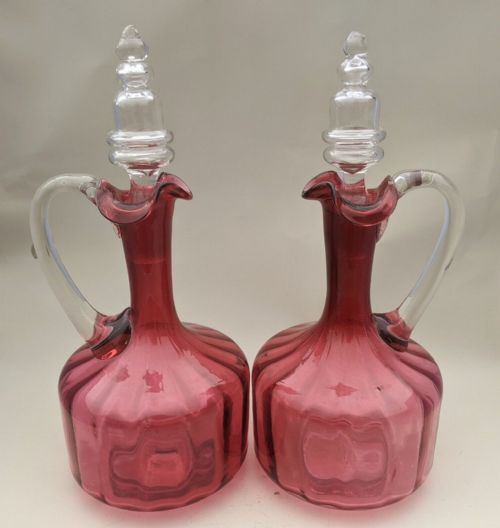


Victorian Cranberry Glass Bottle
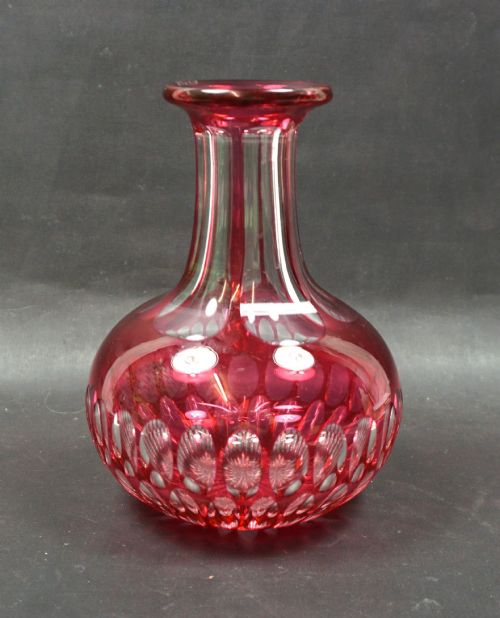
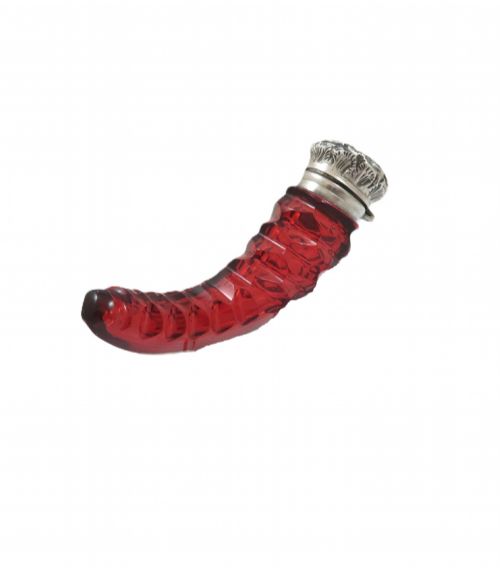
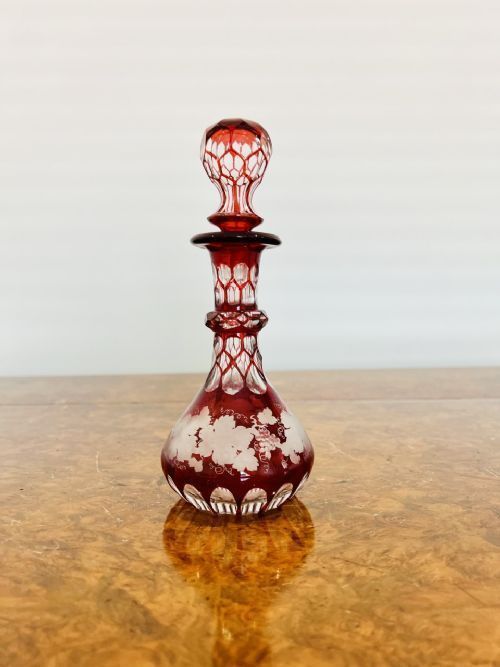
A victorian cranberry glass bottle brings rich crimson warmth and polished silver detail to a dressing table or cabinet.
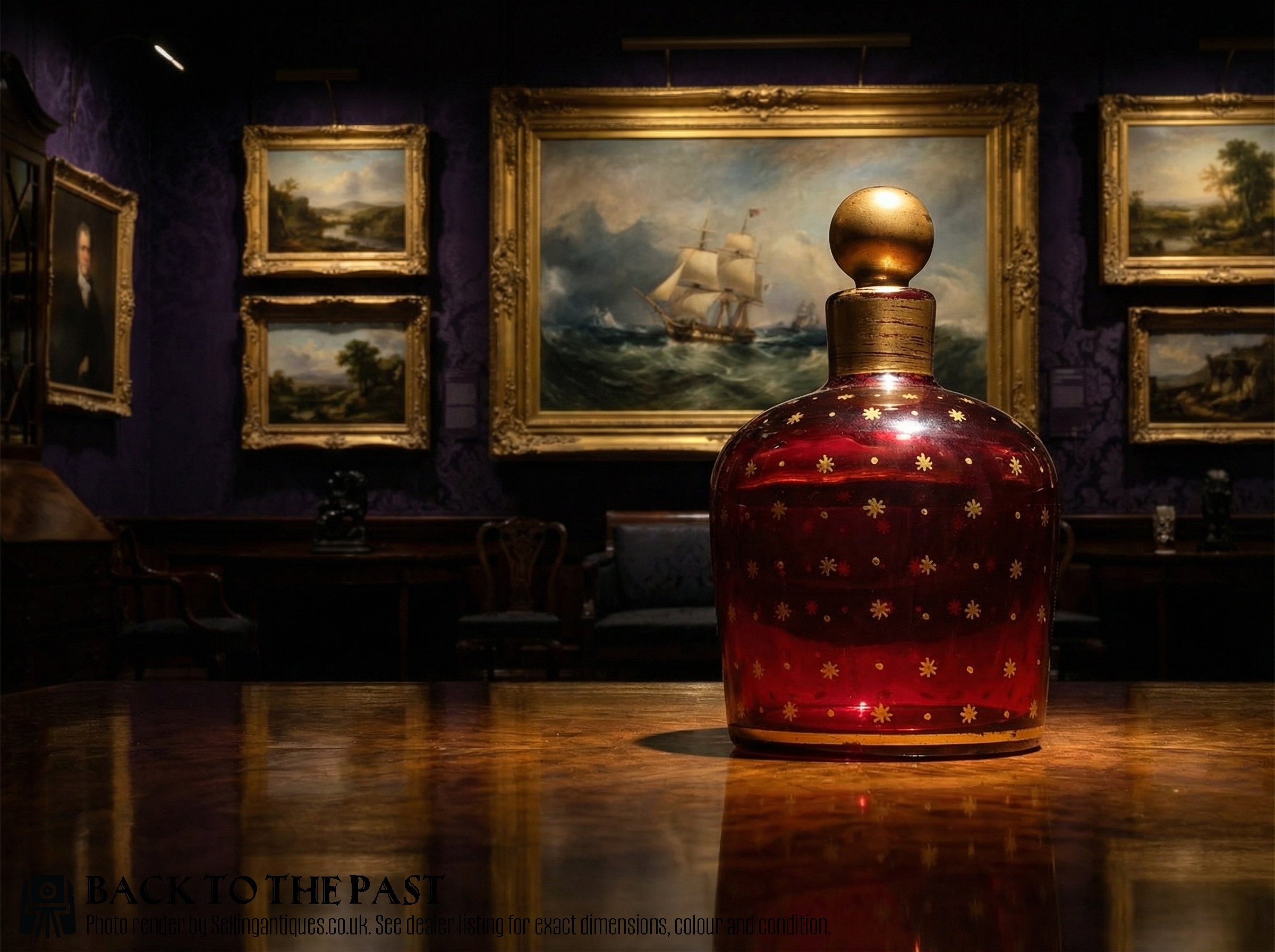
Victorian Cranberry Glass Bottle
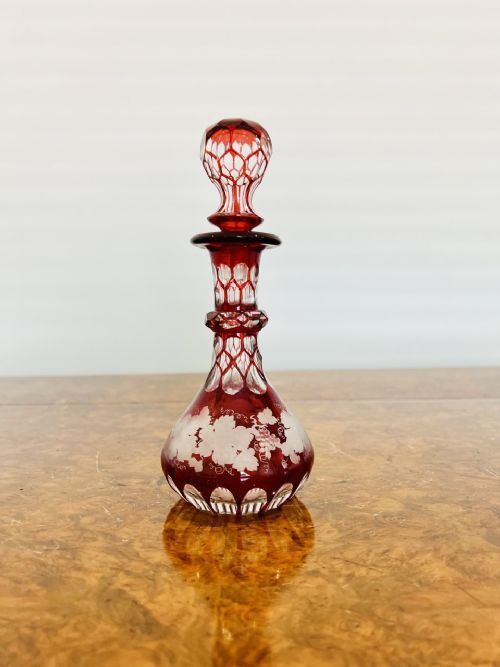
A victorian cranberry glass bottle encompasses a variety of functional vessels, most commonly small perfume and scent bottles alongside larger decanters and carafes. These objects typically date from the nineteenth century into the Edwardian period, originating from English, French, and Bohemian workshops.
How they were made
Makers produced cranberry glass by adding gold chloride to the molten glass batch, creating a distinctive pinkish-red hue through heat treatment. Artisans then shaped the vessels using traditional blown glass techniques, sometimes casing a clear crystal core with a coloured overlay.
Many examples received secondary decoration such as wheel-cutting, gilding, or enamelling. Silversmiths completed the pieces by adding sterling silver screw caps, hinged lids, or pierced collars.
Victorian travellers carried tiny silver-capped bottles containing cayenne pepper for seasoning dull meals on the road.
What varies in quality
Quality depends upon the depth and evenness of the glass colour, alongside the precision of the cut crystal or overlay patterns. Heavy, clear ringing glass and deeply saturated tones separate finer studio work from simpler commercial output.
The presence of hallmarked sterling silver mounts, intact original stoppers, and refined surface gilding or enamel painting elevates an individual piece significantly.
G Walton·Moser·Mousley Brothers·George Brace·Charles May
The Victorian Cranberry Glass Bottle Glossary
- Cranberry glass
- A transparent glass coloured with gold, yielding shades from pale pink to deep ruby red.
- Overlay
- A technique where a layer of coloured glass is fused over a clear crystal body, then partially cut away to reveal the contrasting layer beneath.
- Hock decanter
- A tall, slender vessel traditionally used for serving white wine, often featuring a coloured glass body.
- Sterling silver mount
- A fitted collar, cap, or hinge made from standard silver, frequently bearing British hallmarks indicating the assay office and year.
Victorian Cranberry Glass Bottle: Frequently Asked Questions
How do I clean my scent bottle?
Wash the glass gently in warm soapy water using a soft brush, taking care to avoid harsh abrasives on the silver mounts or gilded surfaces.
Dry the metal components promptly to prevent tarnishing and leave the stopper out until the interior is entirely dry.
Are original stoppers important?
Original stoppers match the grinding and colour of the bottle body, contributing significantly to the completeness and character of the object.
Replacements often fit differently or display subtle variations in hue and glass weight upon closer inspection.
What is overlay glass?
Overlay involves casing a clear or contrasting glass vessel with a distinct outer layer of coloured glass before shaping.
Craftsmen then cut through this outer layer using wheels to create geometric or floral patterns with striking depth.
How can I date a piece?
Makers often incorporated sterling silver mounts bearing hallmarks that indicate the precise assay office and year of production.
Stylistic cues such as cut patterns, Bohemian overlay techniques, and shape variations also help assign pieces to the nineteenth or early twentieth century.