


Edwardian Cut Glass Scent Bottle
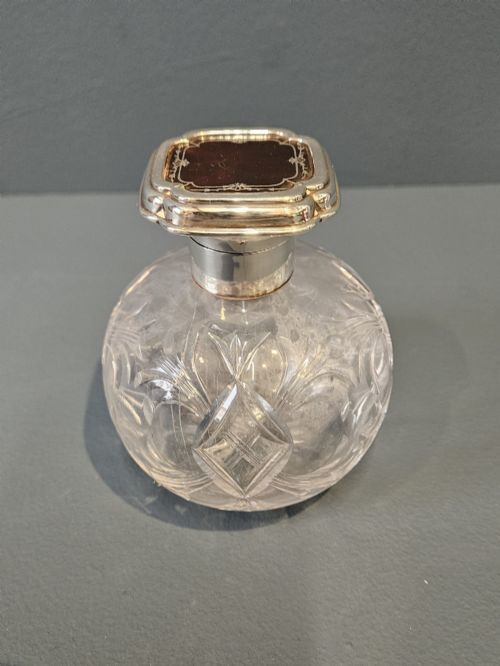
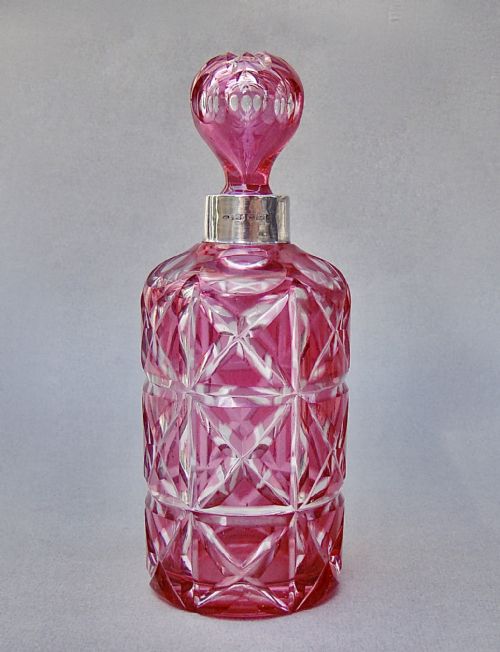
An Edwardian cut glass scent bottle combines deep crystal faceting with precious metal mounts, serving as a dressing table centrepiece.
Edwardian Cut Glass Scent Bottle
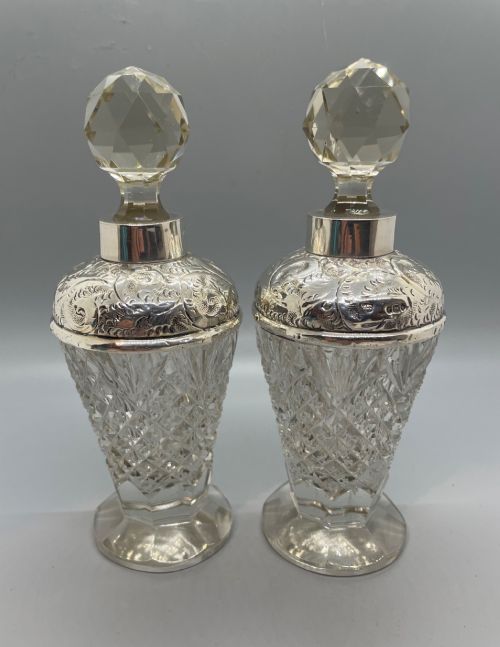
An edwardian cut glass scent bottle is a small vessel designed to hold perfume, typically combining a heavy glass body with a fitted metal lid. These accessories survived from dressing tables and travel cases, reflecting the refined grooming habits of the period.
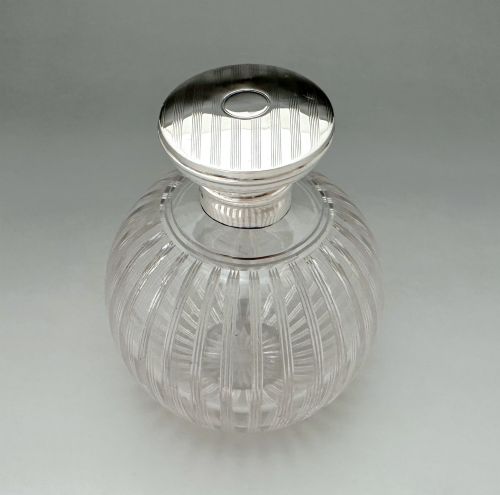
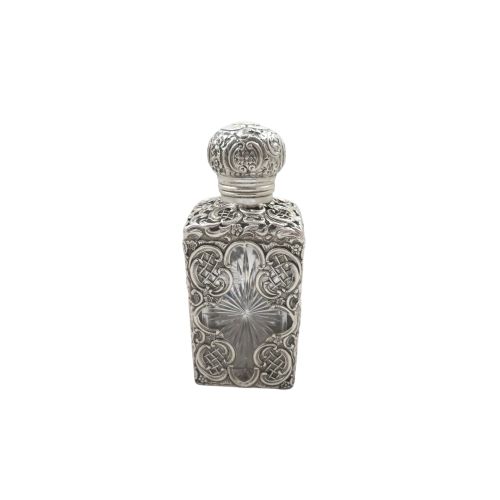
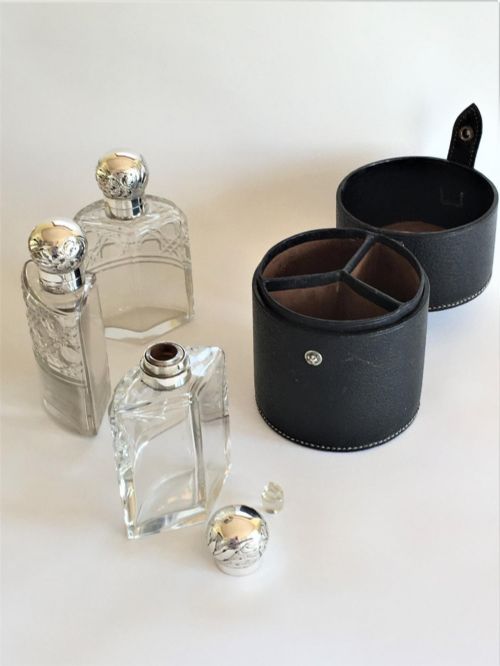
The versions most commonly met on this page date from the Edwardian era and surrounding decades, featuring sterling silver collars or hinged caps. They appear in forms ranging from globular decanters to cased trios and pocket-sized flasks.
Makers utilised various glass types alongside clear crystal, including ruby glass, cranberry glass, and green overlay. Many examples incorporate tortoiseshell or guilloche enamel in the lids, adding decorative contrast to the faceted glass below.
How they were made
Glass bodies were shaped by blowing molten material into moulds or free-blowing, then finished with deep cutting to create geometric facets and light-catching patterns. Craftsmen utilised lead crystal and coloured overlay glass, grinding and polishing the surface to achieve high clarity.
Metal mounts and collars were manufactured separately from sterling silver, often shaped to screw or hinge securely onto the glass neck. Silversmiths stamped these mounts with hallmarks, while specialised artisans applied tortoiseshell panels or coloured guilloche enamel to the lids.
Some Victorian gentlemen required lockable silver cologne bottles to prevent staff from helping themselves to luxury fragrances.
What varies in quality
The quality of an edwardian cut glass scent bottle depends on the depth and crispness of the glass cutting, alongside the weight of the silver mount. Fine examples display sharp, clean facets that catch light evenly, whereas lesser pieces feature shallow or worn pressing.
Proportion and material choice also separate standard production from superior pieces. Intricate additions like tortoiseshell inlays, undamaged guilloche enamel, and heavy cast silver lids elevate the craftsmanship of the object.
Harold Bushell & Co·Barnsley & Co·George Unite·J. Grinsell & Sons·Arthur Willmore Pennington·Henry Matthews·Collett & Anderson
The Edwardian Cut Glass Scent Bottle Glossary
- Cut glass
- Glass decorated by grinding facets or patterns into the surface with abrasive wheels. This technique maximises the refraction of light through lead crystal.
- Guilloche enamel
- Enamel applied over a mechanically engraved metal surface, creating repeating geometric patterns beneath a translucent coloured glaze. It frequently appears on Edwardian and Art Deco vanity items.
- Overlay glass
- Glass composed of two or more distinct layers of different colours, where the outer layer is partially cut away to reveal the contrasting colour underneath.
- Hobnail cut
- A distinct geometric pattern featuring raised, pointed pyramidal knobs across the glass surface. This style creates high tactile texture and intense light dispersion.
- Sterling silver
- An alloy consisting of silver and other metals, traditionally containing a fixed high proportion of pure silver. It serves as the primary material for the collars and hinged lids on these bottles.
Edwardian Cut Glass Scent Bottle: Frequently Asked Questions
How were scent bottles used?
These bottles held liquid perfume for personal grooming on dressing tables or inside travel cases. Owners poured fragrances into the vessels and applied them using stoppers or daubers attached to the lids.
Travellers utilised smaller cased versions or lockable flasks to carry cologne safely on journeys. The tight silver mounts prevented evaporation and spills during daily use.
How do I date a scent bottle?
Silver mounts on British pieces carry hallmarks that record the assay office, city, and exact year of manufacture. Examining these stamped letters and symbols provides a reliable date for the metal components.
Stylistic cues such as heavy hobnail cutting or guilloche enamel point towards specific decades like the Edwardian period or the Art Deco era. Glass manufacturing techniques also shift across the Victorian and 20th-century periods.
What is cranberry glass?
Cranberry glass is a red-tinted transparent glass created by adding gold chloride to the molten mixture. It became popular during the Victorian period and continued into the early twentieth century.
Many examples feature an outer layer of cranberry glass over clear lead crystal, which makers cut through to create contrasting patterns. This technique appears frequently on vanity accessories and table decanters.
How should I display them?
These bottles suit placement on dressing tables, mirrored trays, or glass-fronted cabinets where light can pass through the faceted crystal. Grouping items of varying heights and colours creates an effective visual display.
Protecting the pieces from direct edges prevents chips to the glass facets or denting on the soft silver lids. Handling them by the body rather than the hinged cap preserves the older joints.