


French Glass Perfume Bottle
A french glass perfume bottle carries the tactile weight of a dressing table's history, offering both intricate decoration and functional charm.
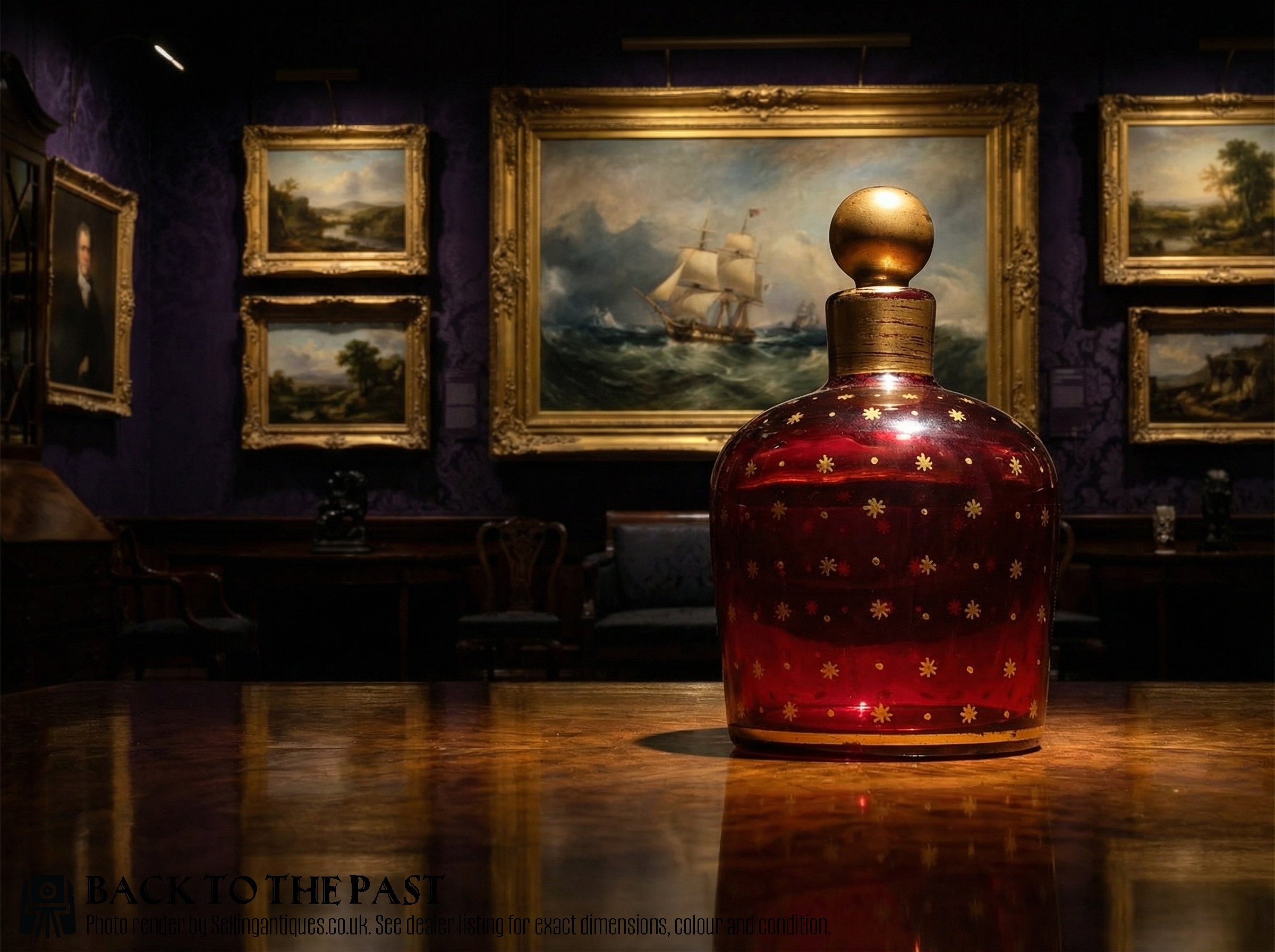
French Glass Perfume Bottle
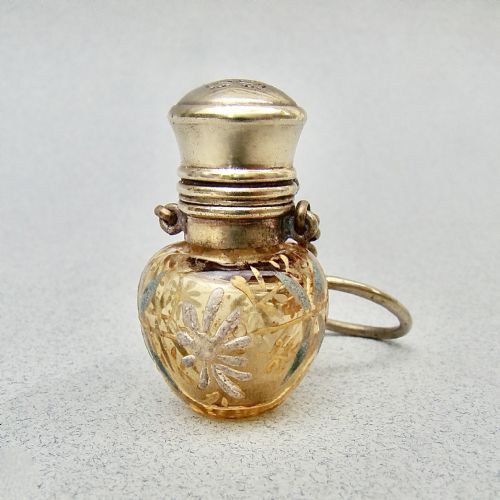
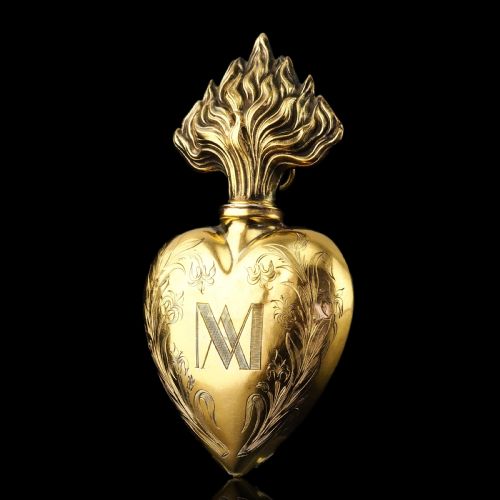
When searching for a french glass perfume bottle, collectors encounter a diverse array of forms spanning from the early nineteenth century through the Art Deco era of the 1930s. The selection ranges from standalone pocket flasks and chatelaine scent bottles designed for suspension to elaborate matching sets housed within velvet-lined caskets. Examples emerge from distinct stylistic periods including the Second Empire, Belle Epoque, and Charles X, reflecting shifting tastes in personal vanity items.
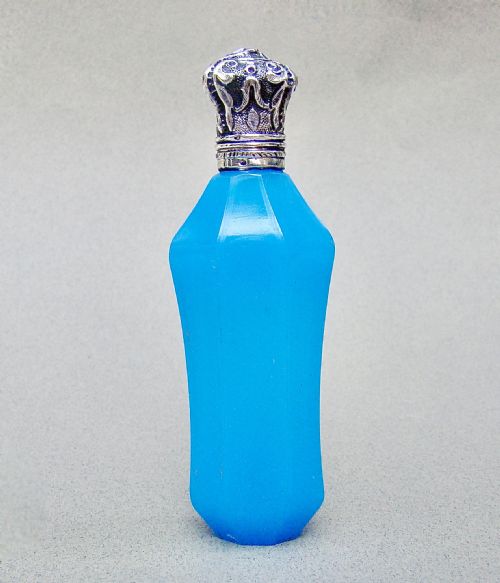
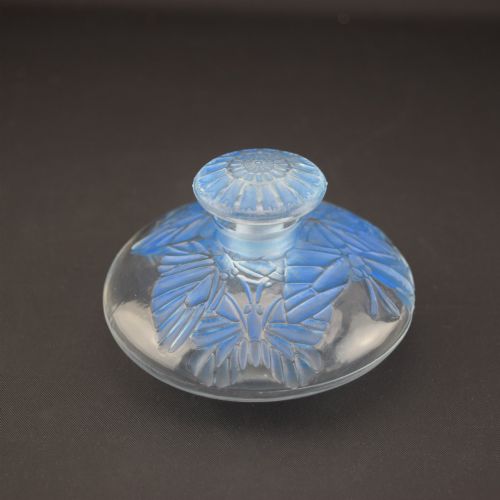
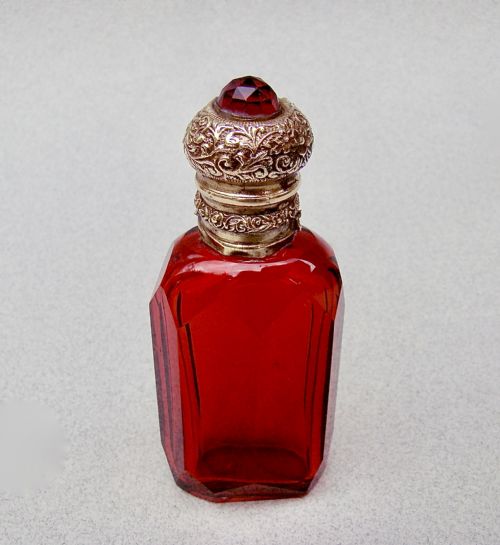
Nineteenth-century specimens frequently display opaque opaline glass, rich ruby or cranberry hues, and heavy hand-gilding, sometimes mounted in silver gilt or ormolu. Transitioning into the twentieth century, moulded and opalescent vessels dominate, particularly those produced during the 1920s and 1930s. Buyers will frequently find pieces accompanied by atomiser hardware or intricate enamel work, illustrating the evolution of decorative packaging and personal scent application.
Materials and methods of construction
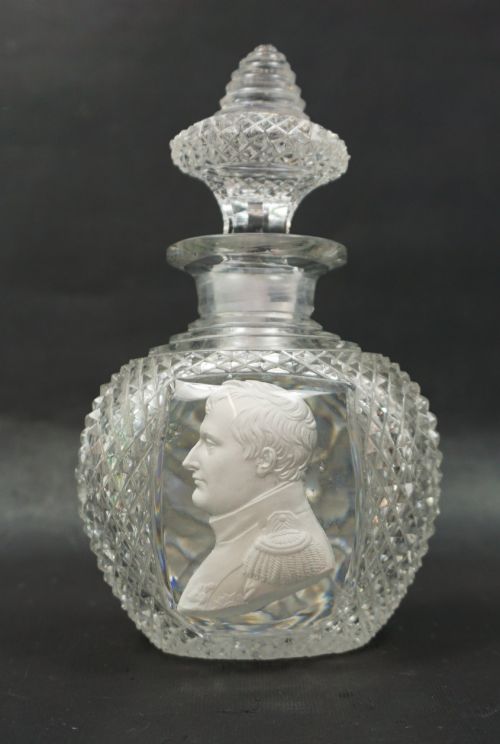
The manufacture of these vessels relied upon skilled glassblowing, moulding, and overlay techniques, where multiple layers of coloured glass were fused together before being cut back to reveal contrasting colours beneath. Makers utilised frosted, satin, and cut glass alongside opaline formulations to achieve varied light-refraction properties. Surface decoration often involved the application of gold leaf, hand-painted enamels, or sulphide portraits embedded directly within the crystal.
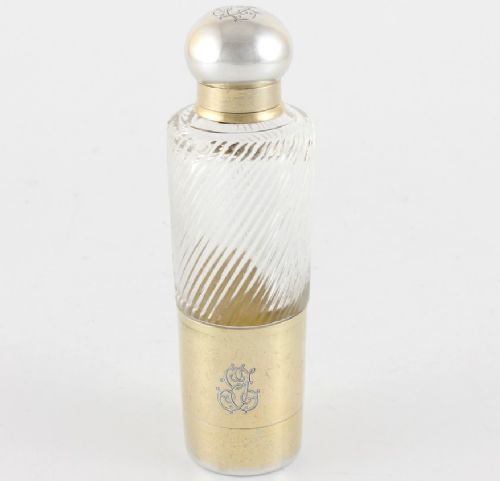
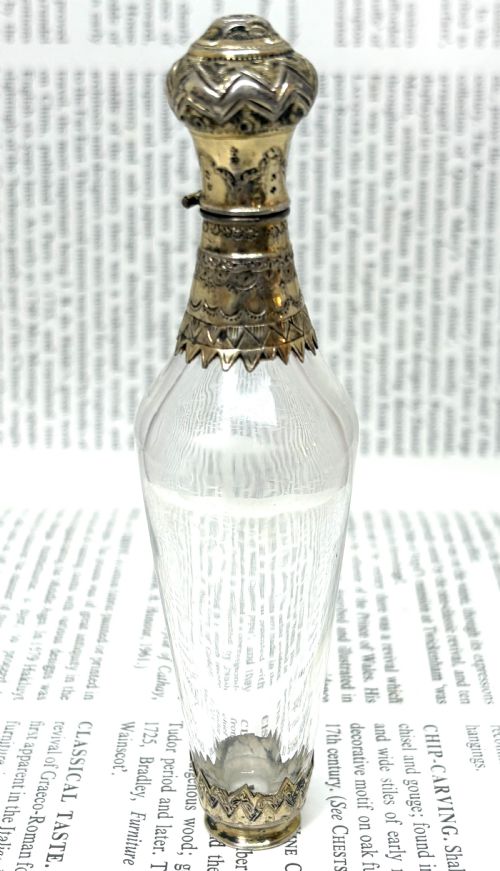
Metal mounts formed an integral part of the construction, requiring precision smithing in sterling silver, silver gilt, vermeil, or ormolu to create hinged caps, collars, and chatelaine chains. Guilloché enamel panels were frequently fused to silver mounts, whilst specialised glass houses employed acid-staining to accentuate moulded reliefs on twentieth-century designs.
Some nineteenth-century ladies carried tiny glass flasks containing smelling salts alongside perfume, preparing instantly for sudden swoons.
Factors influencing quality and craftsmanship
Superiority in these objects rests upon the crispness of the glass moulding, the depth and clarity of overlaid colour layers, and the precision of the metal mounts. High-tier examples feature hand-chased ormolu work and flawless enamel without chipping or crazing, whereas simpler items rely on plain moulded glass with basic metal collars.
The integration between the glass body and its protective or decorative metal housing also defines standard. Tightly fitting hinged lids retaining their original internal glass or cork stoppers indicate higher original craftsmanship and better preservation.
Rene Lalique·Sabino·Moser·Baccarat·Tonnel Paris
The French Glass Perfume Bottle Glossary
- Opaline glass
- An opaque or semi-translucent glass developed in pastel or vivid shades, widely utilised in nineteenth-century vanity items.
- Chatelaine scent bottle
- A small flask equipped with a chain or hook designed to be suspended from a waist belt.
- Ormolu
- Finely ground high-carat gold applied to a bronze base, commonly used for decorative mounts and stands.
- Guilloché enamel
- Decorative metalwork covered in translucent enamel over an engine-turned geometric pattern.
- Sulphide
- A small white cameo made of ceramic paste embedded into clear crystal during manufacture.
French Glass Perfume Bottle: Frequently Asked Questions
How do I date a french glass perfume bottle?
Dating relies heavily on stylistic markers, glass technology, and metal mounting techniques. Early nineteenth-century examples often feature Charles X or Second Empire bronze mounts paired with heavy cut or opaline glass.
Later pieces from the 1920s and 1930s typically exhibit Art Deco geometry, moulded signatures, or distinct frosted relief work characteristic of twentieth-century production methods.
What is a chatelaine scent bottle?
A chatelaine scent bottle is a miniature flask manufactured with an attached chain, ring, or hook. This allowed Victorian women to suspend the container directly from their waist belts as a practical accessory.
These pieces are frequently found encased in silver or ormolu mounts designed to secure the stopper while hanging.
How were perfume caskets used?
Perfume caskets served as portable or dressing-table storage boxes lined with velvet or silk to house multiple glass scent bottles securely. They protected delicate flasks equipped with ground glass stoppers from rolling or colliding.
Wealthy owners utilised them for travelling or to display an assortment of different fragrances in the boudoir.
Are stoppers usually original?
Many surviving vessels retain their matching ground glass stoppers, though replacements do occur due to the fragile nature of the necks and inner plugs. Examining the interior ground rim and matching wear patterns helps determine originality.
Metal screw caps and hinged lids with cork liners also require inspection to ensure the internal seals match the period of the mount.