


Victorian Covered Urn
A victorian covered urn brings monumental presence to a room, uniting functional lidded vessels with decorative sculptural form.
Victorian Covered Urn
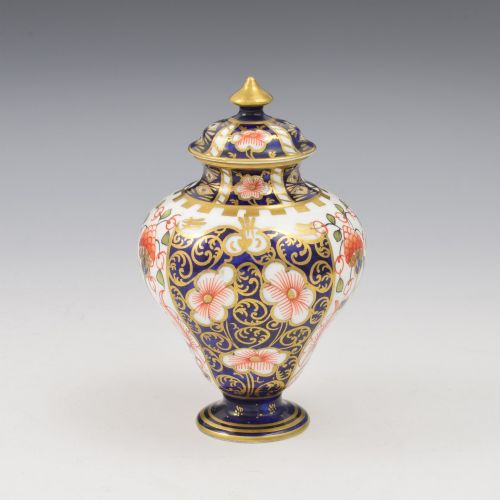
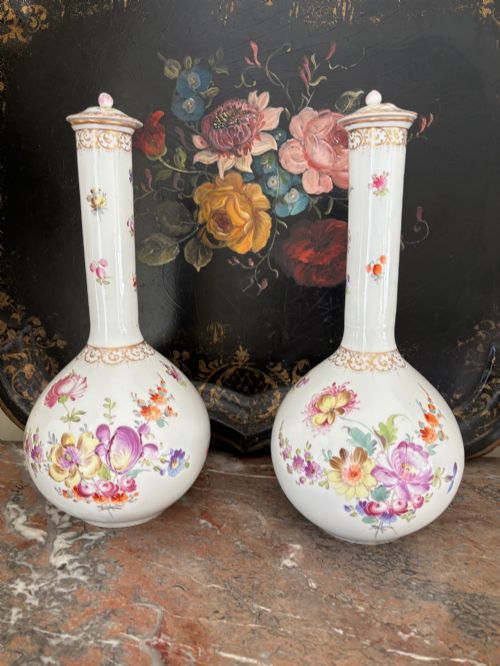
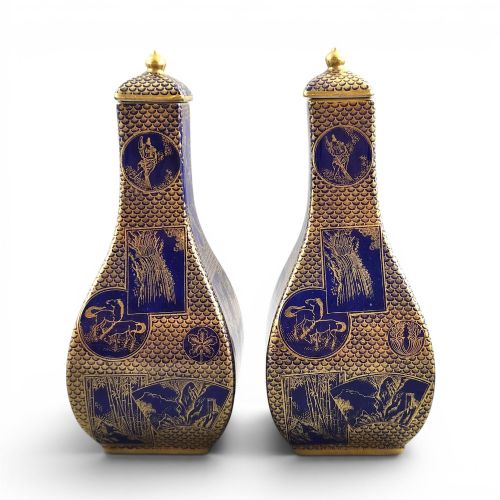
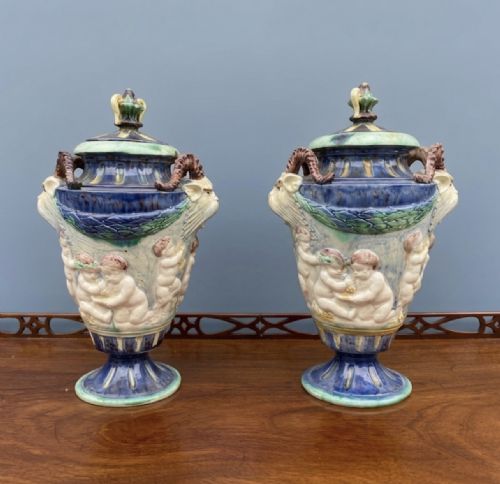
A victorian covered urn encompasses porcelain, ironstone, and ceramic lidded vessels produced primarily during the nineteenth century and the Edwardian era. These pieces frequently adopt classical proportions, often appearing as matched pairs orgarnitures designed for prominent display on mantelpieces or pedestals.
Makers and manufacturers ranging from Royal Worcester and Mason's Ironstone to continental porcelain works produced these lidded forms. Alongside ceramic examples, buyers encounter variations in glass, bronze, and lead.
Styles span from Neoclassical and Rococo Revival to Victorian Chinoiserie and Japanese Meiji period influences, reflecting diverse nineteenth-century aesthetic interests.
How they were made
Piecestoften combine moulded ceramic or porcelain bodies with hand-painted decoration, gilding, and gold leaf applications. Potters utilised ironstone for durability, while porcelain provided a smooth ground for detailed brushwork.
Glazes, enamels, and transfer-printed decalcomania techniques defined the surface patterns, sometimes complemented by applied gilding and metal mounts.
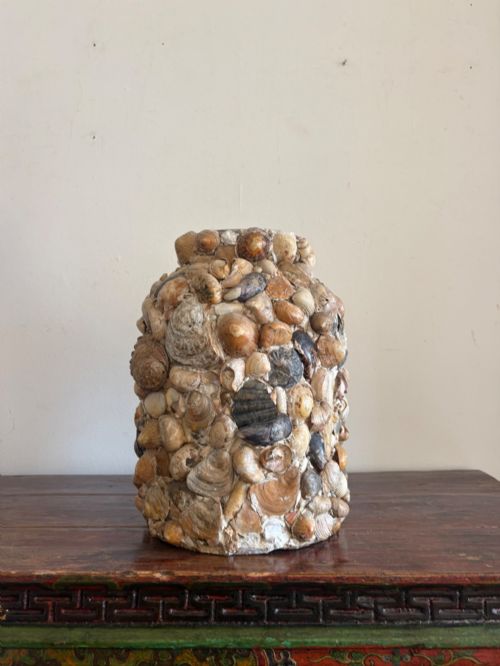
A French folk art shell-covered jar proves that Victorian makers would glue seashells to literally anything.
What varies in quality
The standard of hand-painted detail and the precision of the gilding set individual pieces apart. Artisans who executed freehand floral scenes, birds, or figurative panels achieved greater depth than those relying solely on transfer printing.
The weight, clarity, and crispness of the moulding on handles, finials, and bases indicate the care taken during production. Well-preserved original covers that fit the vessel profile seamlessly hold higher regard.
Royal Crown Derby·Sitzendorf·Mason's Patent Ironstone·Royal Worcester·Samuel Alcock·Royal Vienna·Sevres·Helena Wolfsohn Dresden·Hadley's Worcester·Augustas Rex
The Victorian Covered Urn Glossary
- Garniture
- A set of three or more matching vases or urns designed to be displayed together on a mantelpiece. These matched sets often feature a central dominant vessel flanked by smaller symmetrical companions.
- Ironstone
- A heavy, durable type of ceramic patented in the nineteenth century to imitate Chinese porcelain. This dense material resists chipping and provides a stable body for rich enamels and gilding.
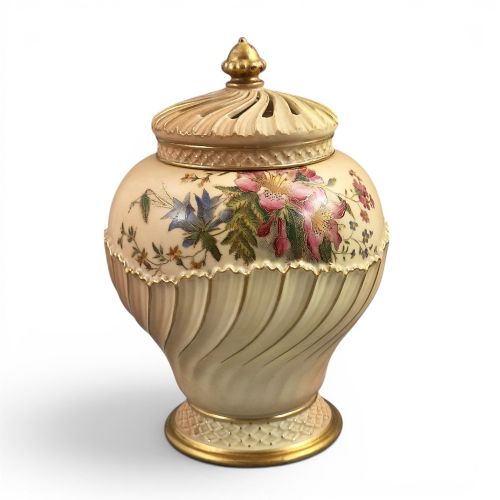
- Pot-pourri
- A lidded vessel perforated to allow dried scented plant materials to fragrance a room. The pierced covers distinguish these utilitarian jars from standard decorative urns.
- Imari
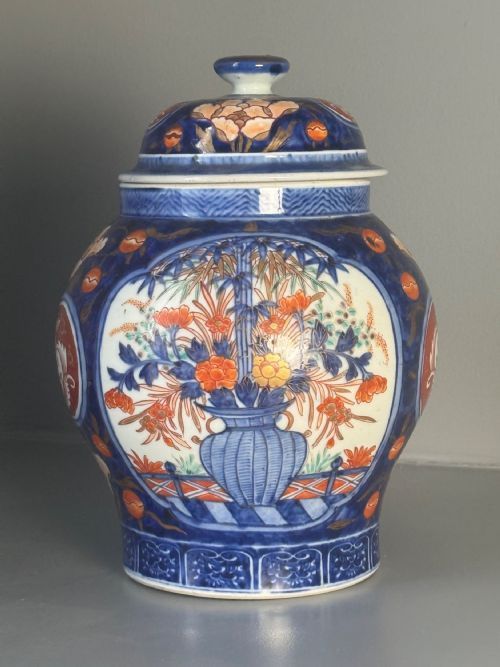
- A decorative style inspired by Japanese export wares featuring iron red, cobalt blue, and gold. Victorian ceramic factories frequently adopted this palette for their lidded vases.
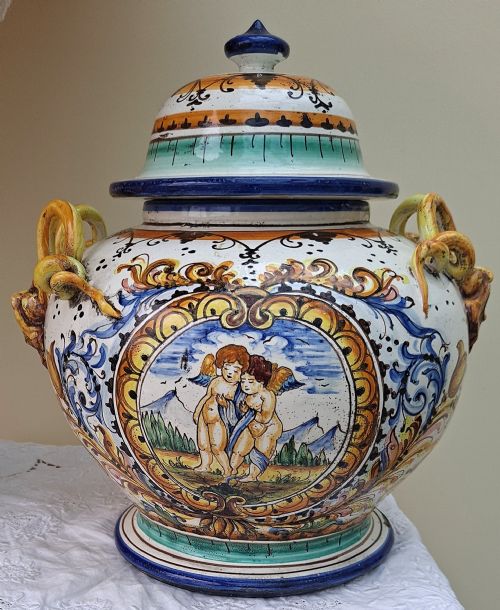
- Maiolica
- Tin-glazed earthenware associated with Italian traditions and later European revivals. The opaque white glaze serves as a ground for colourful painted scenes.
Victorian Covered Urn: Frequently Asked Questions
What is a victorian covered urn used for?
These lidded vessels served primarily as decorative garnitures on mantelpieces, sideboards, and pedestals during the nineteenth century. Some specific forms, such as pot-pourri jars, held dried scented petals to fragrance formal parlours.
Beyond their decorative function, large presentation urns and cups commemorated significant events or displayed the wealth and artistic taste of the household.
How do I care for a porcelain urn?
Dust these fragile ceramic and porcelain pieces gently with a dry, soft brush to protect delicate hand-painted surfaces and raised gilding. Avoid using liquid cleaners, abrasive cloths, or immersion in water, as moisture can damage historic glazes and gold leaf.
Position the urn away from direct sunlight and areas prone to heavy vibrations to safeguard both the ceramic body and the removable cover.
How can I tell different periods apart?
Examining the paste, glaze characteristics, and factory marks helps determine whether an item dates to the early nineteenth century or the late Victorian and Edwardian periods. Earlier pieces often display heavier ironstone bodies or hand-painted Neoclassical motifs, while later nineteenth-century examples frequently embrace eclectic revival styles.
Factory stamps, registration numbers, and painted decorator ciphers found on the underside provide the most reliable chronological markers.
Are lids usually original to the urn?
Checking the interior rim, glaze consistency, and decorative alignment helps confirm whether a cover belongs to its vessel. Because lids are prone to separation over the centuries, replacements occasionally appear on the market.
A matching fit, uniform wear, and consistent painting style across both components indicate an authentic pairing.