






Decorative Iron Planter
These decorative iron planter pieces bring enduring structure and classical style to gardens and terraces.
Decorative Iron Planter
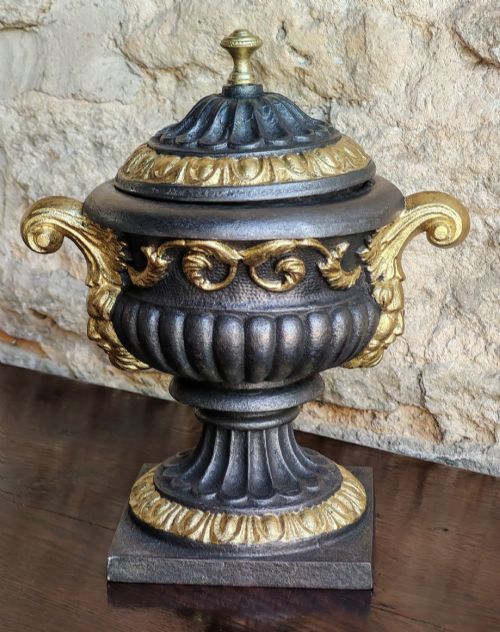
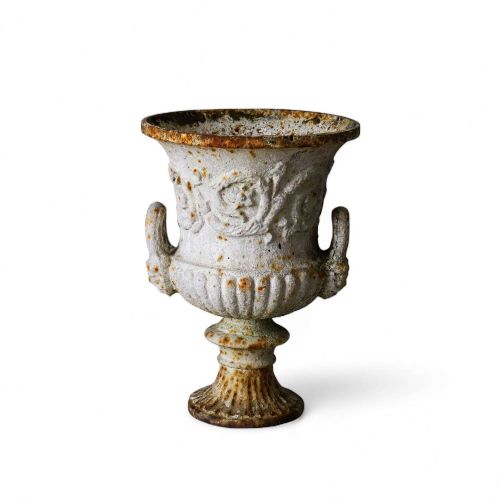
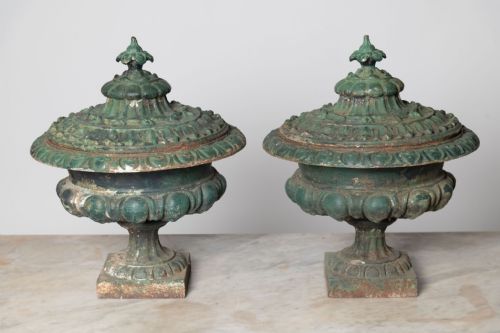
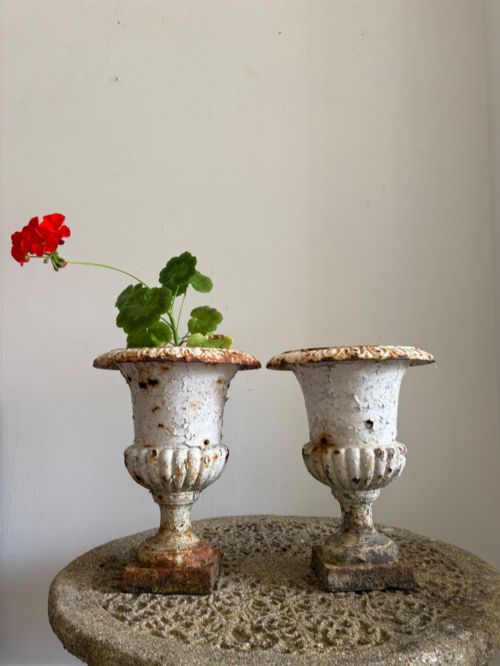
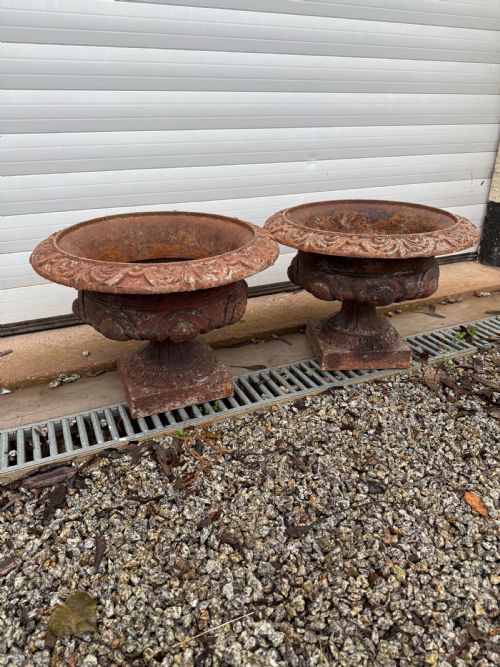
A decorative iron planter encompasses heavy garden vessels, campana urns, tazza urns, and jardinieres designed for exterior and conservatory planting. These objects draw heavily on Victorian and neoclassical design traditions, often featuring classical acanthus leaf ornamentation and pedestal stands.
The selections available here focus firmly on nineteenth-century craftsmanship, including French country models alongside estate-made pieces. Buyers frequently encounter robust pairs intended to anchor formal pathways or frame doorways with substantial botanical displays.
How they were made
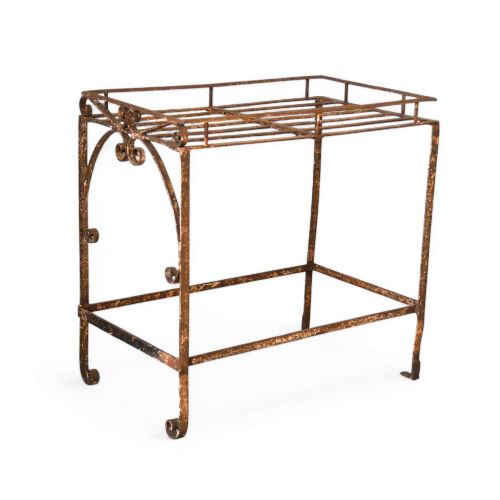
Foundries utilised cast iron for intricate mouldings such as classical urns and footed pedestals, allowing for sharp relief work and heavy load-bearing durability. Wrought iron was shaped by hand for structural garden racks and estate planters, employing traditional blacksmithing techniques.
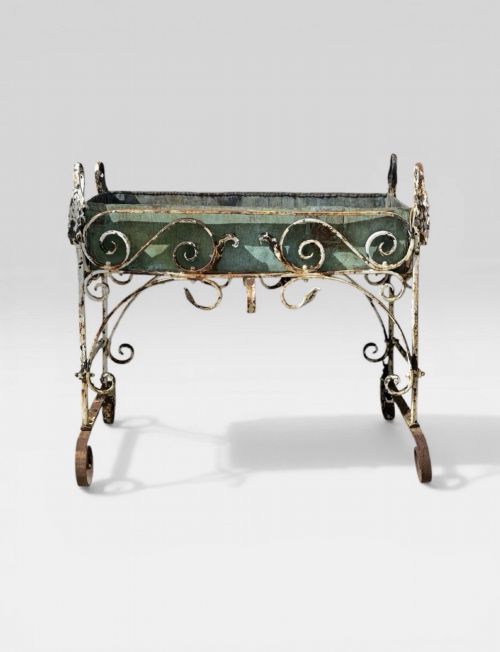
Surfaces frequently show layers of original paint, weathered patination, or protective coatings applied to withstand decades of outdoor exposure. Occasional combinations incorporate zinc linings, copper elements, and terracotta components to house plants securely.
Decorative Iron Planter Retail Price Guide 2026
Typical asking prices for decorative iron planter among the pieces listed under this phrase on Sellingantiques today, from the lower quarter to the upper quarter. They describe what is for sale here now, not the wider market.
What varies in quality
Quality rests in the crispness of the foundry casting and the depth of architectural detail present in motifs like acanthus leaves and classical handles. Finer examples retain balanced proportions, original matching pedestals, and intact lids where the design calls for them.
The integrity of the metal surface and the character of weathered paint finishes dictate visual appeal. Substantial weight and foundry markings distinguish major production works from smaller utilitarian items.
Andrew Handyside·Val d'Osne Foundry
The Decorative Iron Planter Glossary
- Campana urn
- A bell-shaped garden vessel with an everted rim and a pedestal foot, originating in classical antiquity and favoured by nineteenth-century foundries.
- Tazza urn
- A shallow bowl-shaped vessel mounted on a stem and foot, often utilised in Victorian formal gardens for trailing plants.
- Jardinere
- An ornamental receptacle designed to hold plants or flowers, frequently elevated on a dedicated stand or pedestal.
- Wrought iron
- Iron that has been heated and hammered into shape by hand, valued for its fibrous texture and tensile strength.
- Acanthus leaf
- A classical decorative motif modelled on Mediterranean foliage, carved or cast in relief upon urn bodies and pedestals.
Decorative Iron Planter: Frequently Asked Questions
How do I date a cast iron urn?
Dating relies on stylistic clues such as Victorian neoclassical motifs, classical acanthus leaf detailing, and foundry attribution marks stamped into the metal.
Surface characteristics like early distressed paint layers and heavy casting weight also point towards nineteenth-century production periods.
Are these planters suitable for year-round outdoor use?
Cast and wrought iron structures withstand outdoor weathering robustly, developing patinas of rust and aged paint over decades in the garden.
Ensuring adequate drainage prevents internal water accumulation during freezing winter months.
What is the difference between a campana urn and a tazza urn?
Campana urns feature deep, bell-shaped bowls suited to substantial root systems and structural statement planting on terraces.
Tazza urns present a shallower, wide-rimmed profile supported by a stem, designed for elevated display and trailing foliage.
How should I clean a weathered iron planter?
Gentle brushing removes loose dirt and debris without disturbing the stable underlying corrosion or historic layers of paint.
Applying specialist protective oils or wax helps preserve the surface character of nineteenth-century pieces kept in sheltered garden spaces.