




Classical Cast Iron Urns
Classical cast iron urns bring sculptural presence to gardens and terraces, shaped in heavy metal by major nineteenth-century foundries.
Classical Cast Iron Urns
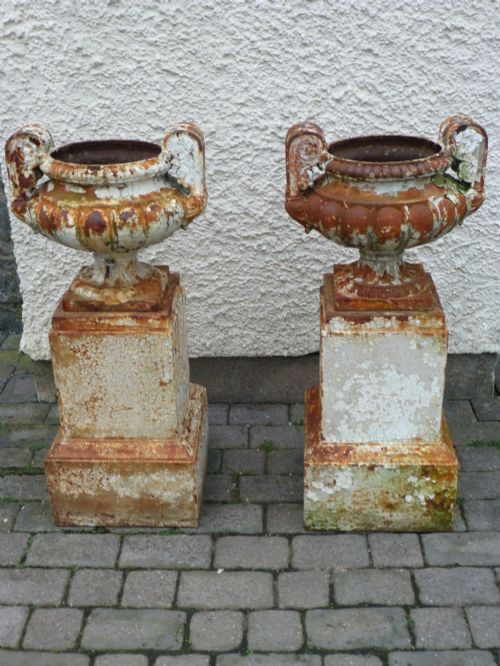
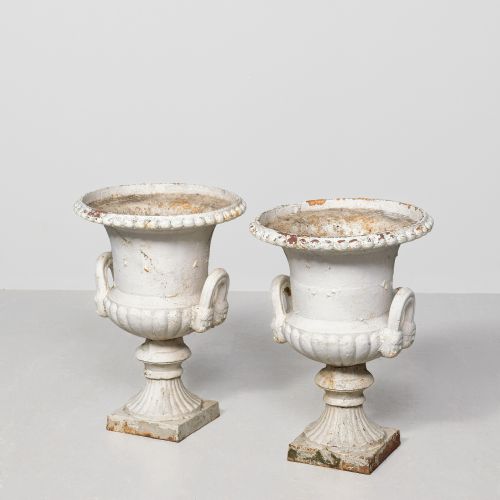
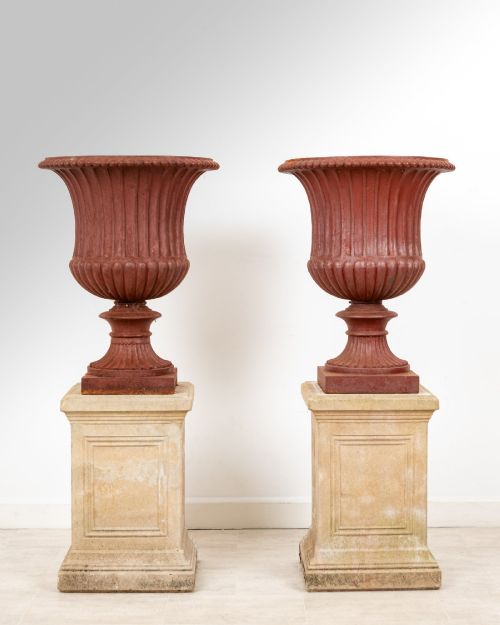
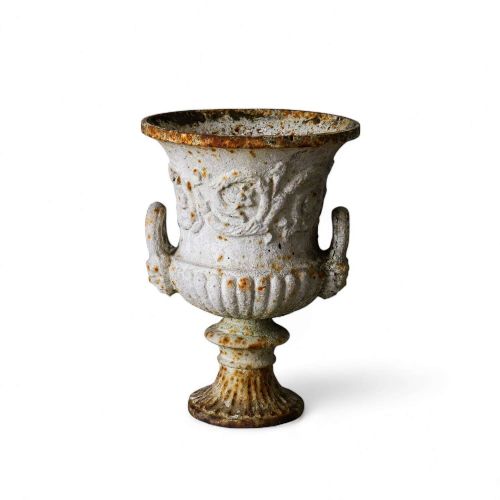
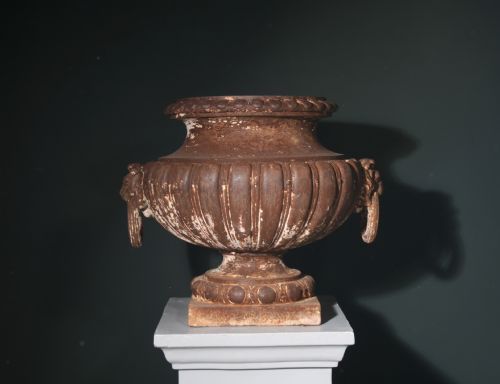
Classical cast iron urns serve primarily as garden ornaments, planters, and architectural focal points, drawing heavily on antique forms like the campana shape. You will frequently encounter nineteenth-century examples, including Victorian and Regency pieces, often standing upon matching plinths or stone pedestals.
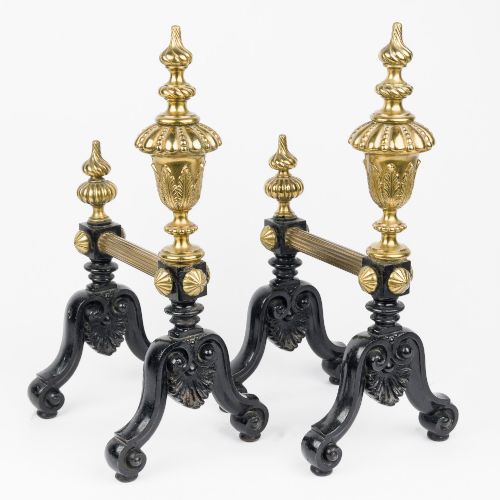
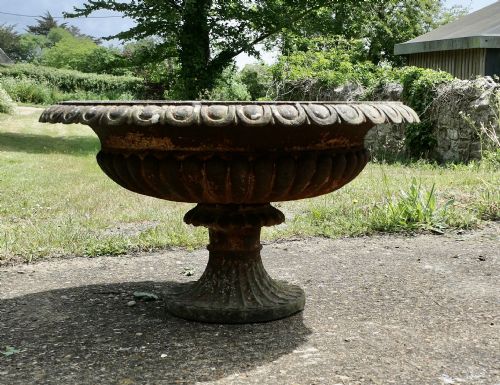
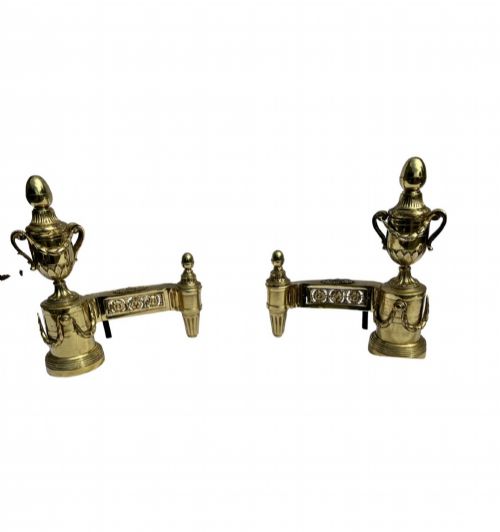
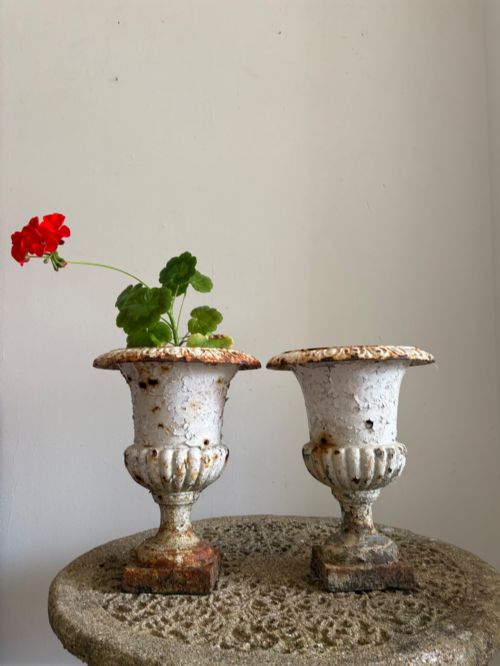
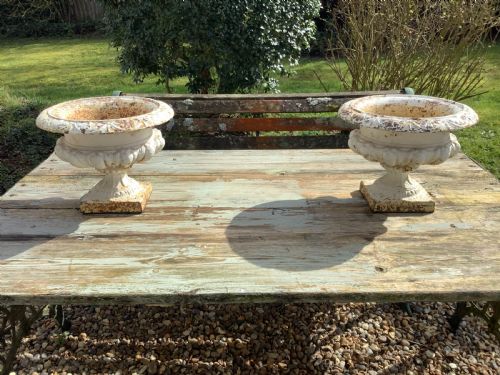
The inventory ranges from grand garden jardinières and tazza urns to smaller table urns and occasional fireplace accessories. Many items appear in pairs, designed for symmetrical placement along pathways or at portico entrances.
How they were made
Foundries poured molten iron into sand moulds to achieve crisp classical details such as acanthus leaves and gadrooned rims. The resulting metal vessels were frequently finished with paint or left to weather naturally outdoors.
Some heavier garden urns incorporate separate stone plinths or brass elements to elevate the main vessel. Original painted surfaces often show layers of weathering accrued over decades of outdoor exposure.
Some heavy garden urns doubled as interior fire dogs before finding permanent retirement among the shrubbery.
What varies in quality
Quality rests heavily on the crispness of the casting detail and the reputation of the founding works, such as Coalbrookdale, Falkirk Carron, Andrew Handyside, or Val d'Osne. Sharp relief in ornament like acanthus foliage distinguishes superior foundry work from softer, later reproductions.
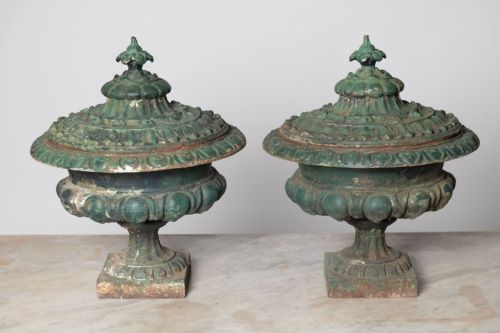
The presence of original matching components, such as lids and plinth bases, elevates an ensemble. Heavy metal gauge and surviving traces of early distressed paint also separate standard utility planters from collector-grade pieces.
Falkirk Carron foundry·Coalbrookdale·Andrew Handyside·Val d'Osne Foundry
The Classical Cast Iron Urns Glossary
- Campana
- A bell-shaped garden urn with an everted rim and a fluted or smooth body. This classical silhouette dominates nineteenth-century metal gardenware.
- Plinth base
- A solid block or pedestal upon which an urn stands to elevate its height and presence. These supporting bases are frequently cast iron or stone.
- Tazza
- A shallow bowl-shaped vessel mounted on a stem and foot, often used interchangeably with garden urns. These decorative forms appear frequently in Victorian landscapes.
- Gadrooned
- Decorated with a series of convex curves or flutes moulded along the rim or body. This classical ornamental motif adds texture to the metal surface.
Classical Cast Iron Urns: Frequently Asked Questions
How do I care for cast iron urns?
Cast iron garden pieces withstand the elements well, though monitoring for rust accumulation helps preserve the metal surface over decades.
Applying protective coatings or specialised paints maintains the original finish without obscuring fine decorative details.
Were these urns always used outdoors?
While the larger campana and garden planters spent their lives on terraces and lawns, smaller table urns and fireplace accessories resided indoors.
Their heavy construction allowed them to anchor domestic spaces just as effectively as formal garden landscapes.
How can I identify a Victorian urn?
Victorian examples often display robust neoclassical motifs like acanthus leaves and heavy gadrooning, frequently bearing foundry marks from makers such as Andrew Handyside or Coalbrookdale.
Matching plinths and weathered painted surfaces further point toward nineteenth-century production.
Do these urns normally include lids?
Lids remain an uncommon survival for garden urns, as most vessels were intended for planting and exposure to the weather.
When original lids do accompany a piece, they significantly enhance the historical completeness of the object.