

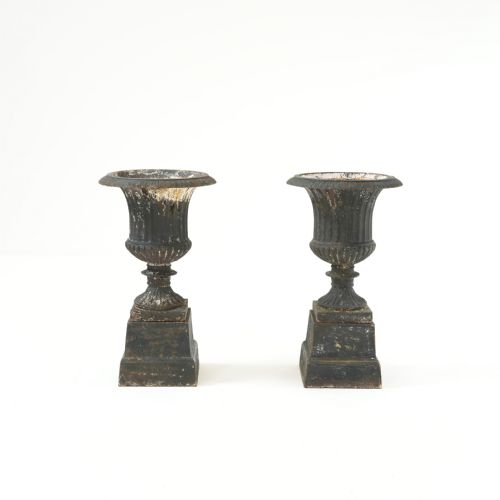
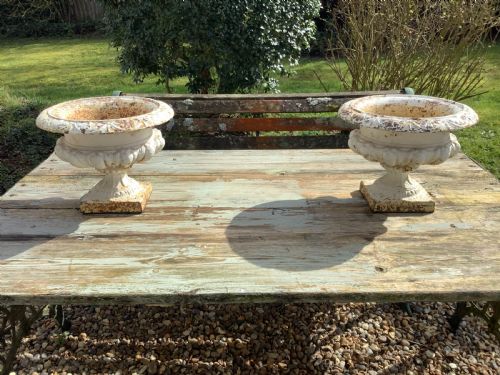


Weathered Cast Iron Planters
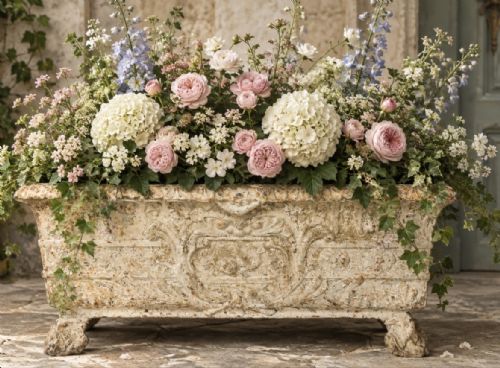
Weathered cast iron planters bring enduring neoclassical weight and rustic garden presence to any terrace.
Weathered Cast Iron Planters
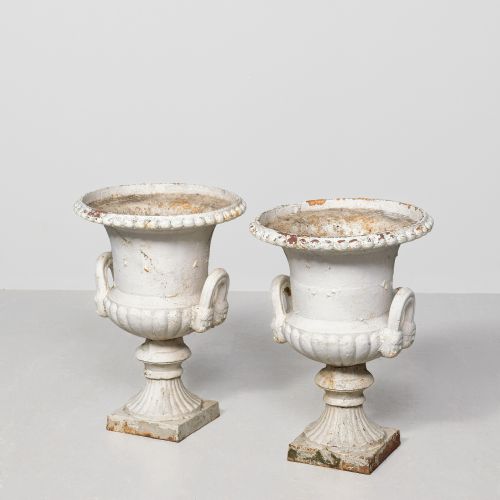
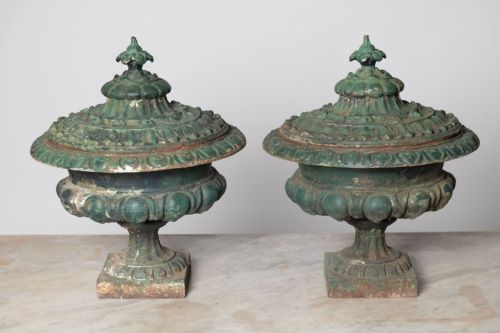
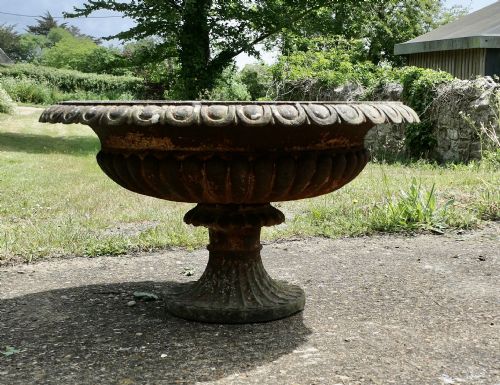
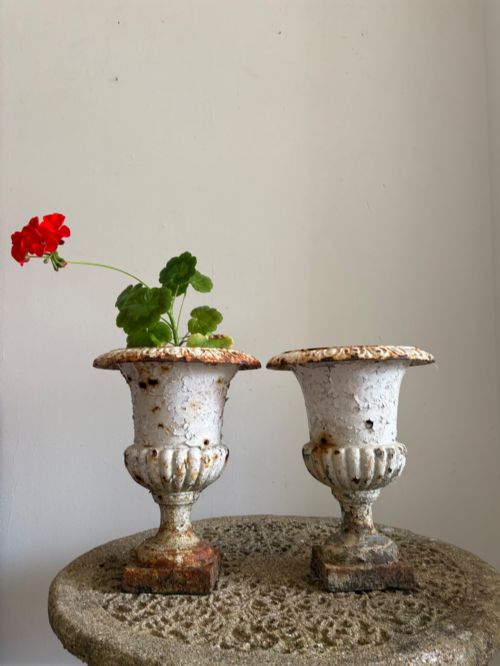
Weathered cast iron planters embody heavy garden ornamentation, primarily taking the form of classical campana urns, tazza vessels, and multi-tiered plant stands designed for outdoor display. When searching for weathered cast iron planters, buyers encounter robust vessels originating from the nineteenth century through to the mid-twentieth century, with Victorian and Regency interpretations dominating the selections.
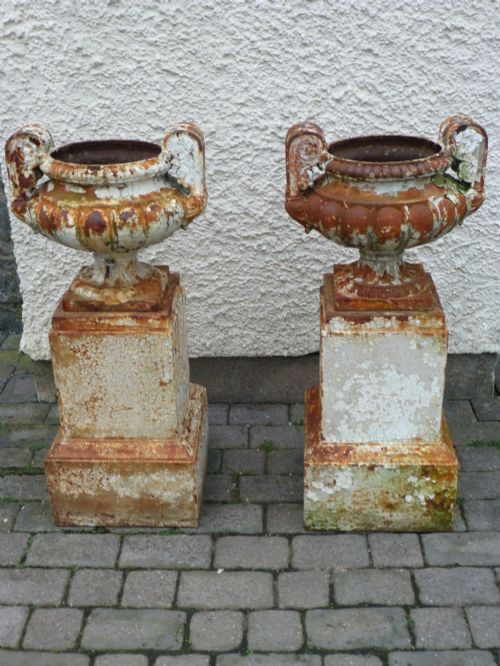
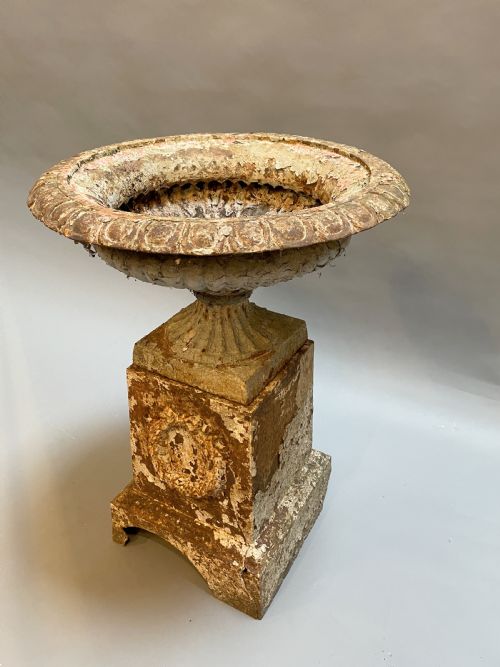
These garden vessels appear singly or in matched pairs, frequently elevated on matching plinths to enhance their monumental garden profile. The forms draw heavily on neoclassical and French chateau styles, featuring gadrooned bodies, fluted bowls, and structured lips that anchor traditional planting schemes.
How they were made
Foundries produced these garden pieces by pouring molten iron into sand moulds, capturing crisp architectural details like classical friezes and gadrooning as the metal cooled. Many surviving examples retain traces of original paint finishes beneath layers of atmospheric oxidation and rust.
Makers often constructed larger forms in modular sections, bolting bowls to separate pedestals or plinths to facilitate transport and placement in nineteenth-century gardens. The inherent durability of cast iron allowed these planters to endure decades of exposure to the elements.
What varies in quality
The sophistication of the casting work dictates the distinction between standard utilitarian vessels and superior foundry art. Finer examples display sharp relief modelling on decorative motifs, balanced proportions, and well-integrated structural components such as original plinths and matching lids.
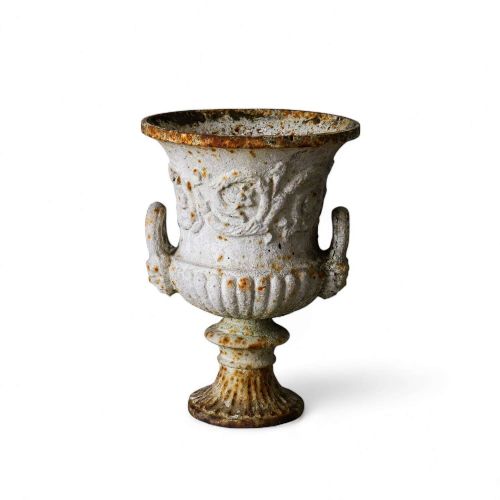
The character of the surface oxidation also shapes the visual merit of each piece, where undisturbed historical paint remnants beneath natural weathering elevate the decorative appeal. Substantial metal thickness and heavier overall weight generally indicate superior nineteenth-century production standards.
Falkirk Carron foundry·Andrew Handyside
The Weathered Cast Iron Planters Glossary
- Campana
- A bell-shaped garden urn form with a flaring rim and a tapering lower body, heavily utilised in classical revival landscape design. This profile remains the most common silhouette found among nineteenth-century garden vessels.
- Gadrooned
- Ornamented with a series of convex, rounded curves or flutes carved in a parallel pattern around the body of an urn. This decorative banding frequently encircles the lower bowl of classical garden planters.
- Tazza
- A shallow saucer-like vessel mounted on a stem and foot, used in garden settings for planting or ornamental display. These pieces offer a distinct, wide profile compared to deep campana urns.
- Plinth
- A heavy rectangular or square base block that elevates an urn or planter above ground level. Original matching plinths significantly enhance the architectural presence of garden ironwork.
Weathered Cast Iron Planters: Frequently Asked Questions
How do I care for cast iron planters outdoors?
Cast iron garden vessels withstand outdoor conditions naturally, developing a stable protective layer of surface rust over decades of exposure. Ensure drainage holes remain clear to prevent trapped water from expanding during freezing weather.
Applying protective oils or specialised waxes can slow down further oxidation if you wish to preserve a specific painted finish. Position them on stable stone or gravel surfaces to prevent moisture absorption from direct soil contact.
Were these urns originally painted?
Nineteenth-century foundries frequently supplied garden ironwork with protective coats of lead paint to mimic stone or bronze finishes. Surviving traces of these early painted surfaces offer valuable clues to the age and history of the piece.
Over time, weathering wears away the top layers, revealing underlying metal textures and multiple historical paint applications. Many collectors prefer to leave these remaining patinated surfaces untouched rather than repainting them.
How can I tell a Victorian urn from a later copy?
Victorian castings typically feature heavier metal walls, crisper decorative detailing, and construction methods involving hand-finished seams and threaded bolts. The depth of the surface oxidation also reflects long-term exposure spanning well over a century.
Later twentieth-century reproductions often display softer mould definitions and lighter overall weights due to modern manufacturing economies. Examining the underside and interior surfaces often reveals the casting texture characteristic of older foundry work.
Can these heavy planters stay outside in winter?
The substantial mass of cast iron allows these planters to remain outdoors throughout harsh winter conditions without structural compromise. Their thick walls easily support heavy root balls and soil loads.
To safeguard delicate plantings, line the interior with protective material or select hardy perennials that tolerate seasonal temperature drops. Raising the base slightly on feet improves drainage and prevents moisture accumulation beneath the plinth.