


Victorian Court Cupboard
These Victorian court cupboard pieces combine sturdy oak construction with elaborate historic revival carving, offering timeless presence for any dining room.
What a victorian court cupboard is
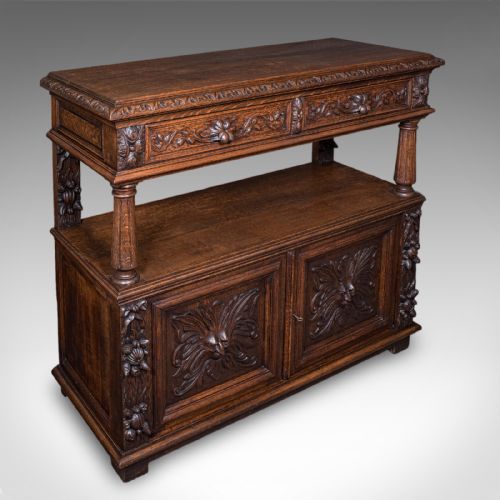
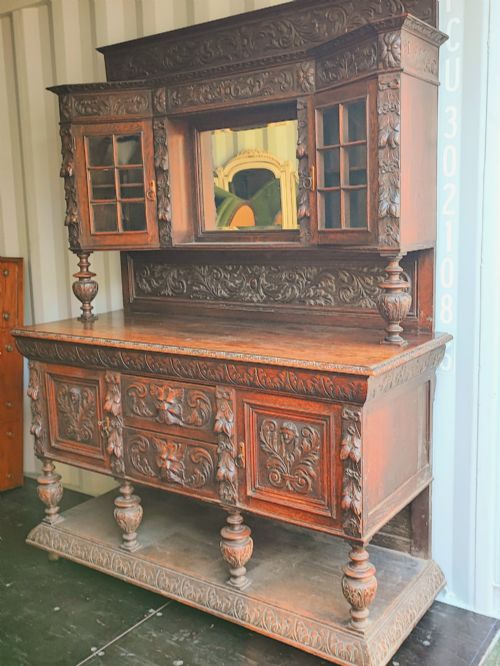
When you search for a victorian court cupboard, you encounter substantial heavy furniture pieces that bridge the gap between storage cabinet and display buffet. The versions most commonly met on this page date from the nineteenth century, specifically around eighteen seventy, taking the form of low cupboards or taller sideboards.
These items draw heavily on earlier Jacobean and Renaissance forms, translating sixteenth and seventeenth-century motifs into Victorian domestic interiors. They serve as impressive focal points in traditional rooms, functioning as both decorative anchor pieces and practical storage.
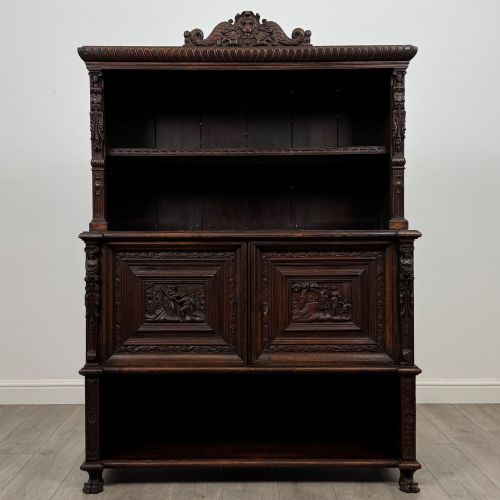
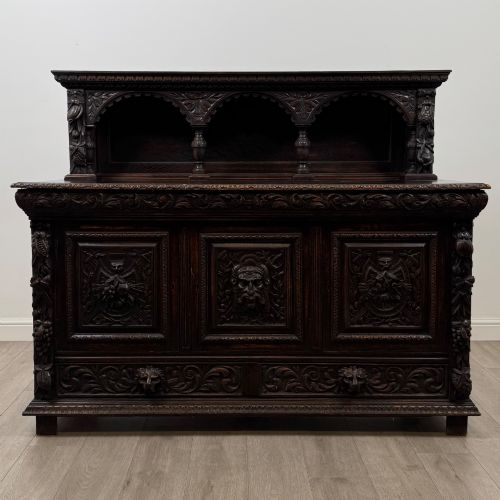
The inventory on this page shows variations ranging from simple peg-joined early examples to heavily carved Renaissance revival buffets. Each piece reflects the nineteenth-century revivalist fascination with antique craftsmanship and robust proportions.
How they were made
Makers constructed these cupboards primarily from solid oak, utilising traditional joining methods such as peg joints alongside iron and brass hardware. The timber undergoes deep relief carving, featuring strapwork, foliage, and figural details characteristic of revivalist aesthetics.
Early nineteenth-century examples often employ peg-joined construction techniques, ensuring durable framing without modern fasteners. Surfaces are finished to highlight the natural grain of the oak, complemented by cast brass or iron drop handles and hinges.
Retail Price Guide 2026
Typical UK retail prices for victorian court cupboard, calculated from the Sellingantiques database of over a million retail prices indexed since 2003. This retail price guide relies exclusively on Sellingantiques data; no external sources or auction records are used, so the figures do not describe the wider market.
Hardware across the inventory includes both iron and brass components, appearing alongside peg-joined and standard nineteenth-century cabinetry.
What varies in quality
The distinction between standard examples and the top of the range lies in the depth and crispness of the carved ornamentation. Finer pieces display deeply undercut relief work and balanced proportions that echo seventeenth-century originals with precision.
Construction methods also separate the grades, with peg-joined frames and carefully selected timber marking out superior items. The integration of iron and brass fittings that match the period style further elevates the status of an individual cupboard.
The Victorian Court Cupboard Glossary
- Court cupboard
- A traditional English sideboard or storage unit featuring an upper and lower section, often heavily carved with architectural motifs. These pieces date back to the sixteenth century but saw a major revival during the Victorian era.
- Peg-joined
- A traditional method of securing timber framing using wooden pegs rather than metal nails or screws. This technique provides structural flexibility and indicates earlier construction methods.
- Strapwork
- A decorative motif consisting of flat, intertwined bands resembling leather straps or ribbons, commonly carved into wooden panels during the sixteenth and Victorian revival periods.
- Buffet
- A sideboard or cupboard used for food storage and serving, sitting at a convenient height for domestic utility.
Frequently Asked Questions
What is a court cupboard?
A court cupboard is a traditional form of storage furniture featuring enclosed cabinet spaces, often tiered or stepped in profile. They serve as substantial sideboards suited for dining rooms and large hallways.
During the nineteenth century, makers revived this historic form, applying dense oak carving and heavy proportions typical of the Victorian period.
How do I date a Victorian cupboard?
Dating relies on examining construction techniques, hardware, and stylistic revival markers. Early Victorian examples often use peg-joined oak construction.
Later pieces from the eighteen seventies and eighties incorporate more elaborate Renaissance revival carving and mass-produced brass fittings alongside traditional joinery.
Where should I place a court cupboard?
These large oak pieces require substantial wall space and work best as focal points in dining rooms or entrance halls. Their dark timber tones complement traditional interiors and period properties.
Ensure the room has adequate clearance, as these cupboards possess deep footprints and heavy visual weight.
What wood was used for these?
Solid oak serves as the primary material for nearly all examples listed on this page. The timber is chosen for its strength and ability to hold deep relief carving.
Makers occasionally paired this oak with iron and brass handles, hinges, and key escutcheons.