
Victorian Colonial Carved Table
A victorian colonial carved table brings dense tropical hardwoods and intricate regional carving into British interiors.

Victorian Colonial Carved Table
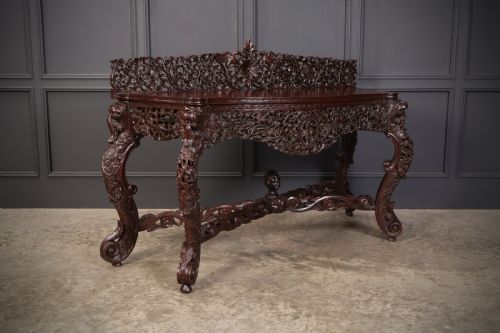
A victorian colonial carved table encompasses a range of occasional, centre, and side tables produced during the nineteenth century across regions influenced by British presence. These pieces frequently combine traditional local woodworking traditions with forms suited to European domestic habits, such as tilt-top mechanisms, side tables, and console tables.
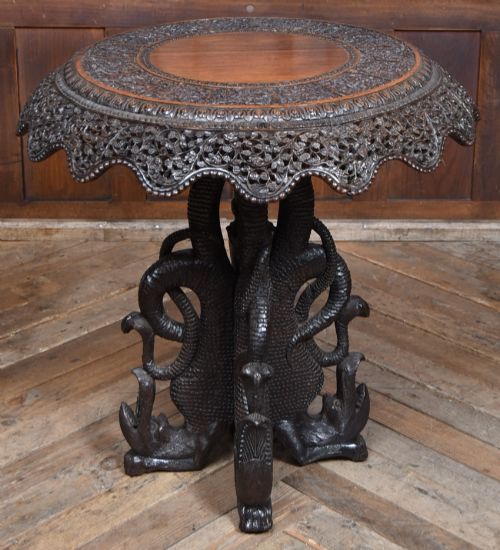
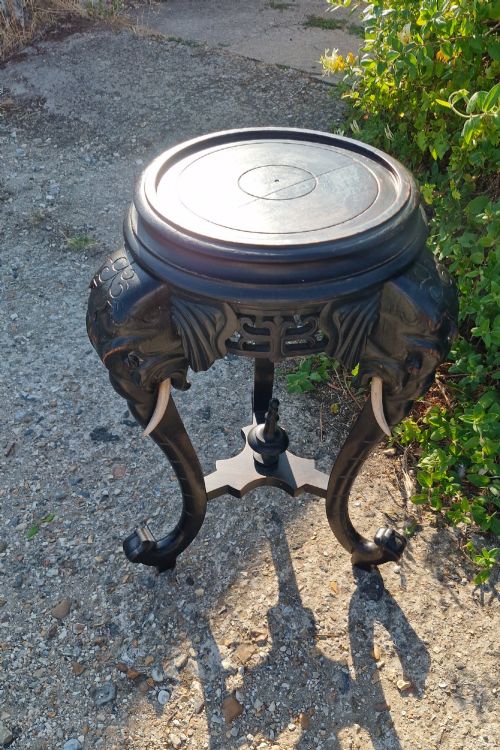
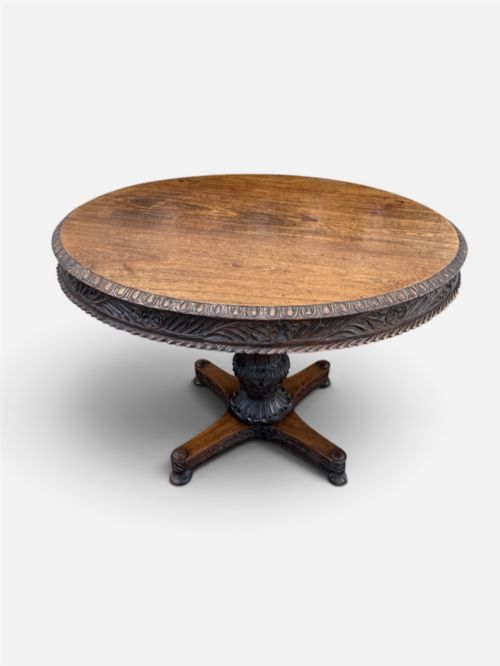
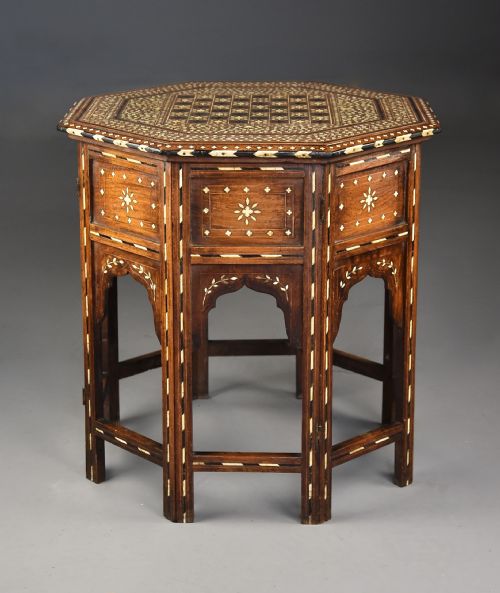
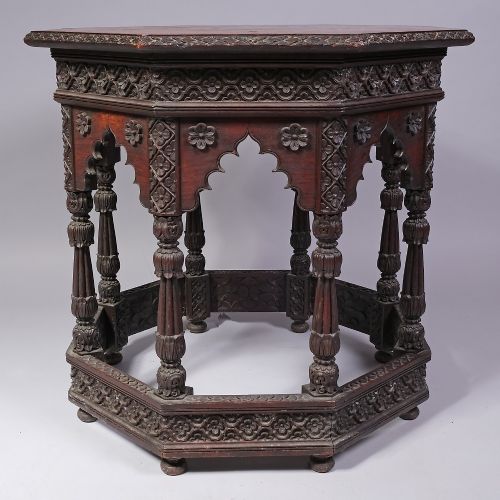
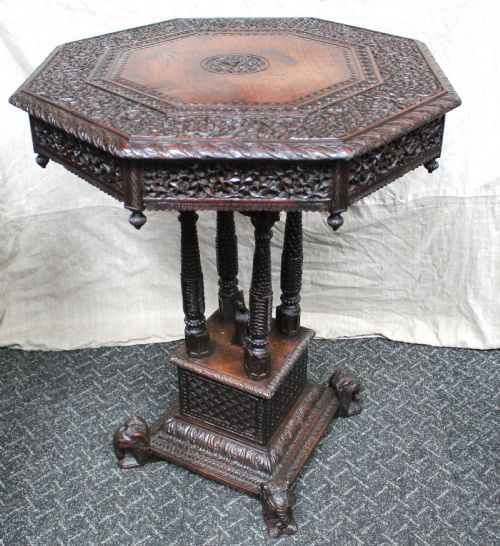
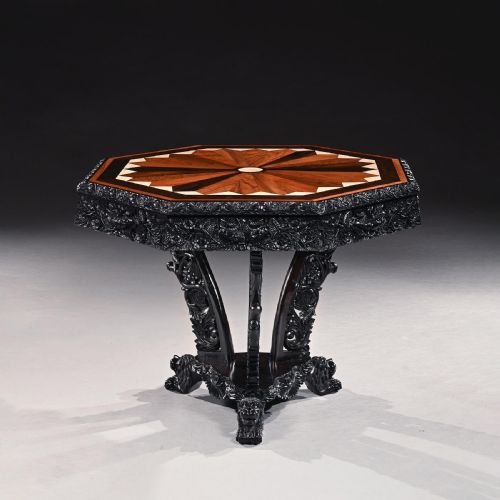
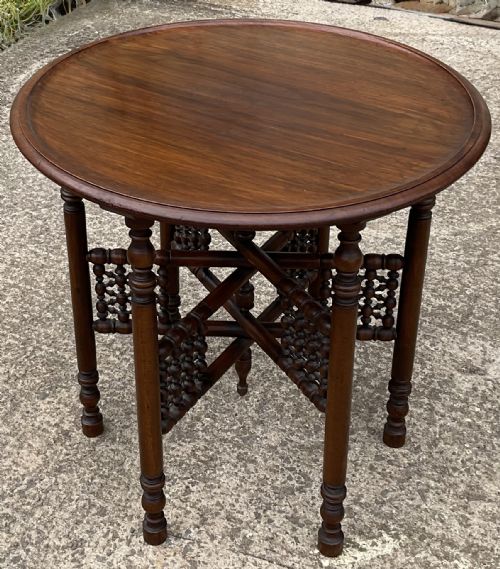
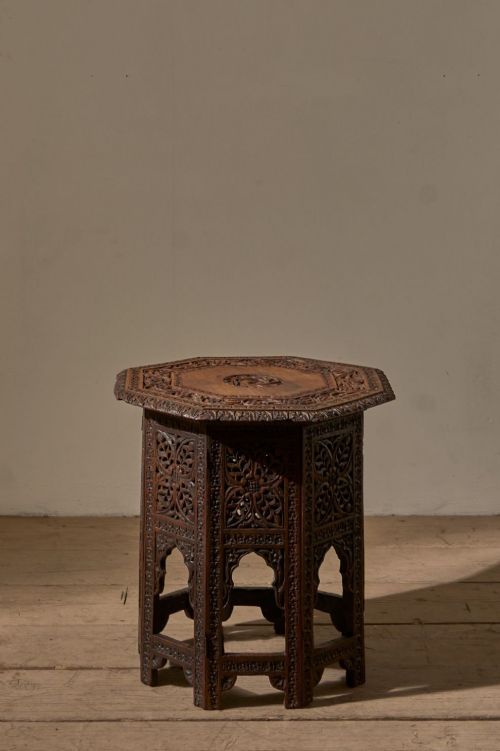
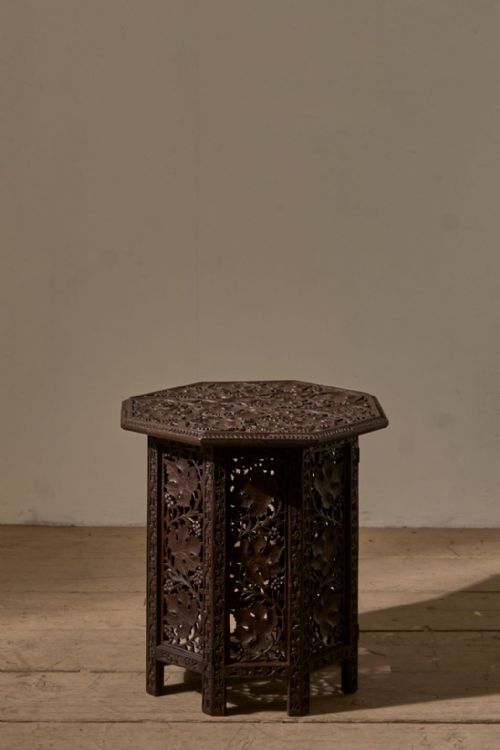
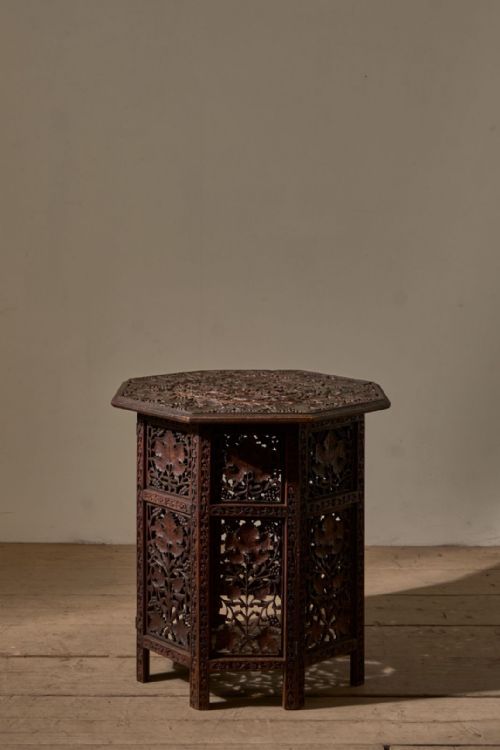
The versions most commonly met on this page include octagonal occasional tables, circular tilt-top tables, and elephant tables featuring carved animal motifs. They emerge from specific centres of production including Hoshiarpur, Burma, Ceylon, and the Bombay Presidency.
Makers utilised dense timbers native to these regions, shaping them into functional items that served as writing desks, tea tables, or display surfaces. Their distinct character stems from the meeting of British room layouts with South Asian and Southeast Asian carving expertise.
How they were made
Cabinetmakers constructed these tables using dense tropical timbers such as padauk, rosewood, teak, ebony, and hardwood. These materials provided the structural stability required for intricate, deep-relief carving without splintering.
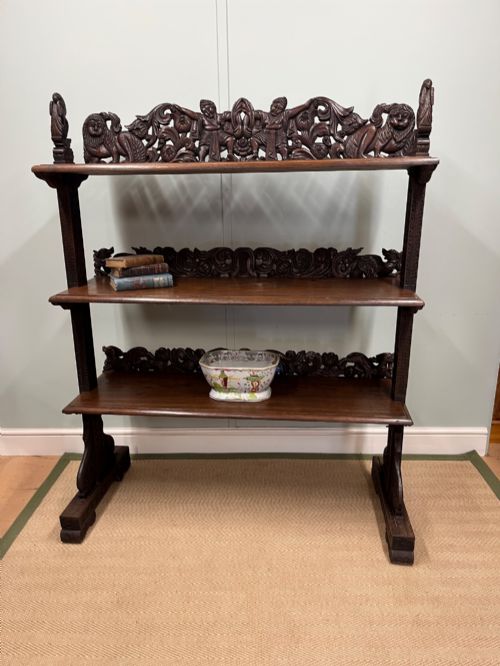
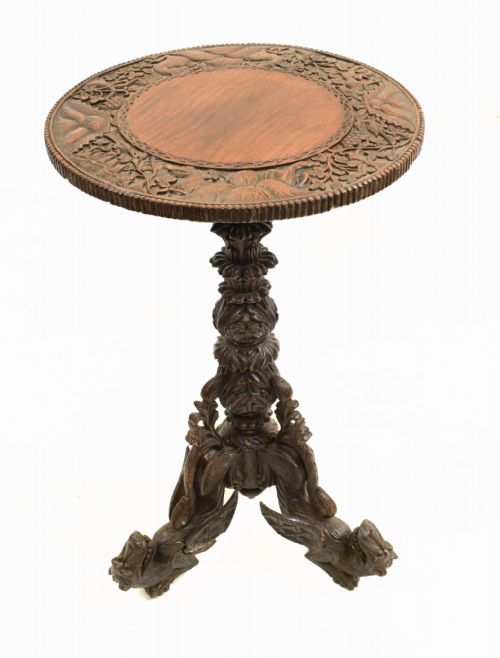
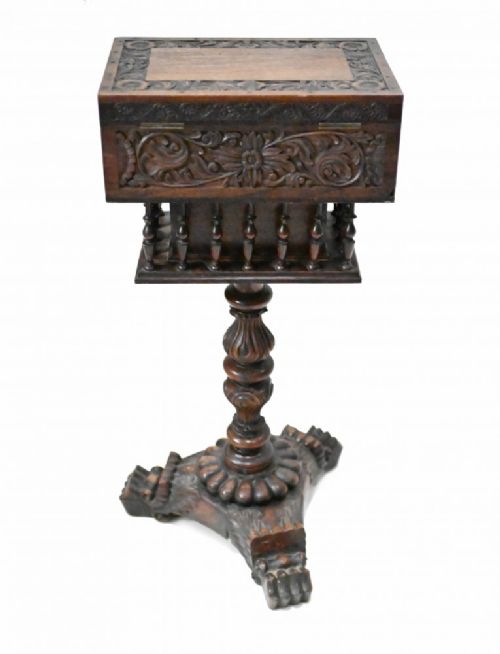
Surface decoration involved deep hand-carving displaying leaf designs, dragons, and figurative elements, occasionally augmented with contrasting inlays of brass, bone, or mother-of-pearl. Some regional pieces, particularly those from Hoshiarpur, relied on precise geometric inlay using multiple wood species and delicate screenwork patterns.
Several tables include carved wooden elephant tusks protruding from beneath the top.
What varies in quality
The depth, crispness, and continuity of the hand-carving separate standard utility items from exceptional examples. Superior pieces display undercut foliage and sharply defined motifs where the background fields are cleanly recessed.
Selection of timber significantly influences the standing of a table. Dense, figured rosewood or richly coloured padauk with consistent grain patination indicates careful material choice by the maker.
The Victorian Colonial Carved Table Glossary
- Anglo-Indian
- A term describing decorative arts and furniture produced in India during the period of British rule, often blending European forms with local craftsmanship. These pieces utilise regional timbers and traditional carving methods.
- Padauk
- A heavy, durable tropical hardwood displaying a reddish-brown hue that deepens with age. Cabinetmakers favoured it for its stability and suitability for intricate carving.
- Hoshiarpur
- A town in Punjab known for intricate woodwork and inlay. Tables from this region typically feature dense geometric patterns formed from brass, bone, or contrasting wood inset into shisham or other hardwoods.
- Tilt-top
- A table mechanism featuring a hinged top that pivots to a vertical position when not in use. This construction allowed large centre tables to be stored against walls to save floor space.
- Teapoy
- A small table designed originally for holding tea canisters and serving tea. In colonial contexts, the form evolved to describe various small occasional tables.
Victorian Colonial Carved Table: Frequently Asked Questions
Where were these tables made?
Production occurred across various regions of South and Southeast Asia, including the Bombay Presidency, Burma, Ceylon, and northern Indian towns such as Hoshiarpur.
Local craftsmen adapted traditional woodworking techniques to suit the export market and British domestic requirements.
What woods are common?
Standard materials include padauk, rosewood, teak, and ebony, all chosen for their density and rich natural colours.
Secondary materials such as brass wire, bone, and mother-of-pearl frequently appear as inlaid decorative accents.
How do I identify regional styles?
Different regions developed distinct decorative vocabularies, such as the geometric inlaid patterns of Hoshiarpur or the figurative dragon and leaf carvings on padauk tables from other districts.
Form also provides clues, with octagonal shapes and elephant supports pointing towards specific production centres in western India.
How should I care for the surface?
Maintain the timber by avoiding direct sunlight and excessive temperature fluctuations that might dry out dense tropical woods.
Dust intricate carvings gently with a soft brush and apply appropriate natural waxes sparingly to preserve the finish.