
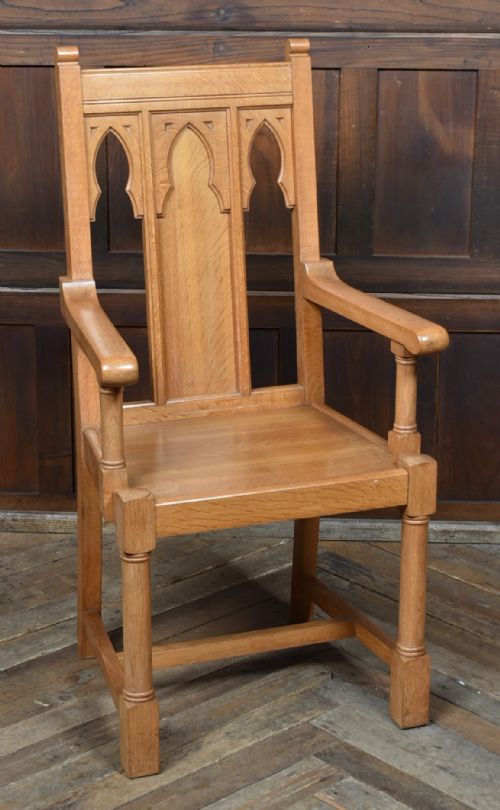


Victorian Church Chairs
Victorian church chairs are solid timber seats built for devotion, offering robust architectural forms and enduring craftsmanship.
Victorian Church Chairs
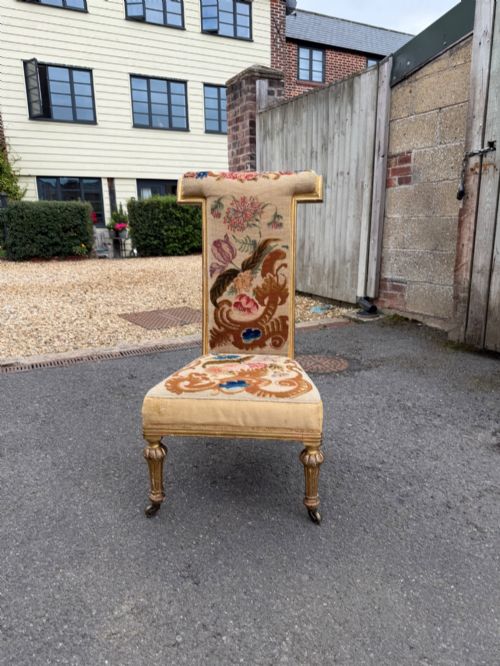
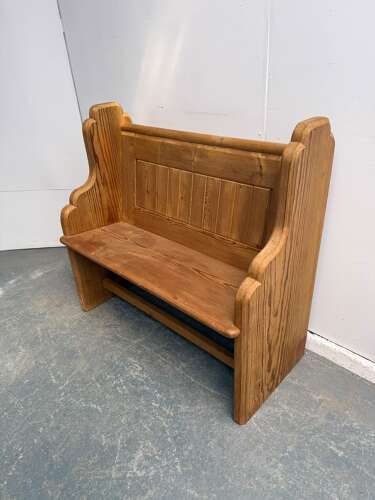
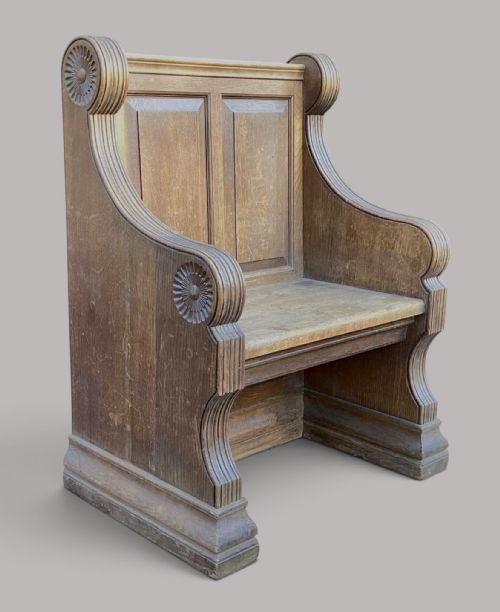
Victorian church chairs include pews, prie-dieu prayer kneelers, Glastonbury armchairs, and architectural hall seats designed for ecclesiastical and domestic settings. Buyers seeking victorian church chairs encounter robust forms built from sturdy timbers, reflecting nineteenth-century devotion and Gothic design.
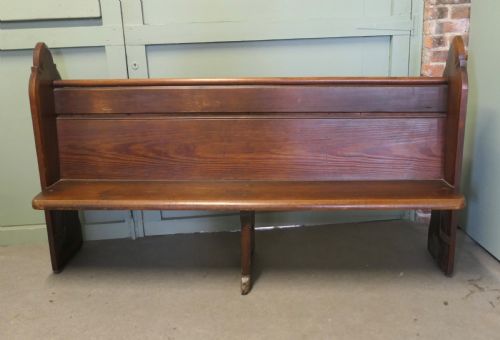
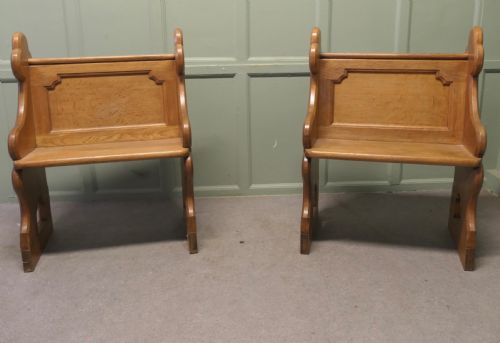
The most common examples on this page are pitch pine and oak chapel seats, often displaying Gothic Revival details, pointed arches, and sturdy pegged joints. These pieces range from simple side chairs made for congregations to imposing throne chairs and settles intended for clergy.
Origins span English workshops, Scottish chapels, and continental carvers, capturing a period when ecclesiastical furnishings combined utility with solemn architectural presence.
Materials and construction
Carpenters built these chairs primarily using solid oak and pitch pine, selecting dense timbers capable of enduring heavy daily use in chapels and cathedrals. Workshops occasionally utilised elm and ebonised wood for specific decorative prayer chairs, sometimes incorporating brass fittings.
Joinery relied on traditional mortise and tenon construction, secured with wooden pegs to withstand the strain of kneeling and sitting. Upholstered variants integrated green velvet, needlepoint, and leather held in place with metal tacks.
Pieces span the Victorian era and Regency period, encompassing Arts and Crafts and Gothic Revival styles.
Quality and proportion
Quality rests upon the selection of timber and the crispness of architectural carving, distinguishing simple utilitarian seating from pieces commissioned for specific cathedrals. Superior examples display balanced proportions, deep relief carving, and original structural integrity without excessive timber replacement.
The presence of maker marks, cathedral provenance, or engraved plaques elevates a piece beyond standard utilitarian church furniture, reflecting the deliberate hand of nineteenth-century craftsmen.
The Victorian Church Chairs Glossary
- Prie Dieu
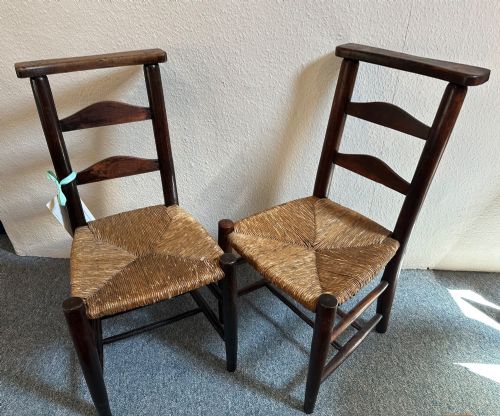
- A specialised prayer chair featuring a low seat and an upper rest for kneeling or leaning during devotions. These devotional seats often include storage compartments or padded velvet rests.
- Glastonbury Chair
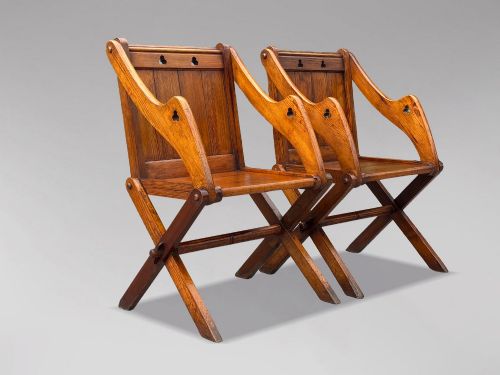
- An ecclesiastical armchair characterised by intersecting diagonal X-frame supports and flat plank arms. This medieval revival form was widely reproduced during the nineteenth century.
- Settle
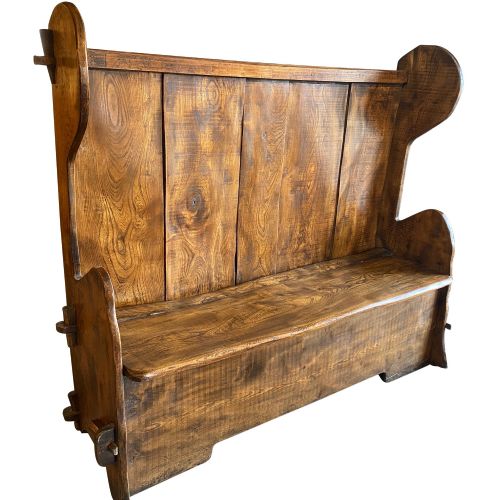
- A wooden bench featuring high backs and solid sides designed to block drafts in large church halls or vestries. Many examples incorporate hinged seats hiding storage boxes underneath.
- Gothic Revival
- An architectural and decorative style drawing inspiration from medieval pointed arches, trefoils, and vertical emphasis. This aesthetic dominated nineteenth-century ecclesiastical design.
- Pitch Pine
- A durable, resinous softwood utilised extensively for nineteenth-century church pews and hall chairs. It accepts wax polishing well and develops a rich patina over decades of use.
Victorian Church Chairs: Frequently Asked Questions
How do I care for pitch pine church chairs?
Clean the timber using a dry or slightly damp cloth to remove dust, avoiding harsh chemical sprays that strip the wax finish. Apply a natural beeswax periodically to nourish the dry wood and maintain its soft sheen.
Keep the seating away from direct heat sources and severe humidity fluctuations to prevent the timber from splitting or joints from loosening over time.
Can I use church chairs around a dining table?
Solid oak and pitch pine side chairs fit well around domestic dining tables, offering sturdy support and a narrow architectural profile. Their upright backs encourage formal seating postures.
Ensure you measure the height of the chair seat against your table apron, as some ecclesiastical chairs feature lower profiles designed for kneeling or chapel desks.
What is the difference between a pew and a church chair?
Pews are long fixed benches designed to accommodate multiple members of a congregation simultaneously. Church chairs are individual movable seats, such as side chairs, armchairs, or prayer seats.
Individual chairs offered greater flexibility in nineteenth-century chapel layouts, allowing spaces to be reconfigured for different services and gatherings.
How do I identify Gothic Revival features?
Look for pointed arch motifs, carved trefoils, quatrefoils, and vertical slat backs that mimic medieval cathedral architecture. These elements reflect the nineteenth-century revival of Gothic forms in ecclesiastical woodwork. Nosing, chamfered edges, and heavy pegged joinery further signal authentic period construction rather than modern reproduction.