


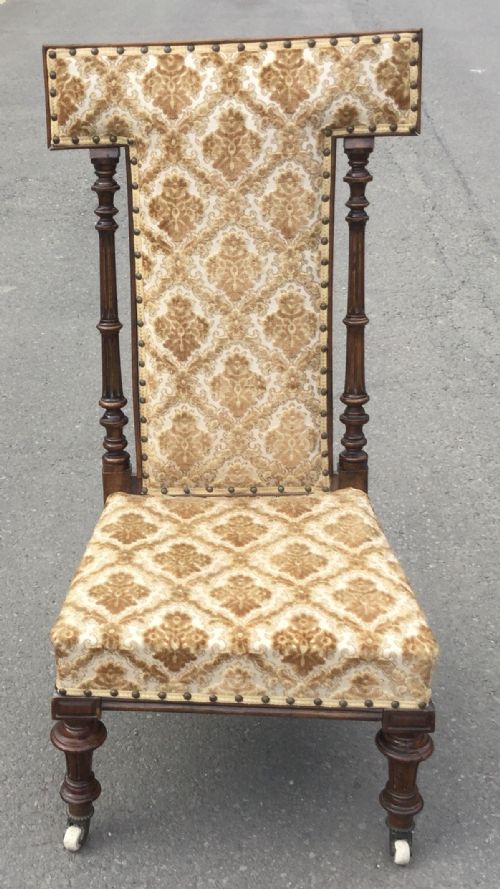

Ecclesiastical Side Chairs
These ecclesiastical side chairs bring centuries of Gothic Revival design and heavy oak construction directly into your interior.
Ecclesiastical Side Chairs
Ecclesiastical side chairs encompass pieces originally fashioned for churches, cathedrals, and private devotional spaces during the Victorian and Edwardian eras. When you search for ecclesiastical side chairs, you encounter a selection spanning the nineteenth century and the early twentieth century, with oak remaining the predominant medium.
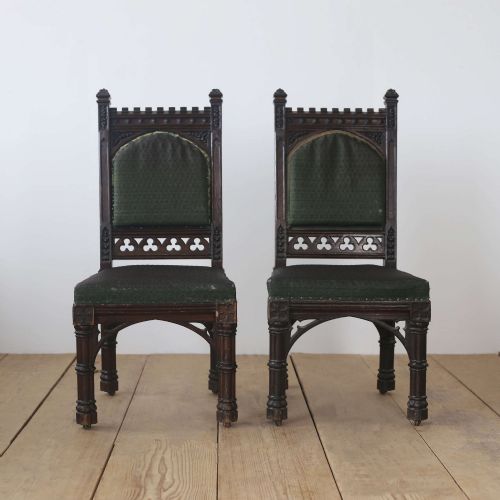
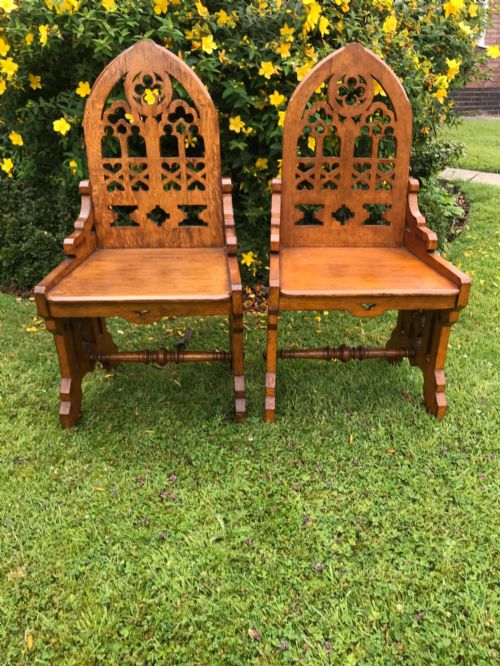
The forms on this page include side chairs, hall chairs, prayer chairs, and Glastonbury chairs that echo medieval ecclesiastical architecture. Many examples incorporate distinct Gothic Revival styling, displaying trefoil details and substantial proportions suited to sacred interiors.
Provenance plays a role in these offerings, with certain items carrying specific historical connections such as markings from St Paul's Cathedral in London. You also find pairs and individual pieces featuring engraved plaques or elbow seats that reflect their ecclesiastical origins.
Materials and Construction
Cabinet makers utilised dense English and Welsh oak alongside rosewood and walnut to build these sturdy church seats. Joinery relies on traditional methods designed to withstand heavy daily use in ecclesiastical settings.
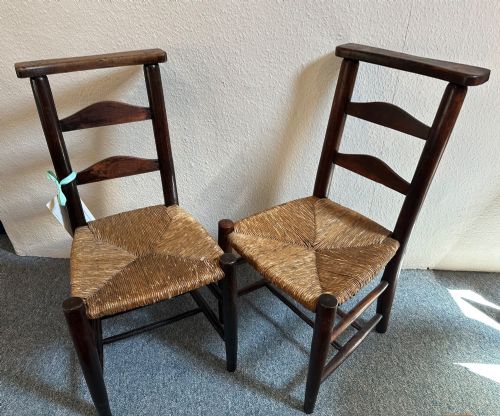
Decorative elements involve carved trefoil details, engraved brass plaques, and structural turnings characteristic of the Gothic Revival movement. Seating surfaces incorporate solid wood, woven rush, or period textiles including tapestry fabric, velvet, and upholstery fabric.
One robust set carries direct evidence of its cathedral choir duties, marked firmly with the stamp of St Paul's.
Distinctions in Quality
Documented provenance elevates an example significantly, particularly when items bear authentic cathedral markings or contemporary engraved plaques. The presence of original textiles and specialised forms like prayer chairs or Glastonbury designs further distinguishes the higher tier of pieces.
The Ecclesiastical Side Chairs Glossary
- Gothic Revival
- An architectural and decorative style drawing inspiration from medieval forms, featuring pointed arches and trefoil motifs. This aesthetic dominates the nineteenth-century church seating found in these listings.
- Glastonbury Chair
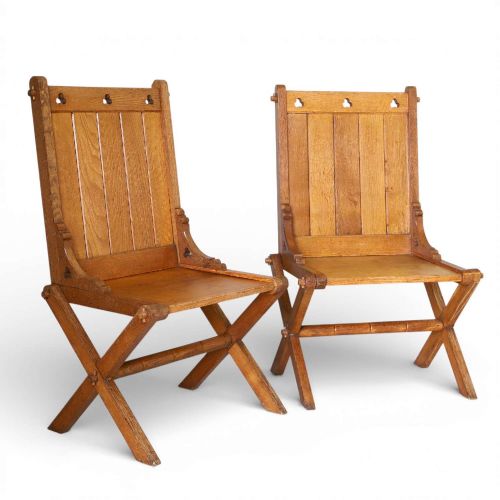
- A specific type of wooden chair with an X-frame base, sloped arms, and a panel back, often associated with ecclesiastical contexts. Examples in Welsh oak reflect this traditional regional construction.
- Prie Dieu Chair
- A low-backed devotional chair designed for kneeling and prayer, sometimes featuring an upper ledge for a prayer book. These chairs frequently utilise rosewood or walnut frames.
- Trefoil
- A graphic ornamentation composed of three overlapping rings or leaf-shaped lobes. This detail appears frequently in the woodwork of Gothic Revival church furniture.
- Hall Chair
- A rigid wooden seat traditionally placed in entrance halls, often sharing the robust construction and ecclesiastical styling of church furniture.
Ecclesiastical Side Chairs: Frequently Asked Questions
Where were these chairs originally used?
These pieces were built for sacred spaces including cathedrals, chapels, and parish churches across Britain. Specific examples served dedicated functions such as clergy seating or private devotional prayer.
Over time, many of these sturdy items transitioned from ecclesiastical interiors into domestic settings, where their architectural presence suited Victorian and Edwardian reception rooms.
What is a Glastonbury chair?
A Glastonbury chair is a traditional form of ecclesiastical armchair featuring an X-frame understructure and a sloping panelled back. The design references medieval prototypes preserved in cathedral history.
Cabinet makers revived this pattern during the nineteenth century using solid oak, producing substantial elbow seats intended for both church and domestic use.
How do I identify a prayer chair?
Prayer chairs, or Prie Dieu chairs, typically feature a lower back and a compact footprint designed to accommodate kneeling or devotional reading. They often incorporate rich timbers such as rosewood or walnut.
Many of these chairs retain period upholstery fabric, tapestry, or velvet panels that align with their nineteenth-century ecclesiastical purpose.
How do I date these church chairs?
Dating relies on stylistic markers within the Gothic Revival movement, timber selection, and any physical documentation present on the piece. Most examples date from the Victorian and Edwardian periods, spanning the nineteenth and early twentieth centuries.
Factory marks, engraved brass plaques, or cathedral stamps sometimes provide a precise year of manufacture or a documented historical context.