
Carved Gothic Chairs
Carved gothic chairs bring architectural form and heavy timber ornament into domestic rooms, offering heavy character built from 19th-century revivals.
Carved Gothic Chairs
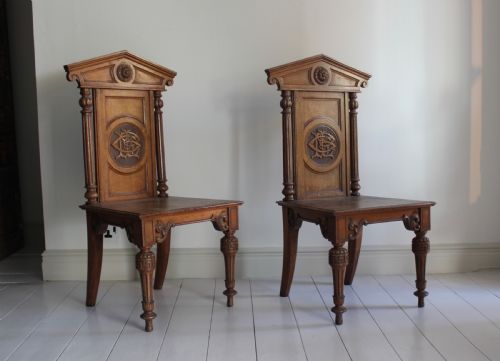
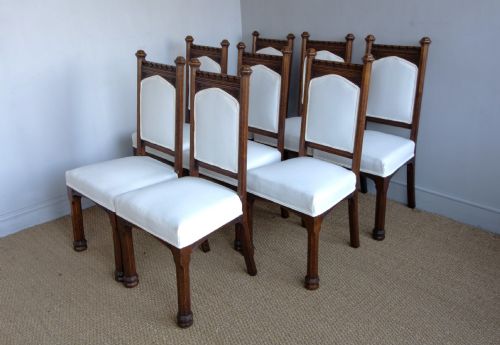
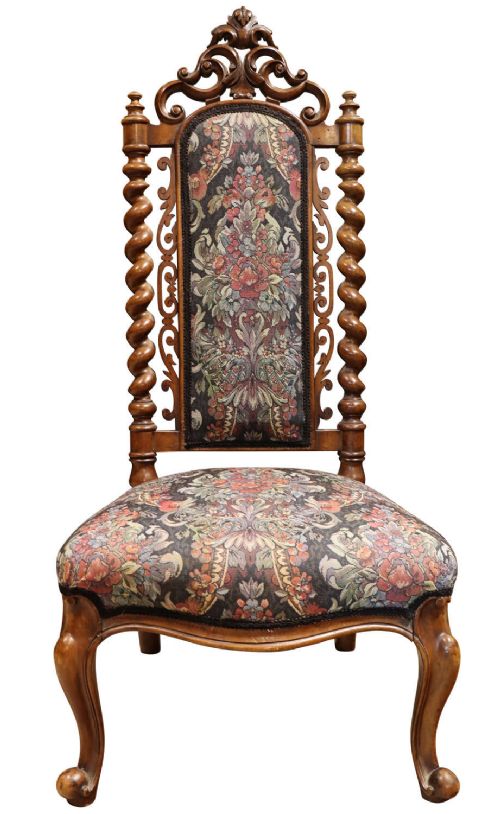
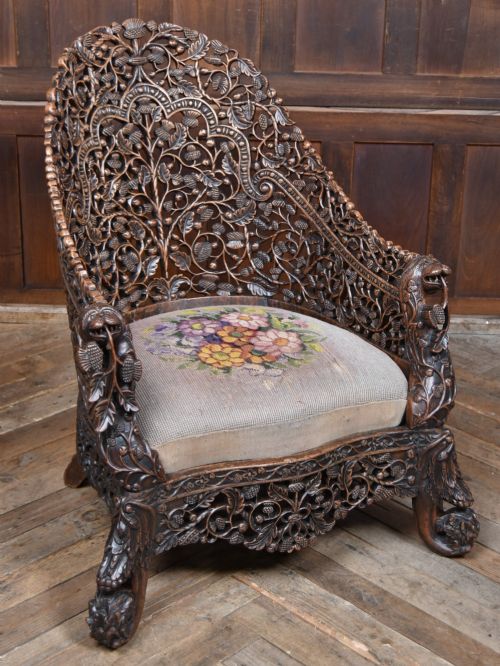
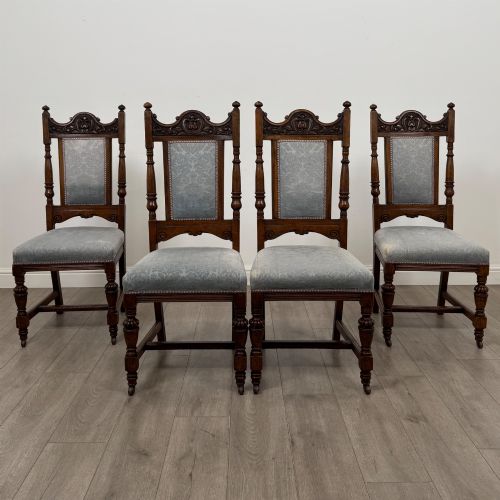
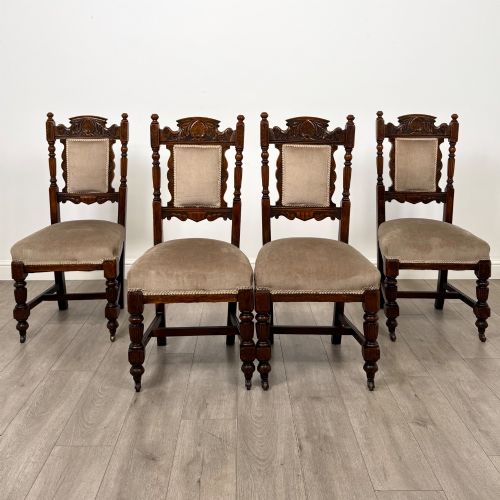
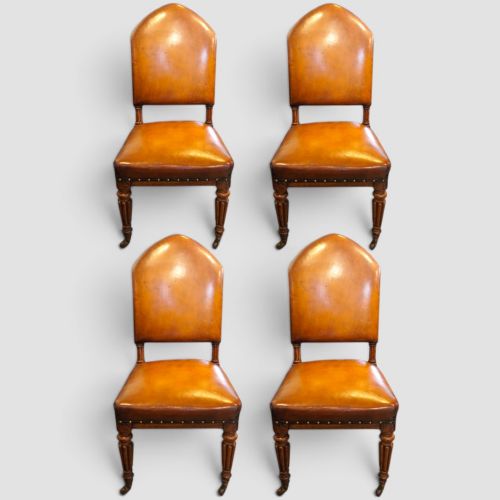
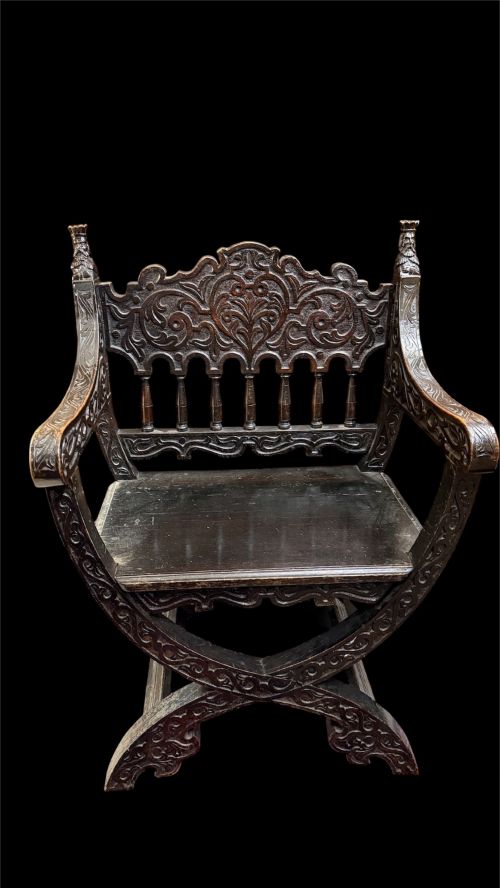
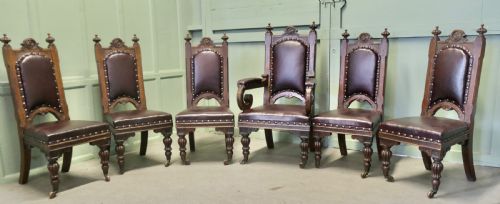
Carved gothic chairs encompass heavy wooden seating shaped by nineteenth-century revivals, drawing on medieval ecclesiastical and architectural forms. When exploring carved gothic chairs on this page, buyers frequently encounter sturdy oak dining seats, high-backed hall chairs, and sturdy armchairs designed during the Victorian period.
The selection spans simpler hall and side chairs with heraldic shield backs alongside substantial throne chairs, metamorphic library steps, and revolving desk chairs. Oak predominates, though walnut, rosewood, and pine appear across variations from the eighteenth century to the early twentieth century.
Materials and Construction
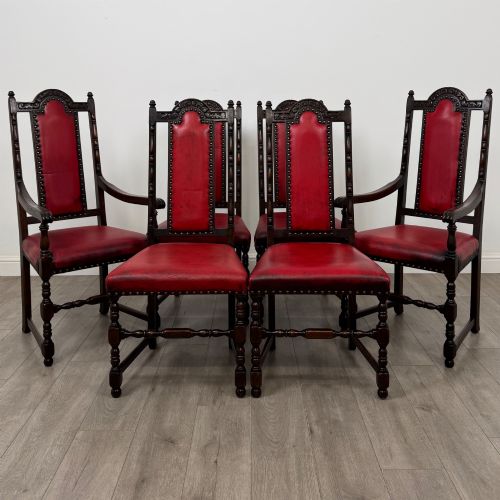
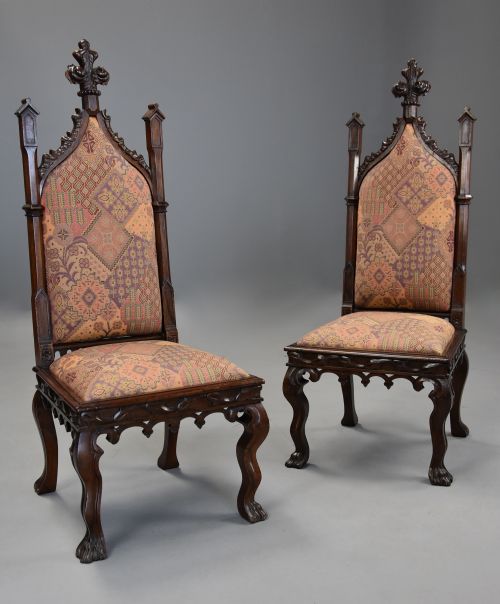
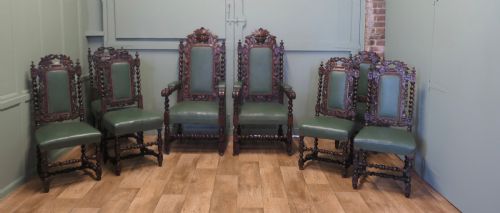
Makers relied primarily on solid English and continental oak, turning to walnut and rosewood for finer decorative forms. Construction involved robust joinery, pegning, and turned elements like barley twist supports, coupled with architectural details such as trefoils and pointed arch motifs.
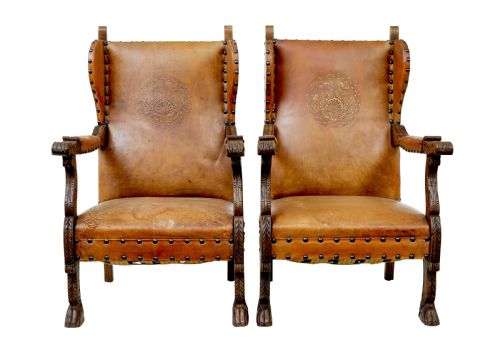
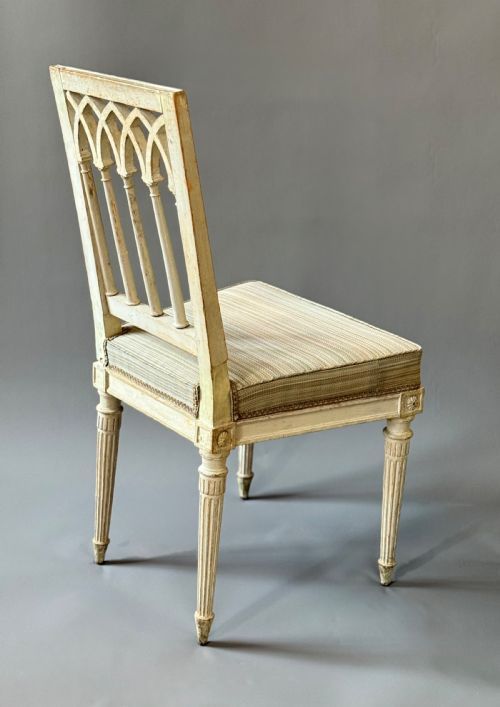
Upholstered versions integrated materials like embossed leather, tapestry, and textiles, often secured with decorative brass tacks. Painted finishes and grey-painted treatments also surface on specific regional or eighteenth-century Gothick taste pieces.
Listings feature oak, walnut, rosewood, and pitch pine across Victorian, Edwardian, and eighteenth-century periods.
Assessing Quality and Character
Quality rests in the depth and crispness of the timber carving, distinguishing masterwork architectural tracery from shallow, mass-produced embellishment. The integrity of the structural timber frame and the weight of the original wood dictate the longevity and presence of each piece.
Originality of upholstery materials, maker labels, and inscribed details elevate individual examples above standard Victorian revival output. Proportion and the harmony of revival styles, whether Jacobean, French Renaissance, or Arts and Crafts Pugin designs, separate ordinary workshop iterations from superior craftsmanship.
W A Willcocks·Norwich Maker
The Carved Gothic Chairs Glossary
- Gothic Revival
- An architectural and decorative movement drawing inspiration from medieval forms, pointed arches, and heavy structural ornamentation. It dominated much of the nineteenth century.
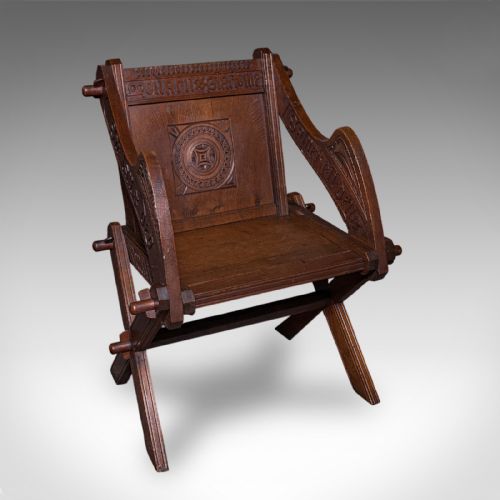
- Glastonbury Chair
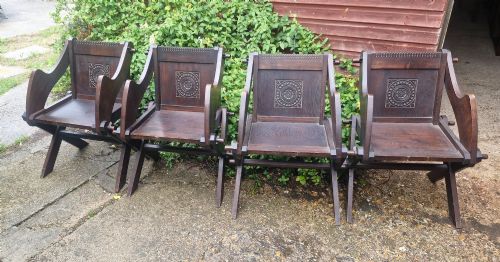
- A distinct type of wooden armchair featuring an X-frame construction and sloping arms, often associated with early twentieth-century and Victorian revivals.
- Trefoil
- A graphic ornament composed of three rounded lobes arranged in a cloverleaf shape, frequently carved into chair backs and panels.
- Wainscot Chair
- A heavy wooden armchair constructed with panelled backboards, typical of earlier domestic traditions emulated in later revival seating.
- Barley Twist
- A type of column or leg turned in a spiral helix shape, popular in seventeenth-century furniture and heavily utilised during Victorian revivals.
Carved Gothic Chairs: Frequently Asked Questions
How do I identify a true Gothic revival chair?
Authentic nineteenth-century pieces display genuine period timber patination, hand-carved architectural details like trefoils, and traditional joined construction rather than modern metal fixings.
Examining the underside and joints reveals hand-tool marks and period fixings consistent with Victorian workshops.
Were these chairs used for dining or display?
Many examples on this page served functional roles as dining chairs, desk seats, or library chairs, while heavier throne and hall chairs stood in reception spaces.
Sturdy timber frames and leather seats ensured they handled daily household use alongside their decorative architectural presence.
What is a Glastonbury chair?
A Glastonbury chair is a specific folding armchair design with an X-frame base and an angled panel back, reproduced widely during the Victorian era in oak and pine.
They take their name from an ancient monastic seat and offer a distinctive flat-pack assembly structure.
How do I care for antique oak Gothic chairs?
Maintain the timber by applying traditional beeswax sparingly to nourish the dry oak surface and protect the carved details from splitting.
Keep wooden seating away from direct heat sources and sunlight to preserve original leather upholstery and polished finishes.