
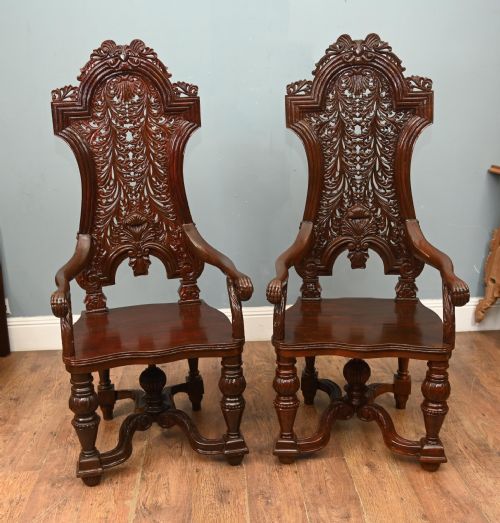


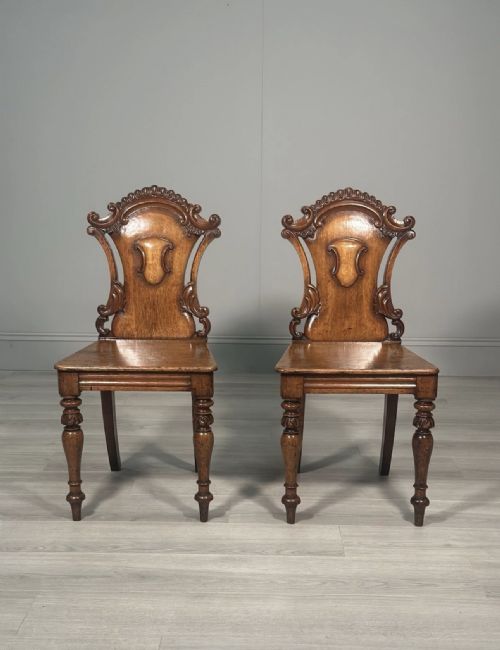
Pair Gothic Oak Chairs
When you search for pair gothic oak chairs, you step into the substantial world of nineteenth-century revival seating built to anchor a room.
Pair Gothic Oak Chairs
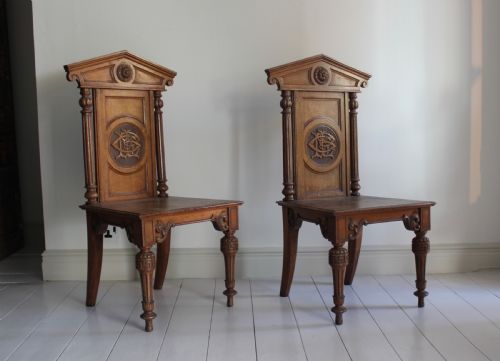
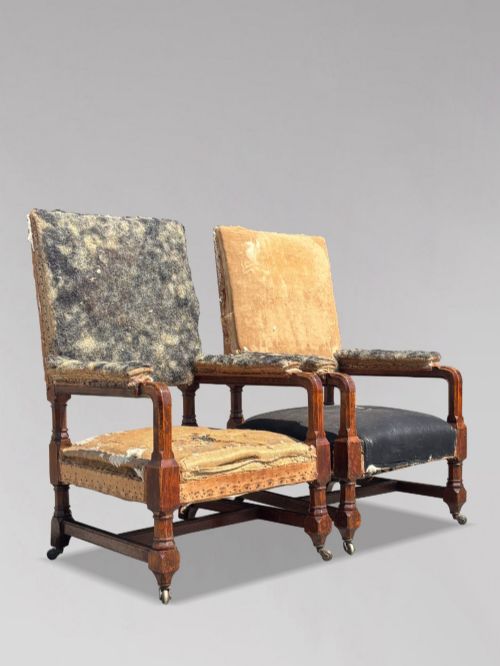
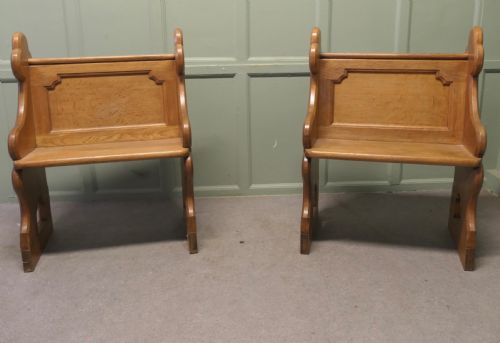
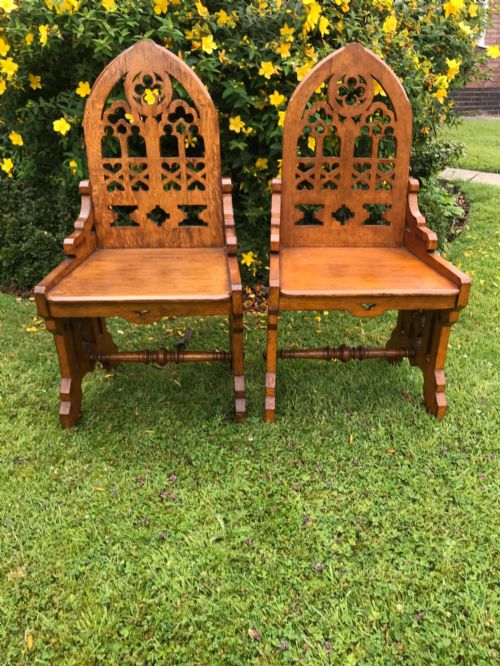
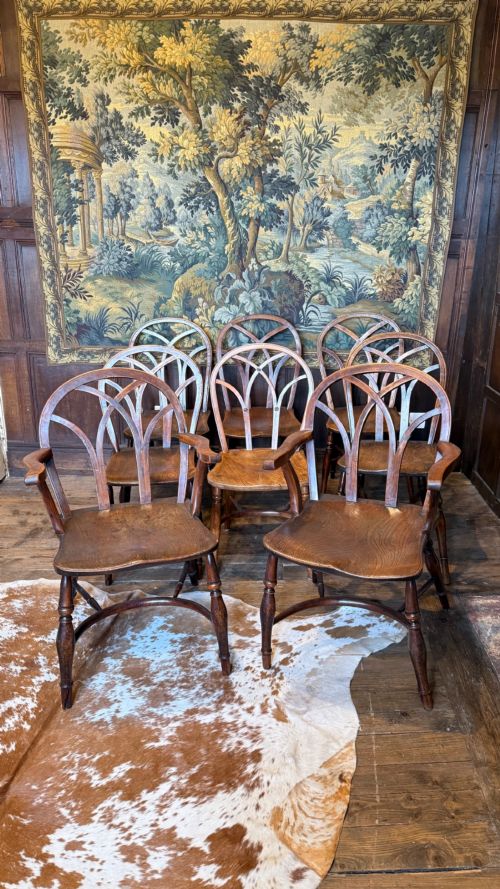
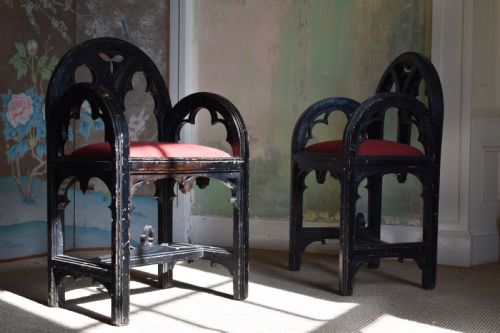
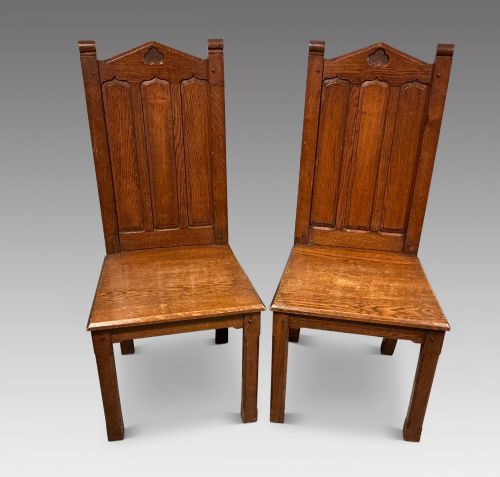
Pair gothic oak chairs encompass hall chairs, armchairs, and throne forms produced primarily across the Victorian era and the later nineteenth century. These seats frequently incorporate architectural motifs inspired by medieval ecclesiastical design, ranging from pointed arches to trefoil cut-outs.
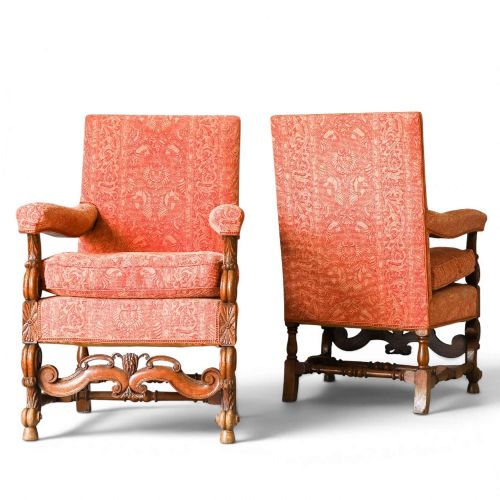
The selections available include simpler side chairs alongside heavy carved armchairs and gossip seats. Makers drew on Gothic Revival, Arts and Crafts, and Jacobean Revival styles to satisfy domestic and institutional tastes.
Materials and Construction
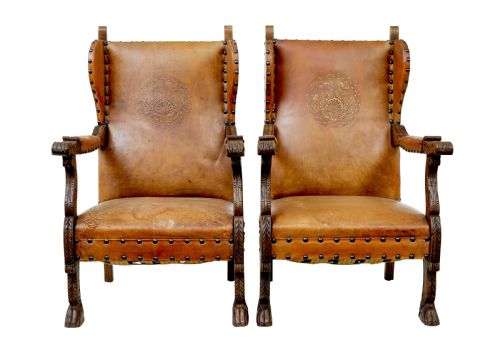
Solid timber forms the primary structure, utilising oak supplemented by brass accents, leather upholstery, velvet, and ceramic inserts such as Minton tiles. Workshops employed traditional joinery alongside heavy carving, deep buttoning, and embossed finishes.
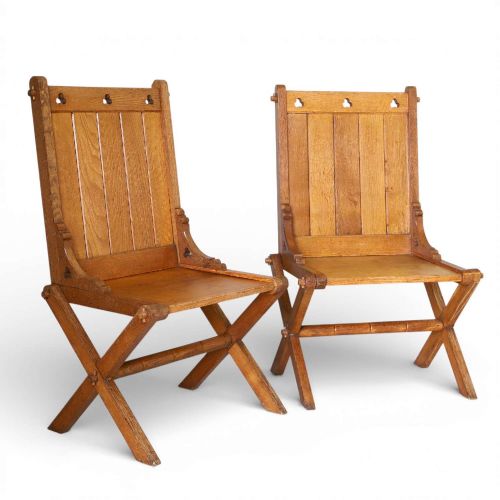
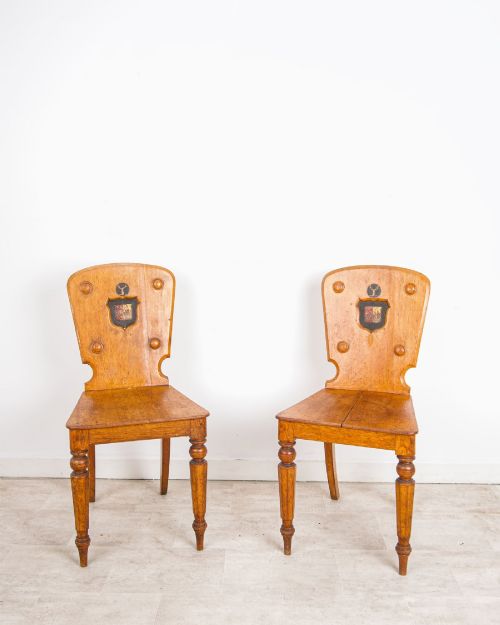
Surfaces range from deeply polished timber to bleached oak and ebonised finishes. Supporting details include turned legs, heraldic shield backs, and structural X-frames.
Listings feature oak combined with unexpected secondary materials including Minton ceramic tiles, brass hardware, and embossed leather.
Design and Execution
Quality rests upon the depth of the carving and the architectural ambition of the frame. Heavy throne chairs with detailed tracery, green man masks, or stamped maker attributions sit at the upper end of the scale.
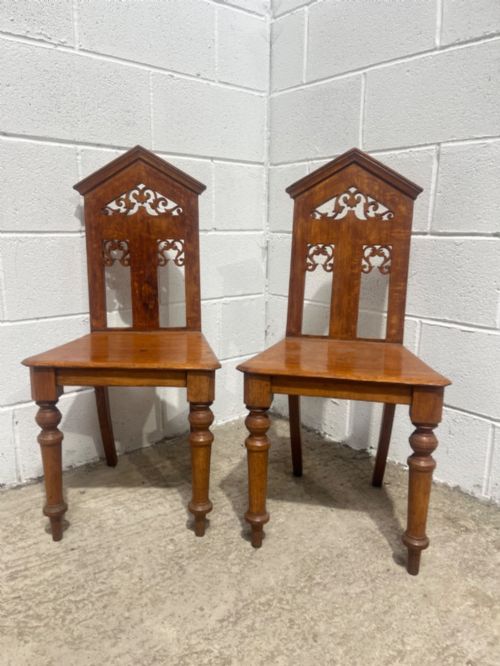
Simpler hall chairs rely on the crispness of heraldic shields and geometric piercing. Uniformity within the pair and the integrity of the original timber define the standard across both domestic and church seating.
Gillows of Lancaster·J W Cook and Sons
The Pair Gothic Oak Chairs Glossary
- Gothic Revival
- An architectural and decorative movement drawing inspiration from medieval buildings. It dominated nineteenth-century design through pointed arches and ecclesiastical motifs.
- Glastonbury Chair
- A folding ecclesiastical armchair design with X-frame supports and a sloped back. Examples often feature inscribed texts or trefoil details.
- Trefoil
- A three-lobed decorative ornament resembling clover leaves. It appears frequently pierced through the wooden backs of hall chairs.
- Curule Chair
- An ancient X-frame seat type revived during the nineteenth century. Also known as a Dante chair, it uses intersecting curved legs.
- Heraldic Shield
- A carved or painted emblem resembling a coat of arms. These appear centred on the top rails of Victorian hall chairs.
Pair Gothic Oak Chairs: Frequently Asked Questions
Where were pair gothic oak chairs used?
These pieces served multiple functions in nineteenth-century buildings, appearing in entrance halls, libraries, dining rooms, and churches. Grander throne versions often stood in reception spaces to project authority and historical pedigree.
More modest side chairs and hall chairs lined corridors for waiting visitors. Their robust timber construction ensured they withstood heavy daily use in both domestic and institutional settings.
How do I identify a Gothic Revival chair?
Look for architectural details borrowed from medieval stone buildings translated into woodwork. Pointed lancet arches, quatrefoils, trefoils, and crocketed spires frequently ornament the crest rails and back panels.
Makers also utilised heavy chamfered framing, linenfold panelling, and heraldic motifs. The overarching aesthetic imitates ecclesiastical and medieval interior design rather than classical classical proportions.
Are these chairs comfortable for daily use?
Many hall and side chairs feature upright wooden seats designed for posture rather than lounging. Their primary purpose was architectural presence and brief seating in hallways.
Armchairs and upholstered variants with leather, velvet, or buttoning offer a softer sit. Cushioning and seat heights vary depending on whether the design originated for a domestic desk or a church choir stall.
How do I care for antique oak furniture?
Maintain the timber by keeping pieces away from direct heat sources and sudden humidity shifts. Regular dusting with a dry, soft cloth preserves the finish without building up residue.
Wax polish applied sparingly helps nourish older oak surfaces. Avoid commercial liquid cleaners that might strip historic patination or damage original leather and fabric upholstery.