





Gothic Arch Wooden Chair
These gothic arch wooden chair selections unite pointed arches with sturdy timbers, offering seating grounded in historic architectural revival styles.
Gothic Arch Wooden Chair
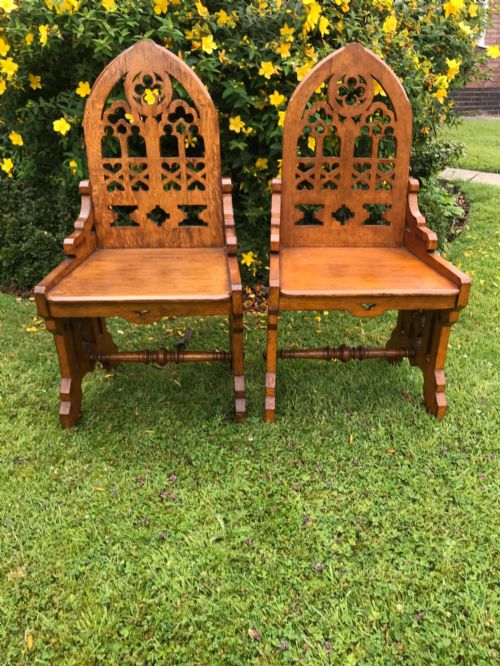
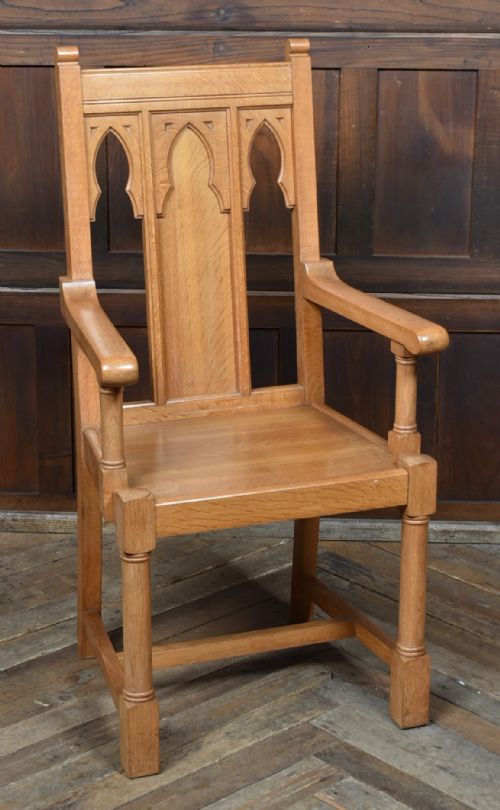
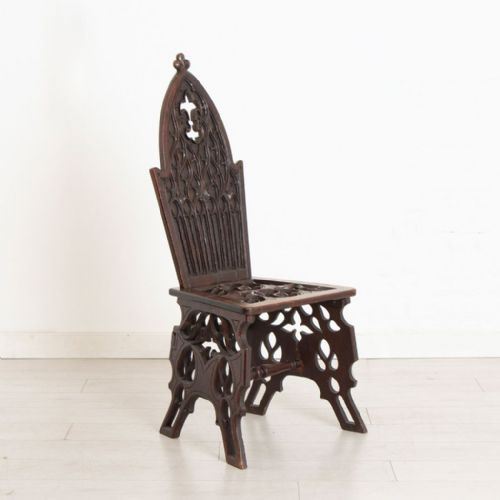
A gothic arch wooden chair draws directly from architectural motifs, featuring the pointed lancet or traceried arches characteristic of ecclesiastical and medieval design. When searching for a gothic arch wooden chair, buyers encounter forms ranging from simple hall seating to substantial chapel thrones.
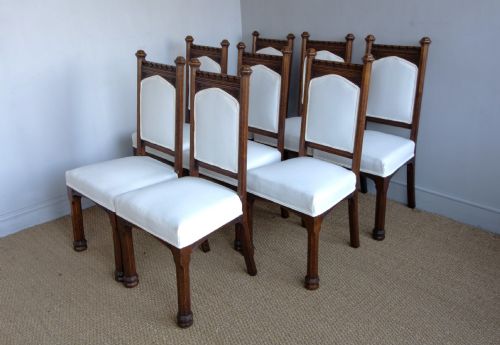
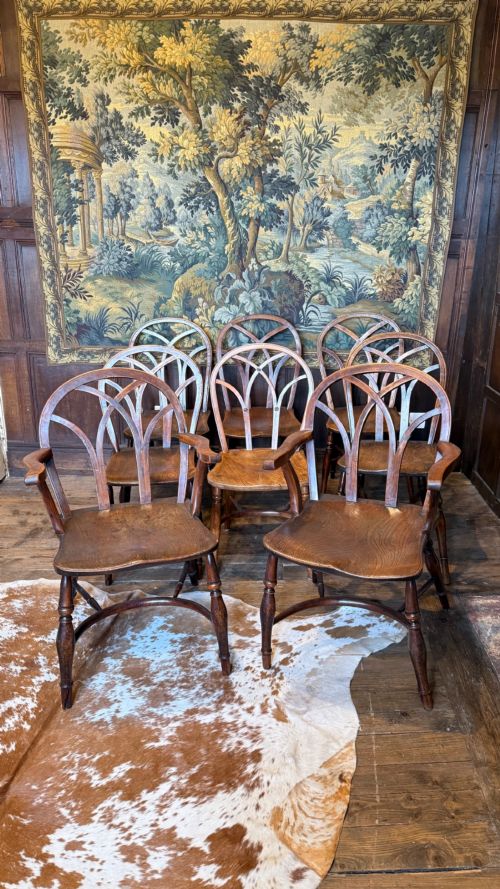
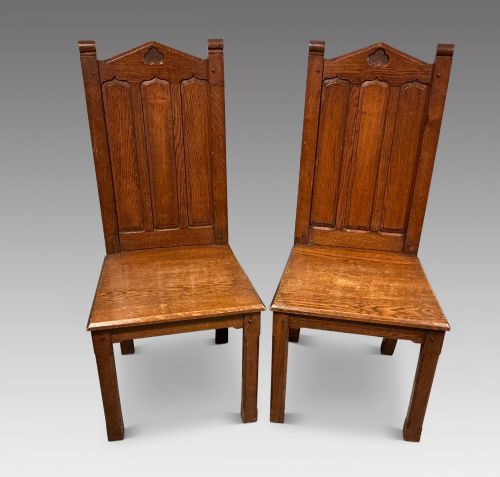
The inventory on this page spans several eras, dominated by Victorian examples alongside Georgian interpretations and Edwardian church seating. Formats vary from pairs of hall chairs to sets of dining chairs and individual armchairs.
Makers utilised resilient regional hardwoods such as oak, mahogany, pitch pine, yew and elm to construct these seats. Many items retain original upholstery in fabric or leather, sometimes complemented by brass details.
Materials and construction methods
Cabinetmakers constructed a gothic arch wooden chair using dense timbers like oak, mahogany and pitch pine to support the complex cutout tracery in the backrests. These woods were selected for their structural strength and ability to hold crisp, architectural lines.
Joinery methods involved traditional pegged and mortise-and-tenon joints to ensure the tall backrests and arched splats remained rigid under daily use. Seats were frequently carved from solid timber or upholstered in durable leather and fabric.
Some nineteenth-century church chairs retain faint traces of old Sunday service seating numbers painted neatly onto the top rails.
Assessing quality in construction and design
Quality in a gothic arch wooden chair rests on the depth of the carving and the precision of the architectural tracery within the backrest. Finer examples display carefully profiled mouldings and well-proportioned pointed arches rather than simple surface decoration.
The choice of primary timber significantly affects the character of the piece, with dense grain and mature patination elevating the visual presence of the chair. Integrity of the underlying frame and soundness of the original joinery distinguish superior workshop production.
The Gothic Arch Wooden Chair Glossary
- Gothic Revival
- An architectural and decorative style that revived medieval forms from the mid-eighteenth century onwards. It heavily influenced furniture design through pointed arches and ecclesiastical motifs.
- Tracery
- Openwork stonework or woodwork forming a pattern in the upper part of a Gothic window or screen. This motif translates directly into the pierced wooden splats of chair backs.
- Hall Chair
- A rigid, upright wooden seat traditionally placed in a grand entrance hall or corridor. These pieces usually feature solid wood seats and prominent decorative backs displaying heraldry or architectural forms.
Gothic Arch Wooden Chair: Frequently Asked Questions
How were gothic arch wooden chairs used?
These chairs served multiple domestic and institutional functions, from formal seating in grand hallways to devotional furniture in churches and chapels. Dining sets provided seating for formal meals within interiors influenced by medieval revival.
Heavier throne chairs and armchairs were often positioned as focal points in reception rooms or ecclesiastical settings, reflecting the architectural dignity of the buildings they inhabited.
What woods were used for these chairs?
Cabinetmakers relied on durable British and continental hardwoods capable of supporting intricate pierced carvings. Oak and mahogany appear frequently across the periods represented on this page.
Pitch pine and elm were also employed, particularly in regional church seating and rustic domestic chairs, providing distinct grain patterns and robust structural support.
How do I date a gothic arch chair?
Dating relies on examining the timber selection, construction techniques and specific revival movement characteristics present in the design. Georgian examples often display lighter mahogany frames and delicate Gothick fretwork.
Victorian and Edwardian iterations tend toward heavier oak or pitch pine construction with deeper mouldings, factory-assisted joinery, and specific ecclesiastical detailing linked to church furnishings.
How do I fit these into a modern interior?
The strong architectural lines of a gothic arch wooden chair allow it to function as a striking standalone statement piece against neutral modern walls. Placing a single hall chair in an entryway introduces historic texture without crowding the space.
Dining sets integrate well around simple wooden tables, where the vertical pointed arches of the chair backs provide a sharp contrast to plain tabletops.