
Panelled Back Oak Chairs
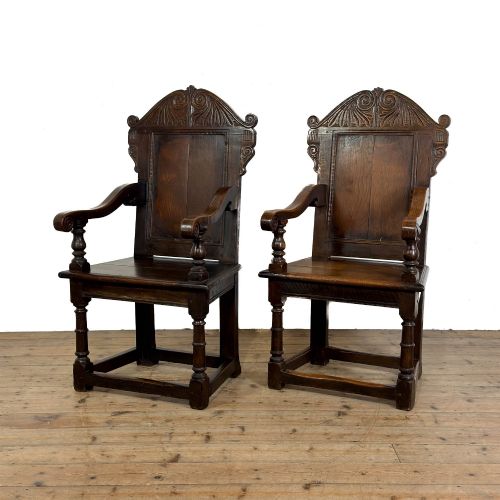
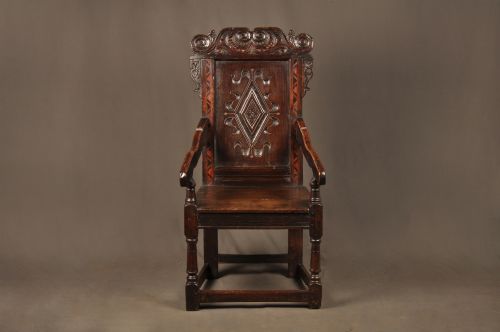
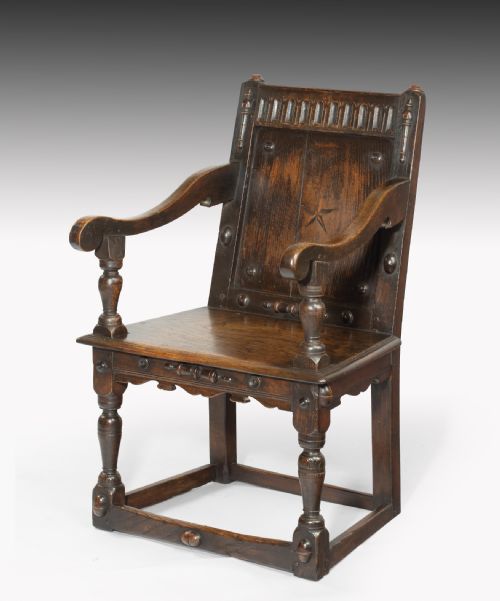
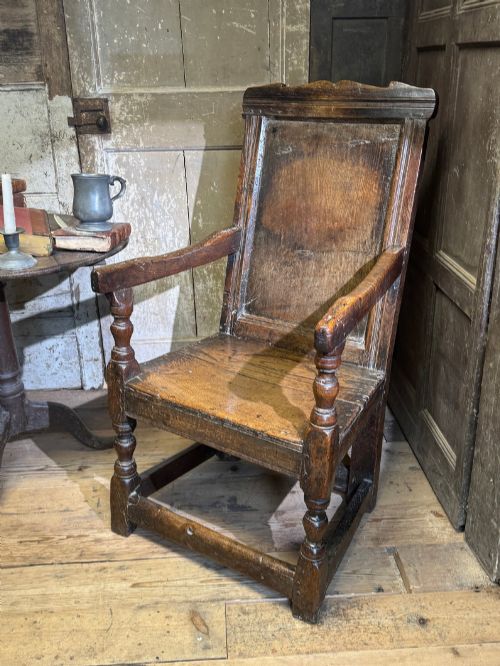
These panelled back oak chairs bring heavy timber framing and solid centuries of service directly to any room.
Panelled Back Oak Chairs
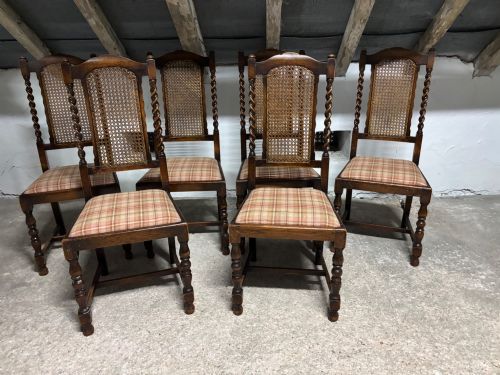
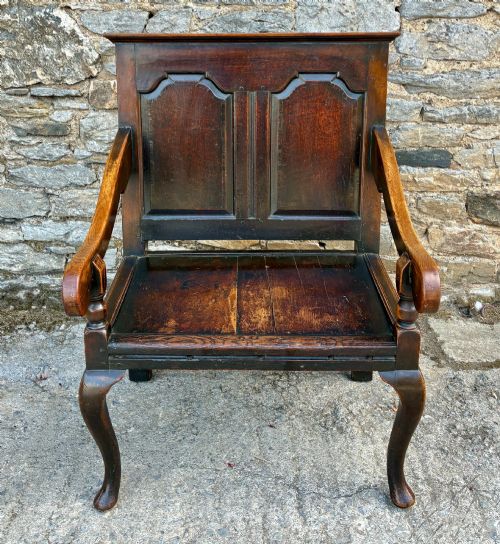
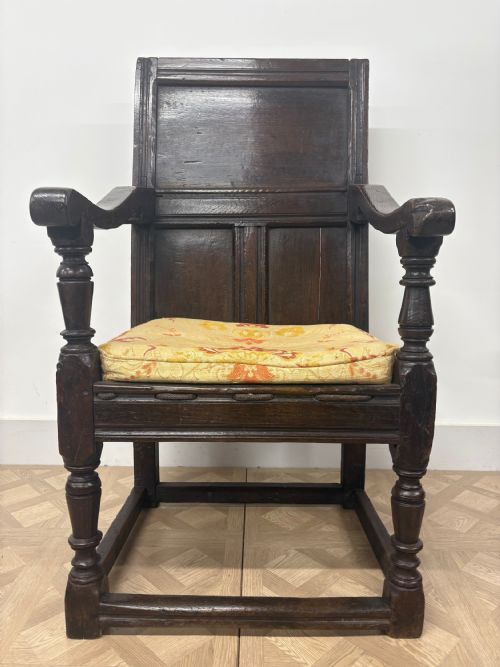
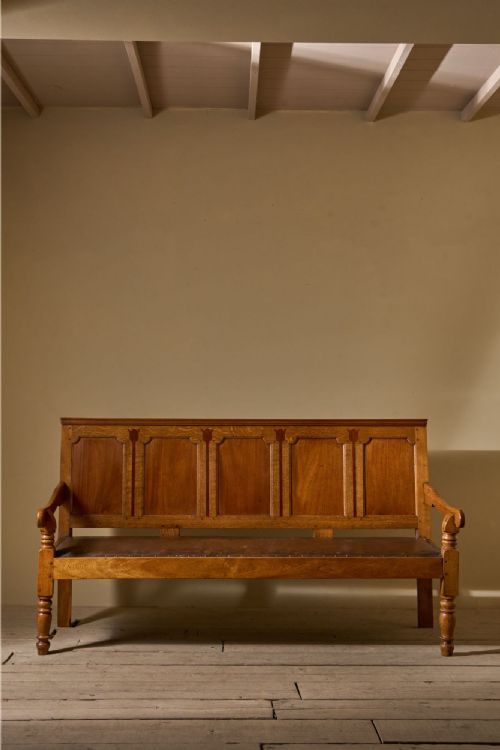
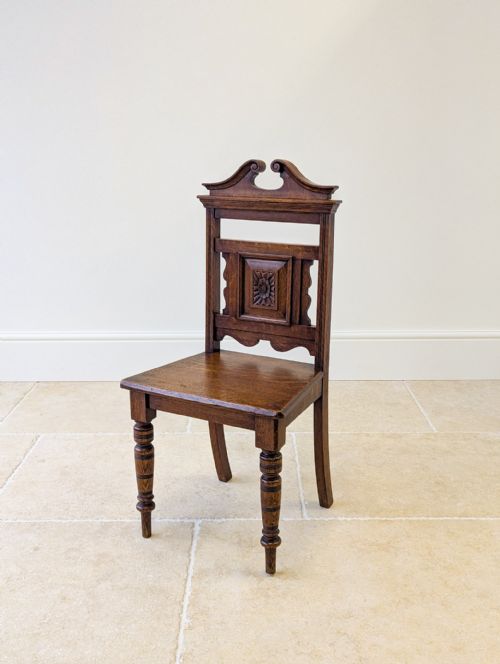
Panelled back oak chairs encompass robust seating forms rooted in domestic history, spanning sturdy wainscot armchairs, side chairs, and long hall benches. The selections here draw heavily from seventeenth-century originals alongside eighteenth-century vernacular adaptations and later nineteenth-century revivals.
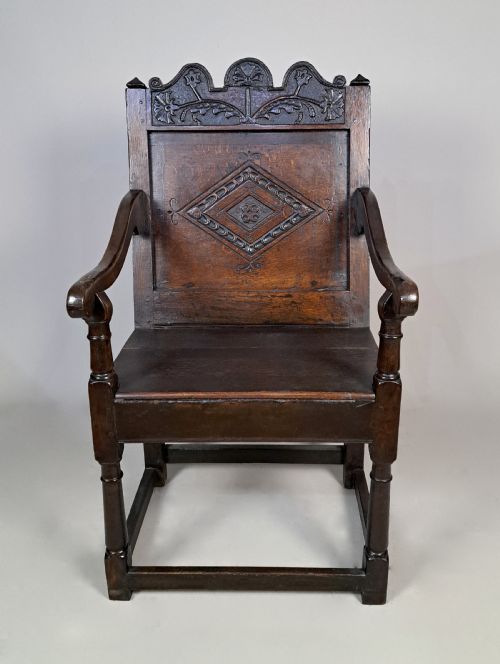
Buyers frequently encounter substantial wainscot armchairs bearing carved wooden backs, complemented by dining sets, hall chairs, and lambing chairs fitted with wing backs or storage compartments. Origins stretch across English regions including Yorkshire and Wales, bringing varied regional carpentry traditions into a single search.
Periods represented stretch from Elizabethan and Jacobean eras through Georgian developments into Victorian and early twentieth-century revivals. Solid construction defines the group, utilising heavy timber throughout frames designed to anchor a room.
Materials and Construction
Carpenters built these pieces using solid oak, often augmented with cane panels, leather, fabric, or textiles for seating surfaces and upholstery details. Metal and brass elements occasionally appear in hinges, fixings, or decorative accents.
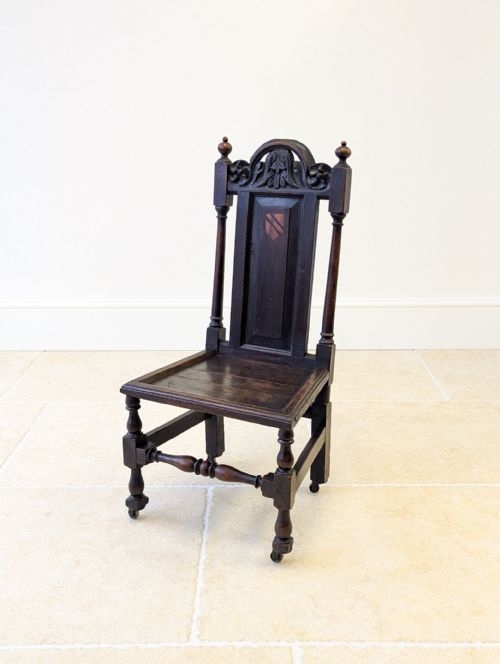
Joinery relied on traditional framing techniques where panelled backs fit securely into grooved uprights and stils, held together with pegged mortise and tenon joints. Surface decoration emerged through carving directly into the timber, sometimes featuring tulip motifs or geometric patterns.
Regional styles include Welsh, Yorkshire, and continental influences applied to armchairs, hall chairs, settles, and benches.
Judging Quality
Distinctions in quality rest upon the integrity of the original timber and the depth of execution in carved details across the panelled back. Pieces retaining their primary structural fabric without extensive timber replacement stand apart from later interpretations.
Proportion and regional character dictate visual success, where honest country construction meets balanced joinery. Surface tone and the natural ageing of the wood contribute significantly to the presence of an individual chair.
The Panelled Back Oak Chairs Glossary
- Wainscot chair
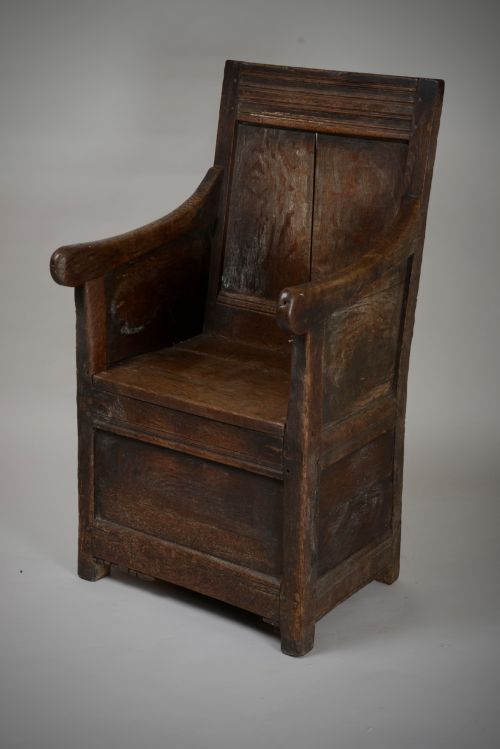
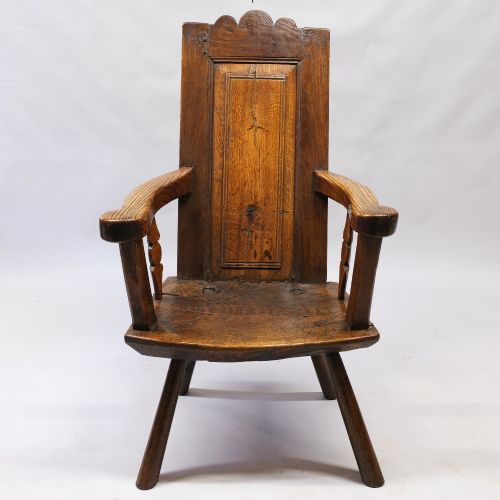
- A heavy wooden armchair featuring a panelled back, solid wooden seat, and sturdy armrests typical of seventeenth-century domestic interiors. This form represents the earliest heavy seating in ordinary households.
- Lambing chair
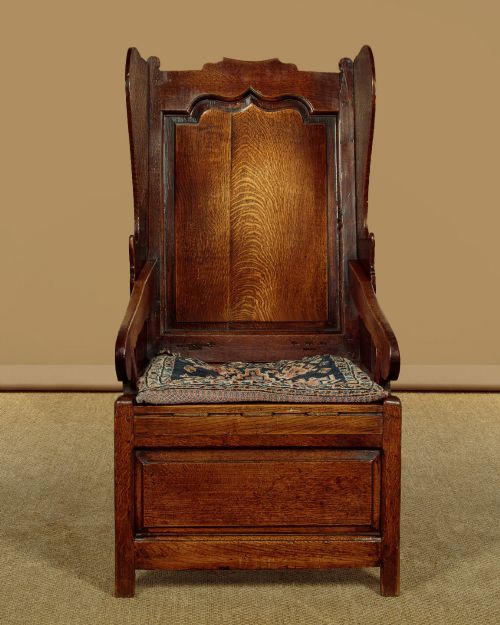
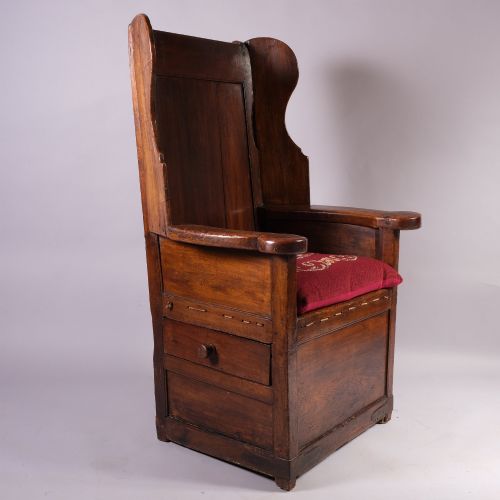
- A traditional high-backed armchair featuring solid wooden wings designed to shield the occupant from drafts. These seats often incorporate enclosed storage bases beneath the seat.
- Caquetoire
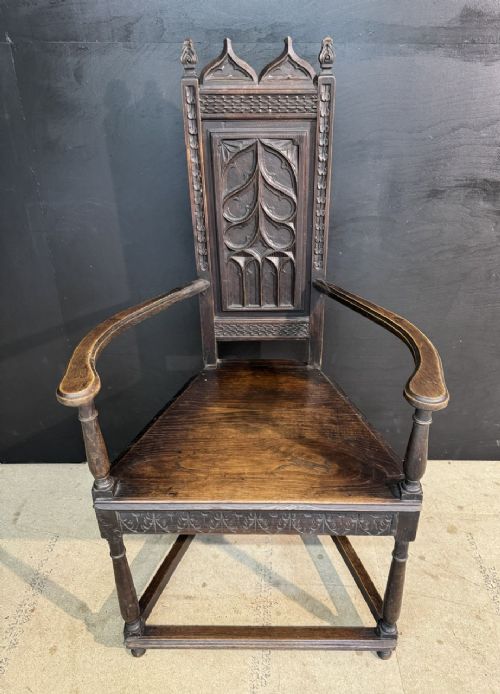
- A lightweight conversational armchair featuring a high narrow panelled back and a trapezoidal seat designed to accommodate sixteenth and seventeenth-century fashions. Originating in France, these pieces encourage social gathering.
- Settle
- A wooden bench featuring a high panelled back designed to block cold drafts, frequently including storage compartments beneath the hinged seat. These communal seats stood near hearths in country houses.
- Stil
- The vertical upright post forming the main structural leg and side support of a panelled chair back. These members bear the primary load of the seating framework.
Panelled Back Oak Chairs: Frequently Asked Questions
What is a wainscot chair?
A wainscot chair is a heavy wooden armchair distinguished by a flat panelled back and solid timber construction. These pieces date primarily to the seventeenth century and served as principal seats of authority.
They utilise frame and panel carpentry rather than upholstered padding, relying on carved decoration across the wooden backrest for visual distinction.
How do I identify a lambing chair?
Lambing chairs feature high wooden backs with characteristic enclosed wings designed to keep out household draughts. They often include a box base or storage compartment underneath the seat.
These pieces typically date from the eighteenth century and served practical roles in farmhouse interiors.
Are these chairs comfortable for daily use?
These wooden seats provide firm, upright support owing to their solid oak construction and rigid panelled backs. Many owners add loose cushions to soften the wooden seats during extended sitting.
Their substantial proportions require adequate floor space and careful placement within modern rooms.
How do I tell seventeenth-century chairs from later revivals?
Original pieces display authentic tool marks, timber shrinkage, and traditional pegged joinery consistent with early periods. Revival examples from the nineteenth or twentieth centuries often utilise machine-cut elements and standardised timber stock.
Examining the underside and joints reveals how the woodwork was assembled across different eras.