

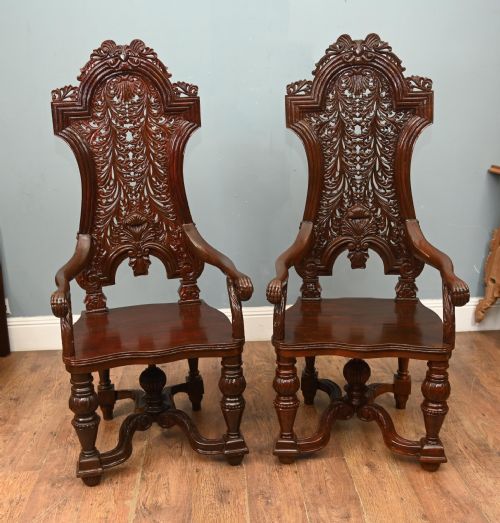


Gothic Style Accent Chairs
Gothic style accent chairs bring architectural presence and historic timberwork into a room, offering robust seating shaped by centuries of revival design.
Gothic Style Accent Chairs
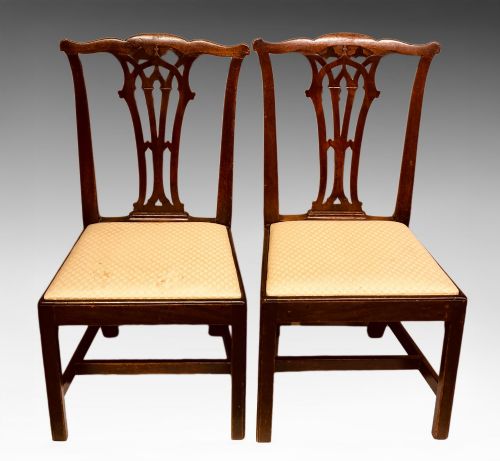
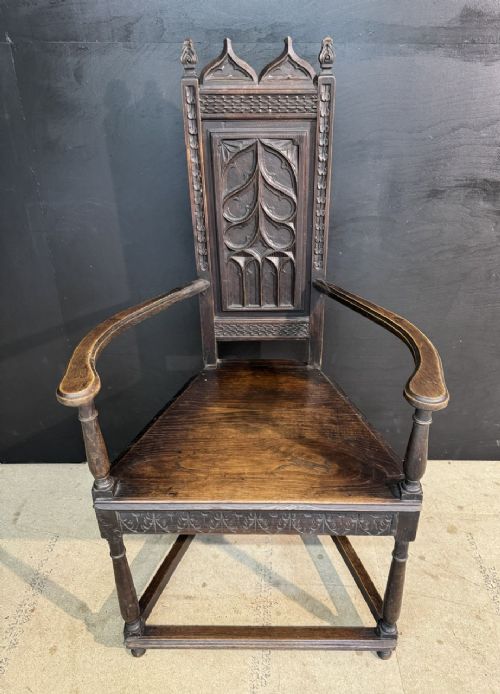
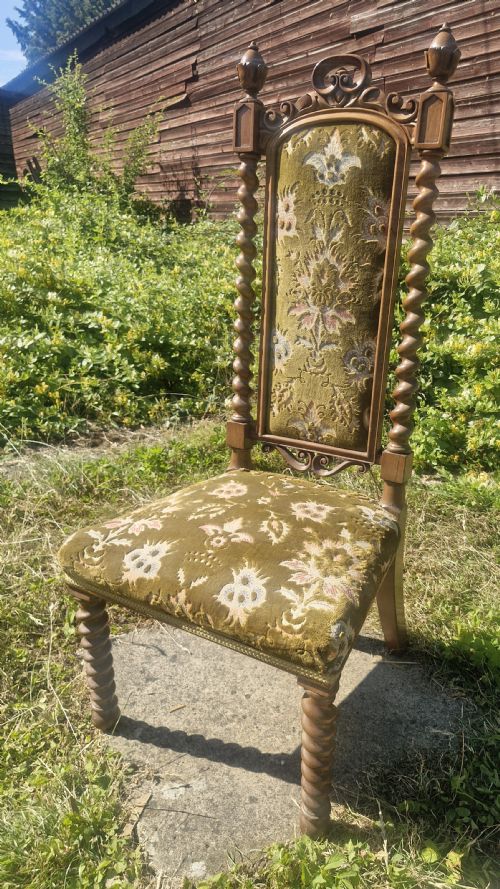
These pieces encompass seating built across the nineteenth century alongside earlier Georgian and later revival periods, drawing heavily on medieval forms. Buyers searching for gothic style accent chairs frequently encounter sturdy armchairs, Glastonbury seats, and high-back hall chairs constructed from substantial timbers.
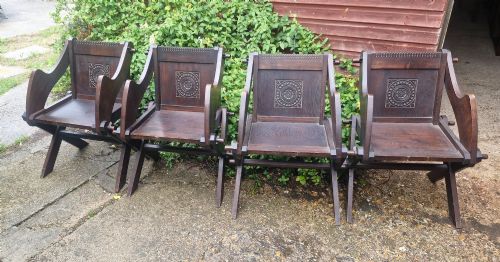
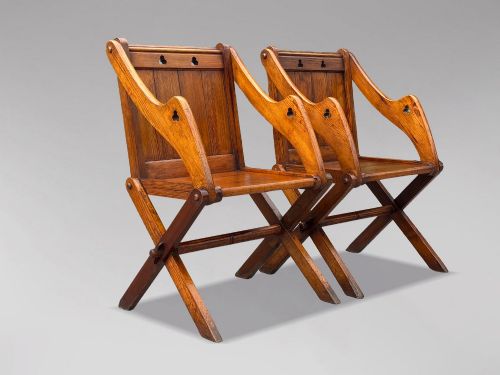
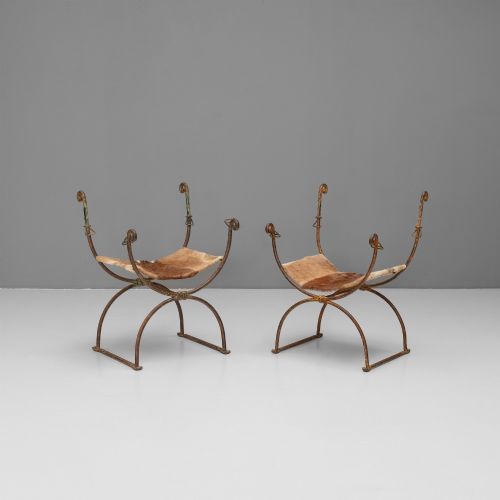
The selection ranges from ecclesiastical revival designs echoing Pugin to vernacular Welsh spinning chairs and heavy oak wainscot forms. Many pieces integrate cross-frame or curule X-frame supports alongside heavily carved backrests and tracery motifs.
Proportions vary from intimate elbow seats to imposing throne chairs intended for prominent placement in a hallway or parlour. Oak dominates the material record, accompanied by rosewood, mahogany, and pitch pine instances.
Materials and Construction
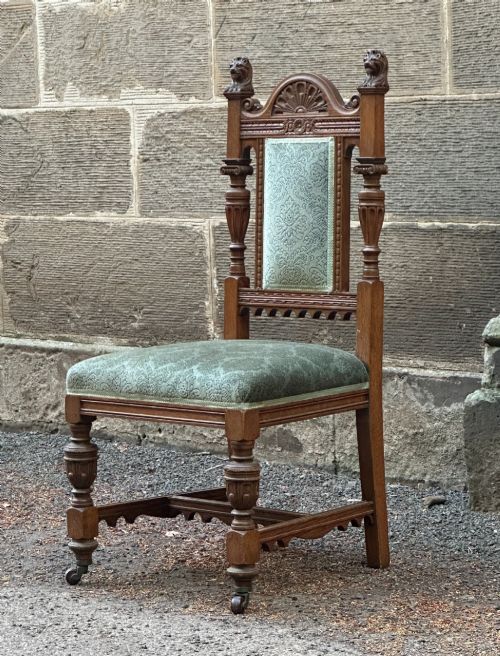
Makers relied primarily on seasoned English and continental oak, alongside darker imported woods like rosewood and mahogany for select high-status commissions. Carving was executed entirely by hand, rendering intricate linenfold patterns, gargoyles, and geometric strapwork directly into the solid timber frame.
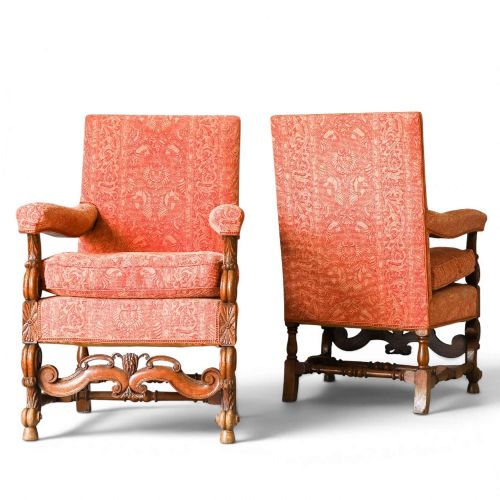
Structural integrity often depended on mortise and tenon joinery, particularly for heavy wainscot and Glastonbury armchairs designed to withstand daily use. Where upholstery appears, materials such as leather and buttoned velvet are secured with brass tacking across sprung or webbed bases.
Some nineteenth-century makers hid carved gargoyles and grotesque faces within the woodwork of ordinary hall chairs to watch over visitors.
Assessing Quality and Execution
Depth and crispness of the hand-carving distinguish superior examples from plain commercial production, as does the density and grain of the selected oak or rosewood. Superior pieces exhibit tight, stable joinery and original timber patination developed through long usage rather than applied surface treatments.
The sophistication of the historical reference matters, with pieces following specific designs by architects like Pugin or cabinetmakers like Gillows holding greater design integrity. Hardware choices, from forged brass fittings to heavy leather hides, indicate the original tier of manufacture.
Bruce Talbert·Gillows·A. W. N. Pugin
The Gothic Style Accent Chairs Glossary
- Glastonbury Chair
- A type of folding chair with an X-frame base, sloped arms, and a panel back, popularized during the Gothic revival. This form traces its conceptual lineage back to early sixteenth-century monastic furniture.
- Wainscot Chair
- A heavy wooden armchair constructed with panelled backrests and solid wooden seats, typical of seventeenth-century domestic interiors. They are frequently reproduced or reinterpreted in later nineteenth-century revival seating.
- X-Frame
- A structural support system formed by intersecting diagonal members, common in Dante and curule chairs. This ancient form provides both rigidity and visual movement to heavy revival seating.
- Sgabello
- A light wooden chair featuring a box-like base or three splayed legs supporting a high, carved backrest. Originating in Renaissance Italy, these portable seats often double as decorative hall furniture.
- Tracery
- Architectural ornamentation resembling openwork stone patterns found in Gothic windows, translated here into carved wood. It appears frequently along the crest rails and splats of revival chairs.
Gothic Style Accent Chairs: Frequently Asked Questions
How do I date a Gothic revival chair?
Dating relies on examining the timber species, tool marks left by construction, and the specific historical revival style employed. Nineteenth-century interpretations often mix Gothic tracery with Victorian upholstery techniques.
Secondary woods, fastening types, and the degree of wear on the timber help narrow down whether a piece originates from the early, mid, or late Victorian period.
Where should I place an accent chair?
These sculptural seats suit hallways, studies, or living rooms where their architectural woodwork can function as a focal point. Their high backs and solid frames command attention without requiring extensive floor space.
Pairing a heavy oak armchair with simpler surrounding furniture allows the carved details and historic timber grain to stand out.
Are these chairs comfortable for daily sitting?
Many examples prioritise formal posture and structural presence over cushioned ease, particularly rigid wooden hall chairs and wainscot seats. Upholstered variants offering leather or buttoned velvet provide a softer sit.
Adding a small cushion can adapt firmer wooden elbow seats for longer periods of relaxation in a modern interior.