



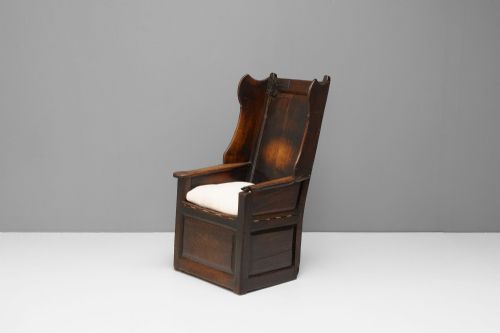
Vintage Oak Throne Armchairs
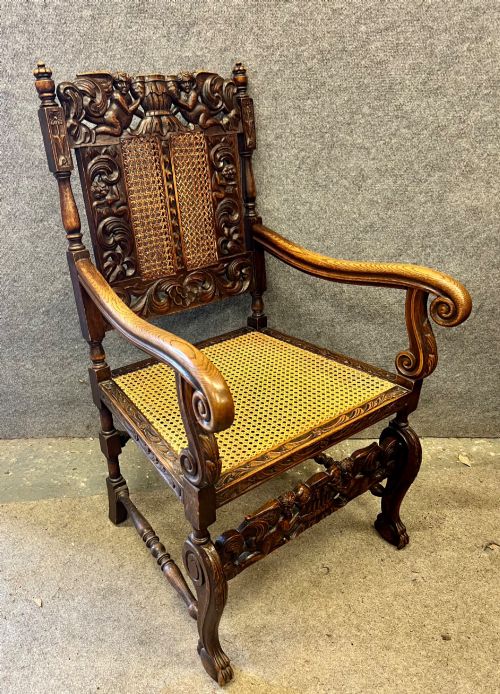
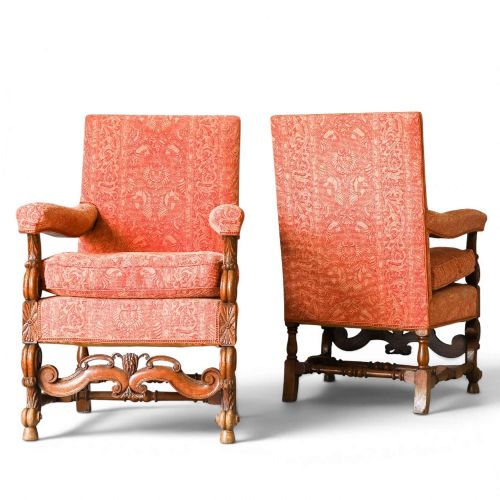
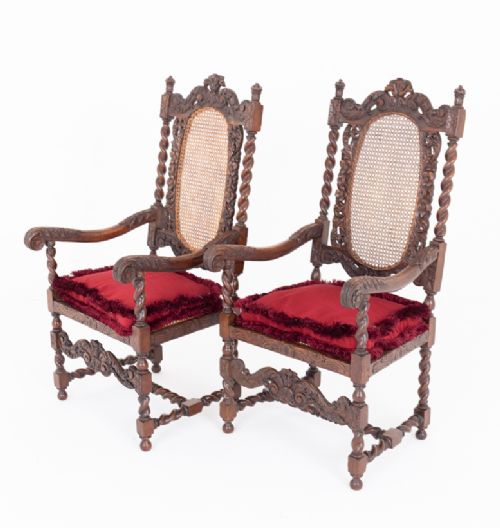
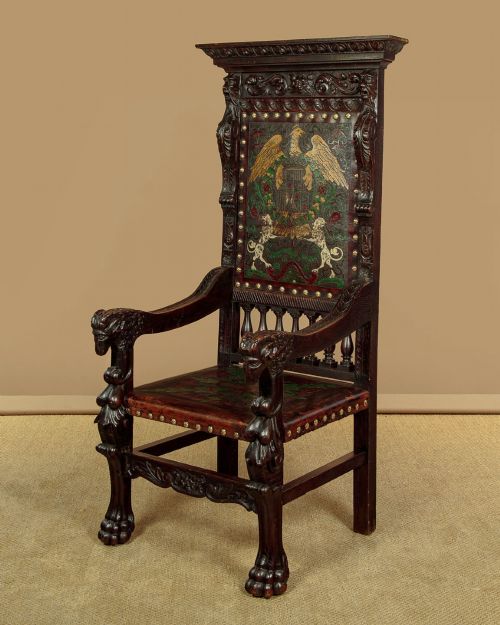
These vintage oak throne armchairs command a room with their high backs and heavy timber frames, offering a striking seat for any study or hall.
Vintage Oak Throne Armchairs
When searching for vintage oak throne armchairs, collectors find imposing high-backed seating drawing on centuries of historical design. The examples seen on this page largely span the Victorian, Edwardian, and early twentieth century eras.
Revival styles dominate these listings, reflecting nineteenth and early twentieth century interest in earlier historical periods. Pieces range from Jacobean and Carolean revival to Gothic and Renaissance revival forms.
Makers of this era turned to sturdy timber to build substantial armchairs with panelled backs, turned legs, and carved details. Buyers encounter both single statement chairs and matched pairs suitable for a grand interior.
What varies in quality
The depth and crispness of the carved ornamentation separate standard production from finer examples. Deeply hand-carved panels with intricate motifs show a higher level of workshop skill than shallow or mechanically pressed decoration.
The choice of secondary materials and upholstery execution also define the grade of the piece. High quality chairs combine substantial golden oak timbers with well-preserved leather panels, brass detailing, and sturdy turned frames.
Vintage Oak Throne Armchairs Retail Price Guide 2026
Typical asking prices for vintage oak throne armchairs among the pieces listed under this phrase on Sellingantiques today, from the lower quarter to the upper quarter. They describe what is for sale here now, not the wider market.
Materials paired with the primary oak timber include leather, velvet, tapestry, rattan cane, and brass hardware.
The Vintage Oak Throne Armchairs Glossary
- Barley Twist
- A turning technique where wood is shaped into a spiral resembling a twisted barley sugar stick. This decorative feature appears frequently on chair legs and structural stretchers.
- Wainscot Chair
- An early wooden armchair constructed with panelled backboards and solid wooden seats. The name links them to the fine oak panelling used on interior walls.
- Gothic Revival
- An architectural and decorative style drawing inspiration from medieval forms. Characteristic elements include pointed arches, tracery, and solemn vertical proportions.
- Carved Corner Chair
- A seating form designed to fit into room angles, featuring a curved backrest supported by multiple corner posts. These pieces often showcase elaborate woodwork.
Vintage Oak Throne Armchairs: Frequently Asked Questions
Where should I place a heavy oak throne chair?
These imposing chairs suit large reception rooms, libraries, or wide hallways where their high backs do not crowd the surrounding space. They function well as standalone statement pieces.
Position them away from direct heat sources to prevent the solid timber and leather panels from drying out or splitting over time.
How do I care for the leather and oak?
Feed the wooden frame with appropriate furniture wax occasionally to maintain the lustre of the oak. Avoid harsh chemical cleaners that strip the finish.
Treat leather panels with a suitable conditioner to keep the hide supple. Regular dusting prevents debris from settling into carved crevices.
Are these chairs comfortable for daily sitting?
Most vintage throne armchairs were built with ceremony and status in mind rather than relaxed lounging. Their upright wooden backs and firm padded seats encourage an upright posture.
Adding a simple cushion can improve comfort for extended periods of reading or working at a desk.
How do I identify a revival style?
Revival pieces borrow decorative vocabulary from earlier centuries while utilising the manufacturing techniques of their actual production era. Look for machine-cut joints combined with hand-finished carvings.
Study the wood patina and hardware construction to distinguish a nineteenth century revival from original seventeenth century seating.