
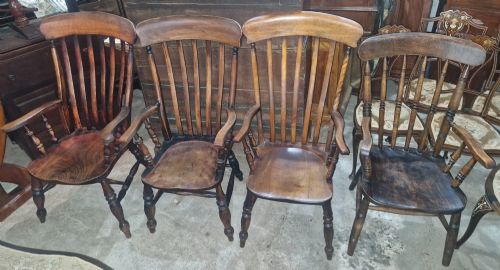
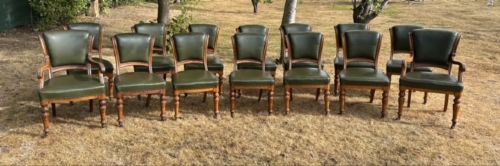
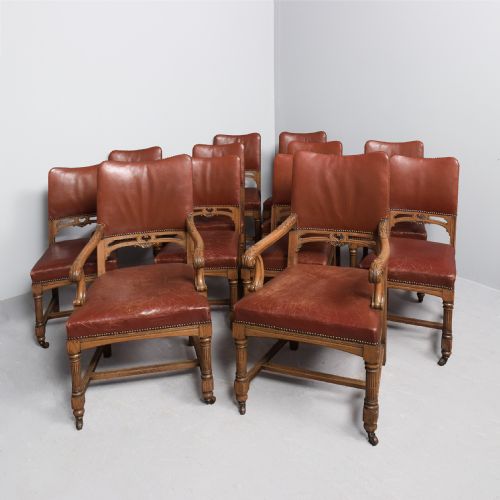
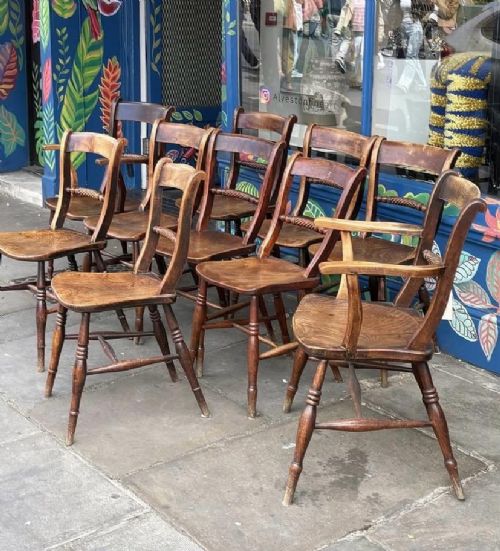
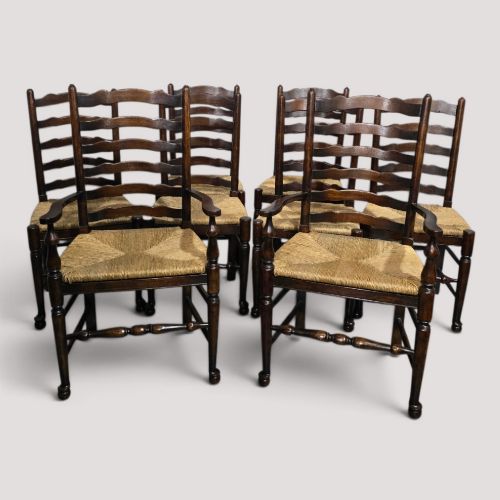
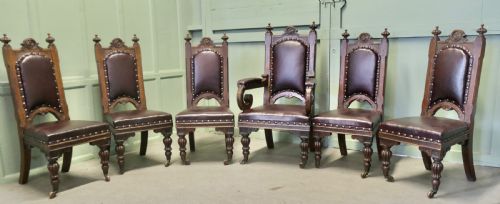
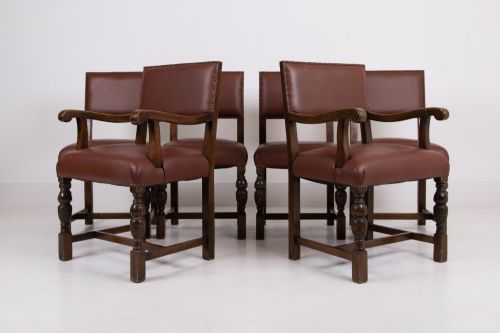
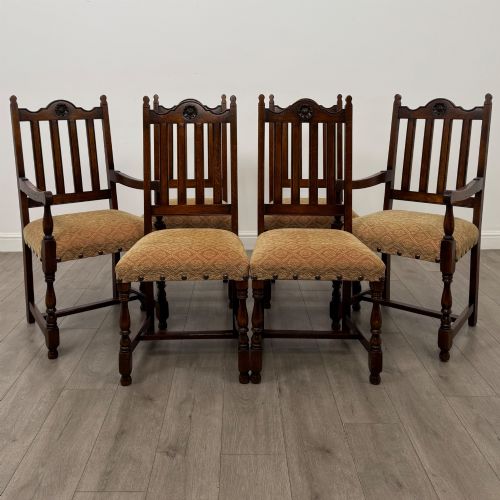
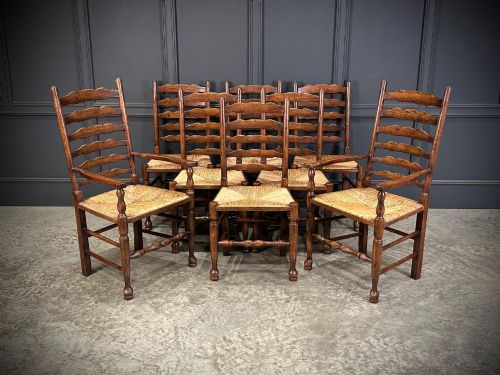
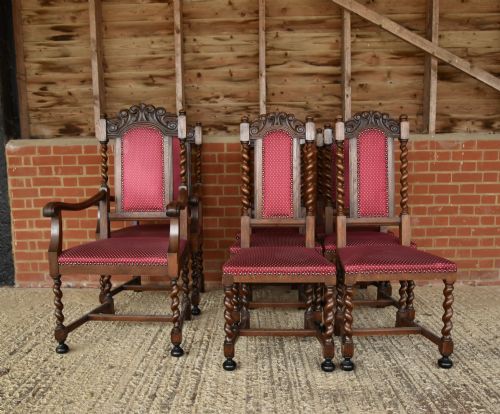
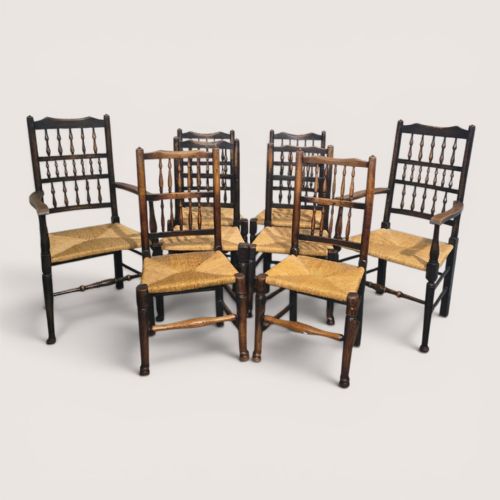
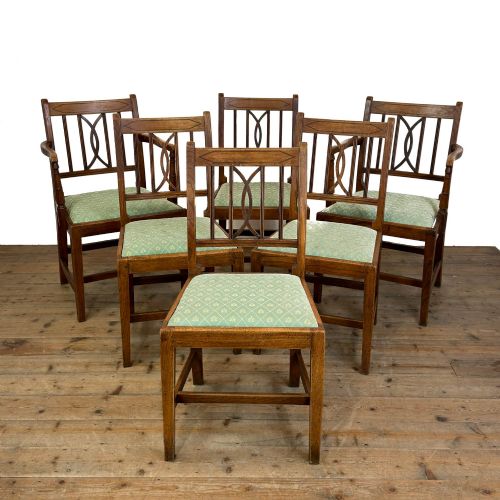
Set of Oak Carvers
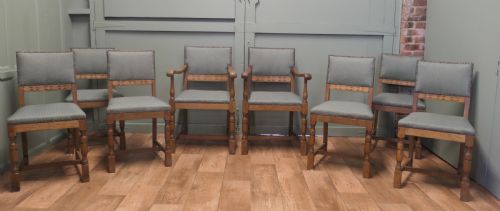
A set of oak carvers brings substantial character and practical seating to a room, offering sturdy frames and supportive armrests for the head of the table.
Set of Oak Carvers
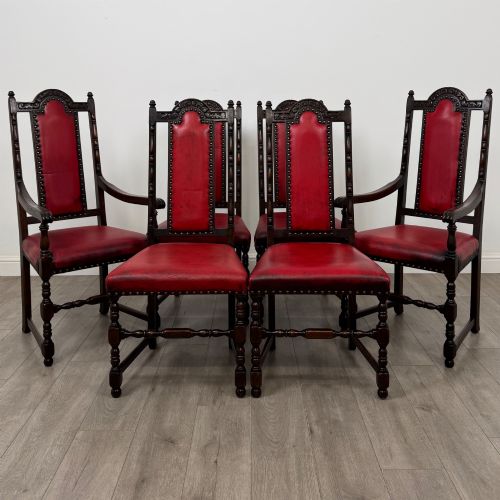
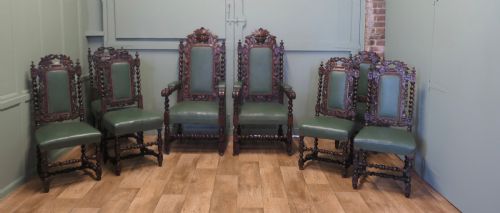
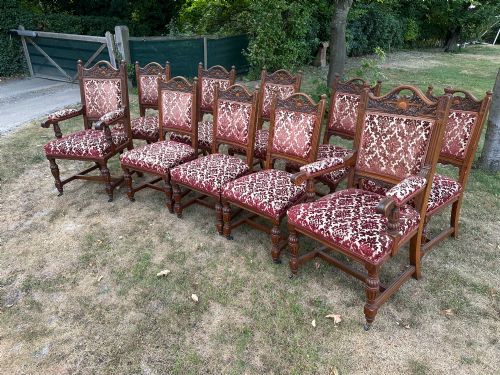
A set of oak carvers consists of matched armchairs designed to sit alongside side chairs at a dining table, originating across the Victorian, Edwardian and early twentieth century periods. These groupings often emerge from larger suites where two armchairs accompany six or more side chairs.
The styles range from plain country ladder backs and Windsor armchairs to heavily carved Jacobean revival and Arts and Crafts designs. Buyers frequently encounter examples featuring high backs, barley twist legs or leather upholstery.
Origins span English country workshops as well as urban cabinet makers, producing robust seating intended for everyday dining and formal entertaining alike. The forms remain remarkably versatile for modern interiors requiring period character.
Materials and construction methods
These chairs rely primarily on solid oak, frequently combined with elm, rush, cane or leather for the seats and backs. Carpenters utilised mortise and tenon joints to ensure rigidity across heavy frames subjected to daily use.
Detailing involves hand carving, spindle turning and steam bending for components such as ladder backs and Windsor bows. Brass studs and upholstery tacks frequently secure leather or fabric pads to the wooden frames.
Finishes range from waxed patinated surfaces to polished golden oak, highlighting the natural grain and growth rings of the timber without obscuring the structural joinery.
Listings feature oak, elm, rush, cane, brass, leather, velvet and fabric across multiple revival styles.
Distinctions in quality and execution
The standard of carving and the depth of relief work separate ordinary production from superior pieces, particularly within Jacobean revival and Gothic styles. Crisp, hand-chiselled details demonstrate greater artisan skill than shallow mechanical stamping.
Timber selection dictates the longevity and visual weight of a set, with dense quarter-sawn oak displaying prominent medullary rays that denote careful conversion of the log. Matched grain patterns across multiple chairs indicate a cohesive commission rather than a later assembled harlequin group.
Structural integrity depends upon tight joinery and original components, whereas heavily replaced stretchers or loose arm joints diminish historical and functional value.
Lamb Of Manchester
The Set of Oak Carvers Glossary
- Carver
- An armchair designed with armrests, traditionally placed at the head of a dining table to match a set of side chairs.
- Jacobean Revival
- A nineteenth and twentieth century style imitating seventeenth century English furniture, characterised by straight lines, panelled backs and geometric mouldings.
- Ladder Back
- A chair back constructed with horizontal wooden slats or rails resembling the steps of a ladder, common in country furniture.
- Rush Seat
- A woven seating surface made from dried marsh grasses twisted into cords, providing a traditional flexible base.
- Barley Twist
- A turned furniture leg or stretcher carved in a spiral shape resembling a twisted barley sugar stick, popular in various revival periods.
Set of Oak Carvers: Frequently Asked Questions
What is the difference between a carver and a side chair?
A carver includes armrests designed for added comfort, traditionally seated at the head or foot of the dining table. Side chairs lack arms and allow for tighter arrangement along the length of the table.
Matching sets typically combine six side chairs with two carvers to maintain a unified aesthetic across the dining room.
How do I care for antique oak dining chairs?
Protect the timber by applying a quality beeswax periodically to nourish the grain and prevent the wood from drying out. Avoid placing the chairs near direct heat sources or strong sunlight, which can cause cracking and fade upholstered or leather panels.
Check the stretcher joints and tighten any fixings gently if movement occurs over time.
Are these chairs suitable for daily family use?
Solid oak construction provides exceptional durability and stability, making these chairs well suited for regular dining room activity. The robust frames withstand heavy use while offering firm and reliable seating support.
Leather, rush or fabric pads can be maintained or reupholstered as needed to suit modern domestic requirements.
How can I tell the period of an oak carver?
Examination of the timber, tool marks and construction techniques helps determine the likely era of manufacture. Victorian and Edwardian revival pieces often incorporate machine assistance alongside hand finishing, whereas earlier examples show entirely hand-carved surfaces and pegged joints.
Stylistic cues such as barley twist legs or Gothic tracery align closely with specific nineteenth and twentieth century revival movements.