






Rustic Oak Rush Chairs
Rustic oak rush chairs bring honest vernacular craft into a room, offering sturdy seating built from durable woods and woven natural cordage.
Rustic Oak Rush Chairs
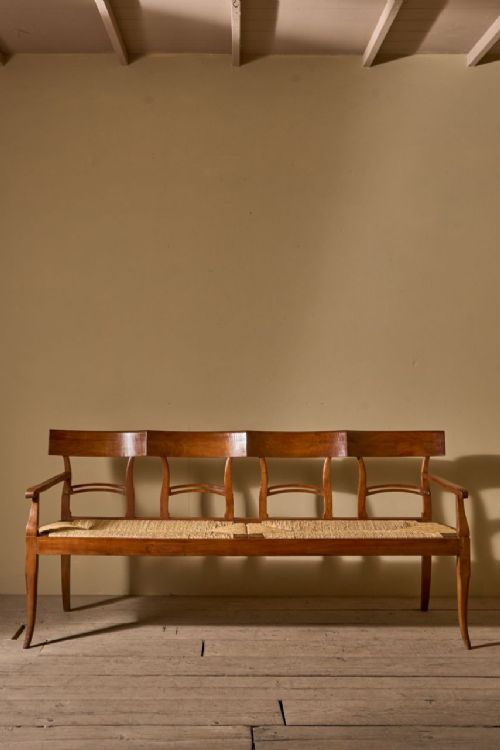
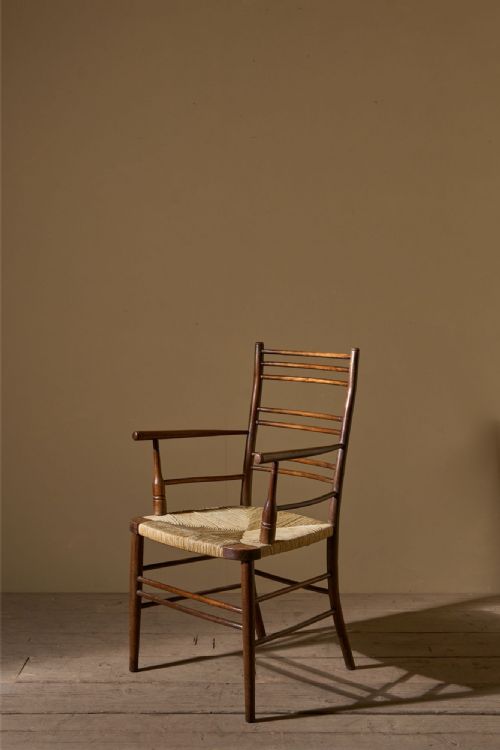
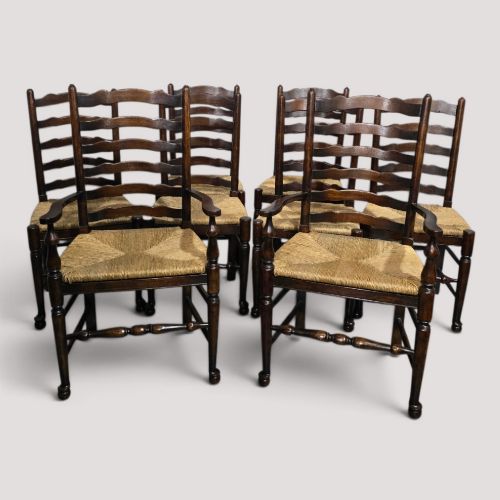
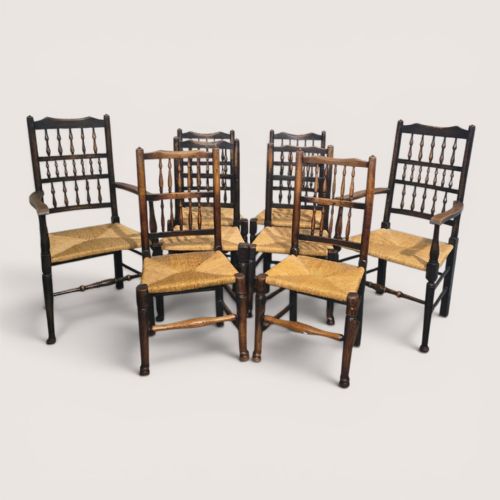
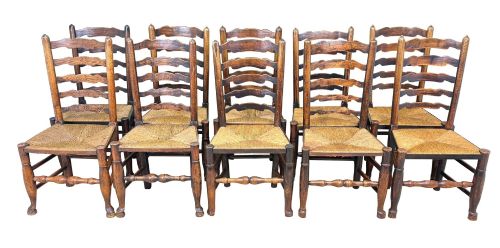
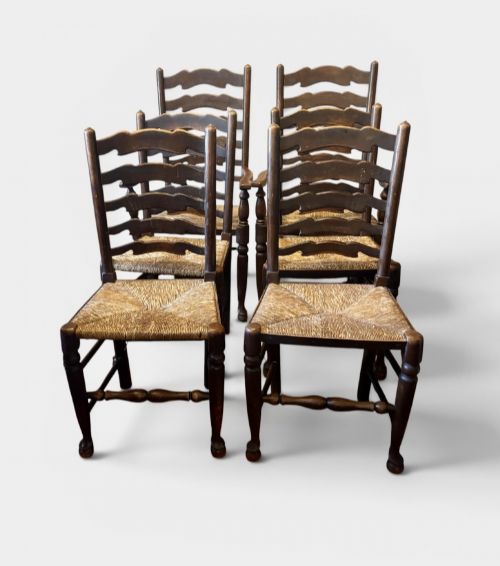
Rustic oak rush chairs are traditional country seats built primarily from solid oak frames paired with woven rush seating surfaces. When exploring rustic oak rush chairs, a buyer encounters diverse forms ranging from single side chairs to extensive sets intended for kitchen and dining tables.
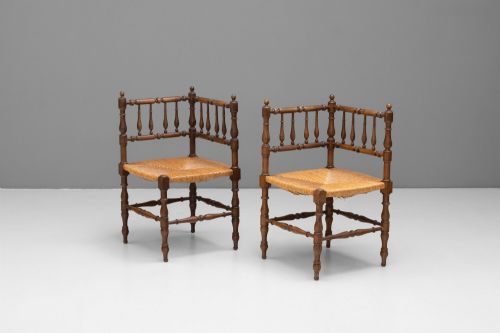
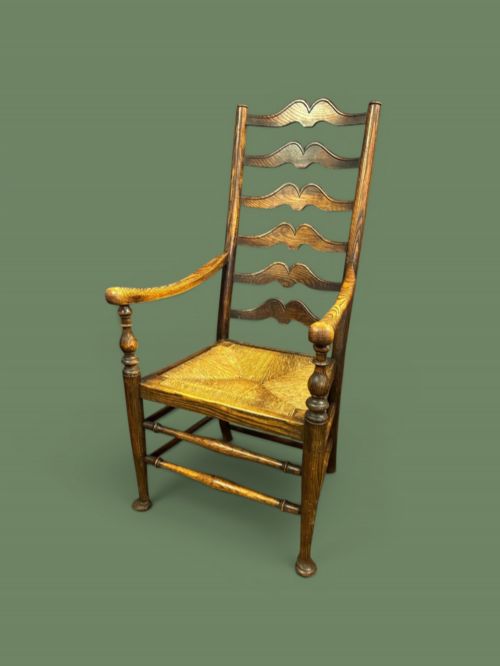
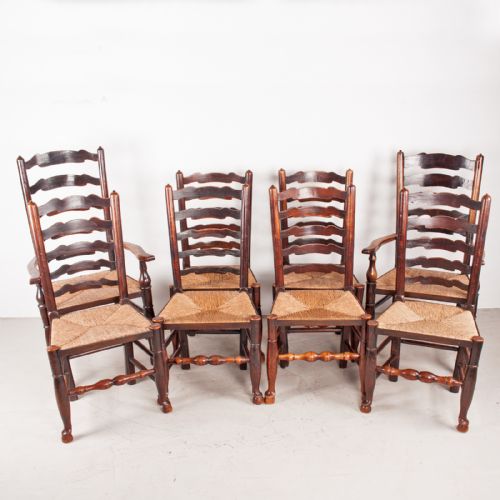
The selection on this page spans several historical periods, most notably the eighteenth and nineteenth centuries alongside twentieth-century revivals. Common regional variations include ladderback dining chairs, spindleback armchairs, corner chairs, and rocking chairs originating from English, French, and Scottish vernacular traditions.
Makers constructed these pieces for daily domestic utility rather than formal display. Consequently, survivors often show the honest signs of generations of family use, with patinated timber frames and replacement rush seating applied as maintenance demanded over the decades.
Materials and construction methods
Carpenters utilised native hardwoods like oak, elm, ash, and cherrywood to build sturdy chair frames using traditional joinery. Turnings, mortise and tenon joints, and pegged assemblies held the structural elements firmly together without relying on metal fasteners.
The seating surface relies on rush, straw, or similar natural cordage tightly woven around the wooden rails to form a resilient pad. This pliable material yields slightly under the sitter, providing comfortable support while maintaining structural tension across the frame.
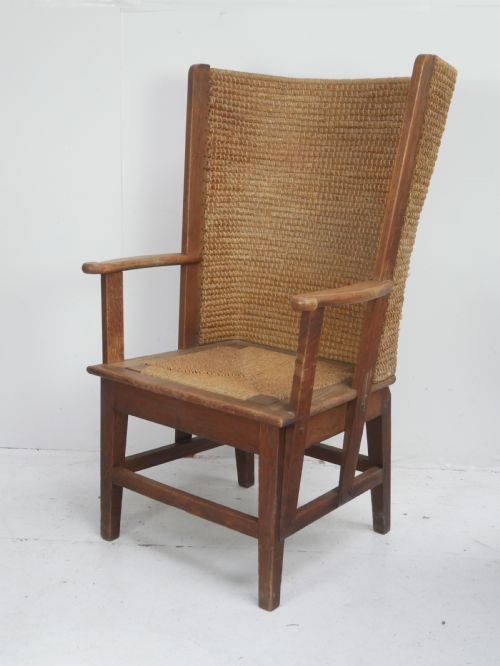
Full-sized Orkney chairs feature hooded straw backs designed to block cold North Atlantic drafts during fireside sittings.
Distinguishing quality in country seating
Quality in these chairs depends heavily on the integrity of the original timber frame and the balance of its proportions. Pieces retaining their early surface finish and tight, original joinery stand apart from those subjected to excessive structural intervention or aggressive sanding.
The neatness and density of the rush weaving also indicate the standard of production. Tightly packed, even cordage demonstrates skilled handwork that maintains its tension and shape far longer than loose or hastily executed weaving.
The Rustic Oak Rush Chairs Glossary
- Rush
- A wetland plant material traditionally twisted into cords and woven to create resilient, flexible chair seats. It provides a comfortable, breathable surface that develops a rich golden tone over decades of exposure.
- Ladderback
- A chair back featuring multiple horizontal wooden slats set between the upright posts. This traditional form offers robust support and appears frequently in regional country seating.
- Spindleback
- A chair design incorporating a series of thin, turned wooden uprights along the backrest. Makers utilised this lighter construction method in various English and Scottish vernacular workshops.
- Vernacular
- Objects built by local craftspeople following regional traditions rather than high-style academic designs. These pieces prioritise practical utility and local material availability above all else.
- Patina
- The deep surface sheen and coloration developed by wood and woven fibres through decades of handling, light, and polishing. It serves as a visual record of an object's age and history.
Rustic Oak Rush Chairs: Frequently Asked Questions
Can broken rush seats be repaired?
Woven rush seats can be entirely re-woven by a skilled artisan using traditional natural cordage materials. A professional restorer strips away the damaged old seating and wraps fresh rush around the existing wooden frame following the original pattern.
Preserving the historic wooden frame while renewing the seat allows an antique chair to return safely to daily domestic service. Regular maintenance ensures the new weaving lasts for many decades of subsequent use.
Are these chairs suitable for daily dining?
Most rustic country chairs were originally built for heavy kitchen and farmhouse dining use, making them naturally sturdy for modern meals. Solid hardwood frames and resilient woven seats handle regular sitting comfortably when the timber joints remain secure.
Checking that the underframe is stable prevents unexpected movement during use. Placing felt pads under the feet also protects wooden floors from the friction of heavy oak frames.
How do I date a ladderback chair?
Dating relies on observing tool marks, timber characteristics, framing construction details, and the specific profile of the turned posts. Eighteenth-century examples often display hand-carved components and deeper wood shrinkage, whereas later nineteenth- and twentieth-century versions show more uniform mechanical turning.
Comparing the form to documented regional styles helps narrow down the probable decade of manufacture. Minor discrepancies in matching sets often indicate workshop production before strict industrial standardisation took hold.