


Victorian China Dessert Plates
Victorian china dessert plates bring colourful painted scenes and gilded borders to the table, offering a glimpse into nineteenth-century dining traditions.
Victorian China Dessert Plates
Victorian china dessert plates encompass decorative dishes and serving pieces designed for the final course of a formal meal. These items range from individual cabinet plates to complete dessert services comprising comports and multiple plates.
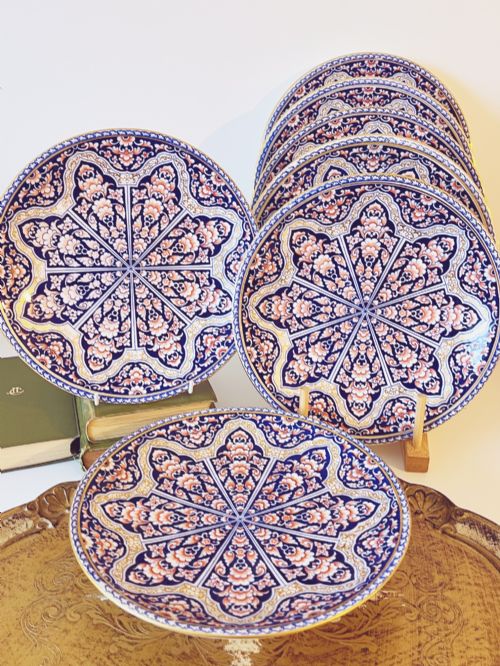
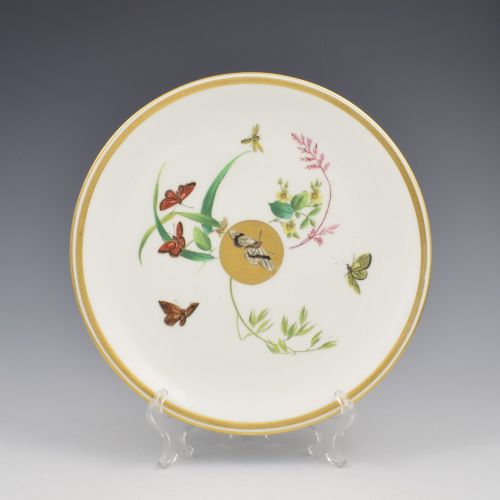
The pieces on this page span the nineteenth century and the early twentieth century, showing influences from the Regency period through to the Aesthetic Movement. Examples feature styles such as Victorian Imari, Rococo Revival, and Japanese-inspired motifs.
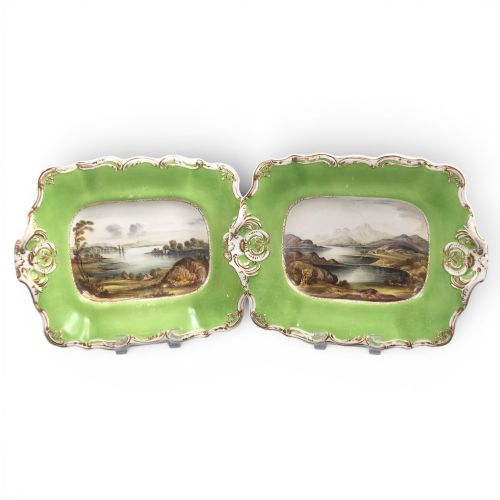
Makers represented in the current selection include Royal Crown Derby, Minton, Coalport, Copeland and Garrett, Doulton Burslem, Worcester by Kerr and Binns, Crescent China, and Wedgewood. Forms include basketweave patterns, Scottish views, and hand-painted landscapes.
Distinguishing quality across the range
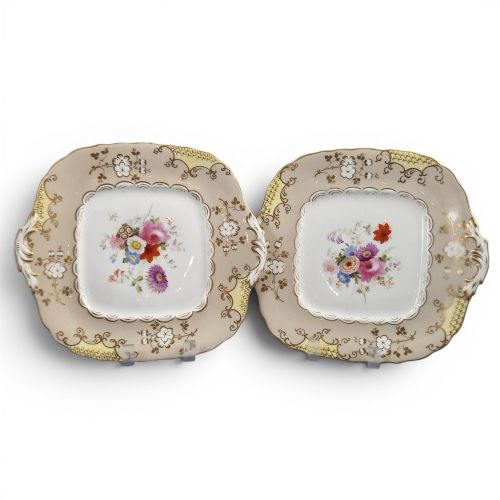
Quality rests upon the execution of the hand-painted artistry, from simple floral motifs to complex landscape scenes and Japanese-style compositions. Finer pieces demonstrate precision in enamel application and brushwork.
The application of gold leaf and gilding differentiates standard items from superior works, particularly where raised or burnished gilding frames the painted centre. The complexity of the ceramic shape, such as basketweave moulding or specific moulding styles like the Newcastle shape, also elevates the piece.
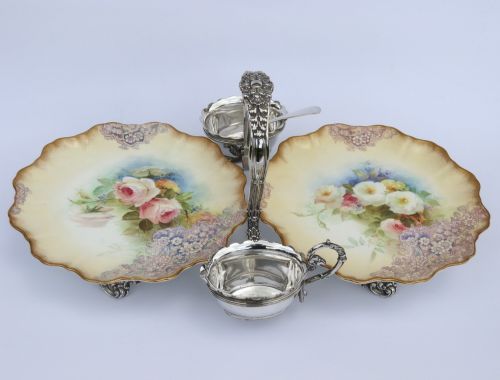
Some nineteenth-century diners enjoyed strawberries served on matched silver-plated stands paired with hand-painted porcelain plates.
Royal Crown Derby·Minton·Coalport·Copeland and Garrett·Doulton Burslem·Kerr and Binns·Crescent China·Wedgewood
The Victorian China Dessert Plates Glossary
- Comport
- A raised dish or bowl used for serving fruit or sweets as part of a dessert service. It typically stands on a pedestal base above the level of flat plates.
- Cabinet plate
- A decorative plate intended for display in a cabinet rather than for practical dining use. These often feature elaborate hand-painted scenes or extensive gilding.
- Bone china
- A type of soft-paste porcelain containing bone ash, known for its high strength, chip resistance, and translucent body. It became a standard material for British nineteenth-century tableware.
- Enamel
- Opaque glass-like material fused to the ceramic surface during firing to create coloured decoration. It provides vibrant hues on nineteenth-century dessert wares.
- Gilding
- The application of gold leaf or gold powder to ceramic surfaces for decorative effect. Burnished gilding is polished to a bright shine.
Victorian China Dessert Plates: Frequently Asked Questions
How were dessert plates used?
These plates were brought out at the conclusion of a formal dinner for the final course, which typically consisted of fruit, nuts, cheeses, and sweet dishes.
They formed part of a larger dessert service that often included matching comports and serving dishes for the table centrepiece.
What is an Aesthetic Period plate?
Aesthetic Period plates reflect the late nineteenth-century movement that embraced asymmetrical compositions and Japanese-inspired motifs.
Such designs frequently incorporate elements like suns, butterflies, and stylised flora rather than traditional European floral arrangements.
Can I use these plates for dining?
While these items were originally functional tableware, many nineteenth-century pieces feature delicate enamel work and gold leaf that benefit from careful handling.
Cabinet plates and hand-painted dessert wares are commonly displayed or reserved for special occasions rather than daily use.
How do I identify a dessert service?
A dessert service typically includes a combination of flat plates and taller serving pieces known as comports, all sharing a uniform pattern or manufacturer.
Partial services survive today with varying numbers of plates, sometimes accompanied by attribution notes from collectors.