
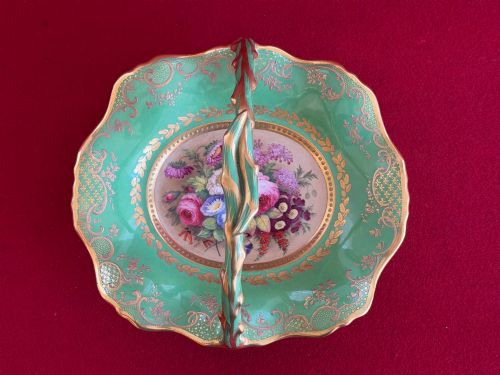
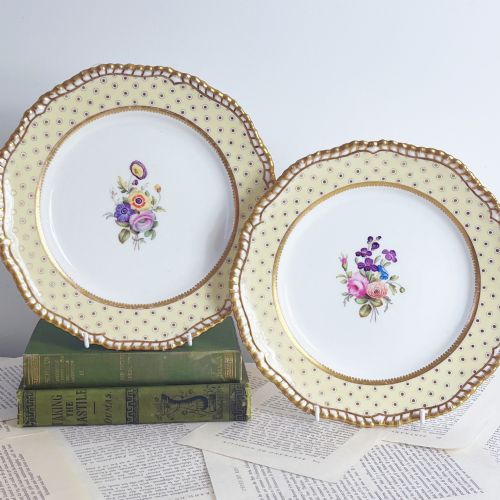
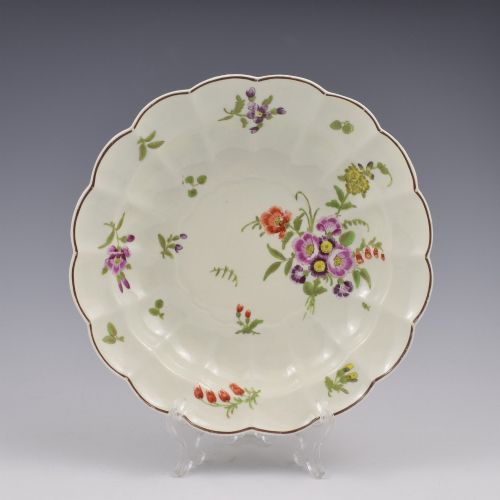
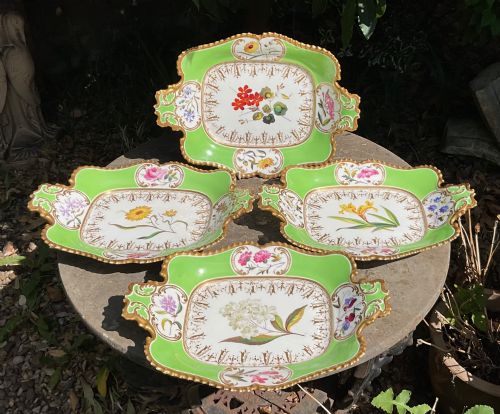
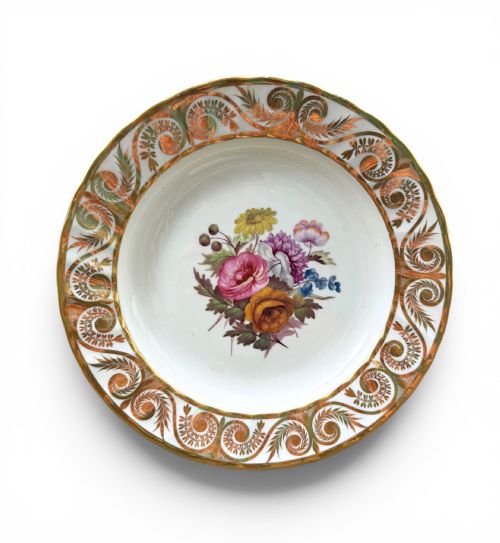
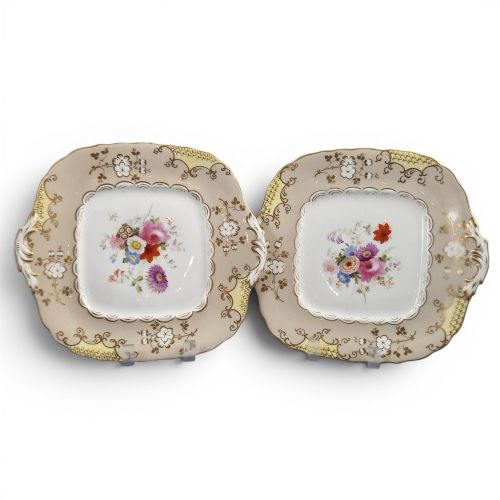
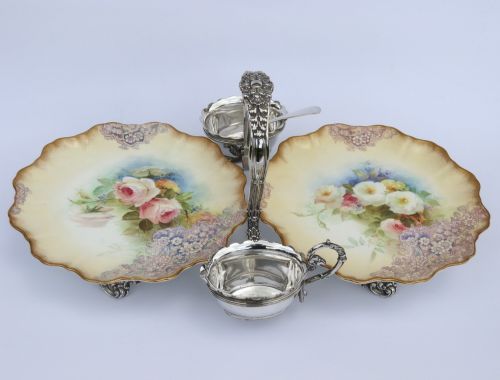


Floral Porcelain Dessert Dishes
These floral porcelain dessert dishes bring hand painted blooms to the table in forms spanning the eighteenth century to the twentieth century.
Floral Porcelain Dessert Dishes
Floral porcelain dessert dishes serve as the decorative centrepiece of a traditional table setting, designed specifically for the final course of a meal. When looking for floral porcelain dessert dishes, buyers encounter serving dishes, plates and bowls shaped for fruit and sweetmeats.
The pieces on this page originate from periods including the eighteenth century, the regency era, and the nineteenth century. Makers such as Spode, Worcester, Derby, Coalport, Minton, and Wedgwood produced these wares.
Forms vary from single plates to part services and paired serving dishes. Buyers find lobed soup plates, basketweave basket plates, and large moulded serving dishes among the selection.
Assessing the quality of the plates and dishes
Quality rests in the precision of the botanical painting and the crispness of the porcelain moulding. Hand painted floral details executed by skilled artists elevate a piece above standard transfer printed wares.
The application of gilding and the weight of the porcelain body indicate the workshop standard. Well preserved enamel colours and clear factory marks on the reverse add assurance regarding the origin of the piece.
Early dessert plates occasionally feature botanical errors painted by hurried artists who mixed up garden weeds with exotic hothouse flowers.
Spode·Chamberlains Worcester·Derby·Coalport·Walker and Hall·Doulton Burslem·John Ridgway·Rockingham Pottery·Minton·Flight Barr and Barr·Wedgwood·Bloor Derby·Royal Crown Derby
The Floral Porcelain Dessert Dishes Glossary
- Bone china
- A type of soft porcelain containing bone ash, developed in England to create a durable and whiter ceramic body. It provides a smooth surface for detailed floral painting.
- Enamel
- Opaque glass colours fused to the surface of the porcelain during a secondary kiln firing. These pigments deliver the vibrant botanical hues seen on dessert services.
- Gilding
- The application of gold leaf or gold paint to the rims and borders of the dishes. It defines the edge of the plate and frames the central floral motif.
- Lobed
- A shaped edge divided into rounded segments or lobes. This contour appears on eighteenth century and nineteenth century dessert plates.
- Part service
- A surviving subset of a larger original dinner or dessert set. It typically includes plates and matching serving dishes rather than every initial component.
Floral Porcelain Dessert Dishes: Frequently Asked Questions
How were dessert dishes used historically?
These dishes held fruit, sweetmeats, and confectionary served at the conclusion of a formal dinner. They occupied the centre of the table or passed among guests.
Servants arranged the plates alongside glassware and silver cutlery to mark the final stage of dining before the removal of the cloth.
Can I use antique dessert dishes for dining?
Most buyers choose to display these pieces in cabinets or use them sparingly for special occasions. Hand painted enamels and delicate gilding require gentle handling.
Hand washing in warm water preserves the ceramic glaze and prevents the loss of historic pigments.
How do I distinguish regency plates from victorian ones?
Regency pieces often feature vibrant apple green grounds, neo-classical shapes, and finely detailed botanical painting. The paste and moulding reflect the neoclassical taste of the early nineteenth century.
Victorian examples frequently display heavier moulded borders, floral transfer printing combined with hand colouring, and broader pastel palettes.
What does a part service include?
A part service comprises a surviving group of matching plates and serving dishes from a larger original suite. The exact count varies depending on what survived down the centuries.
These collections allow buyers to set a small table with uniform antique ceramics without needing a full matching dinner service.