
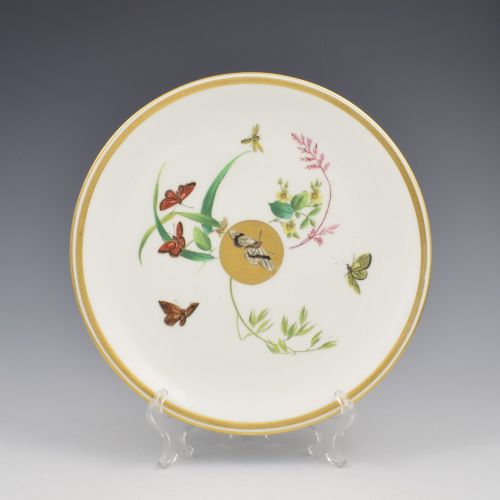
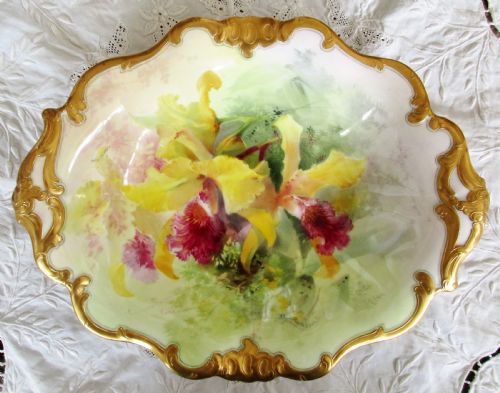
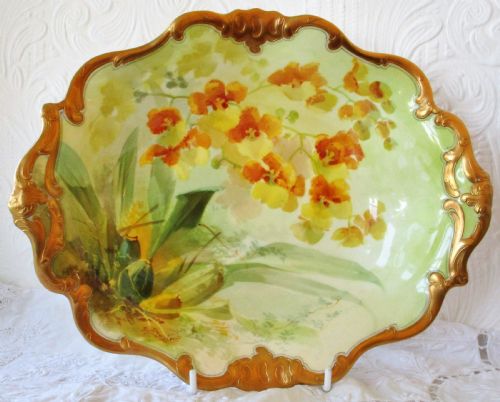
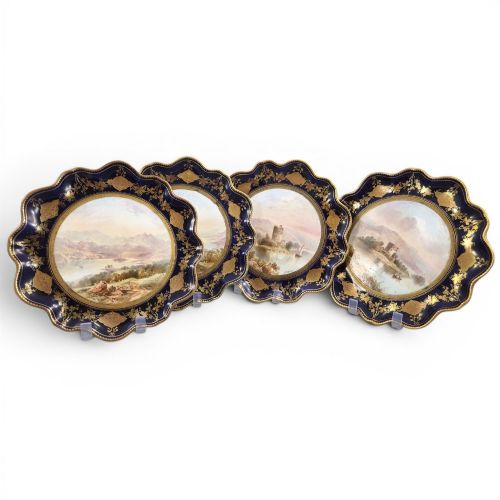
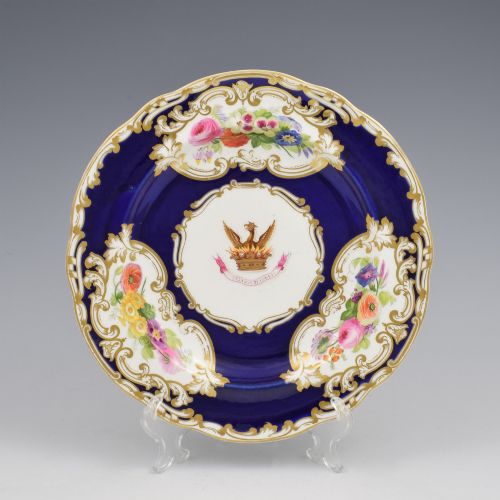


Victorian China Cabinet Plate
A victorian china cabinet plate brings hand-painted colour and gilded detail behind glass, designed for display rather than the dining table.
Victorian China Cabinet Plate
A victorian china cabinet plate is a decorative ceramic piece produced primarily for display in cabinets or on walls rather than for practical dining use. These items emerge from the nineteenth century, spanning periods from the eighteen-fifties through the nineteen-twenties, and encompass diverse forms such as cabinet dishes and dessert plates.
The pieces on this page originate from notable English factories like Minton, Royal Worcester, Coalport, and Royal Doulton, alongside continental European makers including Meissen, Dresden, and French workshops. Forms range from basketweave patterns and armorial designs bearing family crests to hand-painted botanical studies and landscape scenes.
Makers utilised porcelain, bone china, and ironstone as the primary bodies for these display objects. Buyers encounter everything from simple transfer-printed patterns to elaborate hand-painted landscapes, armorials, and raised enamel decoration.
How they were made
Potters shaped fine porcelain, bone china, and ironstone bodies on wheels or pressed them into moulds to create plates, dishes, and soup forms. These clay bases underwent initial firing to produce biscuitware before receiving glazes.
Artisans applied polychrome enamels, cobalt blue, and specialist techniques like pate-sur-pate by hand onto the glazed surface. Subsequent low-temperature firings fixed the pigments permanently into the glaze.
Workers added finishing touches through gilding, applying gold leaf or liquid gold highlights to rims, borders, and motifs, followed by a final kiln firing to bond the precious metal.
What varies in quality
The distinction between standard production and top-tier pieces rests upon the execution of the painting and the reputation of the artist. Items painted by known porcelain artists display meticulous brushwork, anatomical precision in figures or birds, and subtle tonal gradations that lesser factory hands omit.
The application of gilding and specialist decoration distinguishes better examples from routine items. Heavy, burnished gold leaf and complex raised enamel work indicate superior workshop standards compared to thin, flat metallic paint.
The provenance and specific factory commissions elevate certain objects, such as armorial plates featuring detailed family crests or exhibition pieces made for international fairs, above standard domestic cabinet ware.
David Dewsberry·Pucher Deroche·Kornilov Brothers·Thomas Dickson·Helena Wolfsohn
The Victorian China Cabinet Plate Glossary
- Armorial plate
- A ceramic dish painted or transferred with a family coat of arms or crest. These bespoke items were commissioned by landed families to display lineage.
- Cabinet plate
- A decorative plate intended solely for display in a cabinet or on a wall. They often feature delicate painted scenes that would wear away with regular dining use.
- Bone china
- A type of soft-paste porcelain incorporating animal bone ash. This composition produces a durable, milky-white body that allows for thin, refined moulding.
- Pate-sur-pate
- A ceramic decorating technique where liquid white clay is built up in successive layers on a coloured ground to create a low relief cameo effect.
- Ironstone
- A dense, heavy ceramic developed as a durable alternative to porcelain. It resists chipping while accepting colourful enamel and transfer-printed decoration readily.
Victorian China Cabinet Plate: Frequently Asked Questions
What is a cabinet plate?
A cabinet plate is a decorative ceramic dish manufactured primarily for visual display rather than daily dining use.
These pieces typically feature intricate hand-painted motifs, gilding, or special artistic techniques meant to be appreciated behind glass.
How were cabinet plates displayed?
In period homes, these plates sat upright in glazed display cabinets, on sideboards, or hung on walls using wire fasteners.
Their primary function was to showcase the wealth, taste, and artistic appreciation of the household.
How do I identify a Victorian plate?
Identification relies on examining factory backstamps, impressed marks, and stylistic clues such as aesthetic movement patterns or rococo revival borders.
Material composition, including bone china and ironstone, combined with specific painting techniques helps narrow down the production era.
Can I use these plates for dining?
Using these antique plates for everyday dining is generally discouraged due to the fragility of the glaze and delicate hand-painted decoration.
Historic enamels and gold leaf can wear away or scratch easily with cutlery and washing.