


Victorian Ceramic Dogs
These victorian ceramic dogs bring centuries of domestic charm to a mantelpiece, fashioned as spaniels, pugs, and greyhounds.
Victorian Ceramic Dogs
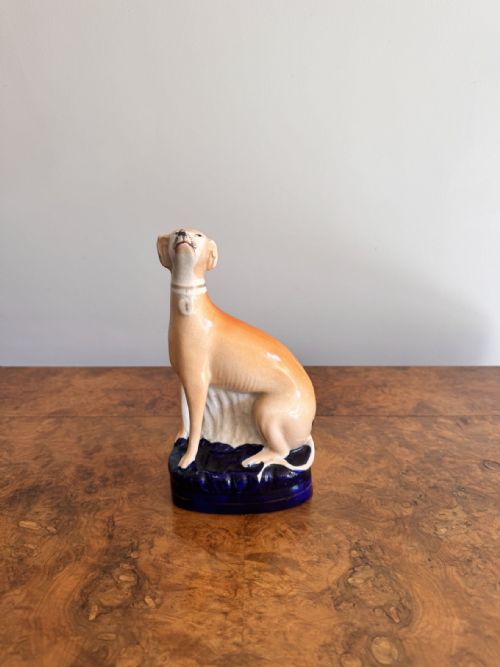
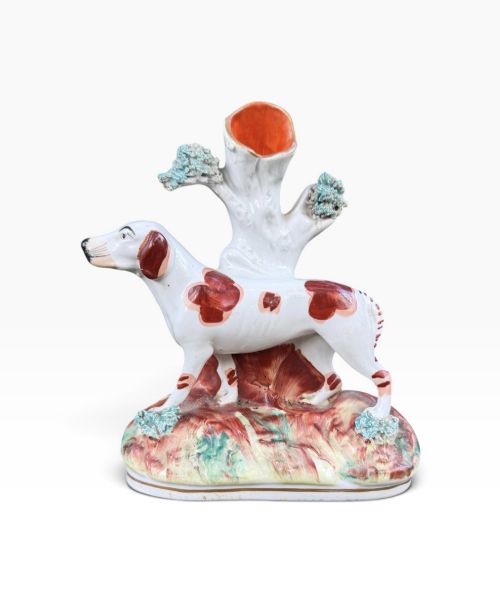
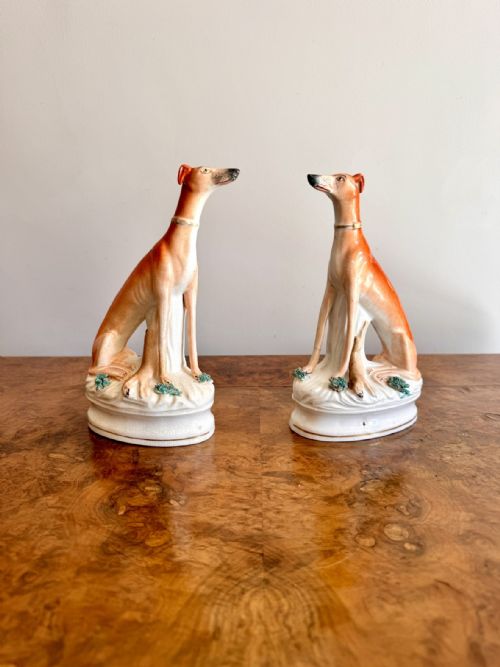
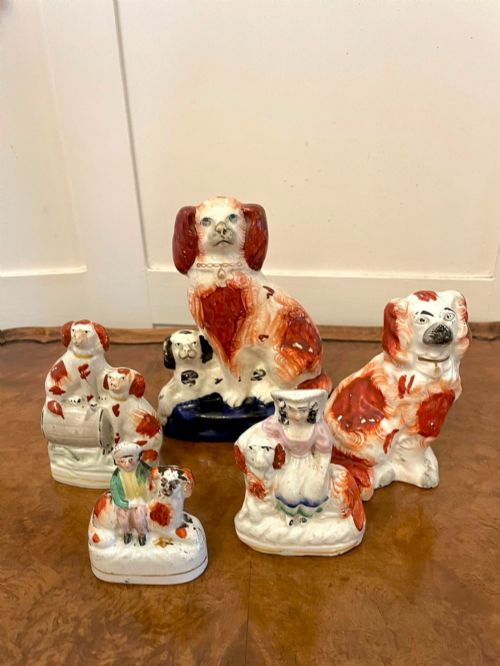
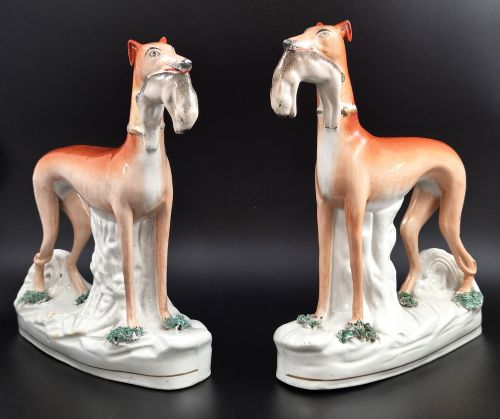
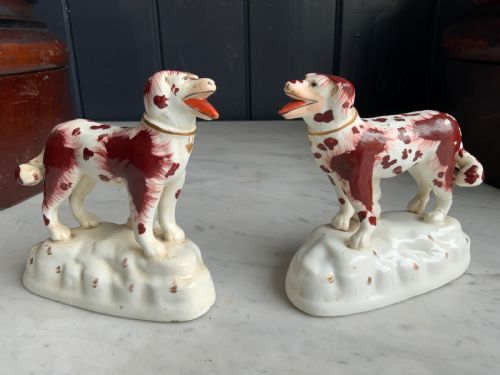
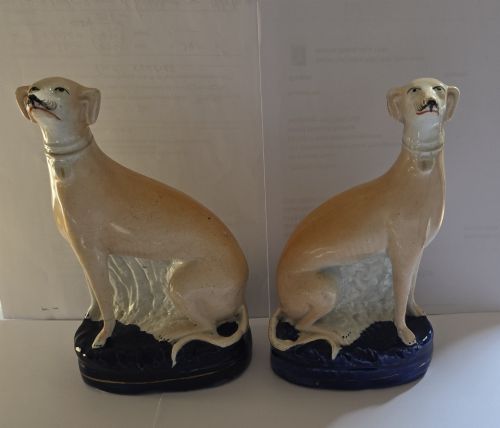
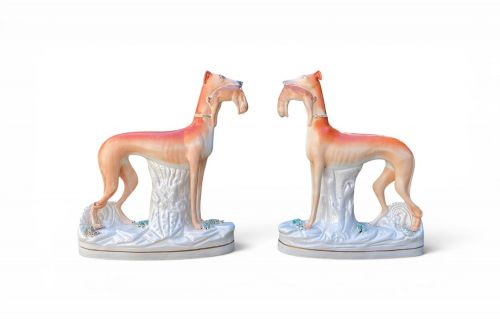
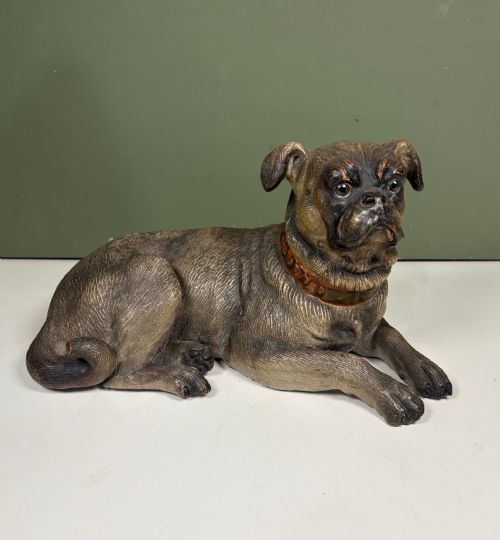
When you search for victorian ceramic dogs, you encounter a specialised array of figural pottery created during the nineteenth century. These ornamental animals include spaniels, poodles, greyhounds, pugs, and whippets, often modelled as seated pairs for fireside display. Most pieces originate from Staffordshire potteries, though examples span different regional styles and periods.

Materials and production techniques
Moulding and hand-finishing determined the final character of each piece, allowing workshops to produce uniform body shapes while varying facial expressions and coat markings. Artisans painted details by hand, resulting in individual variations across matched pairs and figure groups.
Victorian Ceramic Dogs Retail Price Guide 2026
Typical asking prices for victorian ceramic dogs among the pieces listed under this phrase on Sellingantiques today, from the lower quarter to the upper quarter. They describe what is for sale here now, not the wider market.
Several Staffordshire poodles arrive complete with tiny modelled puppies clinging to their sides.
Assessing quality and craftsmanship
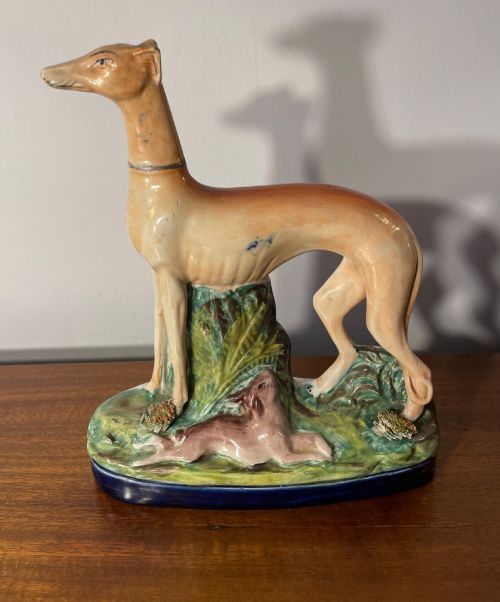
Matched pairs that retain their original scale, complementary colouring, and minimal wear command greater appreciation among collectors. The complexity of the subject, such as poodles with textured clay curls or greyhounds paired with hares, also elevates the character of the object.
Thomas Parr
The Victorian Ceramic Dogs Glossary
- Staffordshire pottery
- Earthenware figures and utilitarian wares produced in the pottery towns of Staffordshire, England. This region dominated the manufacture of mantel dogs during the nineteenth century.
- Comforter spaniel
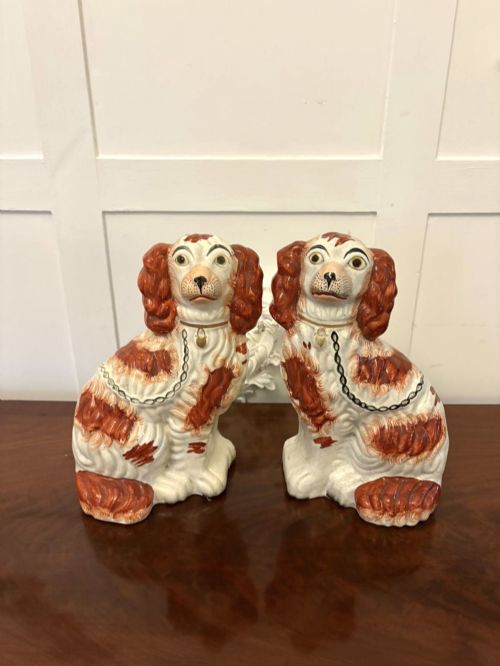
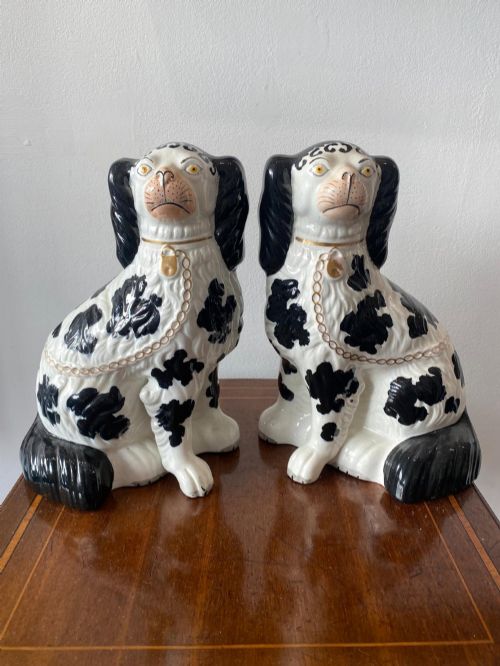
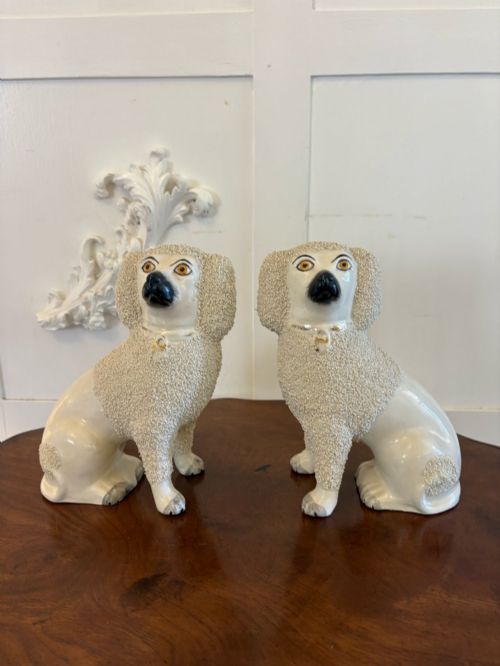
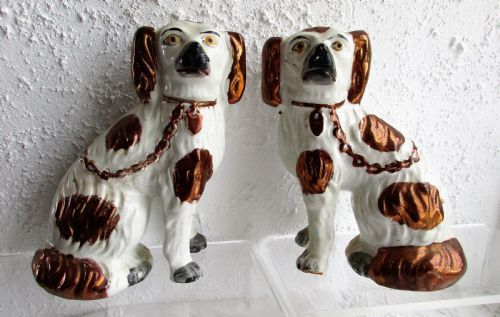
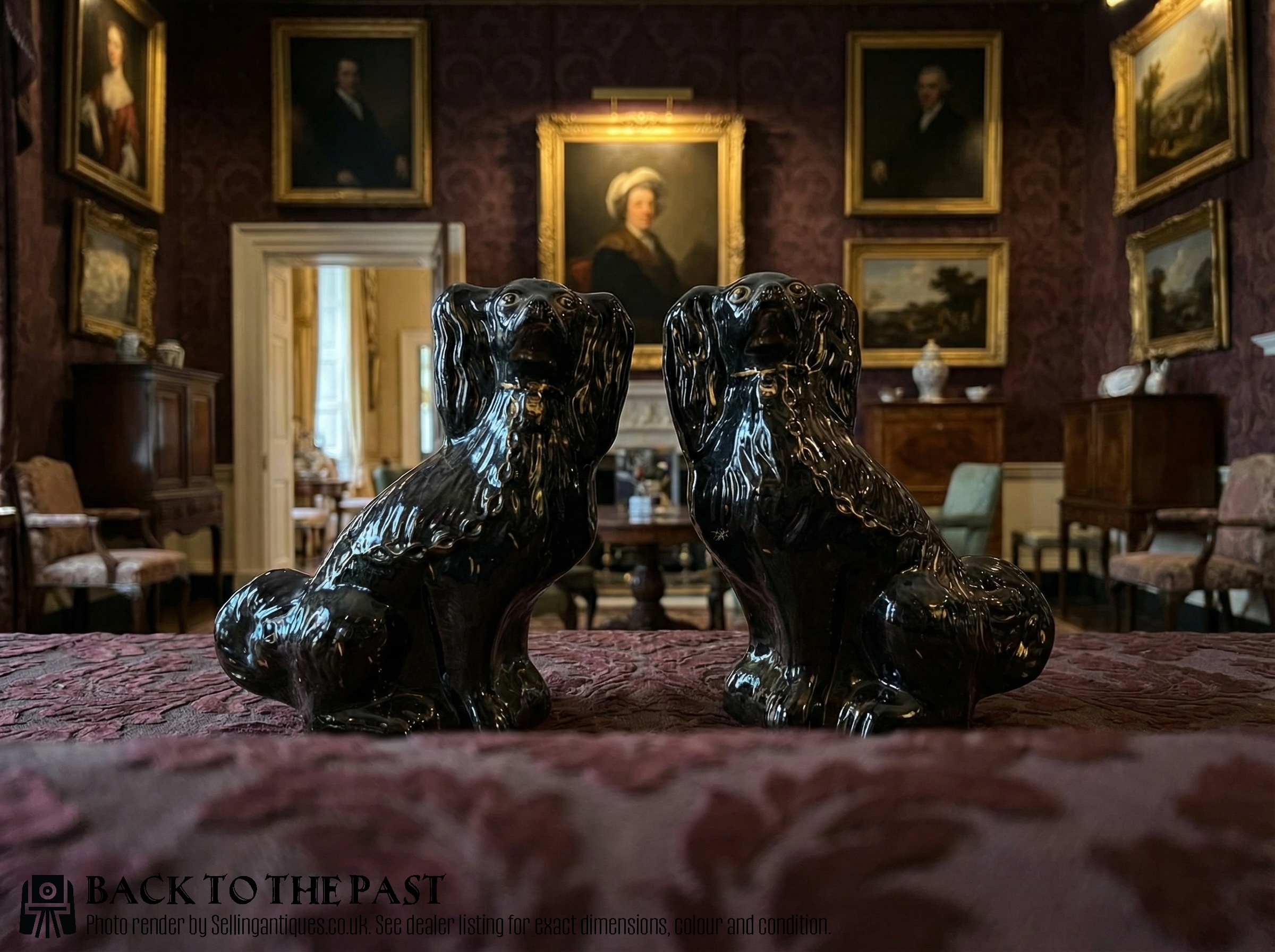
- A popular style of Staffordshire earthenware dog modelled on the King Charles spaniel. These figures were traditionally placed on mantelpieces facing inward toward each other.
- Parian ware
- A fine-grained, unglazed porcelain resembling white marble, utilised for nineteenth-century sculptural figures. It gained popularity for its smooth texture and classical appearance.
- Terracotta
- Fired brownish-red clay used for larger sculptural figures and ornamental garden wares. Austrian workshops frequently utilised this material for life-size dog models.
- Quill holder
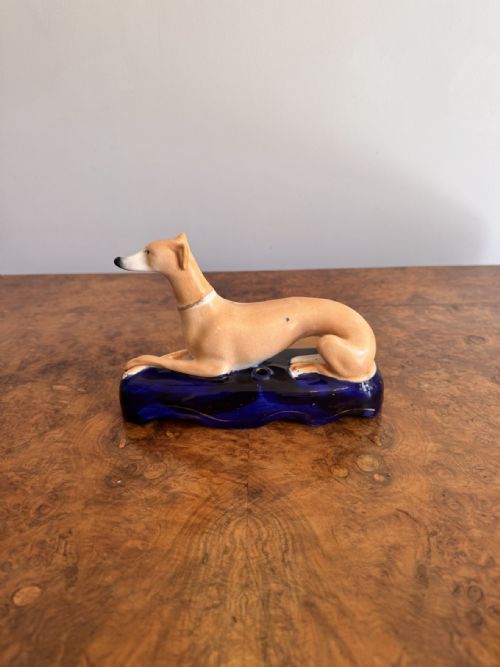
- A desk accessory featuring a ceramic figure adapted with small apertures for holding writing quills. These functional items combine decorative modelling with practical utility.
Victorian Ceramic Dogs: Frequently Asked Questions
What are comforter spaniels?
Comforter spaniels are nineteenth-century ceramic figures modelled after the King Charles spaniel. Households typically displayed them as matched pairs on either end of a mantelpiece.
These pottery dogs earned their name from their association with lap dogs kept by royalty and nobility for comfort. They remain the most recognisable form of nineteenth-century ceramic dog.
How were these dogs displayed?
Victorian households placed these ceramic figures predominantly on mantelpieces above fireplaces. They also appeared on sideboards, chests of drawers, and occasional tables throughout the home.
Matched pairs were arranged to face one another symmetrically. Some specialised forms, such as money boxes and quill holders, served functional roles on desks and tabletops.
What breeds are represented?
The selection encompasses a variety of domestic and sporting breeds popular in the nineteenth century. Spaniels, poodles, greyhounds, pugs, whippets, and pugs appear frequently across the pottery.
Certain pieces incorporate additional elements, such as poodles with puppies, greyhounds with captured hares, or spaniels fashioned into Toby jugs.
How do I distinguish periods?
Differentiating periods relies on observing clay bodies, glaze characteristics, and modelling styles. Earlier pieces often display robust earthenware construction with simple hand-painted markings.
Later Victorian and transitional pieces incorporate refined glazes, gilt highlights, and more intricate anatomical detailing. Continental European pieces introduce alternative materials like terracotta and porcelain.