




Ceramic Spaniel Ornaments
Ceramic spaniel ornaments bring the domestic comfort of the nineteenth-century mantelpiece into a modern room with cheerful symmetry.

Ceramic Spaniel Ornaments
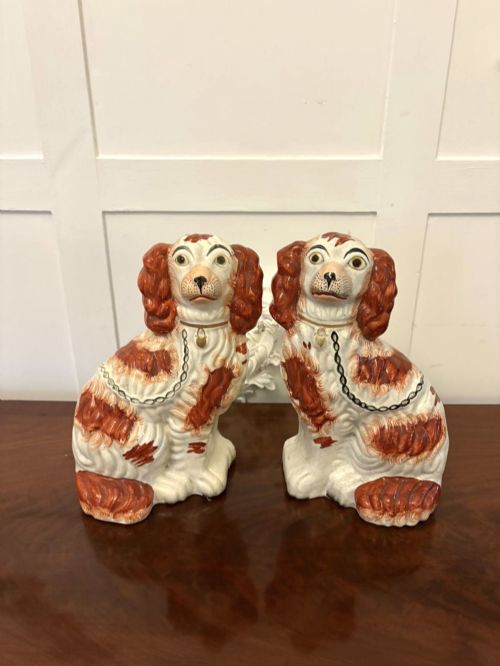
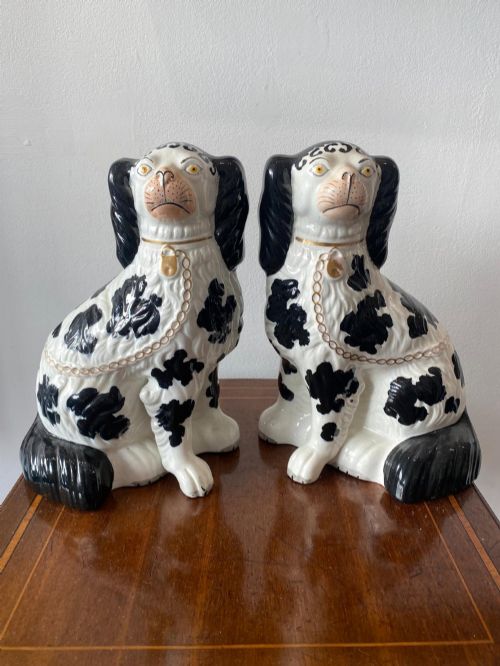
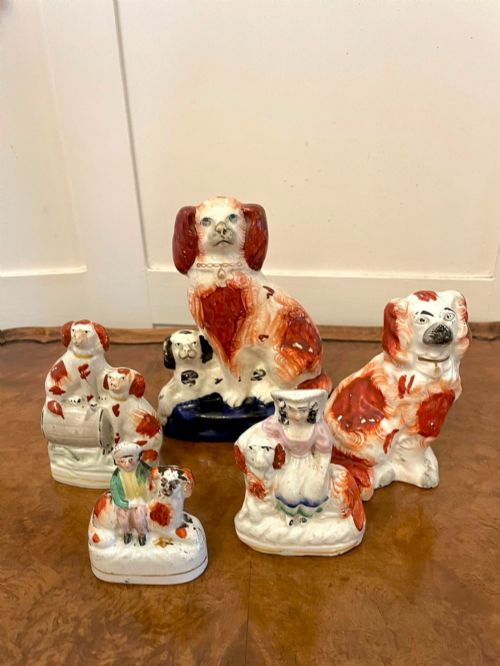
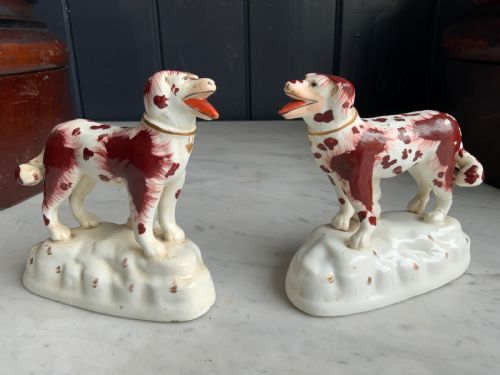
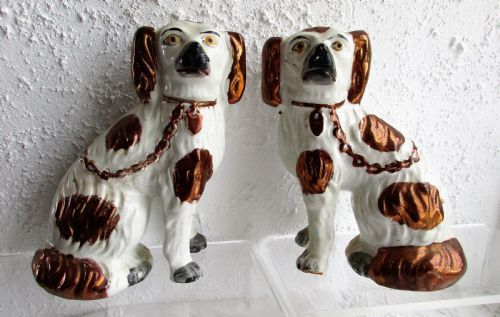
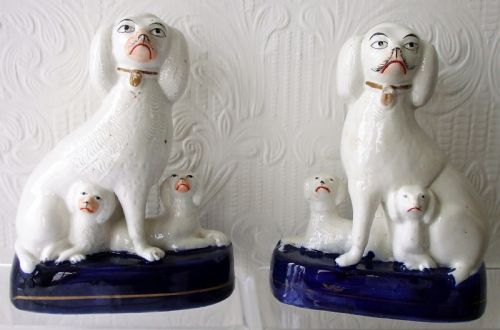
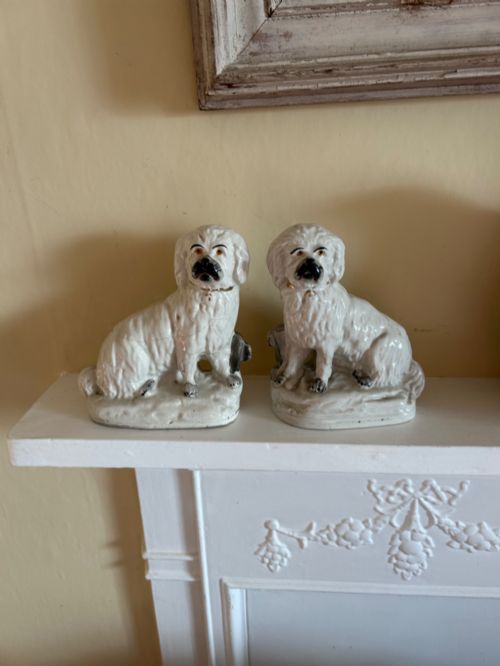
When you search for ceramic spaniel ornaments, you encounter the pottery figures that sat on hearths across Victorian Britain, most often modelled as seated pairs. These decorative objects take the form of spaniels, poodles, terriers and king charles spaniels, sometimes accompanied by puppies or modelled as spill vases and clock groups. The examples you meet on this page span from the nineteenth century into the twentieth, drawing heavily on Victorian styles alongside occasional Chinese export porcelain.
The form developed as a fireside companion, frequently arranged facing each other on either side of a fireplace. Makers produced them in various sizes, ranging from small collections of individual dogs to grand pairs designed to anchor a mantelpiece. Alongside the standard seated spaniels, the selections include dogs resting on blue cushions with encrusted detail and figures incorporating human musicians.
Materials and methods
Potters built these figures primarily using earthenware, stoneware or porcelain, shaping them through moulding before applying glazes and enamels. Many pieces receive hand-painted details in black, red and copper lustre, whilst others utilise contrasting white and gilt finishes or gold leaf highlights.
Surface decoration often includes textured elements such as encrusted clay to mimic fur or cushions. Kiln work fixed these mineral colours and glazes to the ceramic body, producing the glossy finish characteristic of the period.
Ceramic Spaniel Ornaments Retail Price Guide 2026
Typical asking prices for ceramic spaniel ornaments among the pieces listed under this phrase on Sellingantiques today, from the lower quarter to the upper quarter. They describe what is for sale here now, not the wider market.
Some nineteenth-century spaniels wear dour expressions that suggest they take their mantelpiece guarding duties very seriously indeed.
Distinctions in quality
Scale and ambition also divide the range, separating modest single figures from grand pairs, clock groups and multi-piece collections with intricate detailing like gilt highlights and textured encrustations.
Royal Doulton·Beswick
The Ceramic Spaniel Ornaments Glossary
- Earthenware
- Porous pottery fired at lower temperatures, commonly used for nineteenth-century figures. It requires a glaze to become impermeable.
- Spill vase
- A hollow cylindrical vase attached to a figure, designed to hold wooden spills for lighting fires or pipes. They form a functional part of many fireplace ornaments.
- Copper lustre
- A metallic glaze technique that produces a reflective, coppery sheen on the ceramic surface. Potters applied this to catch the flickering light of gas lamps and coal fires.
- Encrusting
- The application of small clay particles or modelled fragments to the surface of a piece to simulate texture, such as fur or upholstery. It requires careful handling during firing to prevent loss.
- Regency
- An architectural and decorative style spanning the early nineteenth century, preceding the Victorian era. Pieces from this period often display cleaner classical lines.
Ceramic Spaniel Ornaments: Frequently Asked Questions
What is a comforter spaniel?
A comforter spaniel refers to the small toy spaniels kept by Victorian households as lap dogs. Potters replicated these specific pets in ceramic form to serve as decorative mantelpiece companions.
These figures often feature characteristic floppy ears, alert expressions and painted markings in black, red or copper lustre.
How do I date these ceramics?
Dating relies on observing the potting style, glaze characteristics and the nature of the painted decoration. Mid-Victorian pieces from the mid-nineteenth century often display bright enamel colours and copper lustre highlights.
Later twentieth-century examples shift in body density and painting technique, reflecting the production standards of firms like Beswick and Royal Doulton.
Were they made as pairs?
Many of these ceramic dogs were produced as symmetrical pairs designed to sit at opposite ends of a fireplace mantel. This arrangement provided visual balance for nineteenth-century interior displays.
Single figures, small collections and groups incorporating clocks or puppies also appear, offering alternative formats for display.