




Victorian Ceramic Cup
These pieces combine domestic utility and ornamental skill, offering a tactile connection to nineteenth-century life through handles, glazes and transfer prints.
Victorian Ceramic Cup
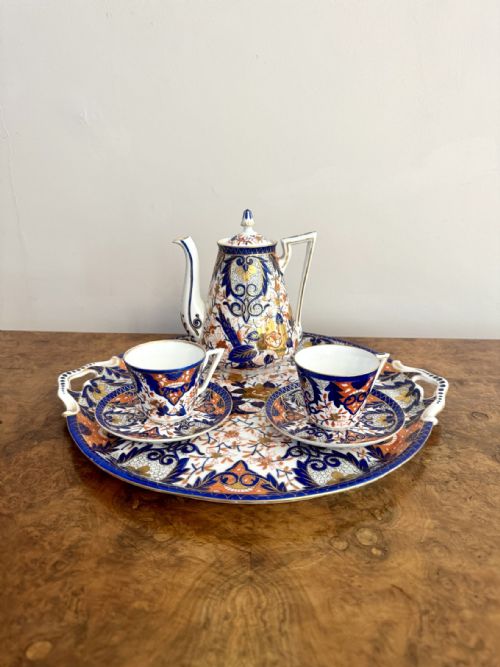
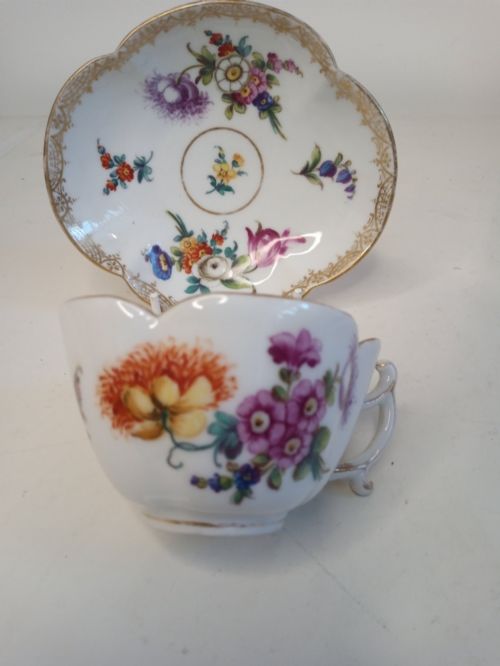
When searching for a victorian ceramic cup, collectors encounter an array of drinking vessels spanning the nineteenth century, including teacups, coffee sets, tankards, and loving cups. The material evidence ranges across porcelain, earthenware, and stoneware, frequently styled in Victorian Imari, Kakiemon revival, or transfer-printed motifs.
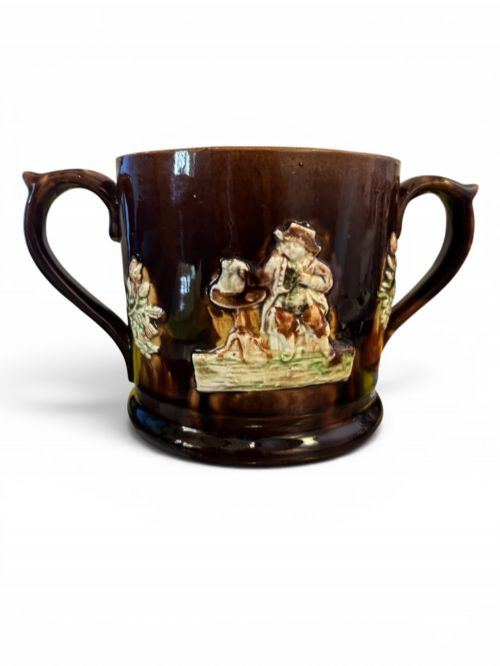
The most common forms on this page include morning teacups and saucers alongside two-handled loving cups and robust mugs. Pieces often date from the mid-nineteenth century onward, reflecting both refined parlour service and hearty tavern use.
Regional potteries and major factories alike contributed to this category, producing everything from nursery mugs to elaborate cabinet pieces. Surviving examples demonstrate the diverse functions of ceramics in daily nineteenth-century routines.
Materials and production methods
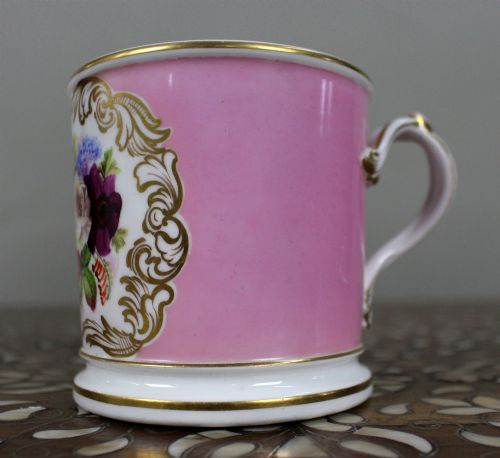
Makers utilised porcelain, ironstone, and stoneware as bodies, shaping them on the wheel or in moulds before applying glaze. Surface decoration often relied on hand-painted enamels, gilding with gold leaf, and monochrome or polychrome transfer printing.
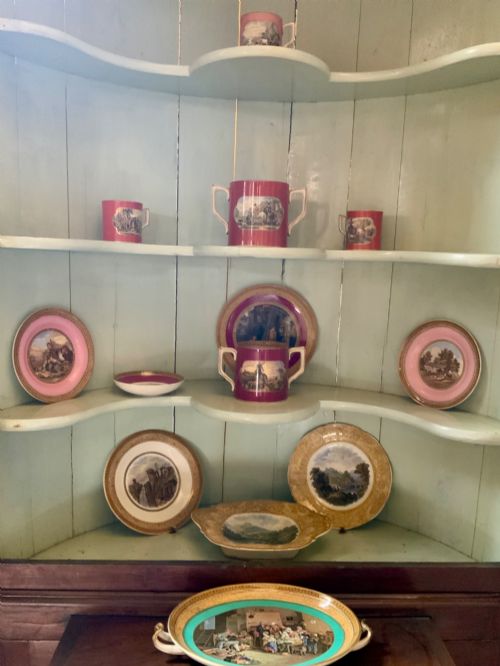
Specialised techniques such as slip-trailing and pâte-sur-pâte appear on finer stonewares, while transfer printing allowed complex hunting scenes, botanical patterns, and poems to transfer clearly onto the curved clay surface.
Several drinking vessels hide small ceramic frogs and newts inside, designed to leap out at the drinker.
Distinctions in quality
Quality rests upon the crispness of the transfer print or the brushwork control in hand-painted motifs like floral sprays and allegorical scenes. Heavier ironstone and stoneware demonstrate utility strength, whereas fine porcelain teacups exhibit thin-walled translucency and delicate gilding.
The precision of the kiln firing and the evenness of the glaze application distinguish standard commercial wares from superior factory outputs.
Grainger Worcester·Doulton Lambeth·Royal Worcester·Minton·Royal Vienna·Moser·Davenport·Hadley Worcester
The Victorian Ceramic Cup Glossary
- Tyg
- A large drinking vessel with multiple handles, usually three or four, designed for passing around a company. These often appear in stoneware or earthenware.
- Transfer printing
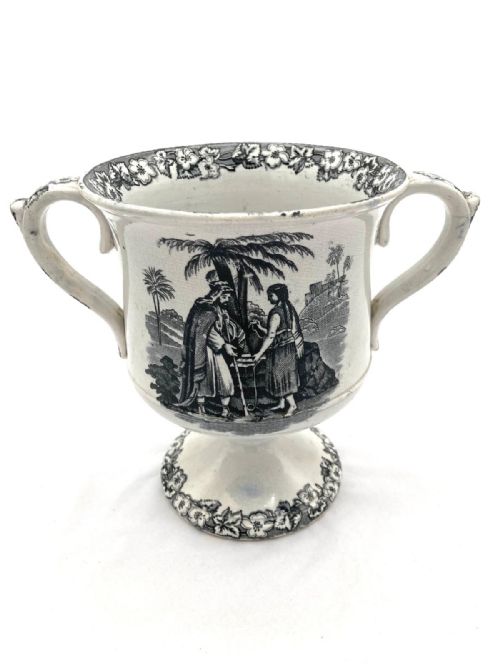
- A method of decorating ceramics by engraving a design on a metal plate, pulling it on paper tissue, and pressing it onto the biscuit or glazed ware before firing. This technique allowed intricate pictorial scenes to be replicated swiftly.
- Ironstone
- A heavy, durable type of earthenware patented in the nineteenth century to imitate Chinese porcelain. It resists chipping and forms the sturdy body of many large mugs and jugs.
- Gilding
- The application of gold leaf or gold paint to edges, handles, and motifs. It highlights decorative borders on teacups and saucers.
- Stoneware
- A dense, impermeable pottery fired at high temperatures until vitrified. It provides a robust body for salt-glazed tankards and utilitarian vessels.
Victorian Ceramic Cup: Frequently Asked Questions
What is a loving cup?
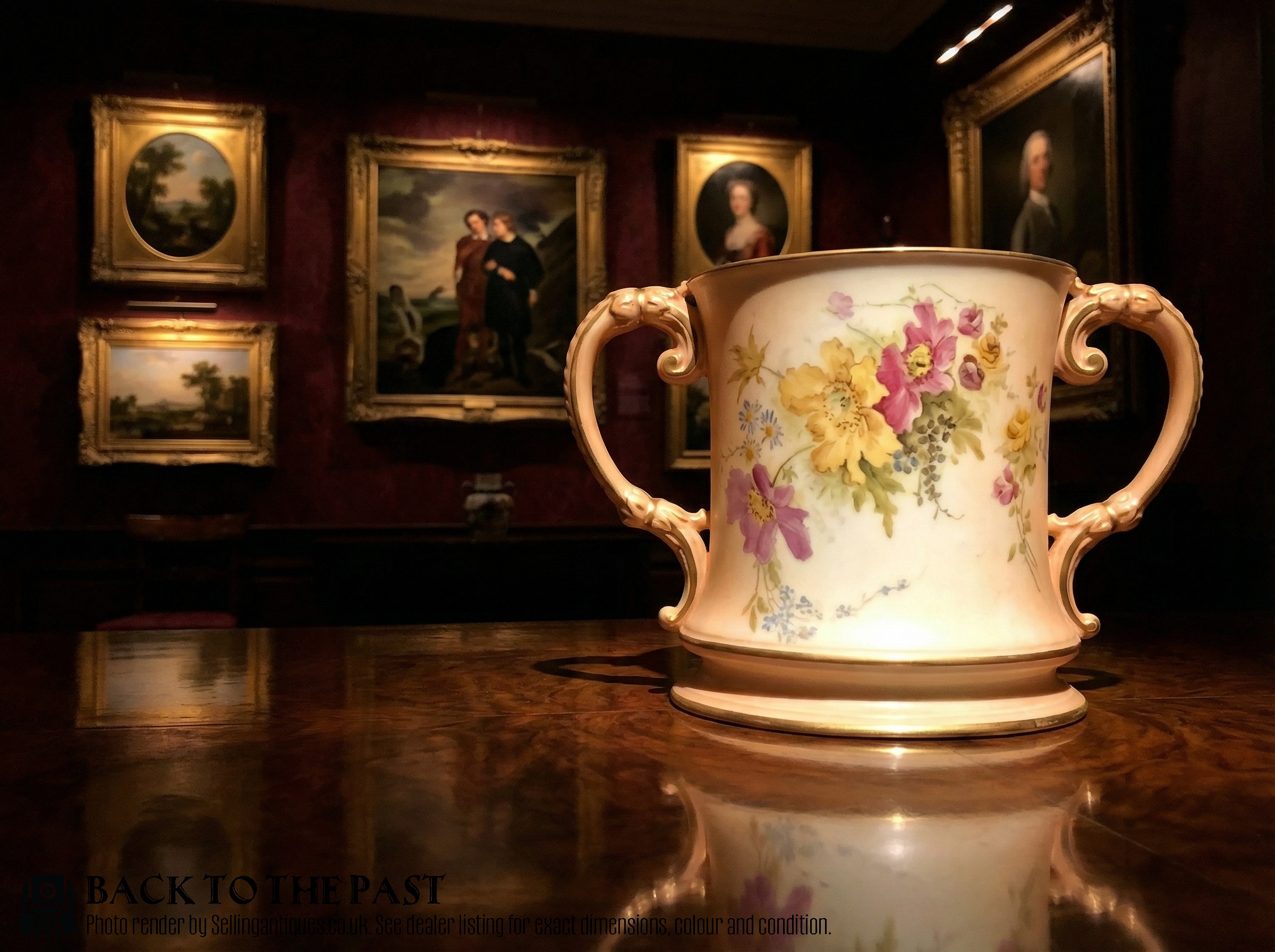
A loving cup is a large drinking vessel featuring two or three handles so it can be passed securely between guests at celebrations and communal gatherings.
Many examples in this category incorporate decorative transfer prints, poems, or internal surprises like ceramic frogs.
Why do some cups have frogs inside?
Potters placed small moulded ceramic frogs or newts inside the bottom of tankards and loving cups as a drinking joke or surprise for the drinker.
As the liquid was consumed, the animal emerged into view, often startling the person finishing the drink.
How do I care for antique ceramic cups?
These pieces require gentle hand washing in warm water using mild soap, avoiding harsh scrubbing that can damage delicate gilding and enamel decoration.
Sudden temperature changes should be avoided to protect aged glazes from crazing.
What is ironstone china?
Ironstone is a dense, hard-wearing ceramic body developed in the nineteenth century to provide a durable alternative to imported porcelain.
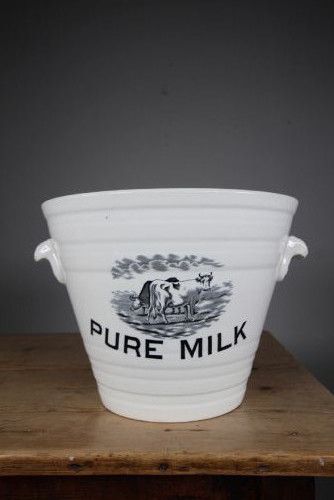
It forms a heavy base suitable for everyday domestic items like dairy pails and large mugs.