


Two Handled Porcelain Cup
These two handled porcelain cup examples offer a tangible link to Regency and Victorian dining, combining fine ceramic bodies with twin handles.
Two Handled Porcelain Cup
A two handled porcelain cup serves specialised drinking and decorative functions across the Regency, Victorian, and Edwardian eras. Buyers encounter loving cups, chocolate cups with covers, and soup bowls spanning porcelain, bone china, and ceramic.
The selection ranges from miniature Royal Worcester pieces to large nineteenth century loving cups. Makers such as Spode, Bloor Derby, H & R Daniel, and Royal Worcester dominate the material evidence.
Forms include decorative vessels and ceramic cups alongside soup bowls and loving cups. Dating stretches from Regency examples around eighteen seventeen to early twentieth century pieces from nineteen twenty.
Materials and construction
Pieces combine porcelain or bone china bodies with applied gold leaf, gilding, and enamel decoration. Artisans shaped these ceramic vessels by hand before firing and applying intricate hand painted details.
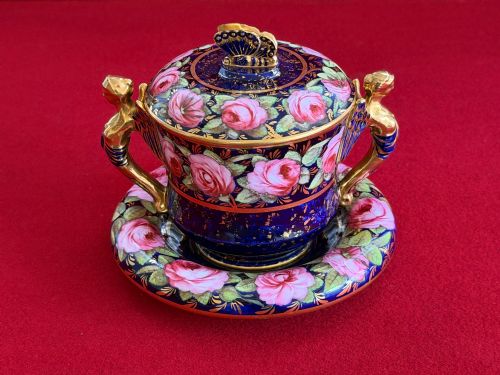
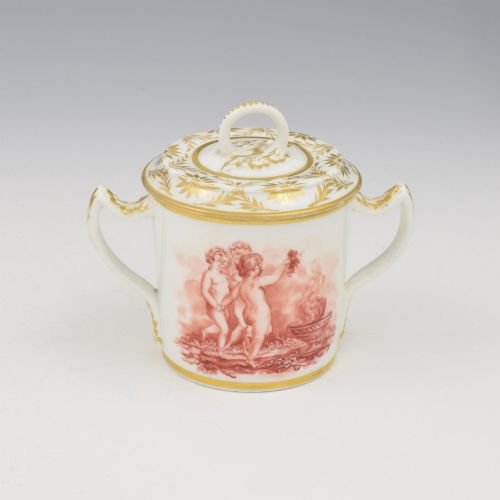
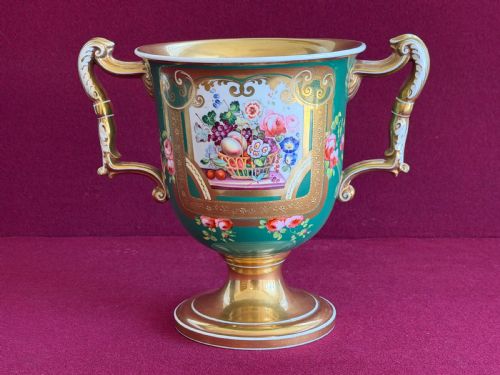
Surface ornamentation relies on sepia putti, blush ivory finishes, and painted fruit motifs. Gilding accents the twin handles and rims of chocolate cups and loving cups alike.
Sepia putti dance across Regency chocolate cups while Royal Worcester artists immortalise everyday fruit.
Assessing quality and execution
Finely executed hand painting distinguishes superior pieces from standard production. Detailed sepia putti work and delicate fruit scenes require advanced artistic skill compared to plain or heavily worn surfaces.
The crispness of the porcelain moulding and the preservation of the gold leaf or gilding indicate the level of craftsmanship. Early nineteenth century works by known factories demonstrate superior ceramic refinement.
Spode·Bloor Derby·H & R Daniel·Royal Worcester
The Two Handled Porcelain Cup Glossary
- Loving cup
- A large drinking vessel featuring two handles designed for communal passing at celebrations. These ceramic pieces often commemorate specific dates or events.
- Chocolate cup
- A specialised vessel equipped with two handles and frequently a matching cover to keep rich chocolate drinks warm. Regency examples often display elaborate painted scenes.
- Blush ivory
- A signature Royal Worcester porcelain finish combining a soft cream background with gilt highlights. This technique became popular during the late nineteenth and early twentieth centuries.
- Gilding
- The application of gold leaf or gold powder to ceramic surfaces. This decorative layer enhances the handles, rims, and borders of fine cups.
Two Handled Porcelain Cup: Frequently Asked Questions
What is a two handled porcelain cup used for?
These vessels served specific purposes including chocolate consumption, communal toasts, and soup service. Their twin handles provided stability when passing heavier ceremonial cups.
Today they function primarily as decorative ceramic displays or cabinet pieces. Collectors prize them for their historical utility and fine painting.
How do I date a antique two handled cup?
Dating relies on factory marks, stylistic traits, and material composition. Regency examples exhibit neoclassical motifs, while Victorian and Edwardian pieces show evolving ceramic bodies.
Comparing the painting style and gilding techniques against known factory periods helps narrow the production decade. Reference guides for makers like Royal Worcester provide definitive factory ciphers.
What is the difference between a loving cup and a chocolate cup?
Loving cups feature two or sometimes three handles designed for passing between guests at gatherings. They generally have deeper, wider bodies suited for communal drinking.
Chocolate cups are smaller, often accompanied by a fitted cover to retain heat. They were intended for individual consumption of rich chocolate beverages.