


Royal Worcester Porcelain Urn
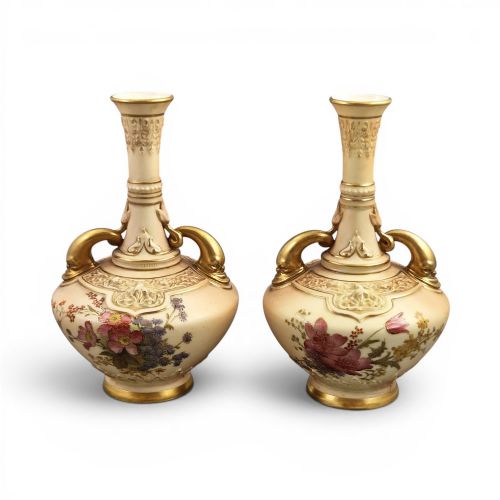
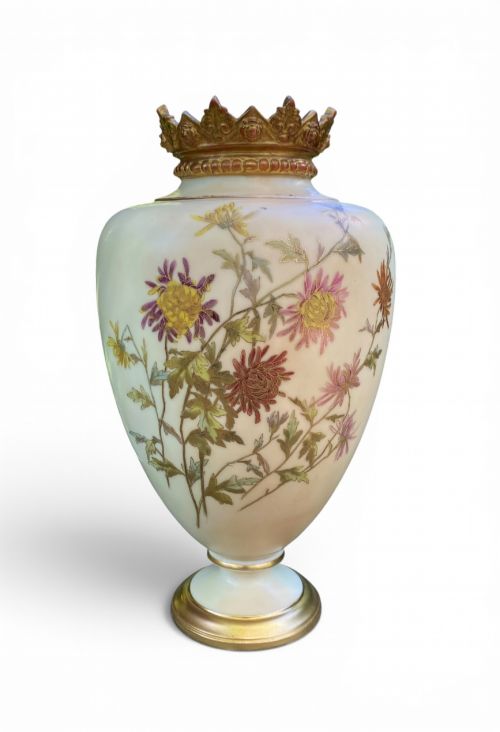
These royal worcester porcelain urn pieces combine fine painted detail with classic ceramic forms, offering a decorative centrepiece for the traditional interior.
Royal Worcester Porcelain Urn
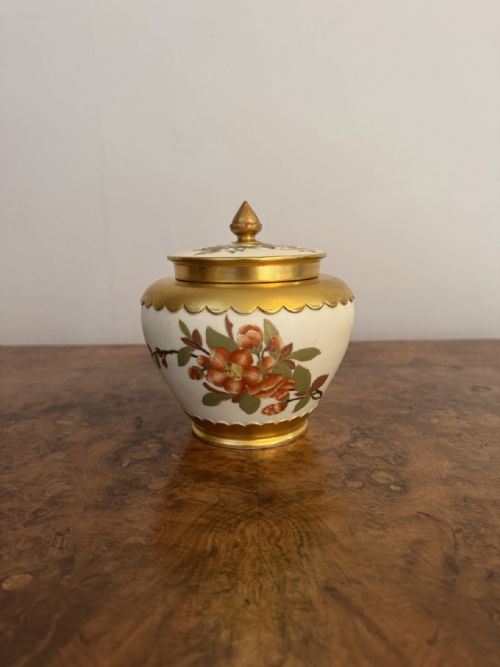
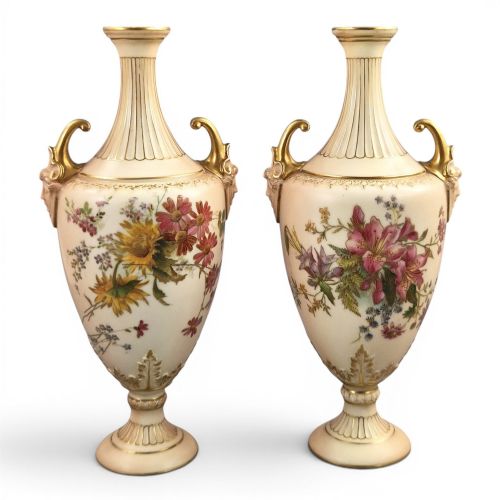
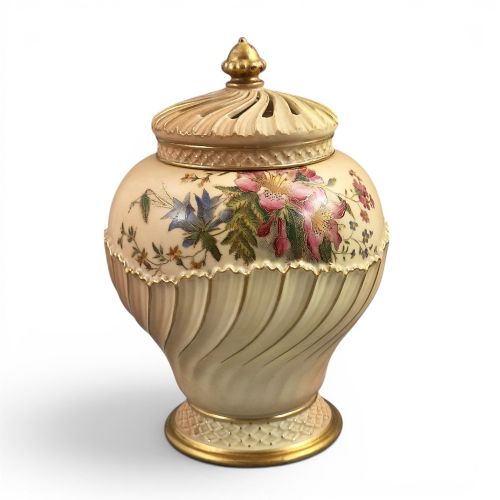
A royal worcester porcelain urn selection brings together decorative vessels, potpourri jars, and handled vases created across the nineteenth and twentieth centuries. The inventory reflects a strong representation of Edwardian blush ivory pieces alongside Victorian neo-classical designs and mid-century painted fruit studies.
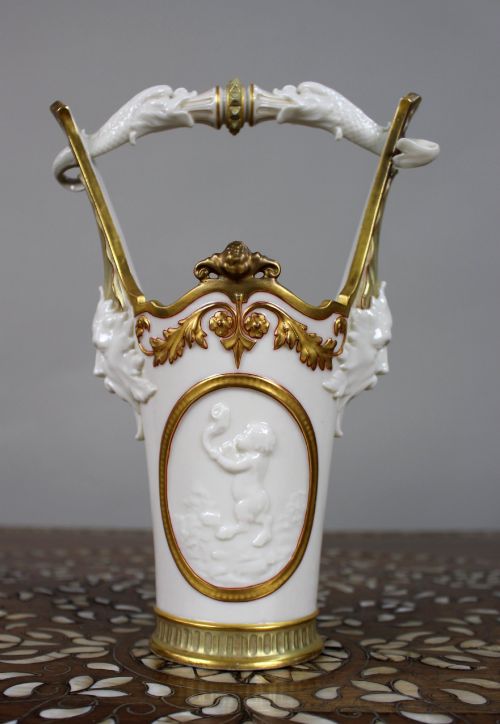
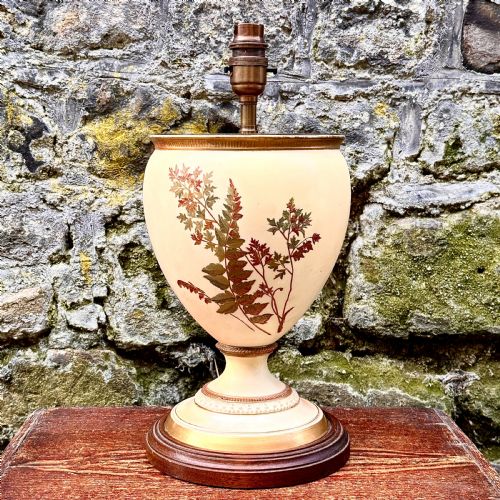
Buyers frequently encounter lidded potpourri pots, ovoid vases, and ewers featuring detailed hand-painted natural subjects such as storks, swans, pheasants, and highland cattle. These forms range from miniature cabinet items to substantial exhibition pieces fitted with pierced gilt handles and brass or wood mounts.
What varies in quality
The distinction between standard production and top-tier pieces rests on the complexity of the hand-painted subject matter and the reputation of the decorator. Signed works by notable painters carry greater artistic weight than standard floral transfer prints.
The intricacy of subsidiary work, such as pierced gilt handles, reticulated lattice patterns, and the richness of the enamel and gilding layers, defines the upper tier of the range.
Swans, storks, and highland cattle gaze serenely from porcelain surfaces, bringing an entire menagerie indoors without the feeding costs.
A.B. Daniell and Son·Hadley and Sons
The Royal Worcester Porcelain Urn Glossary
- Blush ivory
- A soft, matte cream-coloured porcelain body used extensively by the factory for floral-decorated wares during the late nineteenth and early twentieth centuries.
- Reticulation
- An intricate openwork technique where clay is pierced before firing to create delicate lattice designs, famously executed by specialist artisans.
- Potpourri
- A lidded vessel designed with pierced sections in the cover to allow the release of scent from dried flower petals held within.
- Ewer
- A large jug with a wide spout and handled body, often produced in matched pairs for decorative display rather than utility.
Royal Worcester Porcelain Urn: Frequently Asked Questions
What periods do these pieces span?
The selection covers items from the nineteenth century through the Edwardian era and into the mid-twentieth century, including pieces dated across the 1900s, 1910s, and 1920s.
Production methods and decorative styles evolved across these decades, moving from ornate Victorian revival styles toward hand-painted naturalistic bird and fruit studies.
How were potpourri jars used?
Potpourri jars held dried aromatic plant materials, allowing gentle fragrance to diffuse through the pierced covers into Victorian and Edwardian drawing rooms.
Beyond their functional scent-dispersing role, these lidded vessels served as prominent decorative ornaments on mantelpieces and cabinets.
Who painted these porcelain designs?
Many pieces feature hand-painted decoration executed by named artists associated with the factory, such as members of the Stinton family, C. Baldwyn, and various fruit painters.
Signatures or initials on the painted surface indicate the specific hand responsible for the bird, animal, or botanical artwork.
How do I care for antique porcelain?
Display pieces away from direct sunlight and areas of high humidity to protect the delicate enamel colours and gold leaf highlights.
Dust gently with a soft, dry brush and avoid chemical cleaning agents that could damage the glazed or matte blush ivory surfaces.