
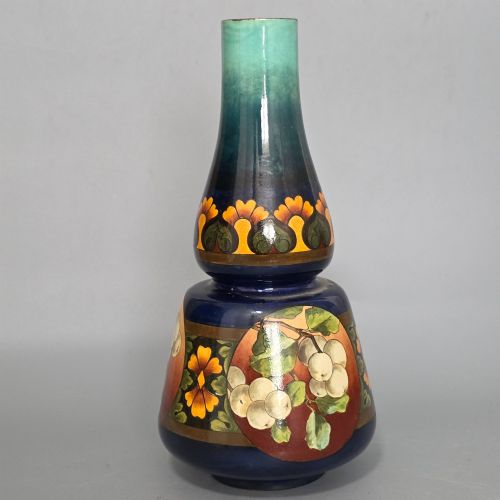
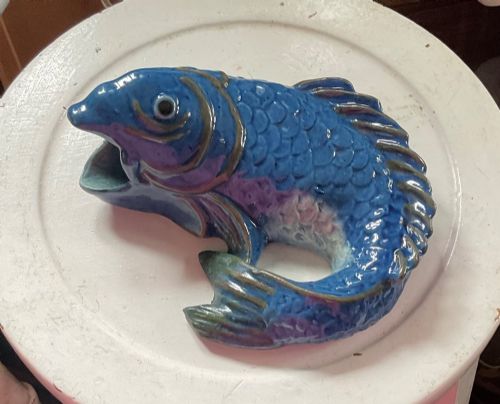


Victorian Ceramic Art Vase
A victorian ceramic art vase brings tactile depth and handcrafted character to a room, drawing the eye with rich glazes and expressive ornament.
Victorian Ceramic Art Vase
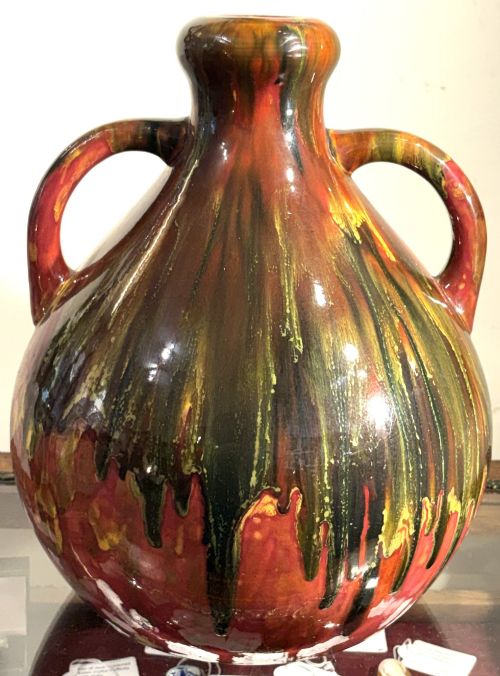
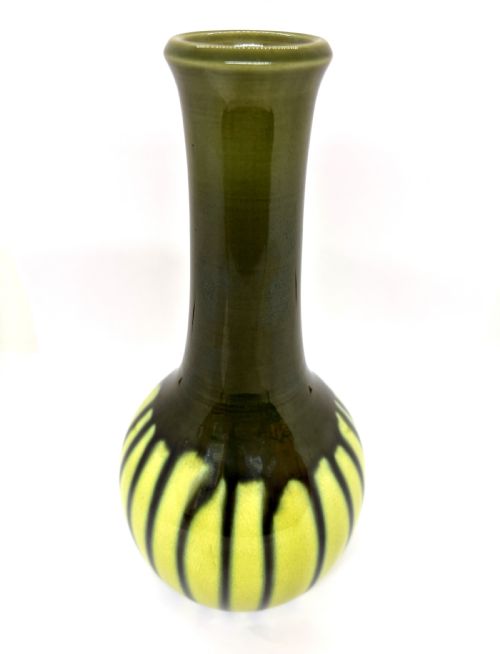
When searching for a victorian ceramic art vase, buyers encounter vessels shaped by late nineteenth-century studios and major potteries. These pieces span standard vases, wall pockets, ewers, and jugs, rooted primarily in the Victorian, Art Nouveau, and Arts and Crafts movements.
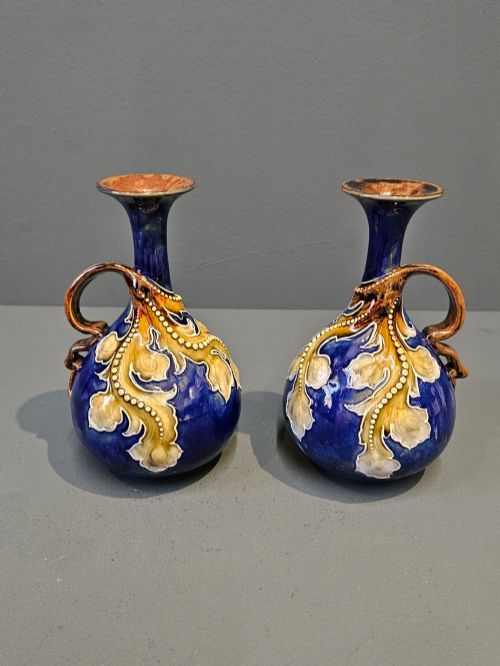
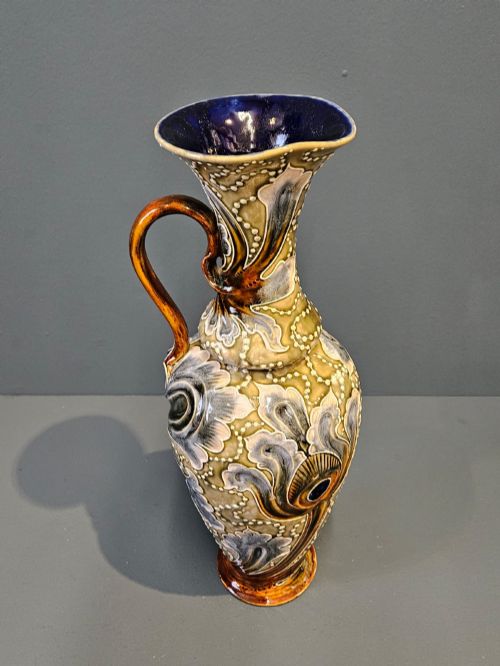
The selections on this page concentrate heavily on British studio and art pottery from the 1880s and 1890s, alongside continental porcelain and earthenware. Doulton Lambeth pieces dominate the groupings, joined by works from Burmantofts, Elton, and Moorcroft.
Forms range from modest cabinet vessels to large floor-standing ewers and twin-handled shapes. Surface treatments transition from simple glazed ceramic to intricate faience, enamel, and gold leaf detailing.
How they were made
Potters shaped these vessels using stoneware, earthenware, and porcelain bodies, applying liquid clay or throwing on the wheel. Many pieces incorporate specialised glazes and enamel painting executed by named artists.
Techniques recorded in the listings include Slaters Patent texturing, faience painting, and slip decoration. Firing took place in kilns that brought out the varied tones of the clay and the depth of the coloured glazes.
Persian kittens peer out from an oil painting listed alongside the ceramics, proving that Victorian tastes extended firmly to fluffy pets.
What varies in quality
Quality rests on the crispness of the modelled ornament, the balance of the thrown form, and the execution of the hand-painted surface decoration. Pieces painted or signed by prominent studio artists command stronger visual presence.
The richness of the glaze palette and the ambition of the studio design elevate certain examples above standard production pieces. Intricate surface patterns and well-preserved gilt or enamel highlights indicate superior workshop standards.
Burmantoft's Pottery·Doulton Lambeth Ware·Sir Edmund Harry Elton·William Moorcroft MacIntyre·Lauder Pottery Barnstaple·Mettlach Pottery·Ernst Wahliss·Brannam Art Pottery
The Victorian Ceramic Art Vase Glossary
- Faience
- Tin-glazed earthenware or pottery decorated with painted designs. This technique allows for colourful surface patterns on art pottery.
- Stoneware
- A robust ceramic fired at high temperatures until vitrified. It provides a dense, impermeable body suitable for detailed incising.
- Earthenware
- Porous pottery fired at lower temperatures, requiring a glaze to hold liquids. It forms the body for many decorative wall pockets and jugs.
- Slip
- Liquid clay applied to pottery for decoration or surface relief. Artists use it to trail or paint raised patterns before firing.
- Ewer
- A large jug with a wide spout and flared base. These vessels often serve decorative purposes in Victorian interiors.
Victorian Ceramic Art Vase: Frequently Asked Questions
What is a victorian ceramic art vase?
It is a decorative vessel produced during the nineteenth century, reflecting movements like Art Nouveau and Arts and Crafts.
These pieces showcase the decorative ambitions of period potteries through painted glazes and varied clay bodies.
How were these vases displayed?
Victorians placed them on mantelpieces, occasional tables, and inside cabinet displays to demonstrate artistic taste.
Larger ewers and jugs stood on the floor or on dedicated pedestals as sculptural focal points in a room.
How do I identify a studio piece?
Look for factory stamps, incised artist monograms, and registration marks stamped directly into the ceramic body.
Named decorators often signed their work beneath the glaze, indicating individual studio production.
Can these vases hold water?
Most glazed stoneware and porcelain vessels are water-tight and functional for holding cut stems or floral arrangements.
Earthenware pieces with porous bodies or specific decorative surfaces are better kept dry to protect the finish.