


Drip Glaze Ceramic Vessel
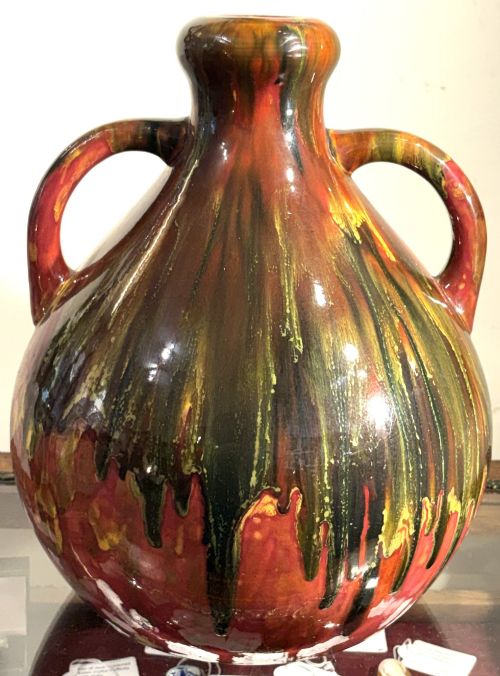
A drip glaze ceramic vessel brings tactile movement and rich surface depth into a room.
Drip Glaze Ceramic Vessel
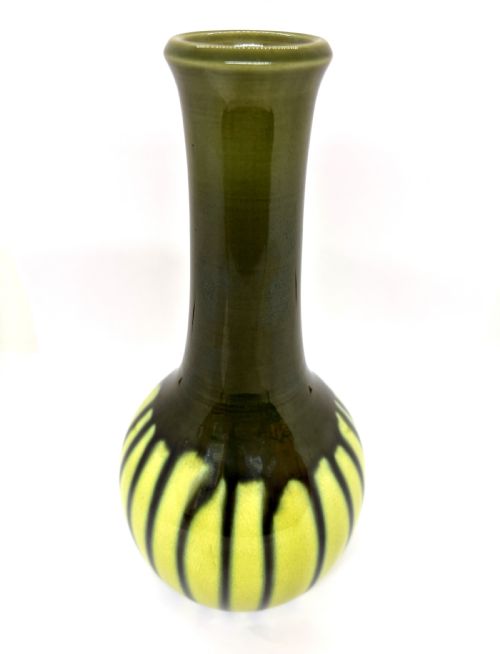
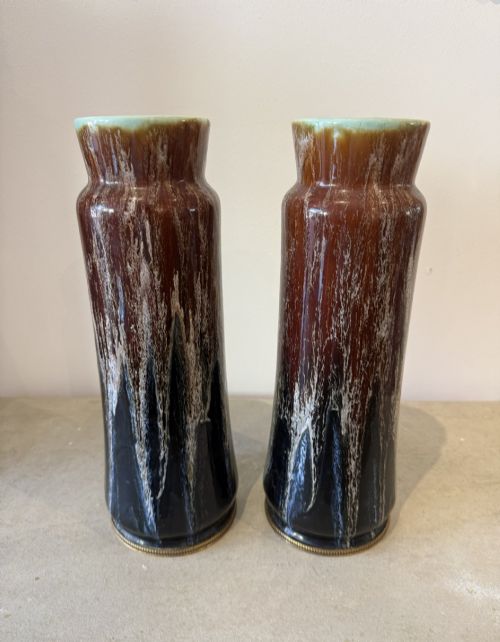
A drip glaze ceramic vessel combines utilitarian forms with flowing surface treatments that capture gravity in molten glass and metallic oxides. When you search for a drip glaze ceramic vessel, you encounter forms ranging from large handled centrepieces to compact cabinet specimens.
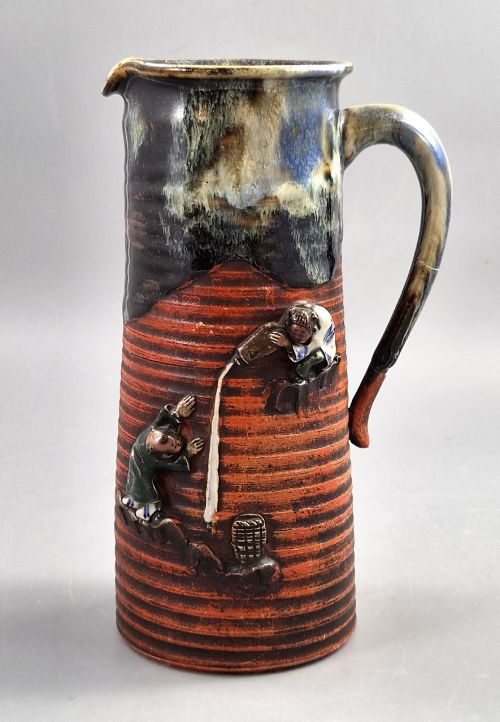
The pieces on this page span the late nineteenth century through to the mid twentieth century, crossing Victorian art pottery, Art Nouveau, Arts and Crafts, and Meiji periods. Vases dominate the selection, accompanied by pitchers and jugs shaped in earthenware, terracotta, and stoneware.
Makers in Britain, France, Belgium, and Japan shaped these works, giving rise to distinct regional interpretations of flowing glazes. The most frequent encounters include English art pottery and Japanese wares featuring characteristic runs and pooled textures.
Materials and methods of production
Potters built these bodies using earthenware, terracotta, and heavy stoneware, throwing them on the wheel or forming them in moulds before firing. The core structure provided a stable foundation capable of withstanding high kiln temperatures and heavy chemical coatings.
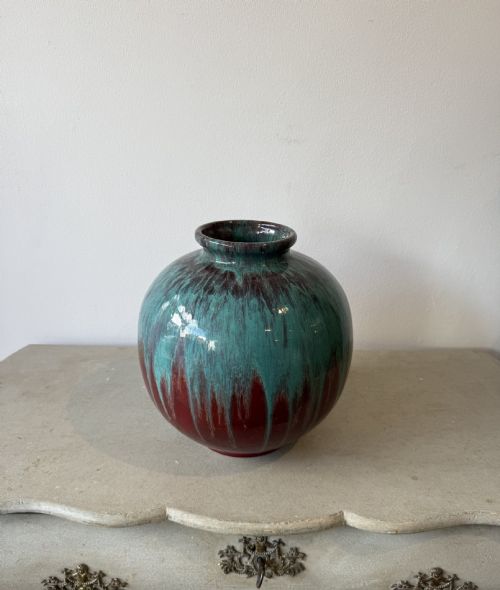
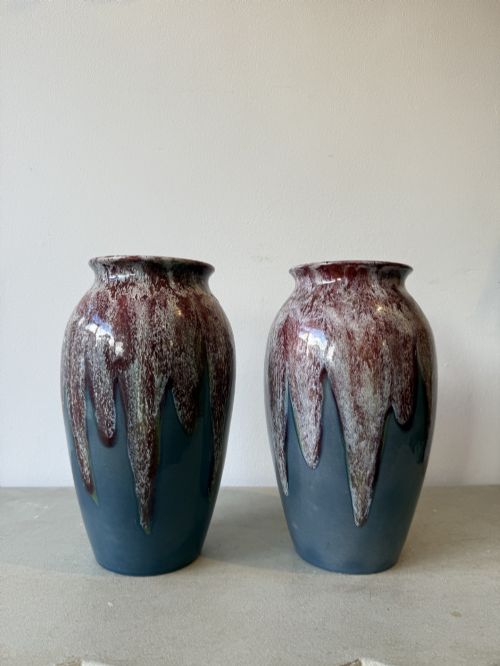
Artisans applied complex liquid ceramic glazes by pouring, dipping, or spraying, allowing gravity to pull the molten layers downward during the heat of the kiln. This chemical interaction produced crystalline effects, flambé runs, and variegated pools that froze in place as the piece cooled.
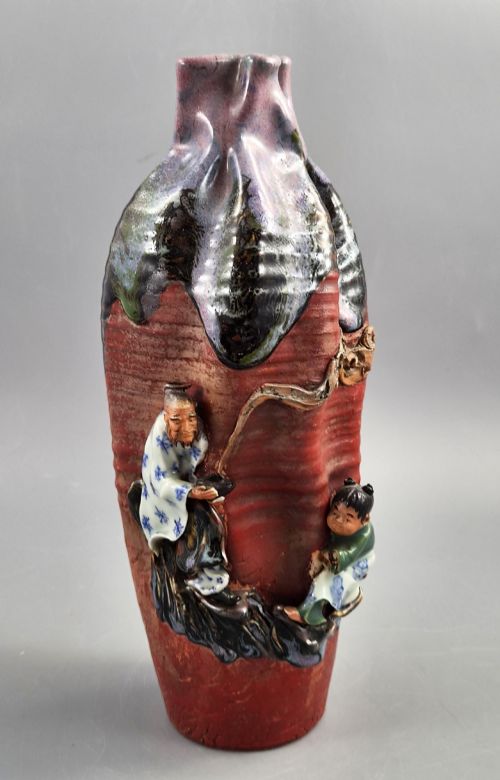
Some nineteenth century Japanese vessels depict sages and mythical attendants frozen forever in glossy lavender flambé.
Judging the quality of the finish
Quality rests upon the chemistry and control of the glaze run, where superior examples exhibit intentional depth, harmonious colour interplay, and stable vitrification. Lesser pieces show muddy pooling or flat, lifeless surfaces that fail to catch the light.
The relationship between the thrown ceramic form and the movement of the glaze dictates the artistic success of the vessel. The finest works display a dynamic tension where the liquid finish enhances rather than obscures the underlying silhouette.
Burmantofts·Boch Freres·Doulton·Cranston·Ruskin Pottery
The Drip Glaze Ceramic Vessel Glossary
- Crystalline glaze
- A finish containing specific chemical compounds that form distinct crystal blooms during the cooling cycle. These patterns resemble snowflakes or starbursts scattered across the body.
- Flambé
- A streaky, variegated glaze effect produced by reducing oxygen in the kiln, resulting in dramatic transitions of red, blue, and purple tones.
- Earthenware
- A porous, permeable ceramic body fired at lower temperatures, commonly used for traditional art pottery and glazed pitchers.
- Stoneware
- A dense, impermeable ceramic fired at high temperatures until the clay body vitrifies completely, offering superior strength and weight.
- Art pottery
- Ceramics produced independently or in small studio potteries with an emphasis on artistic design and experimental glazing rather than mass production.
Drip Glaze Ceramic Vessel: Frequently Asked Questions
What is a drip glaze?
A drip glaze is a surface treatment where liquid ceramic chemicals run down the sides of a vessel during firing. This leaves distinct vertical streaks, pooled rims, and variegated colour transitions.
The technique relies on precise kiln temperatures and gravity to create unpredictable, organic patterns that make each piece entirely unique.
How are these vessels dated?
Dating relies on factory marks, impressed stamps, glaze chemistry, and stylistic indicators such as Art Nouveau curves or Arts and Crafts simplicity. Comparative study of known studio outputs helps narrow the decade.
Porter signatures and registration numbers stamped into the clay body further anchor pieces to specific production eras.
Where were these pieces made?
The listings span European workshops in England, France, and Belgium alongside distinct Japanese studio traditions. Each region developed unique clay bodies and glaze recipes that reflect local tastes.
English art potteries worked alongside continental makers and Meiji period Japanese artisans to advance expressive glazing techniques.
How should I display them?
Display these vessels in spaces with strong natural light to highlight the reflective pools and subtle crystalline details of the glaze. Placing them on neutral wooden surfaces or near plain walls allows the organic forms to stand out.
Keep them away from direct, harsh sunlight if the pigments are sensitive, and handle them carefully by the body rather than delicate applied handles.