

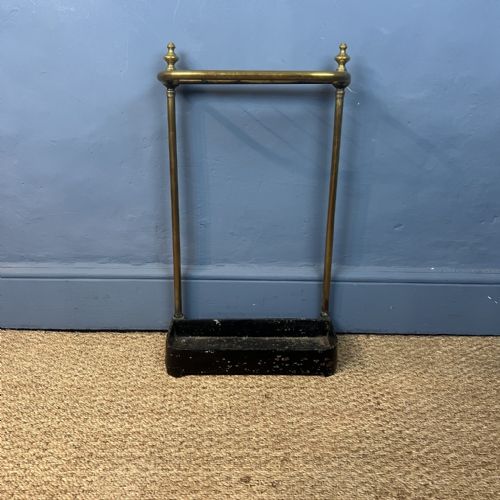
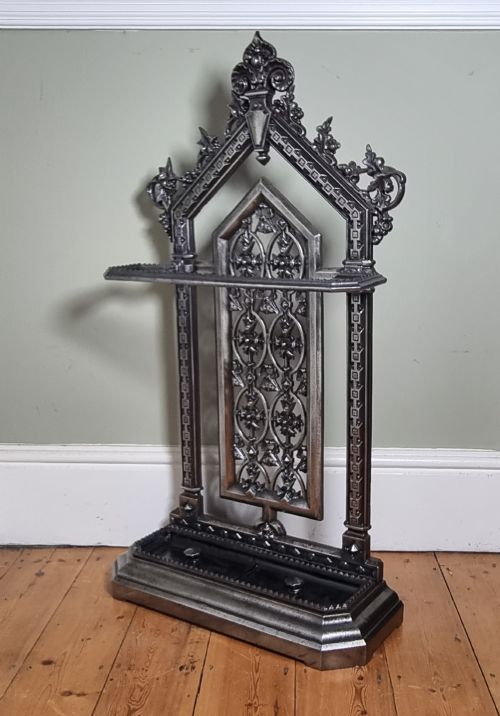
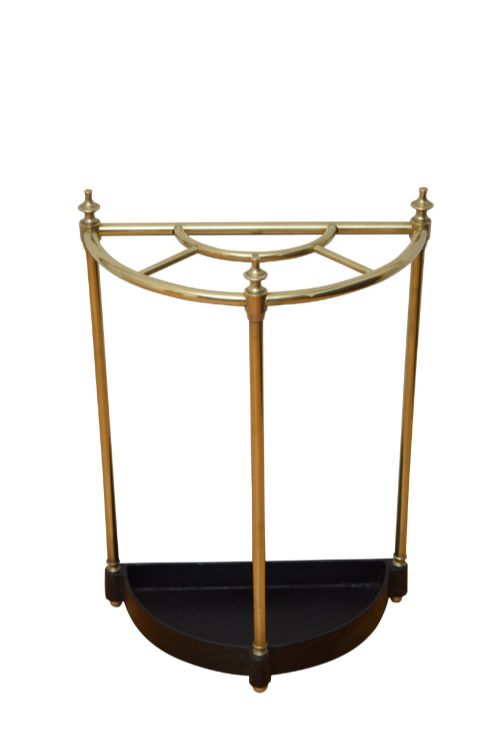
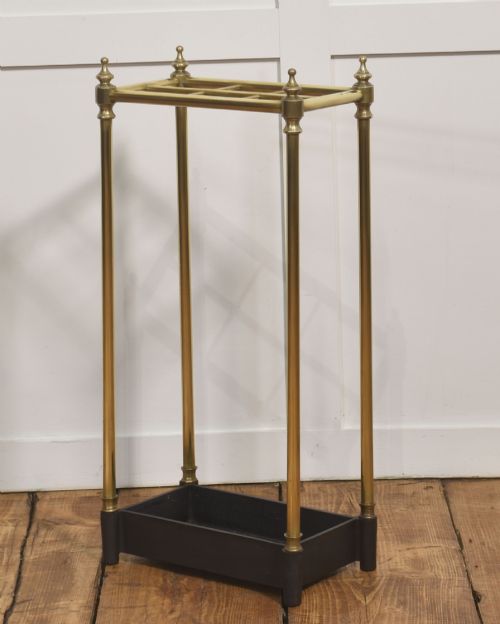
Victorian Cast Iron Umbrella Holder
These Victorian cast iron umbrella holders organise heavy hallway dampness with substantial metal frames built to last.
Victorian Cast Iron Umbrella Holder
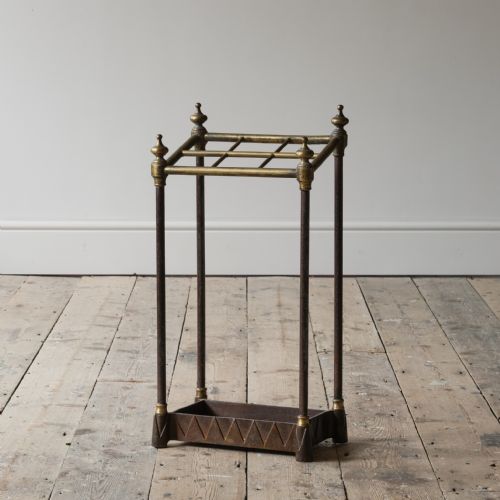
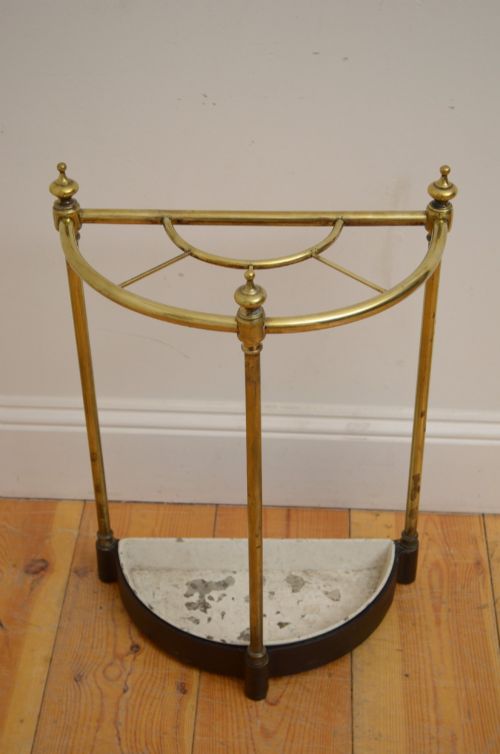
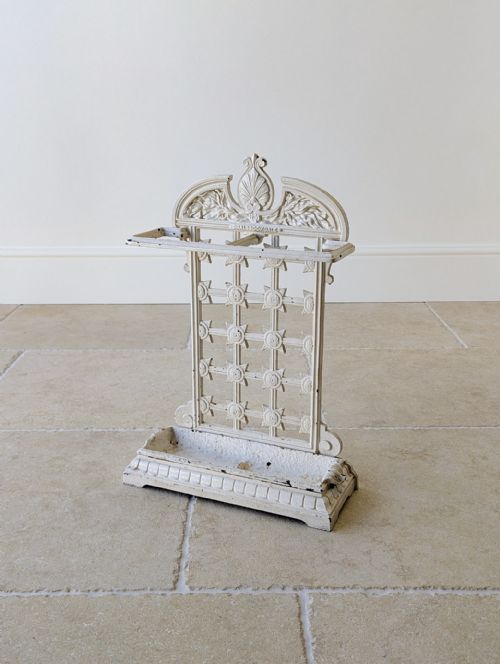
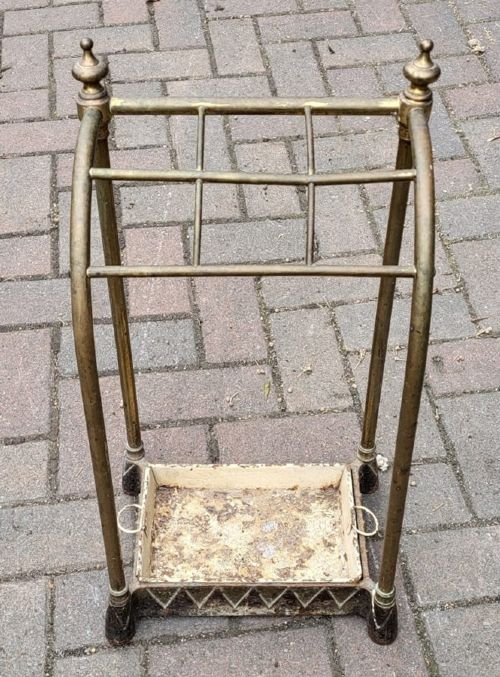
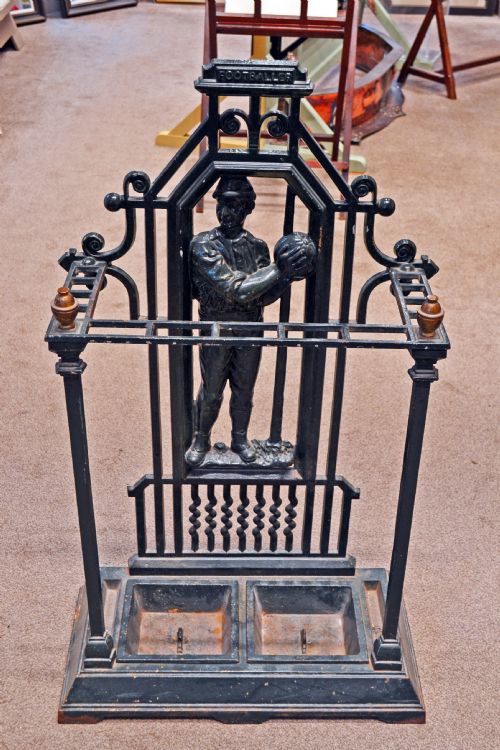
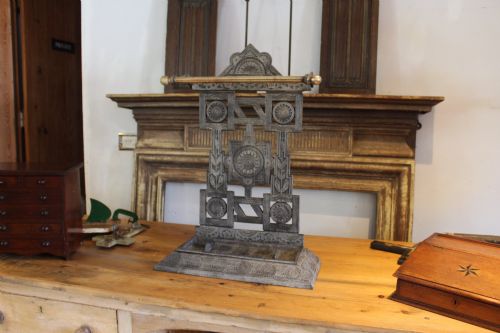
A Victorian cast iron umbrella holder is a functional hall furnishing designed to support wet walking sticks and umbrellas in entranceways. The pieces seen here span periods from the mid-nineteenth century through the Edwardian era, predominantly featuring heavy cast iron construction often paired with brass or ceramic elements.
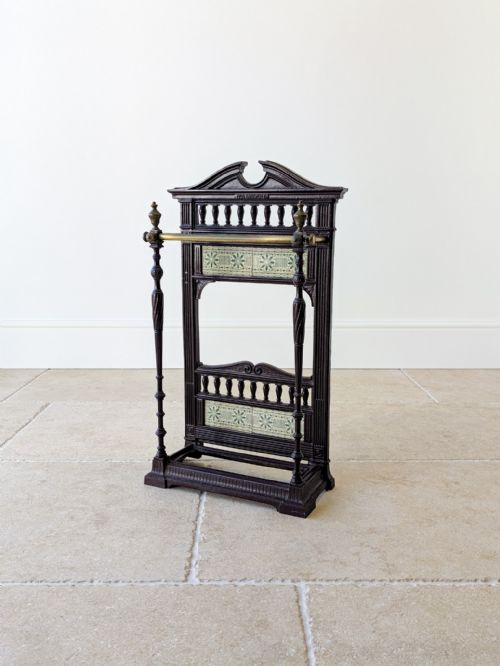
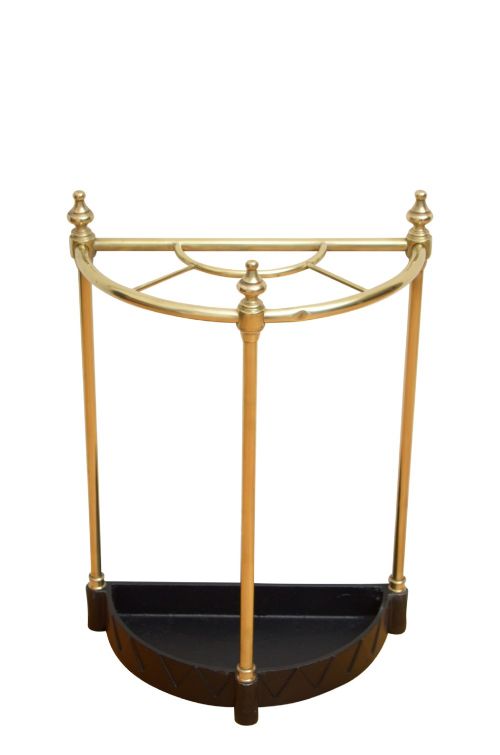
Most examples take the form of dedicated umbrella and stick stands or demi-lune hall stands, while some incorporate coat storage. Designs range from plain utilitarian frames to elaborate pieces displaying gothic, aesthetic movement or French art nouveau influences.
How they were made
Foundries utilised sand-casting techniques to pour molten iron into intricate moulds, producing rigid frames with openwork scroll patterns and figural motifs. Manufacturers often applied a protective painted finish to guard against rust from wet brollies.
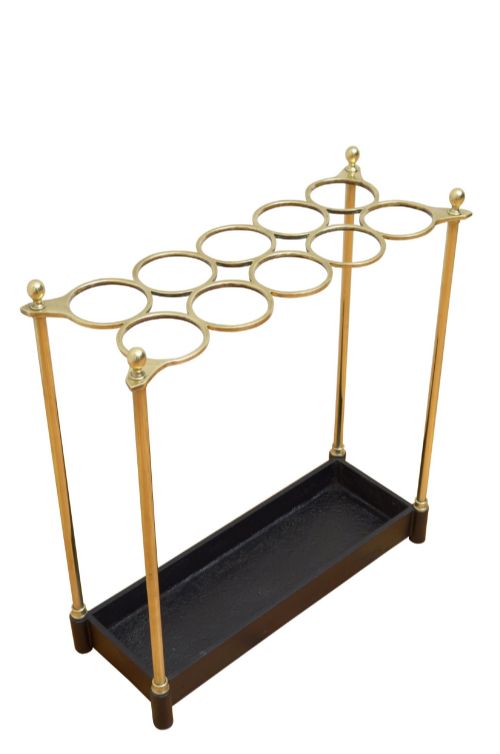
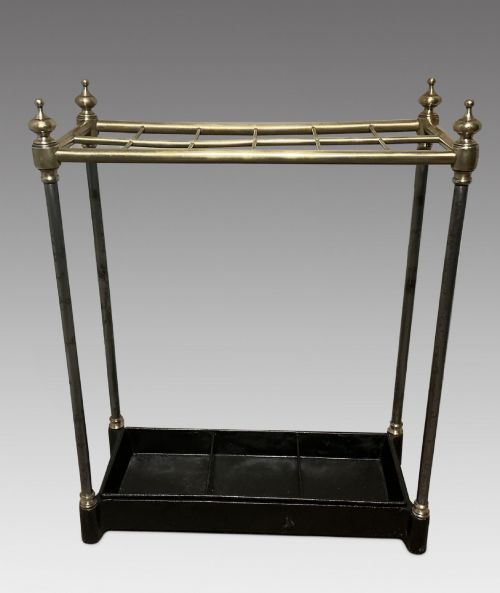
Many designs combine the heavy cast iron base with brass rails, decorative ball finials, or integrated ceramic and enamel drip trays to catch rainwater.
Listings incorporate diverse materials including cast iron, brass, ceramic, enamel, steel, and pitch pine.
What varies in quality
Quality depends on the crispness of the casting and the ambition of the design, moving from standard commercial foundry pieces to sculptural works by named manufacturers. Highly articulated figural subjects and complex openwork demonstrate greater foundry skill.
The integrity of the structural joints and the presence of original drip trays separate superior survivors from altered or incomplete examples.
Coalbrookdale·Thomas Jeckyll·Falkirk Ironworks·A. Kenrick & Sons
The Victorian Cast Iron Umbrella Holder Glossary
- Demi-lune
- A half-moon shape allowing the stand to sit flush against a hallway wall. This profile makes efficient use of narrow entrance spaces.
- Drip tray
- A removable base plate positioned beneath the frame to catch water from wet umbrellas. These are often made of metal or ceramic.
- Aesthetic Movement
- A late nineteenth-century design style emphasising visual beauty over narrative content. Pieces in this style often feature stylised natural forms.
- Finial
- A decorative terminal ornament topping the upright posts of a stand. They frequently appear as brass spheres or cast motifs.
Victorian Cast Iron Umbrella Holder: Frequently Asked Questions
Where did these stands live?
These umbrella holders stood in the halls and vestibules of nineteenth-century homes, greeting visitors immediately upon entry.
Their primary duty was holding heavy walking sticks, umbrellas and parasols so wet items stayed off wooden floorboards.
How do I prevent rust?
Keep the metal dry and place a suitable absorbent liner inside the original drip tray if you use it daily.
Avoid placing wet umbrellas directly into unlined iron channels for extended periods.
Are all cast iron stands Victorian?
While the majority date from the nineteenth century, production continued into the Edwardian period and the early twentieth century.
Design motifs and registration marks help distinguish mid-century Gothic pieces from later Art Nouveau interpretations.