



Dark Metal Umbrella Rack
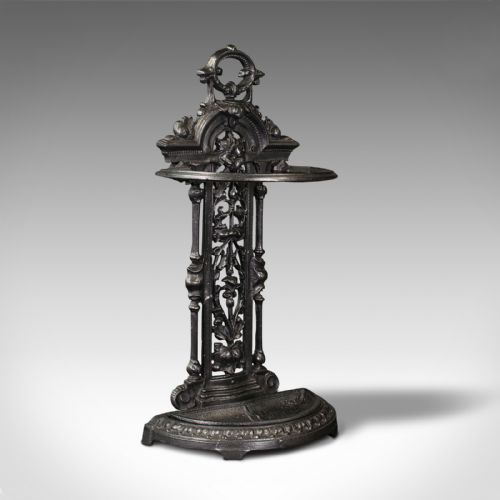
A dark metal umbrella rack brings structure to an entrance, holding heavy walking gear in durable cast iron, brass, and zinc.
Dark Metal Umbrella Rack
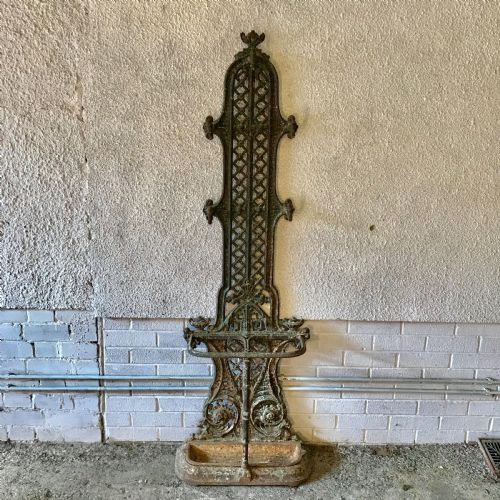
A dark metal umbrella rack is designed for the hallway, offering a practical vessel for wet walking gear and canes. These pieces appear in forms such as stick stands, umbrella and stick stands, and larger hall stands.
The versions most commonly met on this page span the nineteenth century, the Victorian era, the Edwardian period, and around nineteen hundred. Buyers encounter utilitarian items alongside decorative works displaying Gothic Revival and Art Nouveau styles.
Makers utilised robust materials suited to damp environments, pairing heavy metals with carved wood elements like oak and walnut. Regional variations include English designs and Belgian examples from nineteen hundred.
Construction and Materials
Foundries shaped these items primarily through metalcasting, producing rigid frames in cast iron and iron that could withstand daily moisture. Zinc components often lined the base to catch water drips and protect the surrounding floor.
Some pieces combine metal frameworks with carved wood accents, incorporating walnut, oak, and Black Forest woodwork into the structural design. Decorative details draw upon Gothic Revival motifs and flowing Art Nouveau lines.
Dark Metal Umbrella Rack Retail Price Guide 2026
Typical asking prices for dark metal umbrella rack among the pieces listed under this phrase on Sellingantiques today, from the lower quarter to the upper quarter. They describe what is for sale here now, not the wider market.
Materials across these listings span cast iron, zinc, brass, iron, carved wood, oak, and walnut.
Assessing Quality
Quality rests in the crispness of the cast iron detailing and the integrity of the structural joints. Pieces produced by established foundries demonstrate sharper ornamentation and heavier gauge metal than simpler utility items.
The inclusion of original removable drip pans in zinc or brass elevates a piece's utility and preservation. Finer examples also maintain intact wooden elements and stable secondary structures without replacement parts.
Falkirk Foundry·Coalbrookdale
The Dark Metal Umbrella Rack Glossary
- Cast iron
- A strong, heavy alloy poured into moulds to create rigid umbrella stands with intricate decorative patterns. This material defines the majority of nineteenth-century hall stands.
- Drip pan
- A removable tray placed at the base of the rack to catch moisture from wet umbrellas. These pans are frequently formed from zinc or brass.
- Gothic Revival
- A nineteenth-century design style incorporating medieval architectural motifs like pointed arches and tracery. It appears frequently on Victorian hall stands.
- Art Nouveau
- An international style prominent around nineteen hundred characterised by organic, flowing lines and natural plant forms. Belgian makers applied these sinuous curves to hall furniture.
Dark Metal Umbrella Rack: Frequently Asked Questions
What is a dark metal umbrella rack?
A dark metal umbrella rack is a hall furnishing built to hold wet walking sticks, umbrellas, and canes. They combine heavy metal frames with integrated drip trays.
These utilitarian objects served entrance halls in nineteenth-century homes, keeping hallways tidy and dry.
How do I care for cast iron?
Cast iron requires minimal maintenance beyond dusting and keeping the metal dry to prevent rust formation. Ensure the base tray is emptied regularly.
Apply a light wax or protective oil if the metal finish appears dry, avoiding harsh chemical cleaners.
Where were these racks placed?
These stands traditionally stood in the entrance hall or vestibule of a country house or townhouse. They welcomed visitors and caught dripping water immediately upon entry.
Today, they serve the same practical function in modern boot rooms and hallways.
How do I date a stick stand?
Dating relies on stylistic clues, such as the symmetrical geometry of Victorian Gothic Revival or the whiplash curves of Art Nouveau. Foundry marks and patent stamps can also provide specific chronological markers.
Materials provide further evidence, as walnut and oak elements often align with nineteenth-century cabinetmaking traditions.