





Cast Iron Hallstand
These cast iron hallstand pieces bring robust utility and striking Gothic or Aesthetic Movement design straight into the entrance hall.
Cast Iron Hallstand
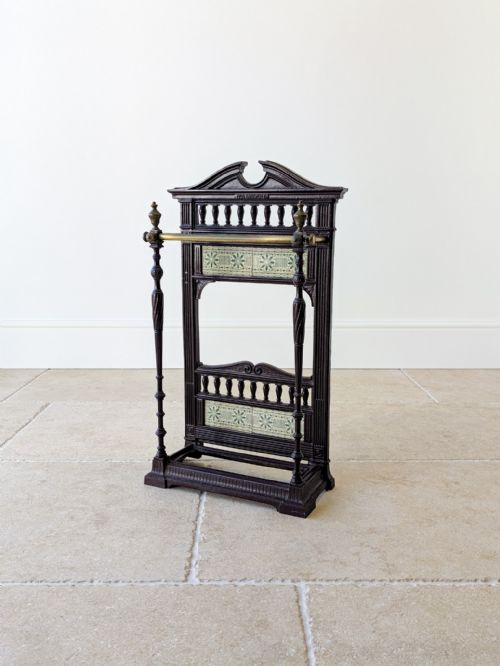
A cast iron hallstand combines utility and decoration, serving as a heavy-duty station for wet umbrellas, heavy coats, and hats in a domestic entrance. When you search for a cast iron hallstand, you encounter substantial Victorian and Edwardian examples designed to anchor a hallway with dark, structural metalwork.
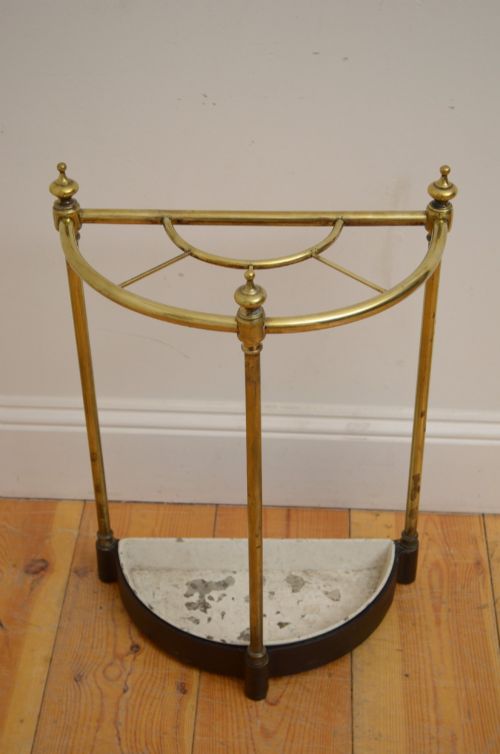
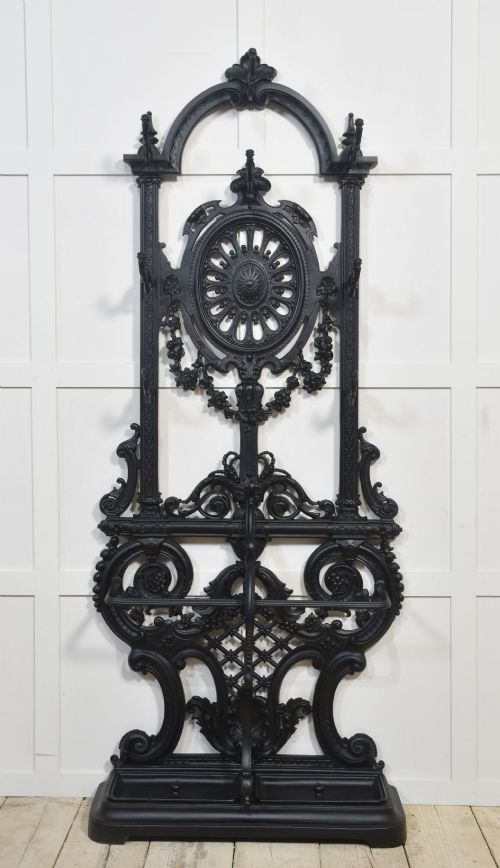
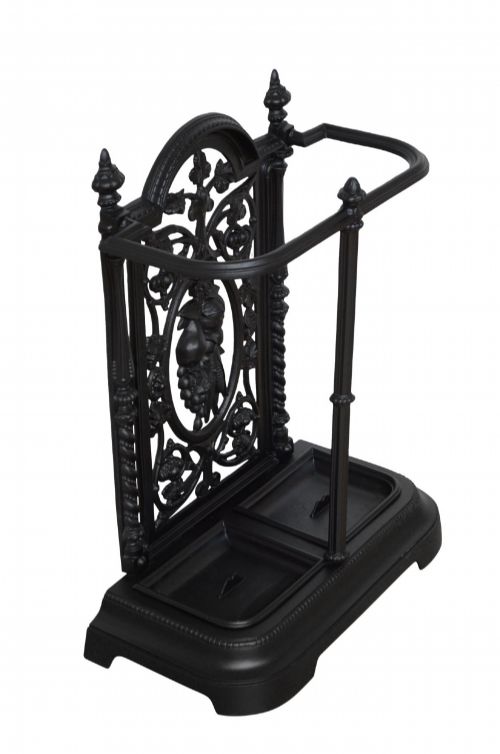
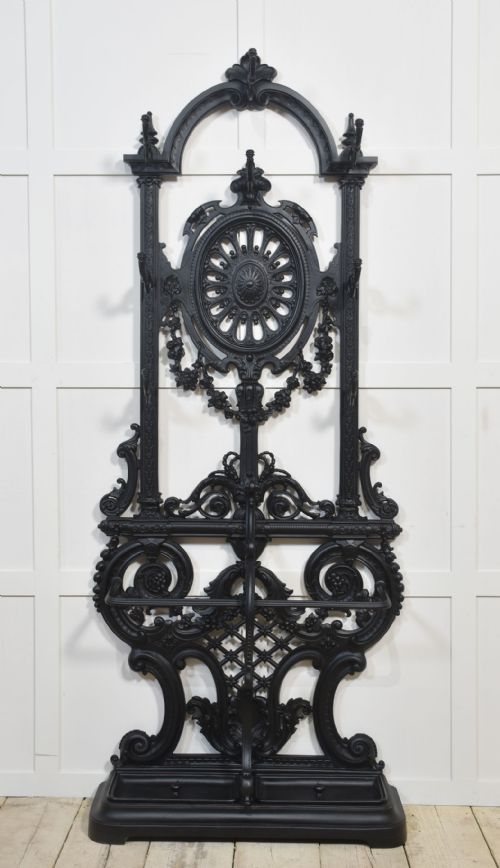
The objects on this page span the Victorian and Edwardian eras, reaching from the mid-nineteenth century around eighteen sixty through to nineteen hundred and five. Forms range from dedicated umbrella and stick stands in half-moon or upright configurations to grander combination pieces featuring coat hooks and hat racks.
Makers such as Coalbrookdale and the Falkirk Foundry dominate the records, alongside uncredited English and French workshop pieces. You will frequently find styles borrowing from the Aesthetic Movement, Victorian Gothic Revival, and even whimsical faux bamboo motifs.
Materials and casting methods
Foundries utilised cast iron poured into detailed moulds to achieve the crisp architectural reliefs, pierced scrollwork, and structural frames that define these pieces. This heavy metal foundation gives each hall stand the immense weight required to support dripping walking sticks and winter coats without tipping.
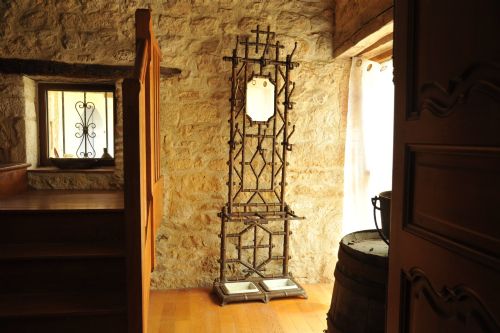
Makers integrated secondary materials like brass for hooks, ceramic for drip pan liners or tile accents, and marble for small surfaces, while protective paint finishes helped guard the iron against damp umbrellas. Faux bamboo effects were also cast directly into the iron structure, mimicking organic plant stems through precise pattern-making.
Some Victorian ironmasters cast rigid metal to look casually like hollow bamboo stalks, fooling the eye right in the hallway.
Assessing quality in cast iron furniture
The refinement of the casting separates standard utility items from finer foundry work, visible in the sharpness of the surface detail and the clean definition of foliage or scroll motifs. Finer pieces retain intricate openwork without the rough casting flaws or blurred edges found in later or simpler reproductions.
Completeness dictates much of the standing of an individual piece, particularly the survival of original drip pans, brass hooks, and stable joints where structural sections bolt together. The presence of documented foundry marks or distinct foundry attribution elevates an example beyond anonymous utilitarian stock.
Coalbrookdale·Falkirk Ironworks·Falkirk Foundry
The Cast Iron Hallstand Glossary
- Cast iron
- A strong, hard alloy of iron and carbon that is poured into moulds while molten. It provides the heavy, rigid framework essential for large hall stands and umbrella holders.
- Aesthetic Movement
- A late nineteenth-century design focus on beauty and visual pleasure rather than narrative storytelling. It often introduced Japanese-influenced motifs and stylized natural forms to hallway furnishings.
- Gothic Revival
- An architectural and decorative style drawing inspiration from medieval design. In ironwork, this manifests as pointed arches, quatrefoils, and ecclesiastical vertical lines.
- Drip pan
- A shallow tray placed at the base of stick and umbrella stands to catch moisture from rain-soaked items. These liners are often made of metal or ceramic and sit within the iron framework.
- Faux bamboo
- A decorative finish or moulded form that imitates the segmented stalks of natural bamboo. This style was popular in European metalwork during the late nineteenth century.
Cast Iron Hallstand: Frequently Asked Questions
How heavy is a cast iron hallstand?
These pieces possess substantial weight due to the density of cast iron, which is necessary to prevent tipping when loaded with wet winter coats and heavy walking sticks.
Because of this heft, they require careful placement on solid flooring and demand proper assistance when moving them between rooms.
Where should I place a hall stand?
They belong in an entrance hall or boot room where their original purpose of holding wet umbrellas, hats, and coats remains useful.
Ensure adequate clearance around the piece so that protruding coat hooks and stick rings do not obstruct narrow hallways.
How do I care for cast iron?
Maintenance involves dusting the intricate recesses regularly and occasionally checking painted or lacquered surfaces for signs of moisture exposure.
Avoid using harsh chemical cleaners that can strip historic paint finishes or damage integrated brass and ceramic components.
How can I tell the period?
Stylistic clues such as Gothic arches point to mid-Victorian production, while asymmetrical plant forms and faux bamboo often signal the later nineteenth century or Aesthetic Movement.
Foundry marks and registration numbers cast into the reverse of the iron provide the most reliable chronological markers.