





Victorian Cast Iron Coat Stand
A victorian cast iron coat stand is a sturdy hallway centrepiece designed to hold hats, coats, and umbrellas.
Victorian Cast Iron Coat Stand
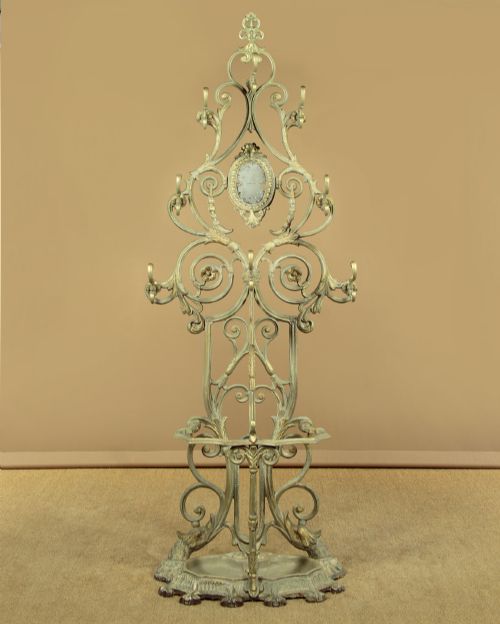
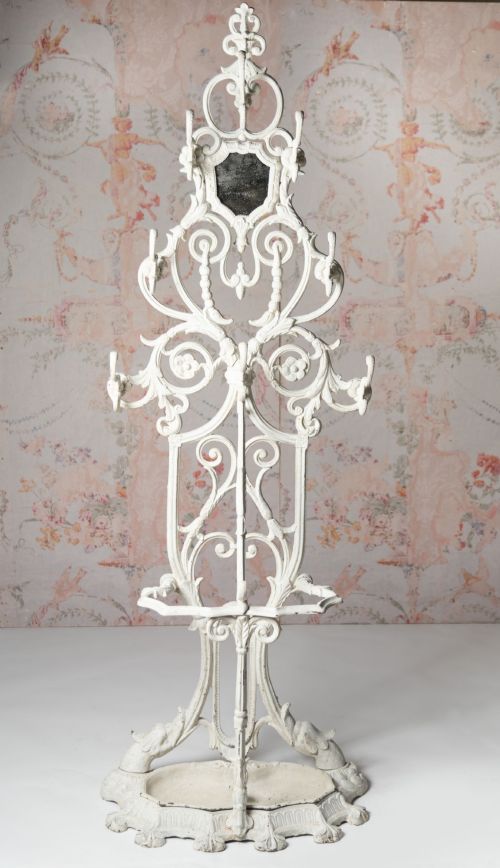
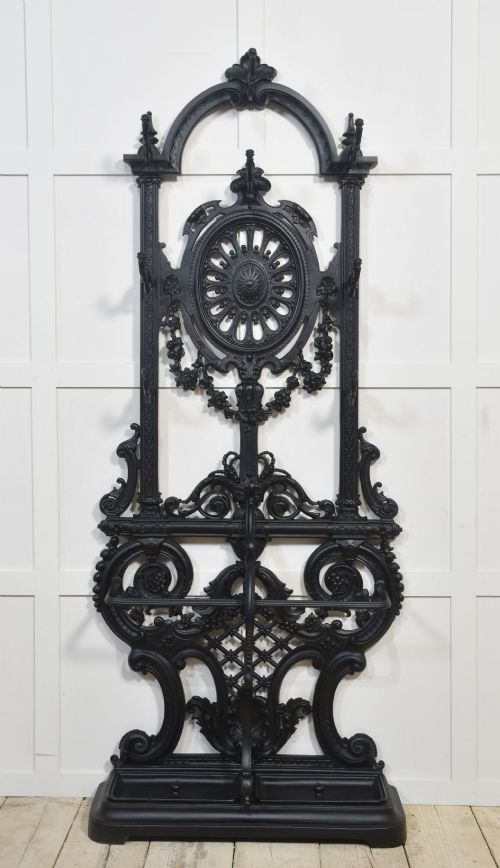
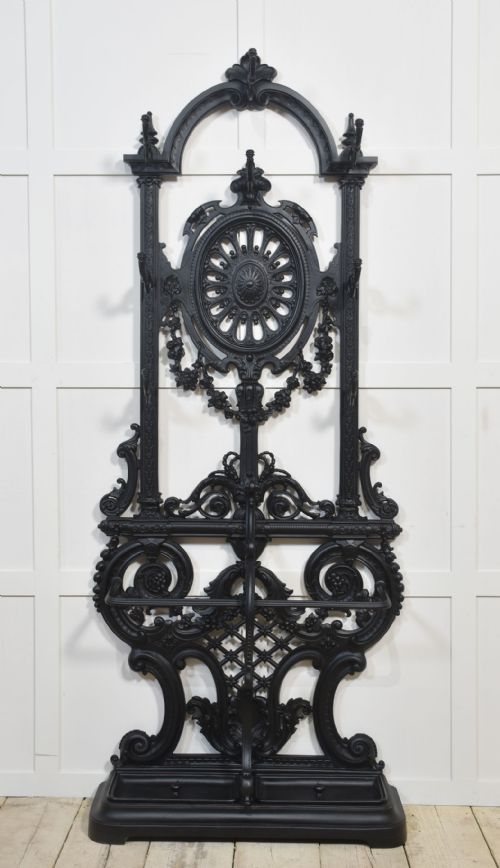
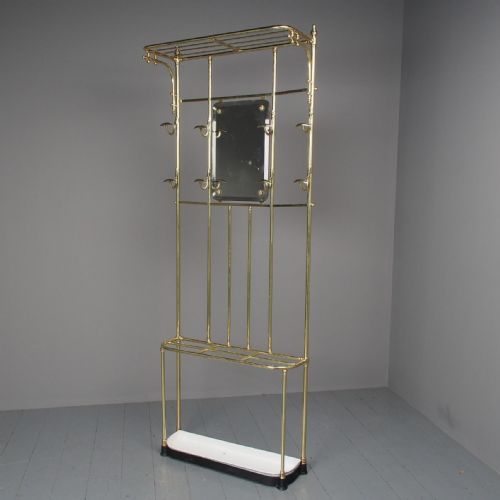
When you search for a victorian cast iron coat stand, you are looking at robust entrance furniture designed for the 19th century hallway. These pieces combine heavy metal framework with practical hooks, drip pans for wet umbrellas, and frequently a central mirror.
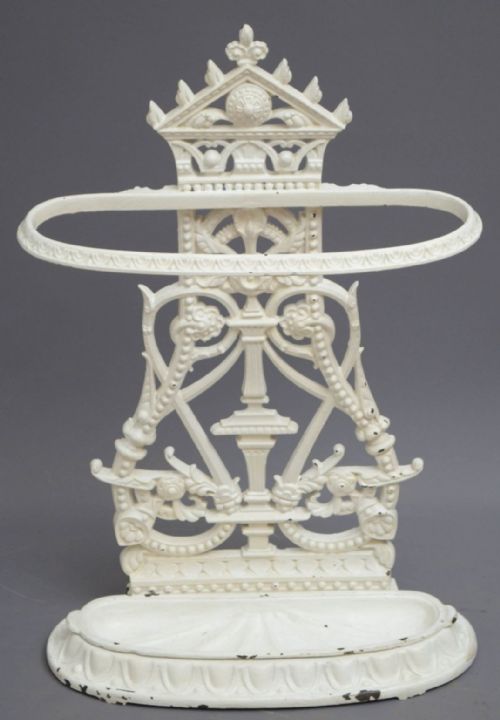
The versions you are most likely to meet on this page span the Victorian and Edwardian eras, with many examples originating from French workshops as well as English foundries. They appear in various forms including tall portico designs, wall-mounted coat racks, and combined umbrella stands.
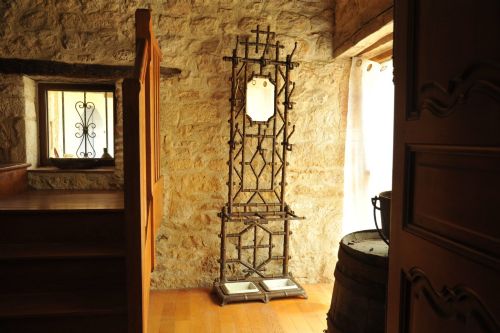
Makers ranged from major industrial foundries producing ornate patterns to smaller workshops crafting faux bamboo and gothic revival designs. Each piece reflects the functional demands of a period hallway where outdoor garments needed immediate storage.
Materials and construction
These stands were produced by pouring molten metal into sand moulds, allowing foundries to create intricate openwork patterns, scrolling foliage, and structural faux bamboo stems. This heavy cast iron framework gives each piece its characteristic weight and stability.
Many examples incorporate secondary materials such as brass hooks, inset glass mirrors, marble bases, and terracotta or metal drip pans to catch water from walking sticks and umbrellas. Original painted or white-glossed finishes often survive beneath layers of later decoration.
Many stands include tiny cast drip pans that have spent over a century catching puddles from Victorian walking sticks.
Assessing quality and design
The distinction between ordinary production and finer work lies in the crispness of the casting and the ambition of the design. Foundries that invested in detailed ornamentation produced stands with sharp relief, clean edges, and balanced proportions.
Quality also shows in the integration of secondary elements, such as heavy bevelled mirror glass, substantial brass fittings, and robust structural joints that withstand the heavy load of winter overcoats.
Falkirk Foundry·Coalbrookdale
The Victorian Cast Iron Coat Stand Glossary
- Coalbrookdale style
- A term applied to ornate openwork iron castings inspired by the famous Shropshire foundry, known for ferns, scrolling foliage, and Gothic motifs.
- Drip pan
- The removable metal or ceramic tray positioned at the base of a stand to catch water from wet umbrellas and walking sticks.
- Faux bamboo
- A decorative moulding technique that mimics real bamboo stalks, popular in nineteenth-century French ironwork.
- Portico stand
- A tall architectural hall stand featuring columns or pillars supporting an upper canopy for hats.
Victorian Cast Iron Coat Stand: Frequently Asked Questions
What is a hall stand?
A hall stand is a piece of entrance furniture combining coat hooks, hat pegs, and umbrella storage, often with an integrated mirror.
They were placed in Victorian hallways to receive outdoor garments and wet walking sticks as people entered the home.
How do I clean cast iron?
Cast iron is cleaned using a soft brush to remove dust and a dry or slightly damp cloth for general maintenance.
Avoid harsh chemical solvents that can strip original paint or protective surface treatments.
Are these stands heavy?
These stands are exceptionally heavy due to the solid metal construction required to support wet coats without tipping.
This weight gives them stability, making them secure freestanding furniture pieces in busy hallways.
How do I spot a reproduction?
Reproductions often feature softer casting details, modern fixings, and lightweight metal composition compared to nineteenth-century originals.
Look for the natural wear, old paint layers, and heavy industrial construction characteristic of the period.