



Gothic Cast Iron Hall Stand
A gothic cast iron hall stand anchors an entrance with architectural weight, offering a practical place for wet umbrellas and heavy walking sticks.
Gothic Cast Iron Hall Stand
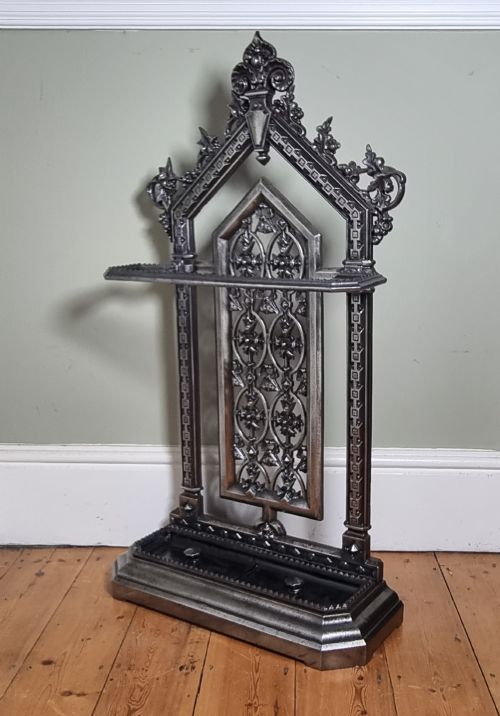
When you search for a gothic cast iron hall stand, you encounter robust Victorian hallway furniture designed to withstand daily household traffic. These pieces range from compact umbrella stands to large hall stands with integrated racks, hailing predominantly from the nineteenth century.
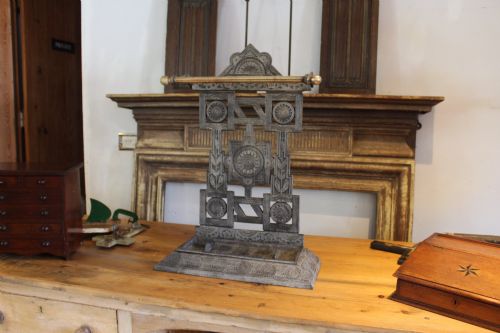
The aesthetic draws heavily on Victorian Gothic Revival and Aesthetic Movement design principles, featuring pointed arches, tracery, and formal geometry. You will most frequently meet heavy stick stands and umbrella racks finished in dark paint, often incorporating brass drip pans or marble elements.
How they were made
Foundries utilised sand casting techniques to produce the intricate openwork patterns characteristic of these pieces. molten iron poured into moulds captured sharp architectural details like trefoils and blind arcading without the need for manual chasing.
Manufacturers integrated functional additions such as removable sheet metal or brass drip trays to catch water from wet sticks. Paint finishes, sometimes layered over time, protected the heavy metal from rust in damp entrance halls.
One standout piece famously depicts William Wallace, proving that even a rainy Victorian Tuesday needed a bit of Scottish medieval drama in the hallway.
What varies in quality
The distinction between ordinary production and superior work lies in the crispness of the iron casting and the ambition of the design. Foundries known for high artistic output achieved deep relief work and clean, sharp edges that cheaper commercial castings lacked.
Structural complexity also separates standard utility items from exceptional examples. A larger ring capacity, the inclusion of named foundry stamps, or sophisticated subsidiary materials like marble bases elevate the standard of the piece.
Thomas Jeckyll·Coalbrookdale·Falkirk Foundry
The Gothic Cast Iron Hall Stand Glossary
- Gothic Revival
- A nineteenth-century architectural and decorative style drawing inspiration from medieval forms such as pointed arches and trefoils. This movement heavily influenced the structural motifs found on Victorian hall furniture.
- Cast Iron
- An iron-carbon alloy poured into moulds while molten to create rigid, durable objects with intricate surface decoration. It served as the primary material for heavy nineteenth-century umbrella and stick stands.
- Aesthetic Movement
- A late-nineteenth-century design philosophy prioritising visual beauty over narrative meaning or strict historical revival. Pieces from this movement often feature stylised natural forms and geometric discipline.
- Drip Pan
- A shallow metal tray placed at the base of a stick stand to catch moisture from wet umbrellas. These components were commonly formed from brass or sheet metal to prevent corrosion.
- Tracery
- Openwork ornamentation resembling stone ribs in Gothic windows, frequently cast into the back panels of hall stands. This technique lightened the visual weight of the heavy ironwork.
Gothic Cast Iron Hall Stand: Frequently Asked Questions
How do I date a cast iron hall stand?
Most examples originate from the Victorian period, roughly between eighteen-sixty and nineteen-hundred. Stylistic clues, registration marks, and foundry stamps cast into the iron help narrow down the decade of production.
Heavier gothic detailing often aligns with mid-Victorian revivalism, while certain pieces carry specific dates or maker attribution stamped directly onto the reverse.
Were these stands made only for umbrellas?
These versatile pieces accommodated walking sticks, riding crops, and parasols alongside heavy winter umbrellas. The numerous ring divisions kept multiple items upright and separated in busy Victorian hallways.
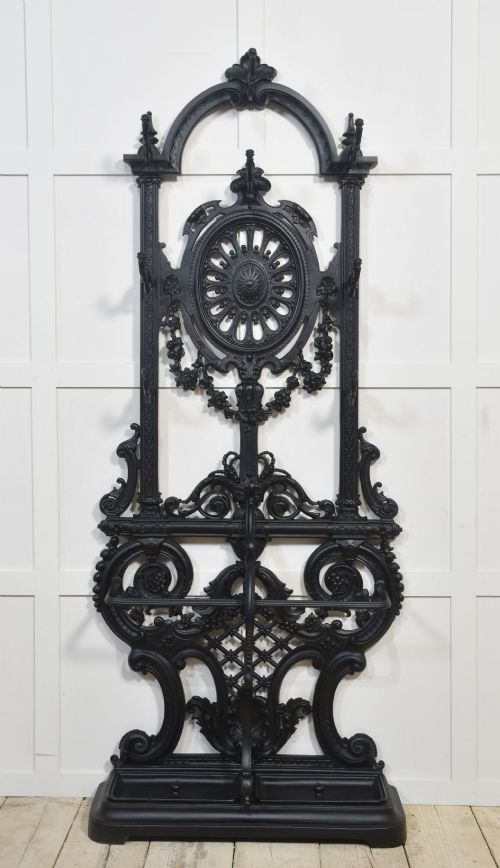
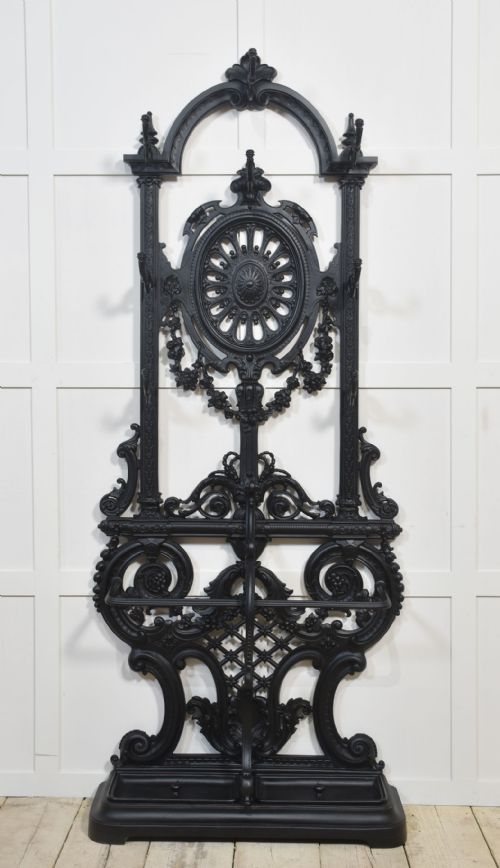
Larger hall stands sometimes combined umbrella racks with hat hooks and mirror frames, serving as the central furniture piece for a home entrance.
How should I care for cast iron furniture?
Keep the metal dry and dust it regularly with a soft brush to protect the original painted or patinated surface. Avoid harsh chemical cleaners that might strip historic paint layers.
Periodically check and empty the lower drip trays to ensure moisture does not sit against the base of the iron frame.
What is the difference between a stick stand and a hall stand?
A stick stand specifically focuses on vertical storage for walking items and umbrellas, usually comprising a base tray and an upper retaining ring frame. They have a smaller footprint.
A hall stand is a larger piece of furniture that often includes a back panel, coat hooks, a mirror, and a built-in umbrella rack at the base.