
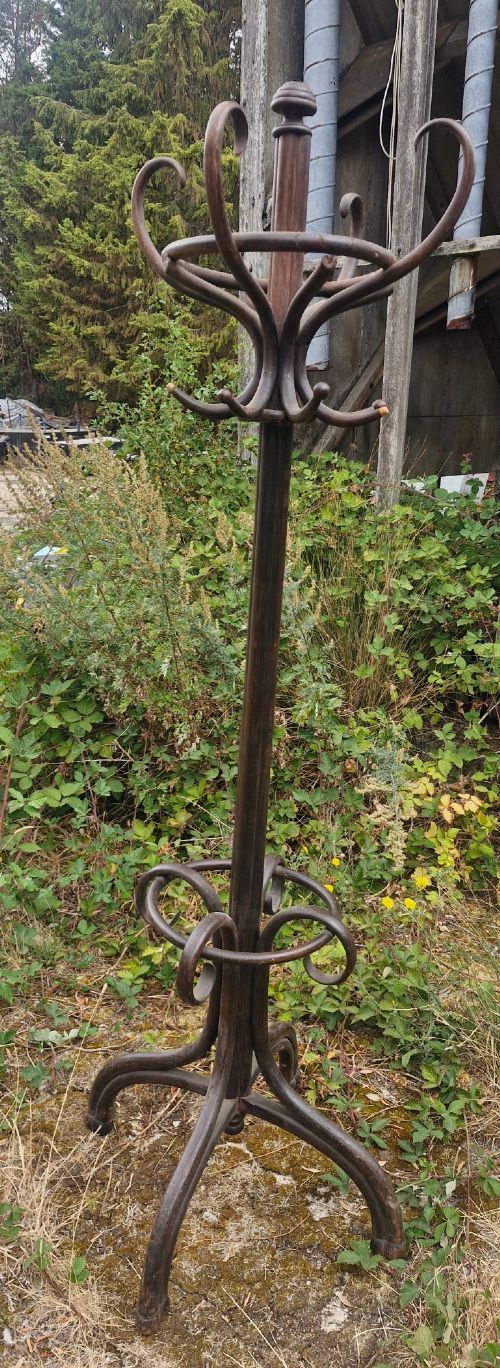
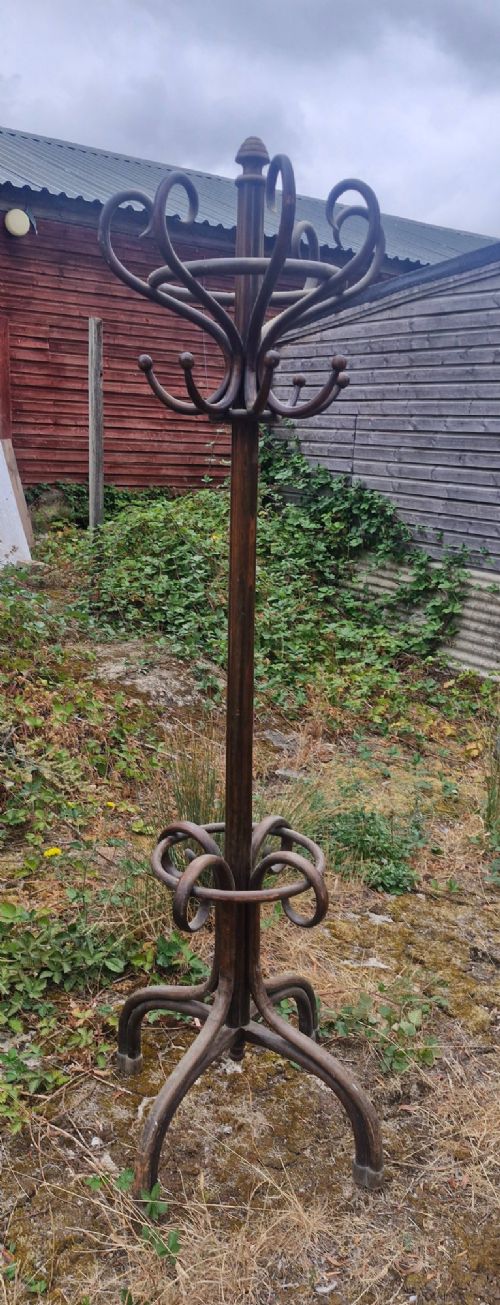
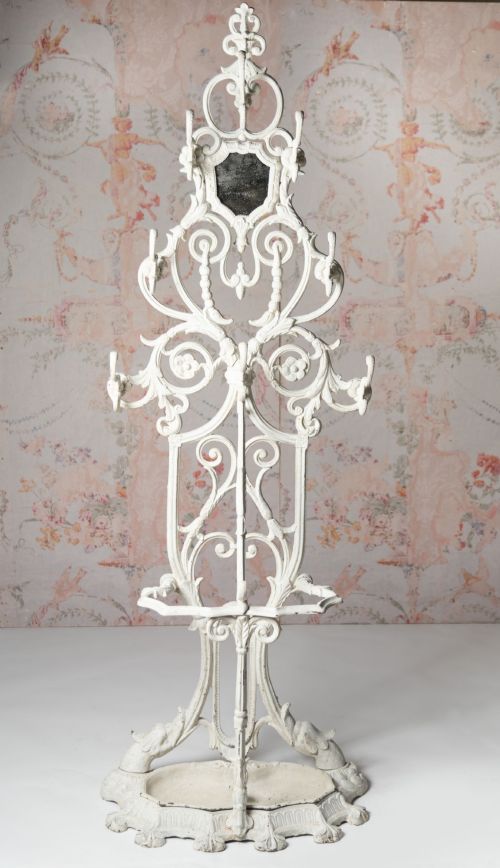
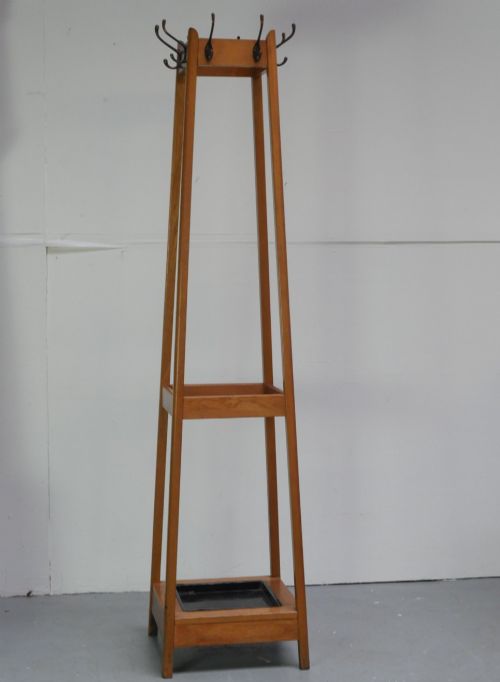
Freestanding Coat Tree
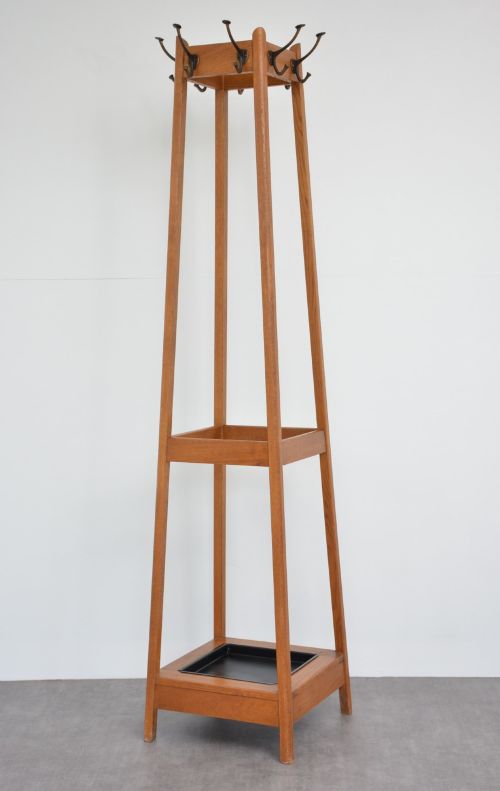
A freestanding coat tree organises hallway garments and sticks, bringing practical nineteenth and twentieth-century utility to an entrance.
Freestanding Coat Tree
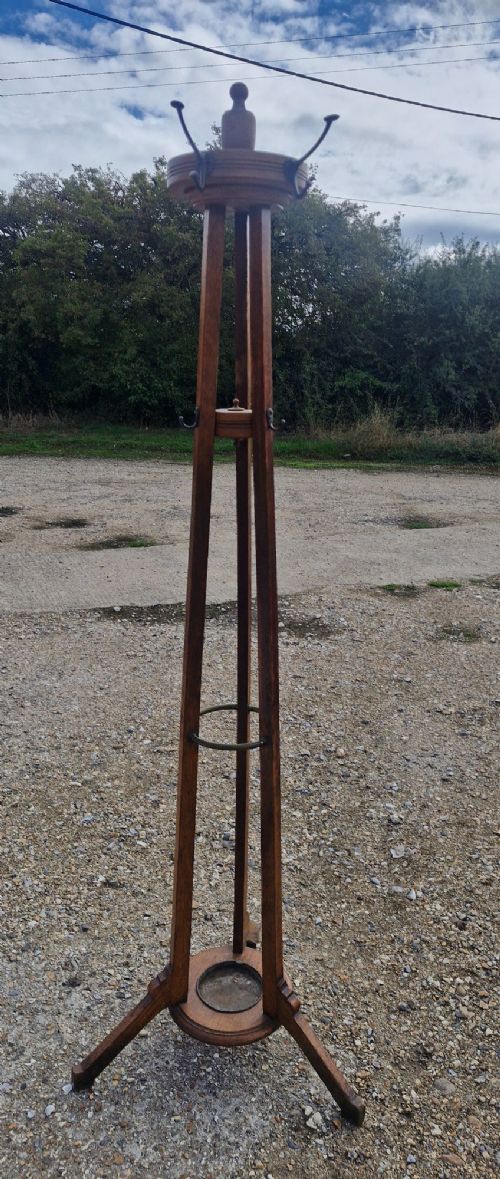
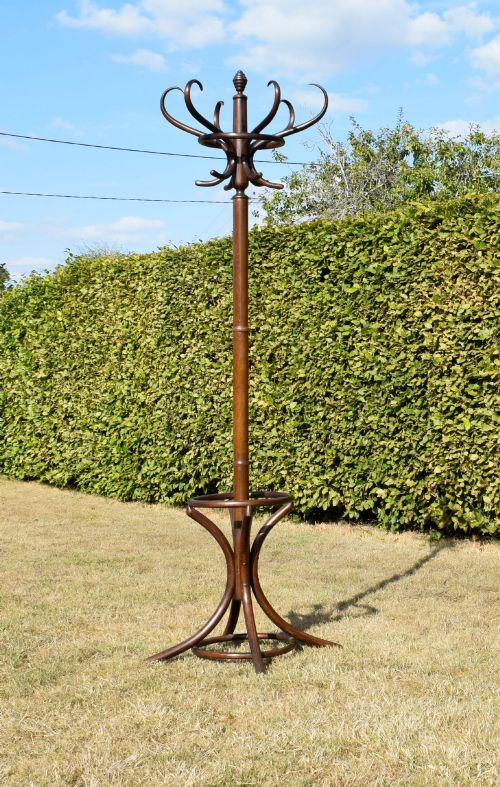
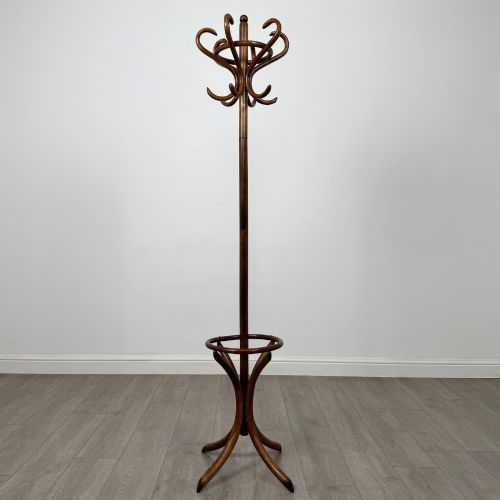
When you search for a freestanding coat tree, you encounter sturdy vertical timber frames designed to hold hats, coats, and walking sticks in domestic hallways. The selection on this page predominantly spans Victorian and Edwardian periods, stretching from the late nineteenth century through to the interwar decades of the twentieth century.
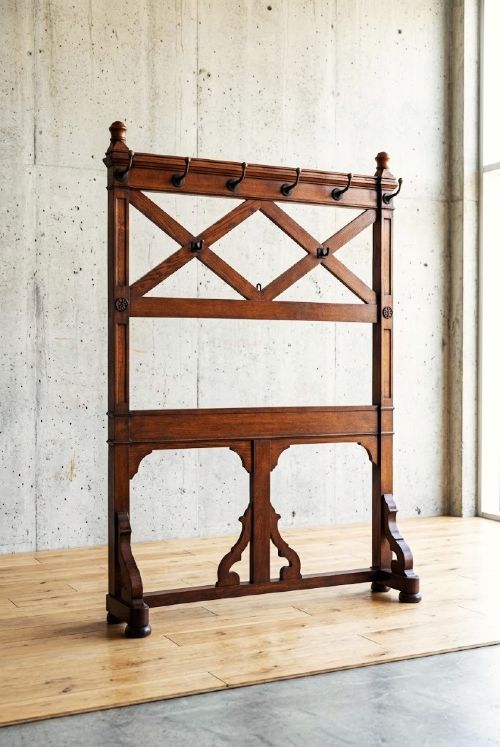
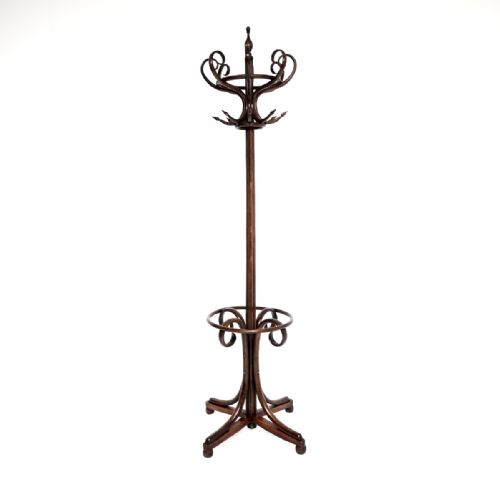
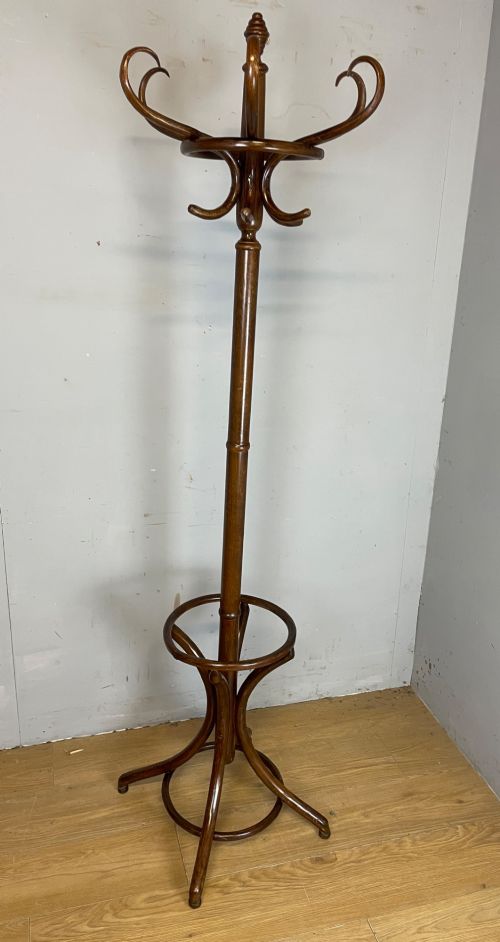
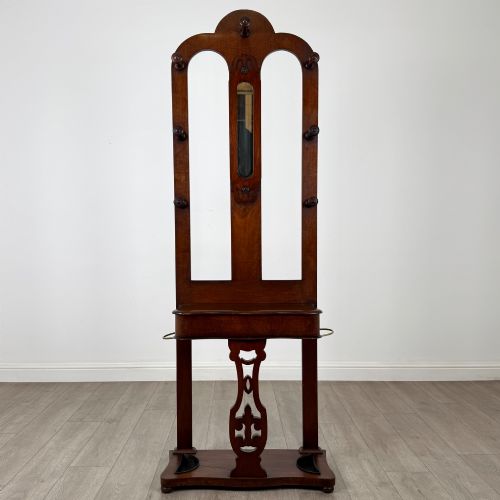
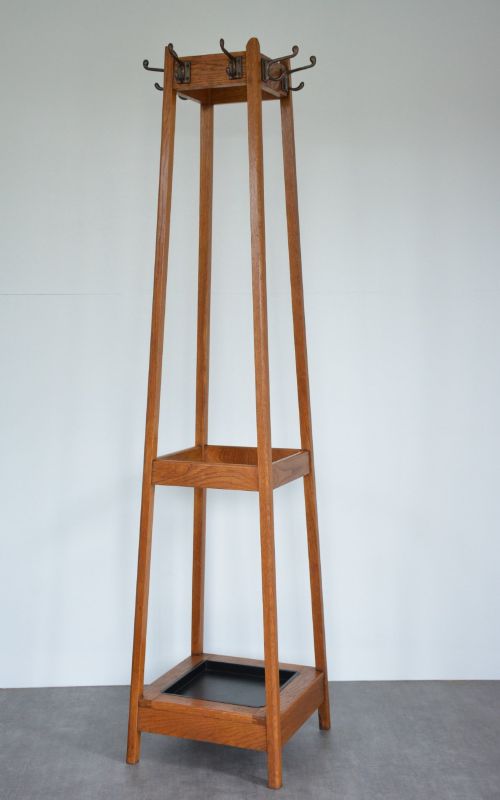
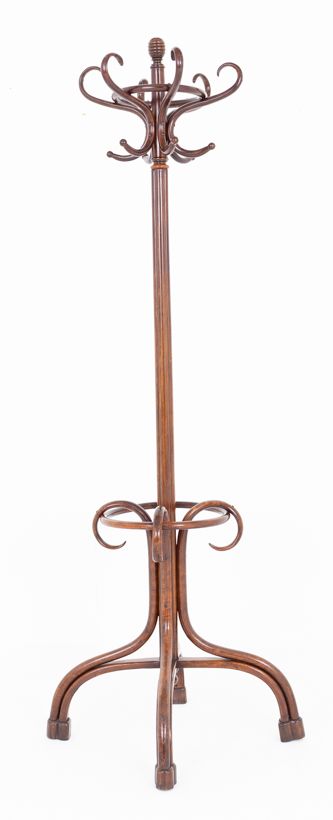
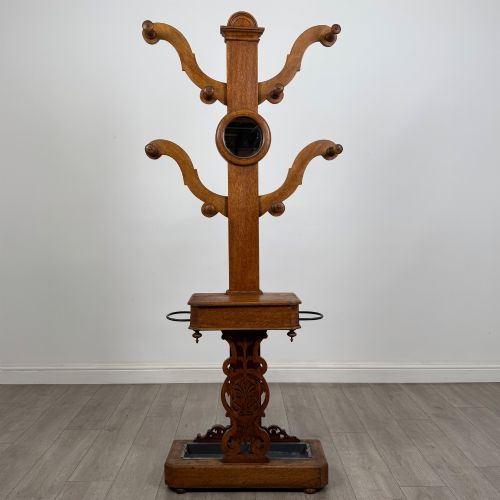
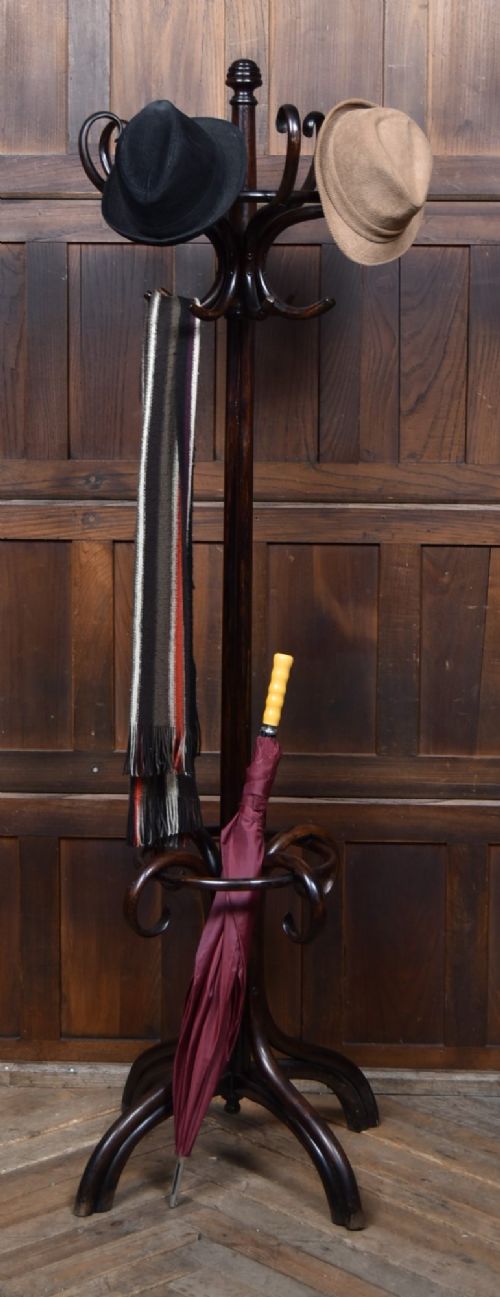
You meet various configurations, from revolving bentwood designs to substantial oak and mahogany hall stands equipped with integrated umbrella holders and drip trays. These items originate from British, French, and Austrian workshops, reflecting diverse regional furniture traditions of the past two centuries.
Simpler models rely on slender bentwood uprights with multiple curved hooks, whereas architectural hall stands often incorporate panels of solid oak, walnut, or bamboo, occasionally housing mirrors or small glove drawers.
Materials and Construction
Maker workshops utilised steam-bending techniques on beech and beechwood to produce the fluid, curved forms characteristic of bentwood coat trees. This process allowed craftsmen to shape timber into resilient, lightweight frameworks without sacrificing structural integrity.
Heavier hallway furniture relied on solid oak, mahogany, and walnut, often joined with traditional cabinet-making methods to support the substantial weight of winter garments. Metal components such as cast iron and brass appeared in drip trays, umbrella rings, and robust coat hooks.
Surface finishes varied according to the period, employing polished French polishes on mahogany and simple varnishes or waxes on utilitarian oak and bentwood.
Listings feature items spanning the Victorian, Edwardian, and Art Deco periods, constructed primarily from beech, oak, and mahogany.
Judging Quality
Quality in a coat tree lies in the rigidity of the upright column and the clean execution of steam-bent curves or timber joinery. Examples from recognised makers demonstrate tighter tolerances in the joints and superior timber selection, ensuring the structure remains stable under daily domestic use.
The presence of original hardware, such as brass or cast iron drip trays and matching hooks, elevates an item's integrity. Lesser pieces show signs of excessive timber shrinkage, replacement hooks, or compromised bases that wobble under weight.
Thonet·Astrola·Jas Shoolbred·Fischel
The Freestanding Coat Tree Glossary
- Bentwood
- Wood shaped by exposure to steam, allowing craftsmen to create smooth, permanent curves. This technique defined lightweight nineteenth-century seating and coat stands.
- Hall Stand
- A substantial piece of entrance furniture combining a coat rack, hat hooks, mirror, and umbrella storage. These items anchor traditional hallway interiors.
- Demi Lune
- A half-moon shape used for console tables and certain space-saving hall stands designed to sit flush against a wall.
- Drip Tray
- A removable metal or ceramic basin positioned at the base of a stand to catch water from wet umbrellas. It protects the surrounding wooden floorboards from moisture damage.
Freestanding Coat Tree: Frequently Asked Questions
How do I stabilise a wobbly coat tree?
Check the central connecting bolt or screw running through the vertical shaft to the base, as these frequently loosen over decades of use. Tightening the primary fixing usually restores stability to the entire frame.
If the base joints themselves have dried out, professional re-gluing prevents further strain on the steam-bent sections during daily loading.
Where should I place a hall stand?
Position your stand in an entrance hall or boot room where damp coats and umbrellas require immediate storage upon entry. Ensure adequate clearance around the rotating sections if you own a revolving model.
Keep wooden pieces away from direct heat sources such as radiators to prevent the timber or bentwood from drying and splitting.
How do I clean antique bentwood?
Dust the surface regularly with a soft, dry cloth to prevent grime accumulation in the curved joints and carved wooden details. Avoid harsh chemical cleaners that strip the original polish or varnish.
Apply a microcrystalline wax sparingly once or twice a year to nourish the timber and maintain a soft protective sheen.