


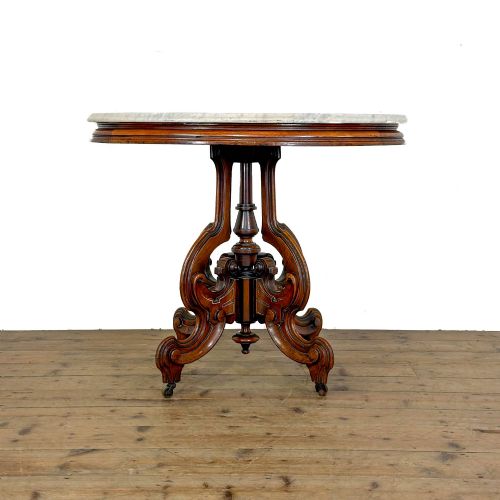
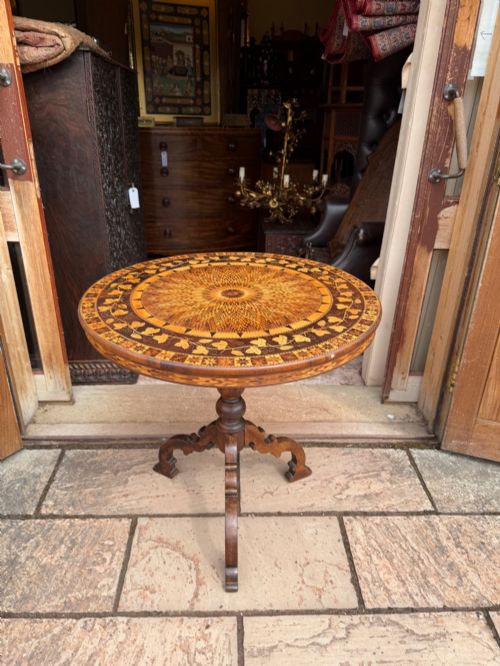
Victorian Carved Tripod Table
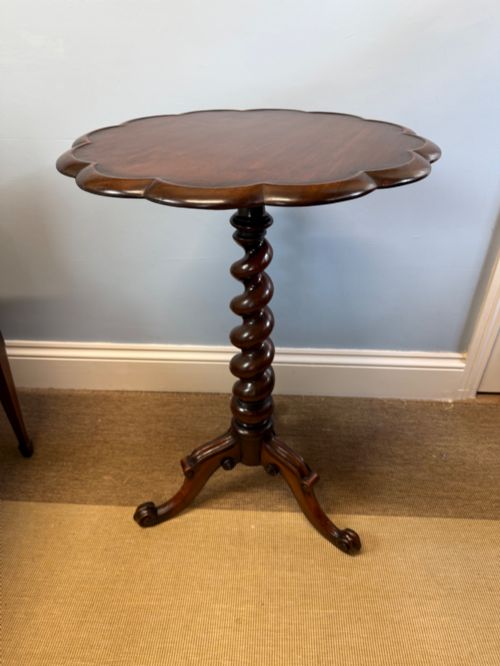
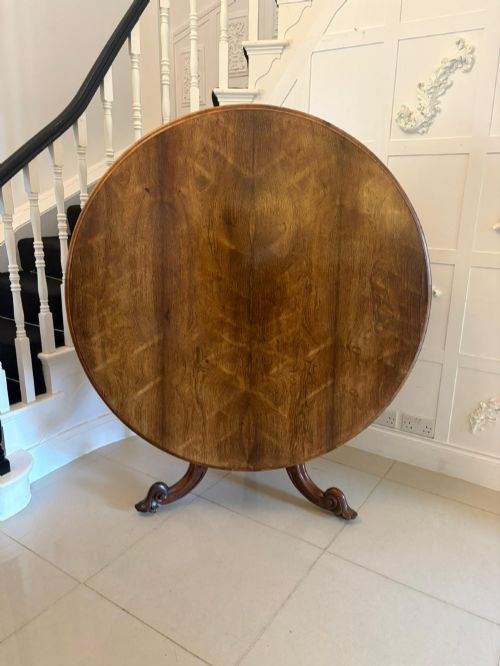
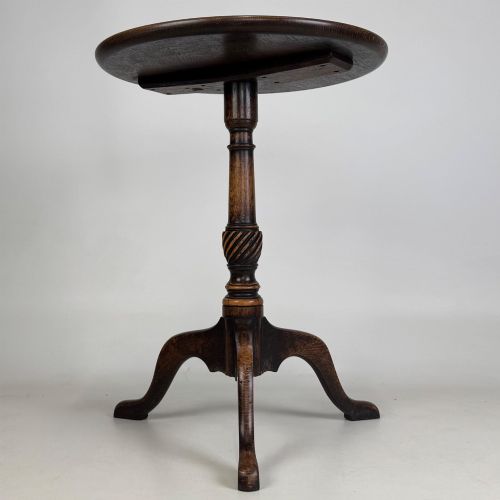
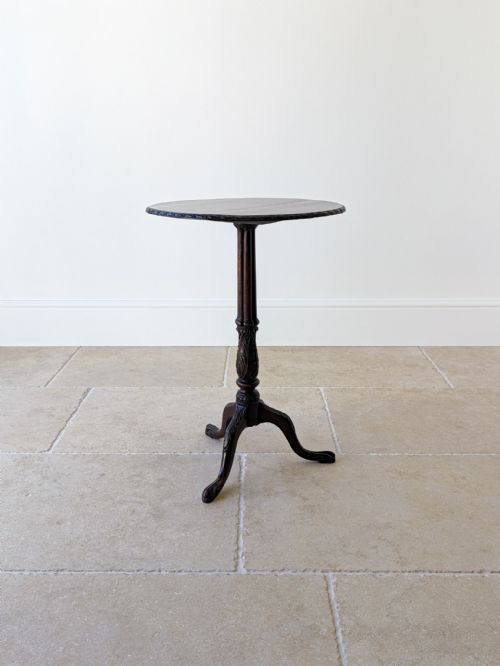
A victorian carved tripod table combines solid 19th-century timber craftsmanship with a single central pedestal supported by three legs.
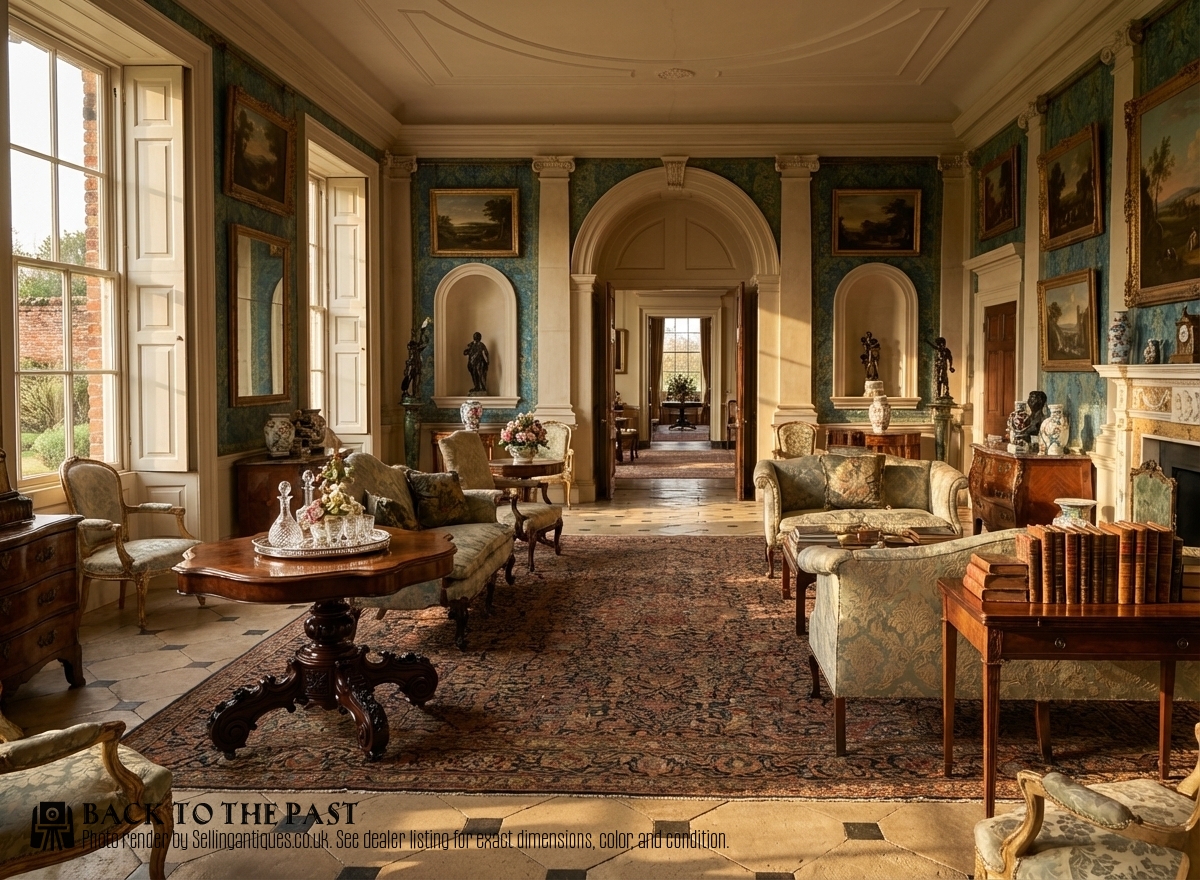
Victorian Carved Tripod Table
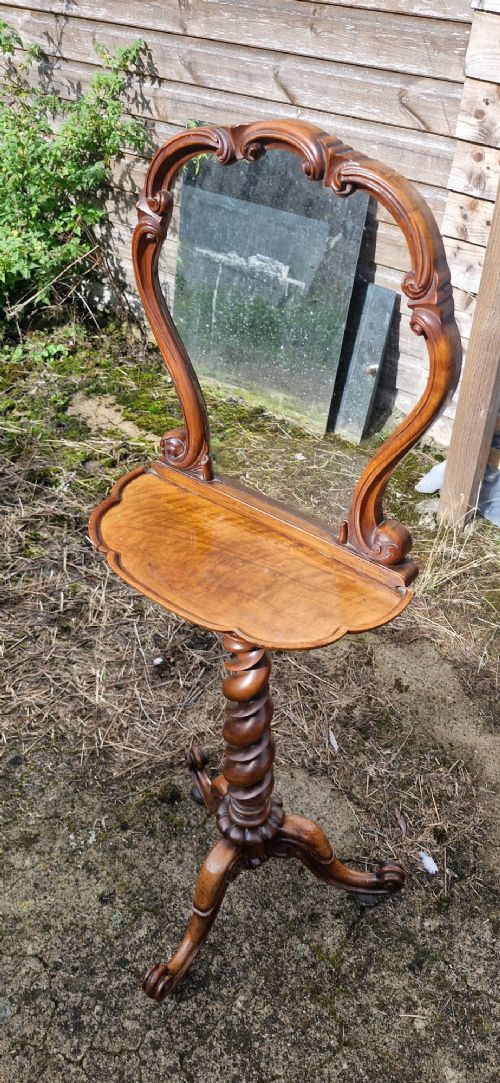
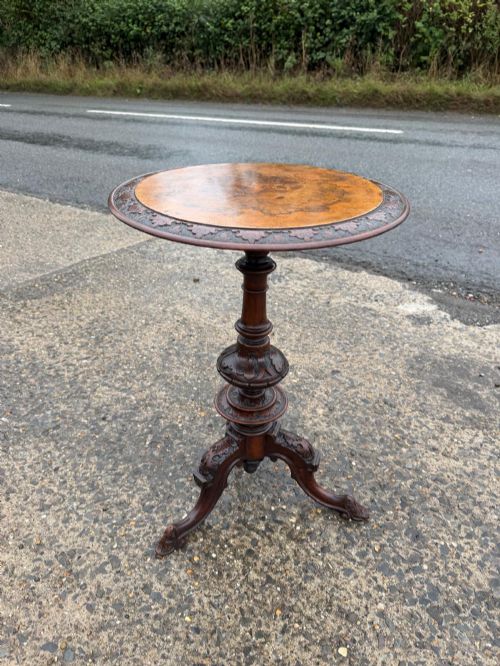
A victorian carved tripod table takes many forms across the nineteenth century, most frequently appearing as a lamp table, wine table, or occasional table designed for parlour use. These pieces rely on a central turned or carved pedestal rising from three feet, often featuring circular or scalloped timber tops.
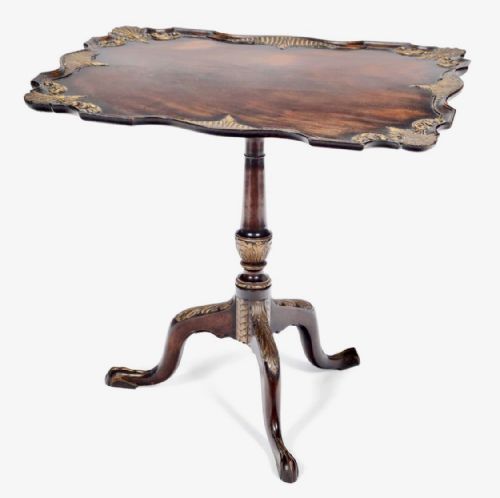
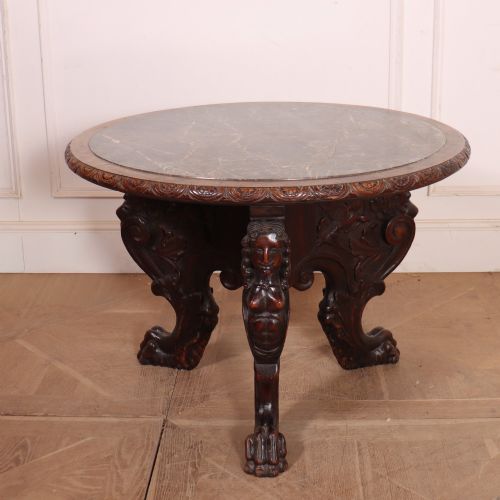
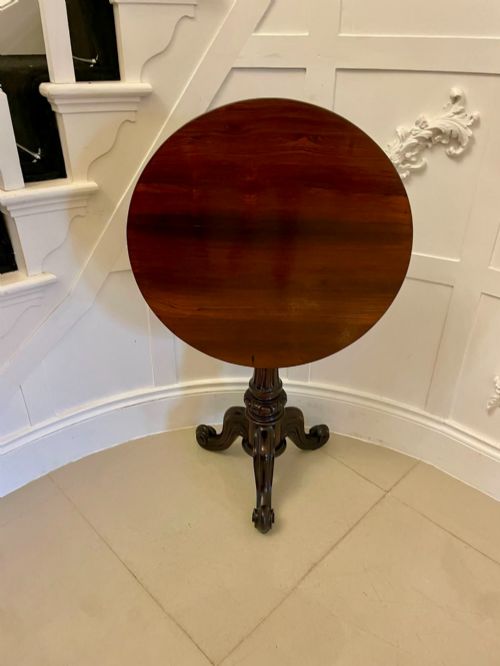
Makers of the period also produced larger centre tables, dining variants, and tilt-top designs which allowed the surface to fold away when not in use. Oak, mahogany, and walnut dominate the selection, frequently paired with intricate decorative carving along the legs and edges.
How They Were Made
Cabinet makers utilised dense hardwoods including mahogany, walnut, and rosewood, often selecting burr walnut veneers for figured table surfaces. Construction involved joining a solid timber top to a central turning via a tilt mechanism or fixed block, supported by three shaped legs fitted into the pedestal base.
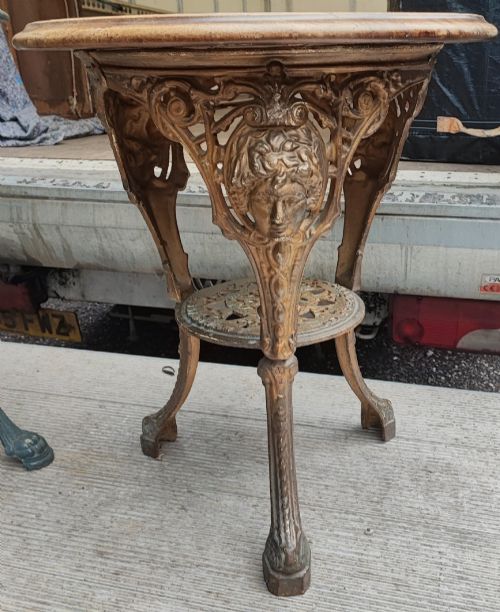
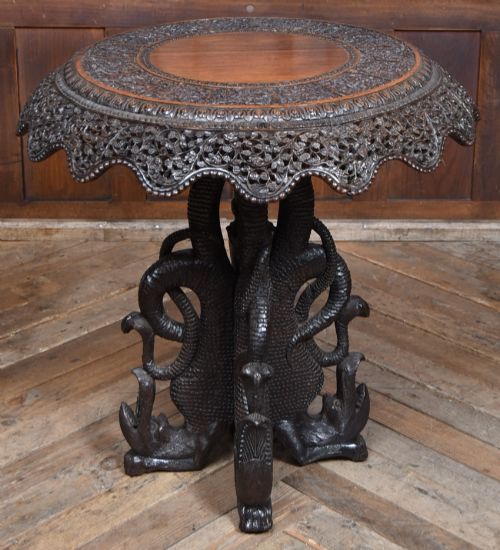
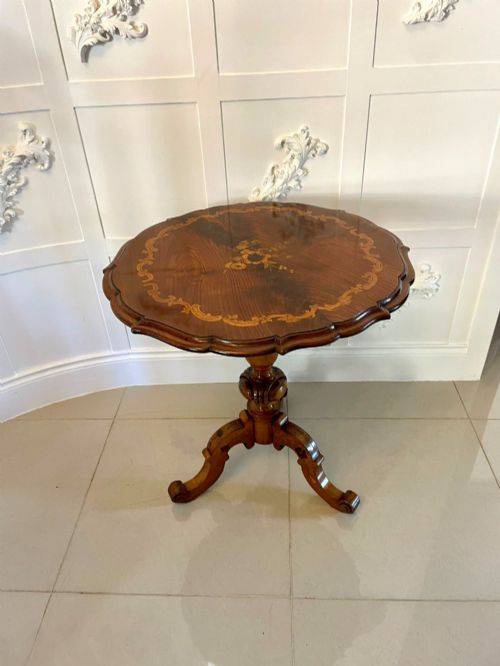
Decoration relied heavily on hand carving, chip-carving, and marquetry inlay, whilst subsidiary pieces incorporated brass fittings, marble inserts, or parcel gilding. Selected examples display regional styles such as Anglo-Burmese, Italian Sorrento, or Chippendale Revival motifs applied to standard nineteenth-century forms.
One listed elephant table includes painted wooden tusks alongside standard Victorian tripod construction.
What Varies in Quality
The standard of a victorian carved tripod table rests on the depth and crispness of the hand carving rather than mechanical regularity. Superior examples display carefully chosen timber grains on the top, such as figured mahogany or burr walnut, matched to robustly proportioned pedestals.
Construction details also separate workshop grades, with tighter joinery at the leg junctions and smooth operation on tilt-top or adjustable mechanisms. Lesser pieces show simpler turnings and sparse decoration, whereas top-tier items incorporate marquetry inlay, piecrust edges, or specialised styling.
The Victorian Carved Tripod Table Glossary
- Tripod table
- A small freestanding table supported by a central column resting on three feet. This construction provides stability on uneven floors.
- Tilt top
- A table top hinged to the pedestal so it can be pivoted vertically. This mechanism allowed tables to be stored flat against a wall.
- Burr walnut
- Wood taken from walnut tree growths, producing swirling patterns. Cabinet makers used veneers of this material for decorative surfaces.
- Marquetry
- Inlays of different woods fitted into a design on a panel. This technique created pictorial or geometric ornamentation on table tops.
- Piecrust edge
- A raised, scalloped carved border around a circular table top. The shape mimics pastry work popular in 18th-century revival styles.
Victorian Carved Tripod Table: Frequently Asked Questions
What rooms suit these tables?
A victorian carved tripod table functions well beside seating as a lamp or wine surface in a living space. Their compact footprint allows them to fit easily into corners or beside armchairs.
Larger versions serve as centre tables in hallways or studies. The tilt-top varieties offer flexibility for rooms requiring adaptable furniture arrangements.
Were these used for dining?
Smaller tripod tables were designed for holding drinks, books, or lamps rather than serving family meals. Occasional and wine tables provided convenient movable surfaces in nineteenth-century parlours.
Larger pedestal forms and dining variants handled heavier domestic tasks. Tilt-top mechanisms let households clear floor space quickly after use.
How do I care for the surface?
Polished timber surfaces require dusting with a soft, dry cloth to prevent grit accumulation. Avoiding direct sunlight and damp conditions protects the original wood finishes and veneers from splitting.
Periodic application of appropriate wax polish maintains the lustre of nineteenth-century timber. Water and heat should be kept away from untreated or polished wood.