



Circular Painted Side Table
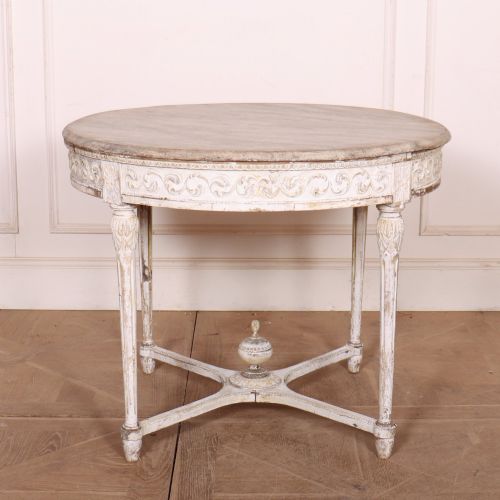
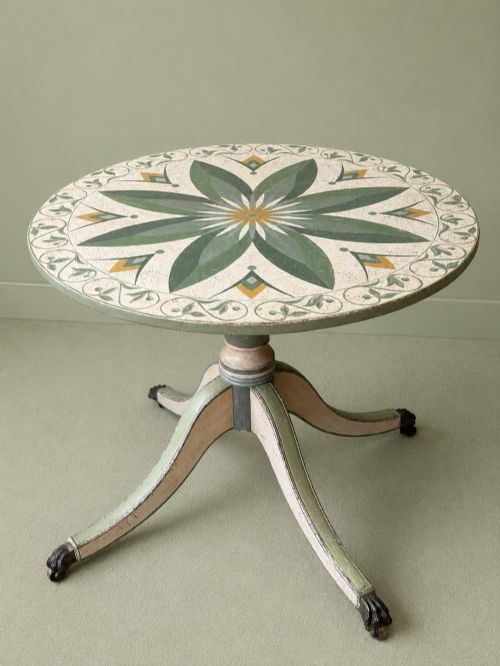
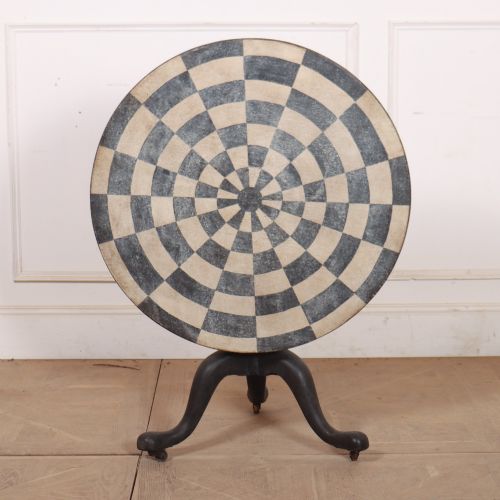
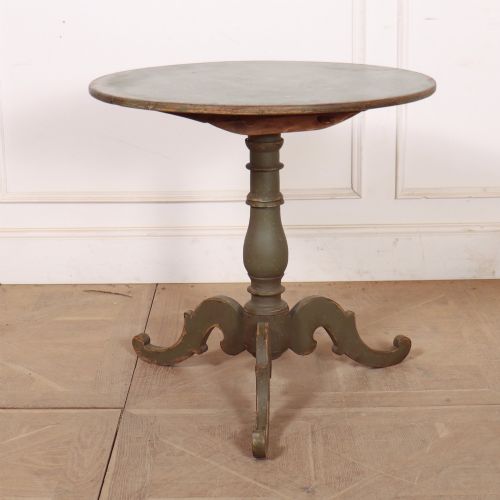
A circular painted side table brings colour and character to a room, offering a useful surface that draws the eye without dominating the space.
Circular Painted Side Table
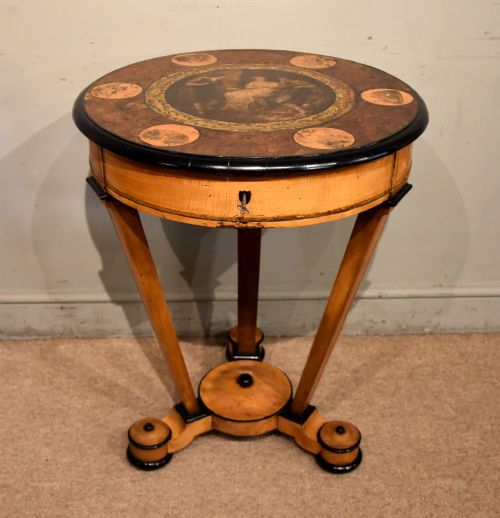
A circular painted side table encompasses a diverse group of occasional furniture spanning the eighteenth, nineteenth and early twentieth centuries. These pieces appear in forms such as lamp tables, tilt-top tables, gueridons and pedestal stands, originating from workshops across England, France, Sweden, Italy and beyond.
The version most commonly met on this page is the nineteenth-century Victorian or continental occasional table, often featuring hand-painted decoration upon wood or timber. Many examples display regional characteristics, from Swedish lamp tables to French gueridons with marble tops.
Buyers seek out a circular painted side table to introduce decorative charm and practical surface area into sitting rooms, hallways and bedrooms. The combination of a rounded profile and painted finishes allows these tables to fit neatly beside seating or in corners.
Materials and construction
Carpenters constructed these tables using a variety of woods including oak, pine, mahogany and general timber, frequently shaping them into tripod bases, pedestals or console supports. Surface decoration involved direct painting, polychrome work, parcel-gilding or ebonising, sometimes applied as later decoration over earlier frames.
Many sophisticated continental and English examples incorporate inset marble tops resting upon wooden or parcel-gilt frames. Inlaid details in satinwood or other timbers appear alongside hand-painted floral, petal, and Chinoiserie motifs executed directly onto the wood.
Gypsy tables brought portable bohemian flair to Victorian parlours, folding up easily when the room needed to be cleared for dancing.
Distinctions in quality
Quality in these tables rests upon the integrity of the timber construction and the artistry of the painted surface. Superior examples display finely proportioned pedestals, stable tripod legs, and crisp, original or sympathetic hand-painted detailing rather than coarse application.
The presence of original materials, such as fitted marble tops on French gueridons, elevates a piece above those with later replacements. The harmony between the form of the table and the execution of its decorative paint scheme distinguishes finer workshop output from simpler utilitarian items.
The Circular Painted Side Table Glossary
- Gueridon
- A small French table, often circular and supported by a single central pillar or column. These frequently feature marble tops and painted or gilded wooden frames.
- Tilt-top table
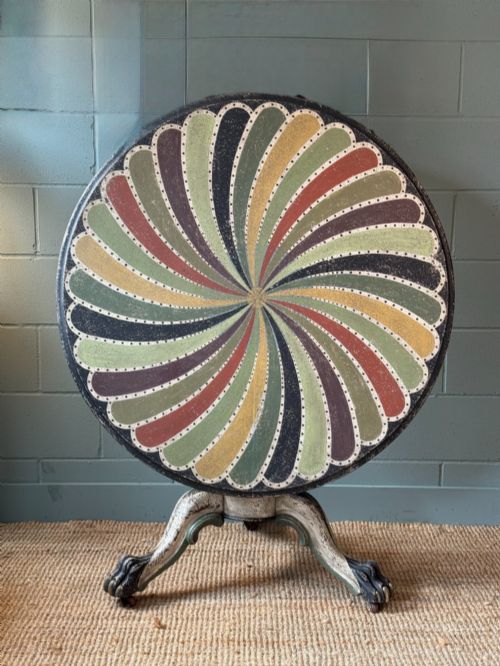
- A table with a hinged top that can be tilted vertically when not in use, allowing it to be stored compactly against a wall. This mechanism was popular in eighteenth and nineteenth-century English furniture.
- Demi-lune
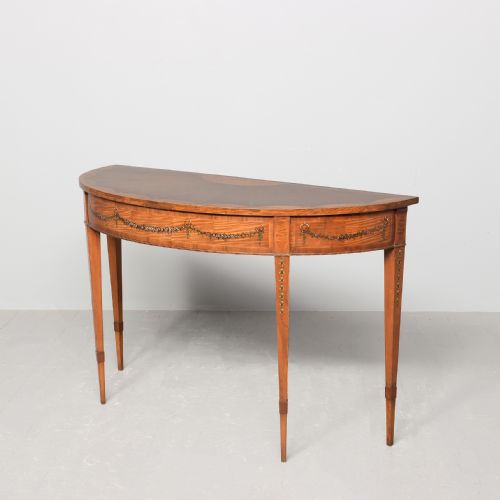
- A half-moon shape used for tables designed to sit flush against a wall. These console or serving tables often feature painted and inlaid surfaces.
- Tripod table
- A freestanding table supported by three legs radiating from a central pillar. This construction provides stability on uneven floors.
- Parcel-gilt
- Partially gilded, where thin layers of gold leaf highlight specific carved or moulded details on a painted wooden surface.
- Cricket table
- A small, lightweight circular table with three splayed legs and a lower tier or stretchers. Traditional Welsh and English versions often utilise oak or pine.
Circular Painted Side Table: Frequently Asked Questions
Where should I put a circular painted side table?
These tables suit corners, narrow hallways, or spaces beside armchairs and sofas where a compact surface is useful. Their rounded tops prevent sharp corners in busy rooms.
They also function effectively as lamp stands, plant pedestals, or bedside tables, adding a decorative accent without overwhelming the surrounding furniture.
What is the difference between a gueridon and a lamp table?
A gueridon is typically a continental form, frequently French, featuring a circular top often made of marble supported by a central pedestal and painted or gilded frame. They originated as candle or torch stands.
Lamp tables are generally English or Scandinavian occasional tables designed at a convenient height to hold a table lamp, often possessing wooden tops and tripod or four-legged bases.
How do I care for a painted wooden surface?
Keep painted tables out of direct sunlight to prevent the colours and pigments from fading over time. Use coasters or mats to protect the finish from moisture and heat.
Dust the surface gently with a soft, dry cloth and avoid harsh chemical cleaners or abrasive polishes that can damage antique painted decoration.