
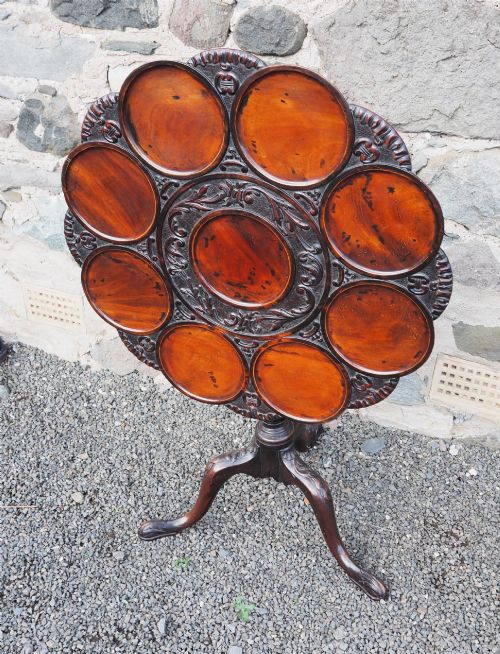
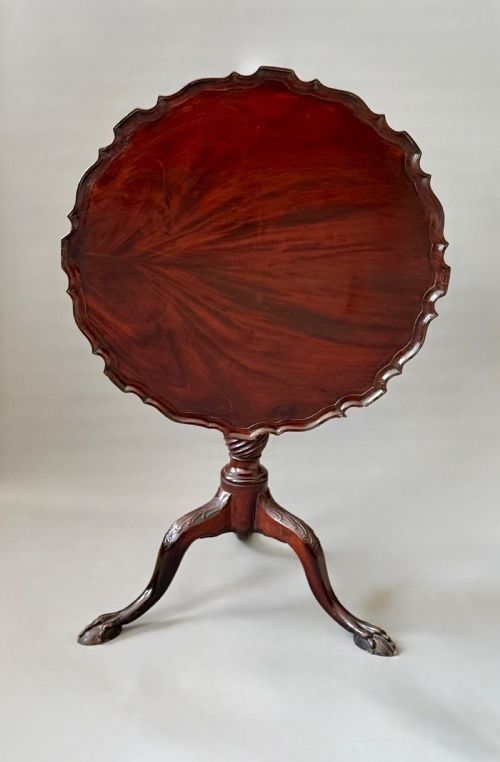
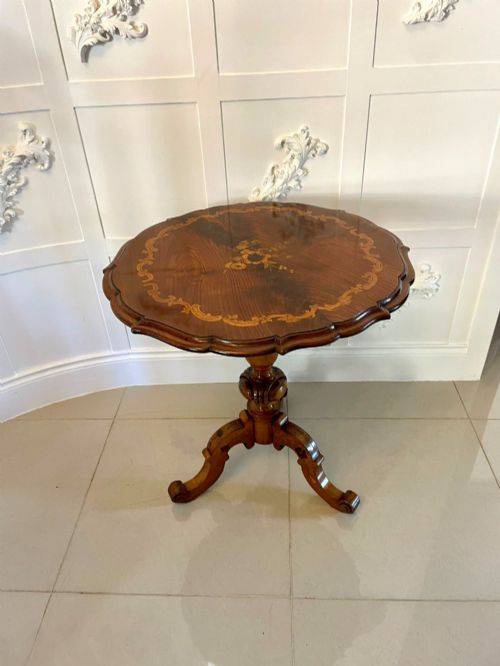
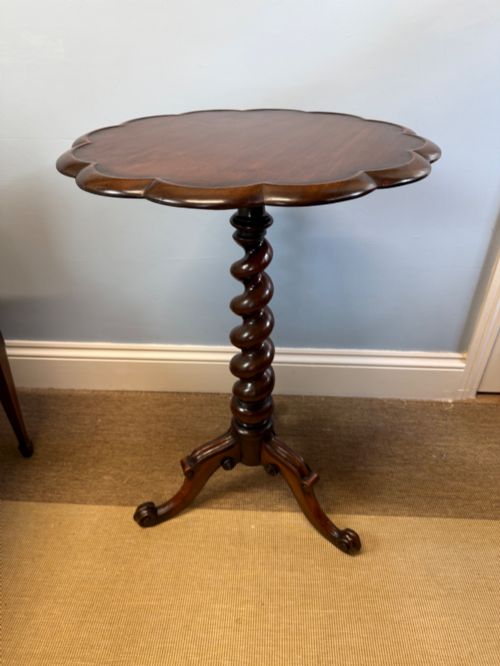
Scalloped Occasional Table
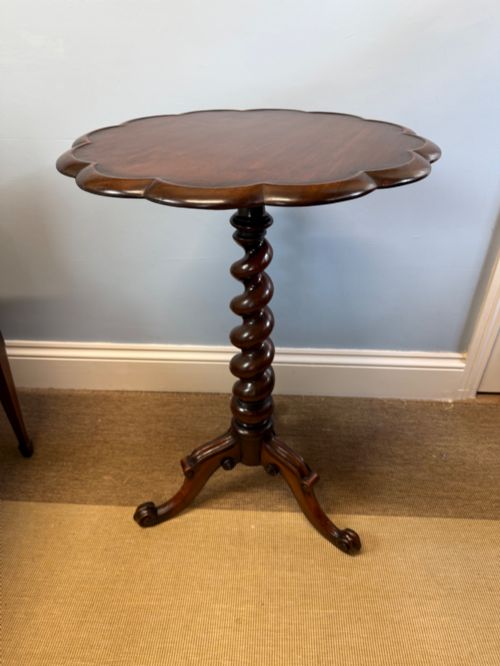
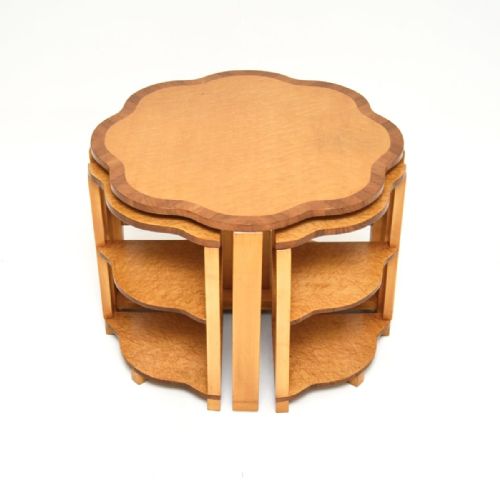
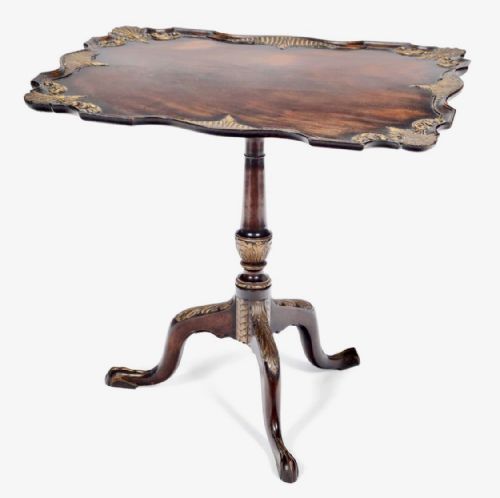
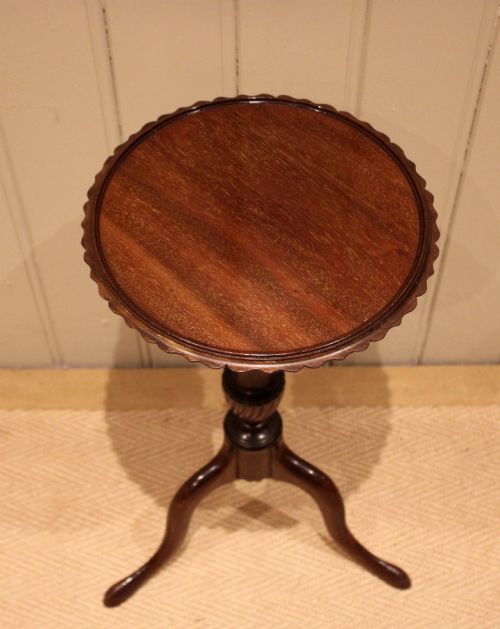
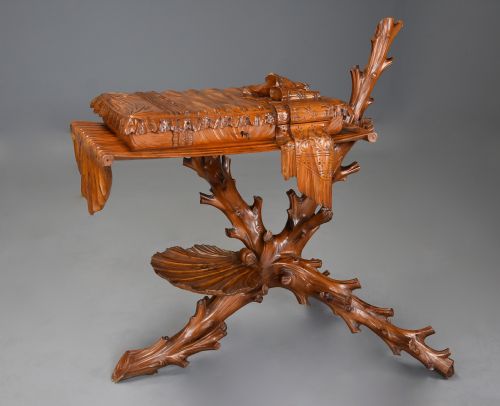
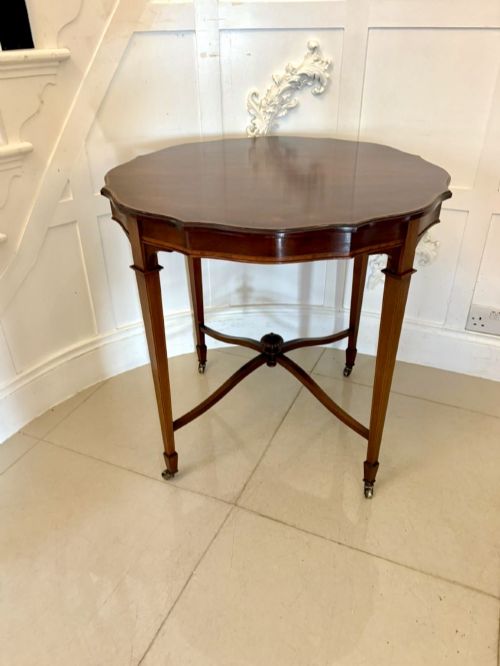
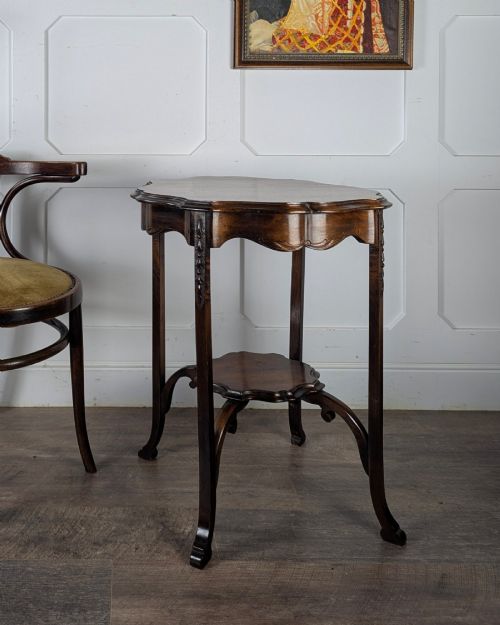
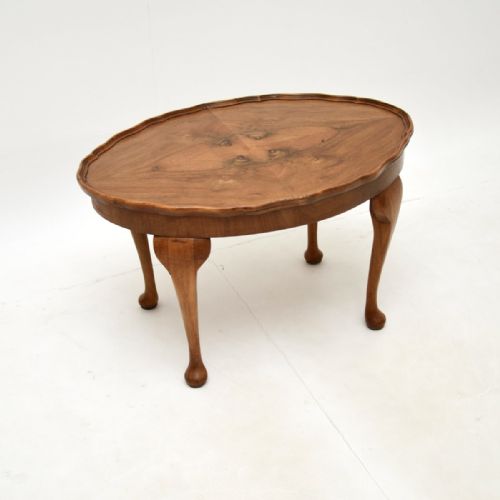
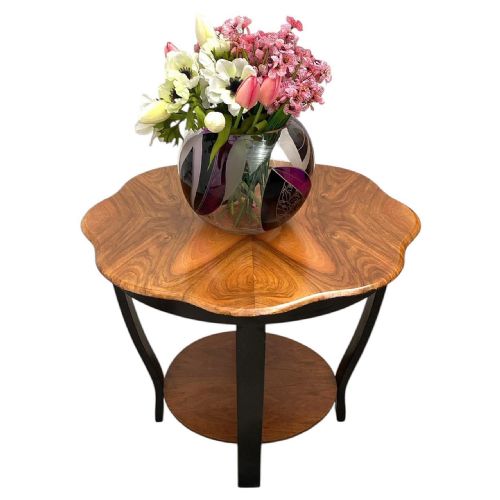
A scalloped occasional table provides a handy surface with a shaped edge, taking many forms from Georgian pie crust designs to Art Deco walnut pieces.
Scalloped Occasional Table
A scalloped occasional table serves as a flexible small surface for a lamp or drink, appearing in forms such as wine tables, lamp tables, and coffee tables. These pieces emerge across periods spanning the eighteenth century through to the art deco era, reflecting changing domestic habits.
Mahogany and walnut dominate the selection, often shaped into circular tops with raised edges, whilst lighter satinwood and fruitwood appear in smaller side tables. Buyers will frequently encounter Victorian and Edwardian examples alongside earlier Georgian styles and later revival pieces.
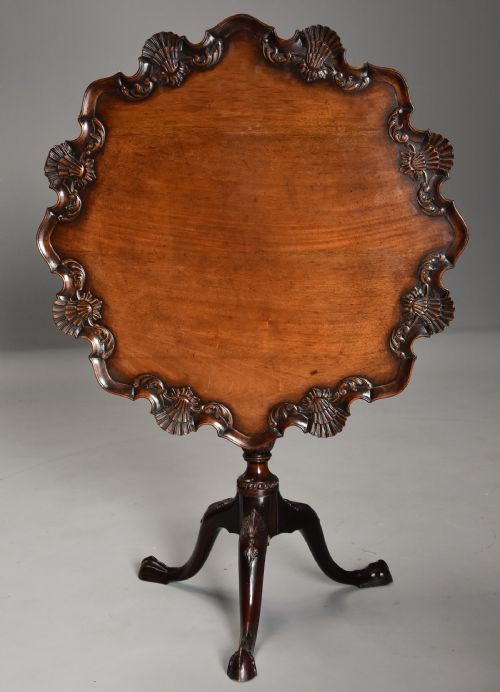
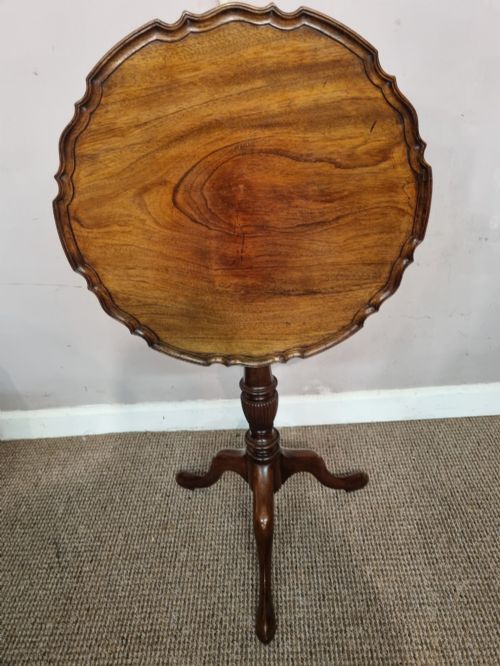
Makers and workshops utilised various formats including tilt-top tripod bases, nesting sets, and two-tier designs. The shaping of the edge remains the defining feature, whether carved directly into the timber or formed as a pie crust border.
How They Were Made
Cabinet makers worked with solid timbers and veneers, selecting mahogany, walnut, and oak for their structural strength and grain patterns. Marquetry inlay and satinwood banding decorated the surfaces of finer Edwardian and Victorian tables.
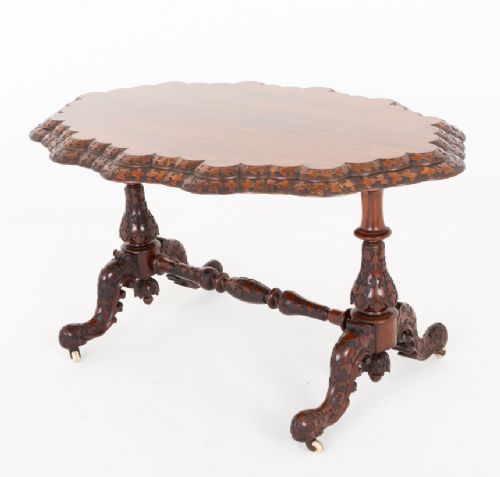
Turning and carving shaped the central columns and tripod legs, while specialised joinery secured the tilt-top mechanisms found on wine and tripod tables. Edges were painstakingly carved or moulded to create the characteristic scalloped outline.
Some Victorian tables doubled as portable games boards or secretive surfaces for pouring afternoon tea.
What Varies in Quality
The crispness of the edge carving distinguishes standard production from exceptional work, particularly on pie crust and scalloped borders where hand-carved details demand high skill. Timber selection also dictates the visual weight, with figured walnut and burr veneers offering rich grain movement.
Proportion and stability in the tripod base separate refined examples from heavier, clumsier pieces. The integration of mechanical elements, such as smooth tilt-top catches and precise marquetry inlay, marks the work of superior workshops.
Shapland and Petter·Gillows
The Scalloped Occasional Table Glossary
- Pie crust edge
- A raised, decoratively carved border running around the circumference of a circular table top. This moulding resembles the fluted edge of pastry on a pie.
- Tilt-top table
- A table featuring a mechanism that allows the top to pivot vertically for storage against a wall. This format is common in tripod wine tables.
- Tripod base
- A supporting pillar resting on three curving legs, typical of occasional and wine tables from the Georgian period onward. It provides a stable stance on uneven floors.
- Marquetry
- The art of applying decorative veneer pieces to a structural surface to create pictorial or geometric patterns. Walnut and exotic woods were frequently used for this technique.
Scalloped Occasional Table: Frequently Asked Questions
What is a scalloped occasional table used for?
These small tables serve flexible roles beside seating, holding lamps, drinks, or decorative objects. Their compact sizes allow them to fit easily into corners or beside armchairs.
Historically, specific forms like wine tables or urn stands held particular items during formal entertaining. Today they function as versatile surfaces in living spaces and bedrooms.
Are tilt-top tables stable?
A well-made tilt-top table relies on a secure brass or wooden catch beneath the surface to lock the top flat. When engaged properly, the mechanism holds the table firm.
The three-legged tripod base naturally balances on most floor surfaces without wobbling.
What is the difference between an occasional table and a wine table?
An occasional table is a general term for any small, moveable table used intermittently around a room. A wine table is typically smaller and taller, designed specifically to hold a single glass or bottle.
Wine tables frequently feature tilt-top tripod designs, whereas occasional tables include nests, coffee tables, and side tables.