



Victorian Carved Sewing Table
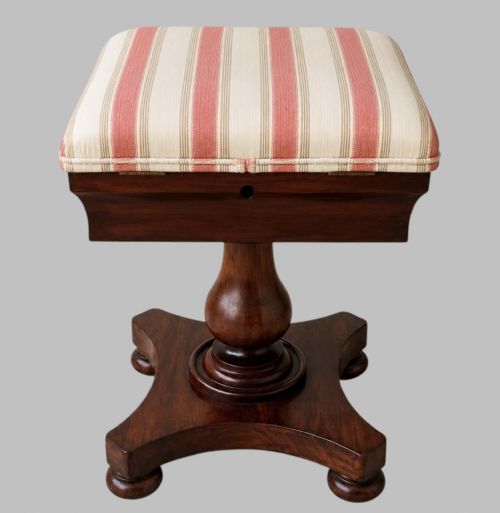
These pieces of a victorian carved sewing table span walnut and rosewood, offering compartmentalised storage and inlaid tops designed for nineteenth-century needlework.
Victorian Carved Sewing Table
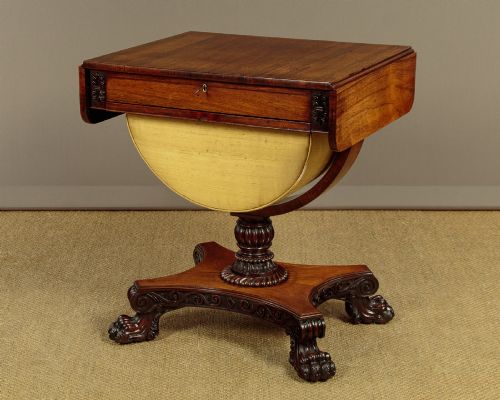
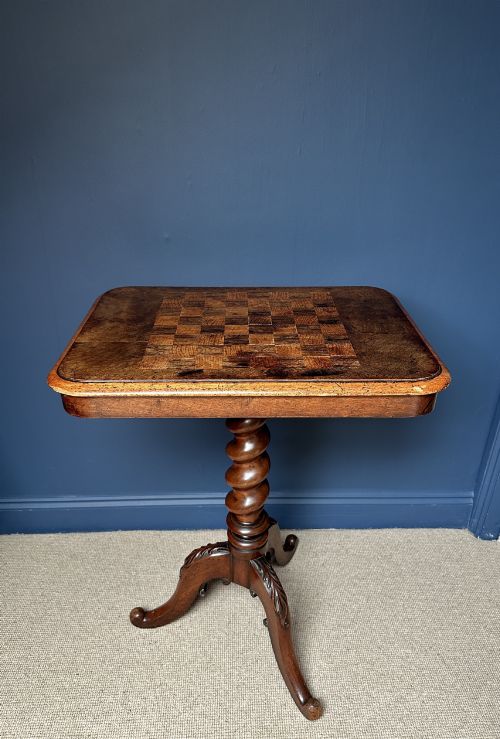
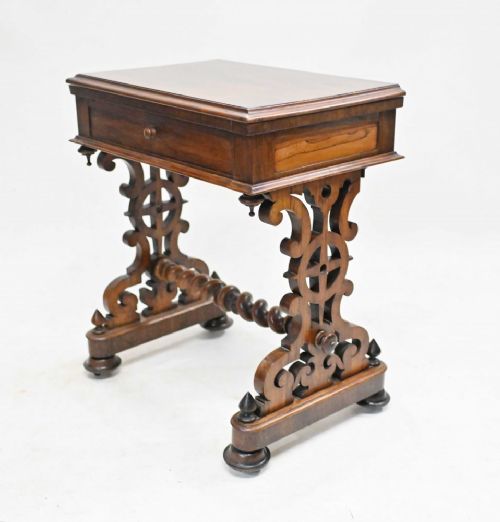
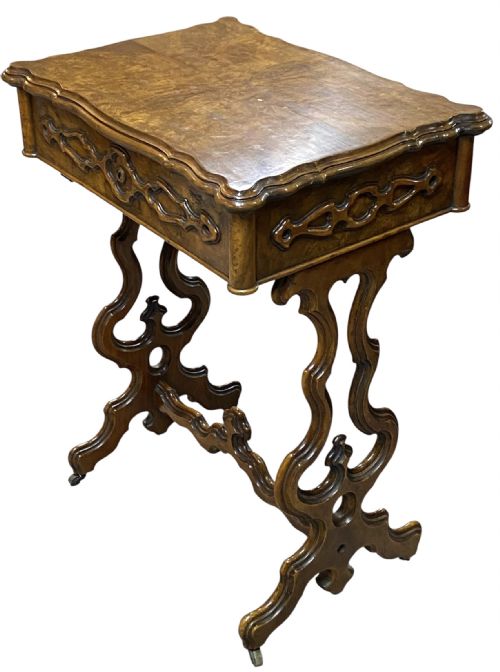
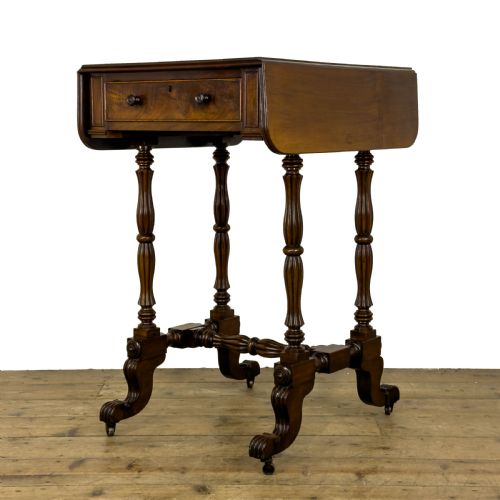
A victorian carved sewing table is a domestic piece designed for needlework and small crafts, appearing across this selection in forms such as work tables, games tables, and drop-leaf variations. Most examples found here date from the nineteenth century, with burr walnut and rosewood predominating as the primary timbers.
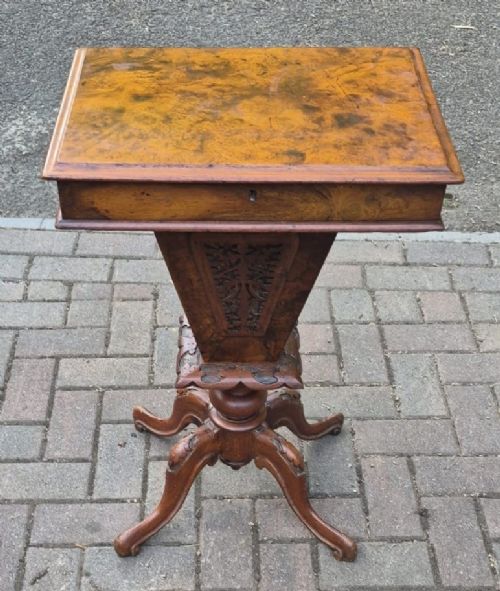
Makers and cabinetmakers constructed these items to combine utility with parlour display, frequently integrating fitted interior compartments for threads alongside chess or backgammon boards on the surface. Buyers typically encounter freestanding pedestals, trumpet-shaped bases, and drop-leaf designs intended for versatile placement in a sitting room.
How they were made
Cabinetmakers utilised dense hardwoods like walnut, mahogany, and rosewood, often selecting burr veneers for figured surfaces on lids and drawer fronts. Marquetry and fruitwood inlay added decorative contrast, while brass fittings secured interior compartments and drop-leaf hinges.
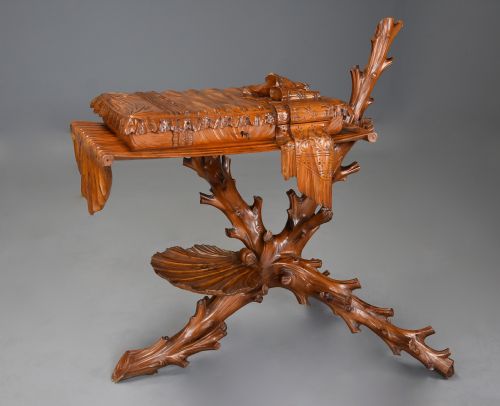
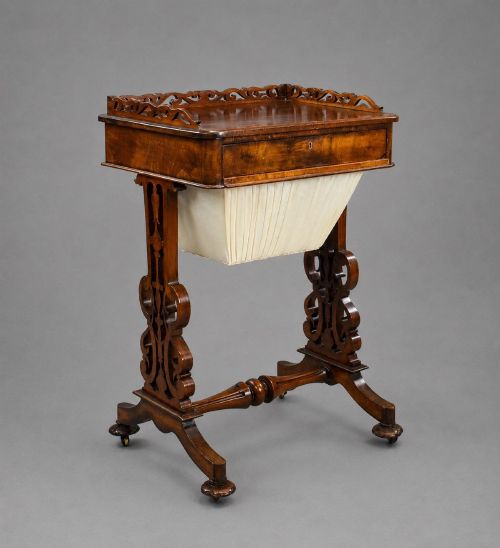
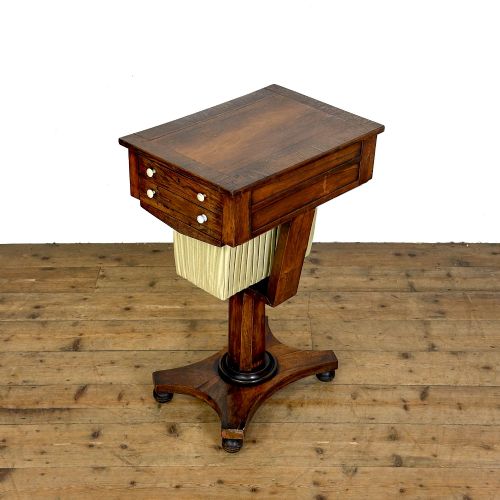
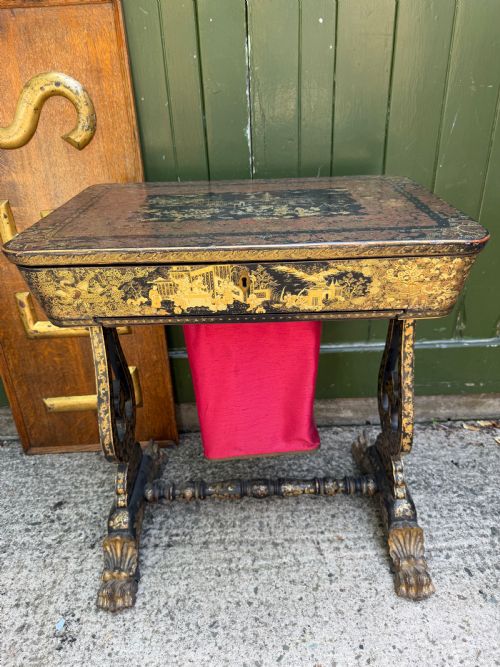
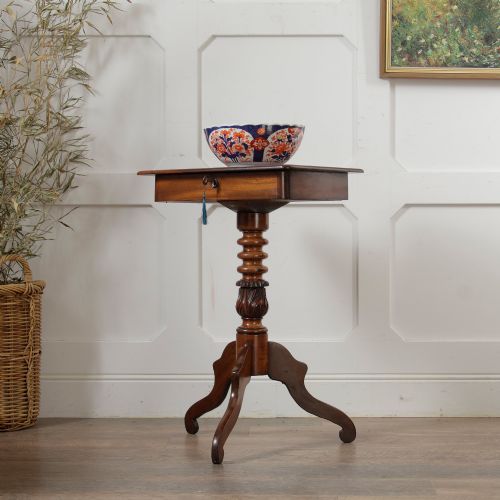
Carving was executed by hand on pedestal columns, friezes, and supports, ranging from subtle bobbin turnings to elaborate Italian grotto motifs in pine. Fabric bags or fitted boxes suspended beneath the main body provided soft storage for textiles and sewing implements.
Some Victorian makers could not decide if a piece was for sewing or chess, leaving us tables equipped to mend a sock and lose a rook simultaneously.
What varies in quality
The sophistication of the timber figure and the precision of the marquetry inlay set superior examples apart from plainer workshop output. Burr walnut with rich grain patterns and crisp, deep hand-carving on the pedestal columns indicate a higher standard of manufacture.
Internal organisation also dictates distinction, where fitted velvet-lined compartments, intact ivory or bone fittings, and multi-functional sliding game boards show greater initial investment. The structural integrity of the pedestal base and the seamless movement of drop-leaves further distinguish finer pieces.
Boothroyd Sons Rimmer
The Victorian Carved Sewing Table Glossary
- Burr walnut
- A figured wood veneer taken from the wart-like growths on walnut trees. It creates complex, swirling grain patterns highly prized for Victorian table tops.
- Marquetry
- The art of applying decorative pieces of veneer to a structure to form intricate designs. Floral motifs and geometric patterns frequently appear on nineteenth-century table lids.
- Trumpet table
- A work table featuring an octagonal or flared body shaped like a musical instrument. This design widens towards the base above a carved pillar and tripod feet.
- Drop-leaf
- A table top with hinged flaps on one or two sides that fold down when not in use. This mechanism allowed nineteenth-century homeowners to save space in smaller parlours.
- Killarney ware
- Woodwork decorated with detailed marquetry landscapes, typically produced in Ireland from arbutus and other native timbers. These items often feature characteristic local motifs.
Victorian Carved Sewing Table: Frequently Asked Questions
What was a sewing table used for?
These tables served as functional furniture for storing threads, needles, and unfinished needlework inside compartmentalised drawers or suspended fabric bags. They doubled as writing desks or display surfaces in nineteenth-century drawing rooms.
Many variants incorporated reversible or sliding lids that revealed backgammon and chess boards beneath the main surface. This dual purpose made them central pieces for parlour entertainment and domestic craft.
How do I identify a Victorian sewing table?
Look for dense hardwoods like rosewood or burr walnut combined with turned pedestal bases and hinged work bags underneath. The presence of fitted internal compartments is a primary indicator of their original function.
Dates generally span the mid to late nineteenth century, often displaying characteristic stylistic influences such as William IV mass or later Victorian marquetry inlay.
Are these tables suitable for modern living?
Their compact proportions make them effective as side tables, lamp stands, or bedside surfaces in contemporary homes. The internal compartments remain practical for storing small modern items like stationery or craft supplies.
Drop-leaf versions adjust easily to restricted spaces, while versions with inlaid chess boards add decorative interest to a study or sitting room.