



Rosewood Drop Basket Table
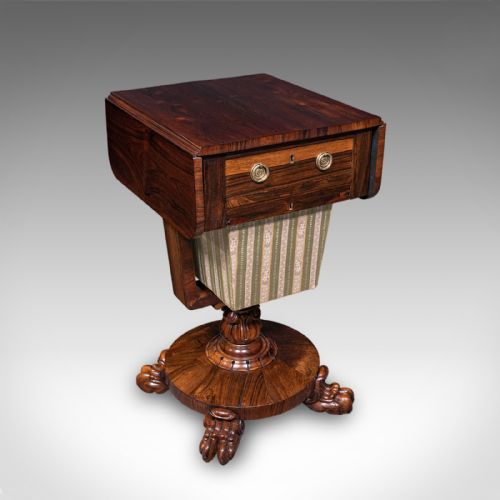
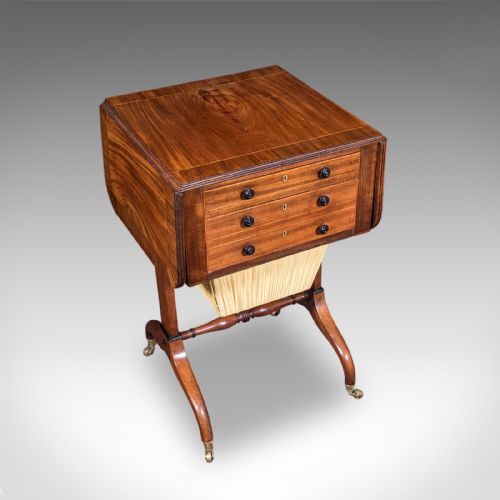
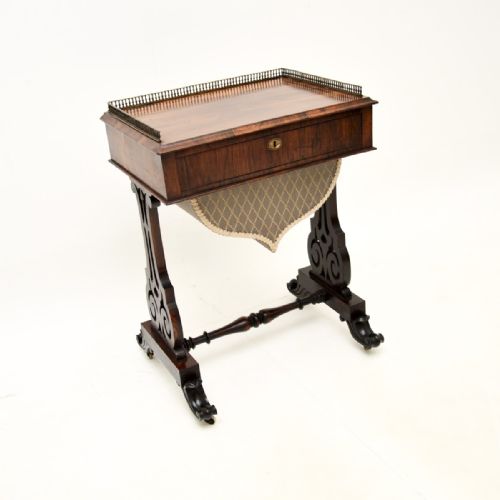
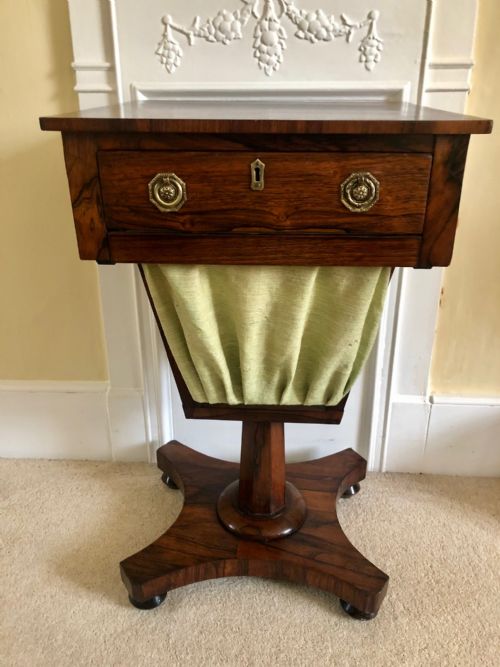
A rosewood drop basket table is a refined nineteenth-century English sewing and occasional piece, offering warmth of timber and ingenious compartments for the collector's interior.
Rosewood Drop Basket Table
When searching for a rosewood drop basket table, buyers encounter a specific category of nineteenth-century English sewing and occasional furniture designed for ladies' parlours. The pieces on this page span the Regency, George IV, William IV, and Victorian periods, alongside specific dates such as eighteen-fifty.
The dominant forms are work tables, sewing tables, side tables, and occasional tables, often featuring drop leaves and suspended fabric baskets. These items served practical domestic purposes for needlework and correspondence while displaying decorative elegance in principal rooms.
What varies in quality
The distinction between standard examples and superior pieces rests upon the subtlety of cabinet-making and the figuring of the rosewood timber. Finer pieces demonstrate exceptional grain matching across the top surfaces and refined turning on the pedestals.
Attribution to documented workshops elevates an example significantly, as seen in pieces bearing the hallmarks of Gillows. The integrity of the original fitted interior compartments and the quality of the brass fittings further define the upper tier of the range.
Gentlemen of the nineteenth century occasionally had to navigate parlour tables laden with mysterious velvet bags destined entirely for secret embroidery.
Gillows
The Rosewood Drop Basket Table Glossary
- Rosewood
- A dense, heavily figured dark timber prized in the nineteenth century for its rich colour and polished finish. It forms the primary visual characteristic of these tables.
- Drop leaf
- A hinged flap on the side of a table that can be raised to extend the surface area or lowered when space is required. This mechanism provides versatility in smaller rooms.
- Work table
- A specialised nineteenth-century table equipped with drawers and a fabric basket for sewing materials and needlework accessories. It is also frequently referred to as a sewing table or ladies hobby table.
- Boxwood
- A pale, hard wood utilised for delicate stringing and inlay work to create contrasting geometric borders on table tops. It highlights the edges of drawers and panels.
- Gillows
- A renowned English furniture manufacturing firm operating from Lancaster and London, celebrated for exceptional quality during the Regency and Georgian periods. Pieces by this maker command distinct recognition.
Rosewood Drop Basket Table: Frequently Asked Questions
What is a rosewood drop basket table used for?
These tables were originally designed for ladies to store sewing materials, needlework, and writing supplies within the parlour or drawing room.
Today, collectors utilise them as sophisticated side tables, lamp tables, or occasional tables that add historic character to living spaces.
How do I identify a Regency period table?
Regency tables typically display classical architectural influences, bold rosewood veneers, and robust pedestal bases often terminating in brass paw feet and castors.
They date from the early nineteenth century and share stylistic traits with George IV and William IV designs found on this page.
What is the difference between a work table and a sewing table?
The terms are largely interchangeable within nineteenth-century English cabinet-making, both describing pieces equipped with internal compartments and hanging fabric bags.
Some variations focused more on writing surfaces or general parlour use alongside traditional needlework.
How do I care for nineteenth-century rosewood furniture?
Maintain these pieces by keeping them away from direct sunlight and dramatic humidity changes to protect the delicate rosewood veneers and boxwood inlay.
Apply traditional furniture wax sparingly to preserve the natural lustre of the timber without building up excess residue.