






Mid Victorian Work Table
A mid victorian work table is a domestic piece designed for sewing and needlework, offering clever compartments that suit modern rooms as versatile accent furniture.
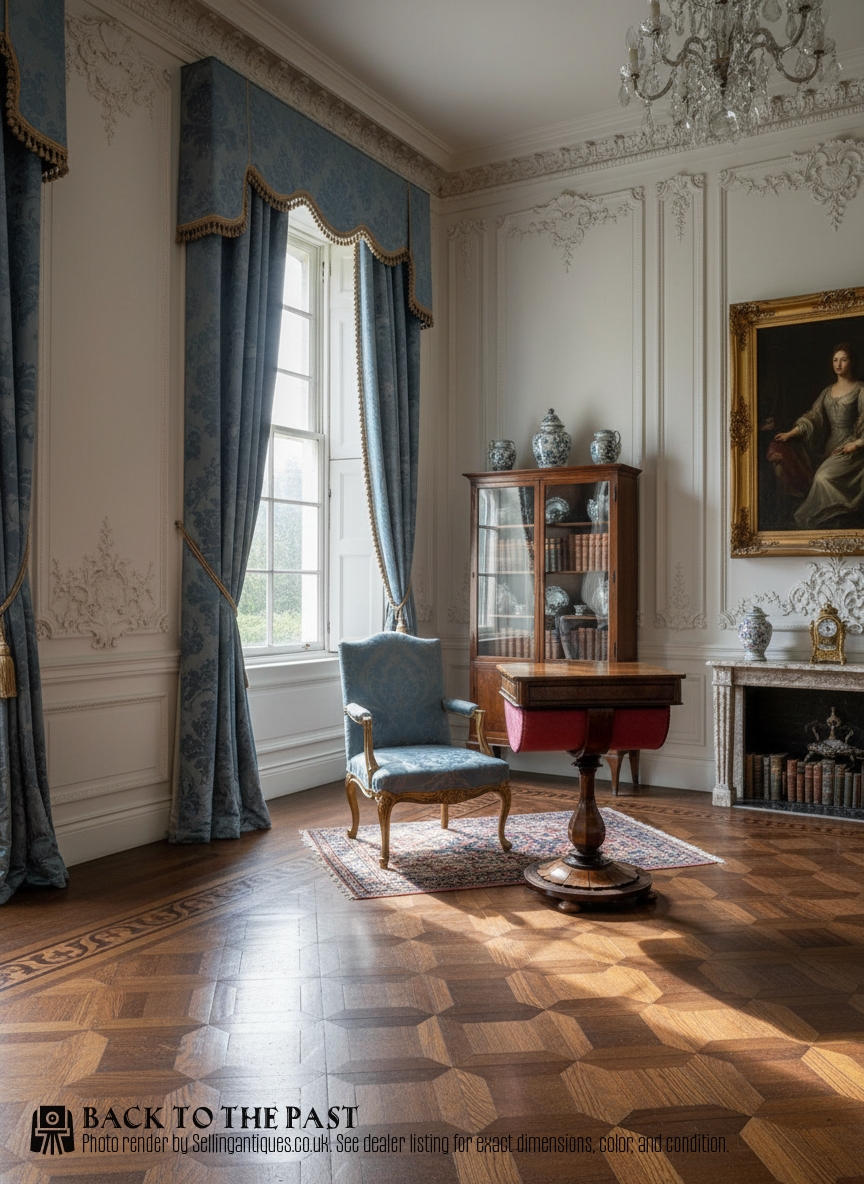
Mid Victorian Work Table
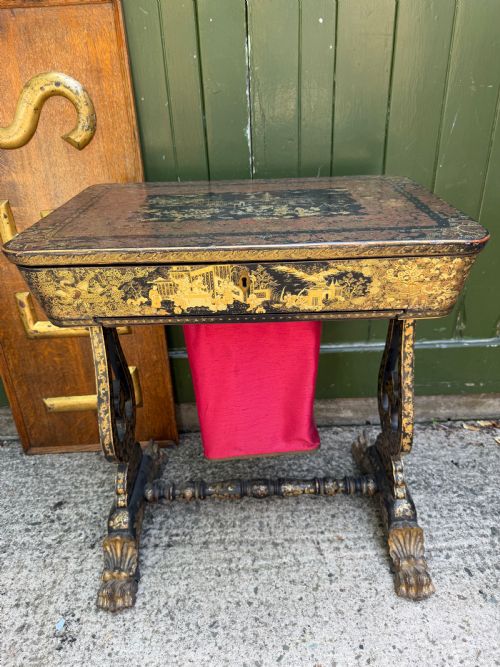
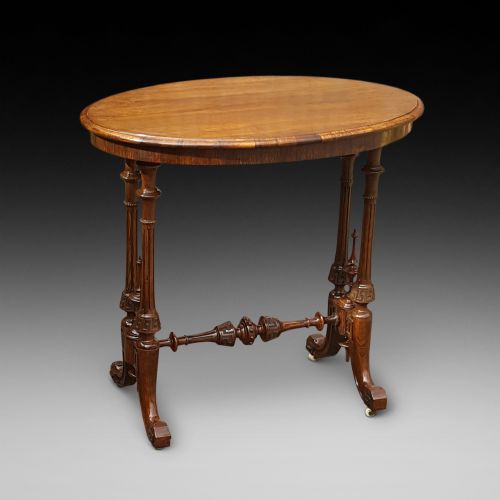
A mid victorian work table is a functional piece designed to house sewing implements, correspondence and small crafts within fitted interior compartments. These examples span from the middle decades of the nineteenth century through to the eighteen-eighties, taking forms such as sewing tables, writing tables and occasional lamp tables. Workshops produced these pieces in forms ranging from oval walnut tables to drop-leaf rosewood variants and cradle base designs.
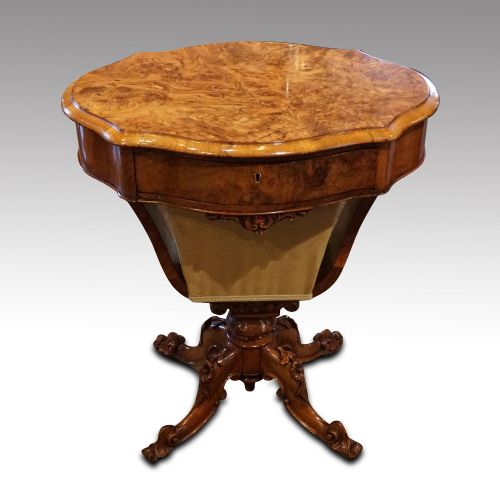
Buyers encountering this selection will frequently meet walnut, burr walnut and rosewood surfaces, often accompanied by fitted interiors lined in fabric or velvet. Some pieces combine sewing storage with integrated games boards or folio stands for reading materials. The construction typically reflects the domestic habits of the Victorian era, offering compact proportions that suit contemporary interiors as side or lamp tables.
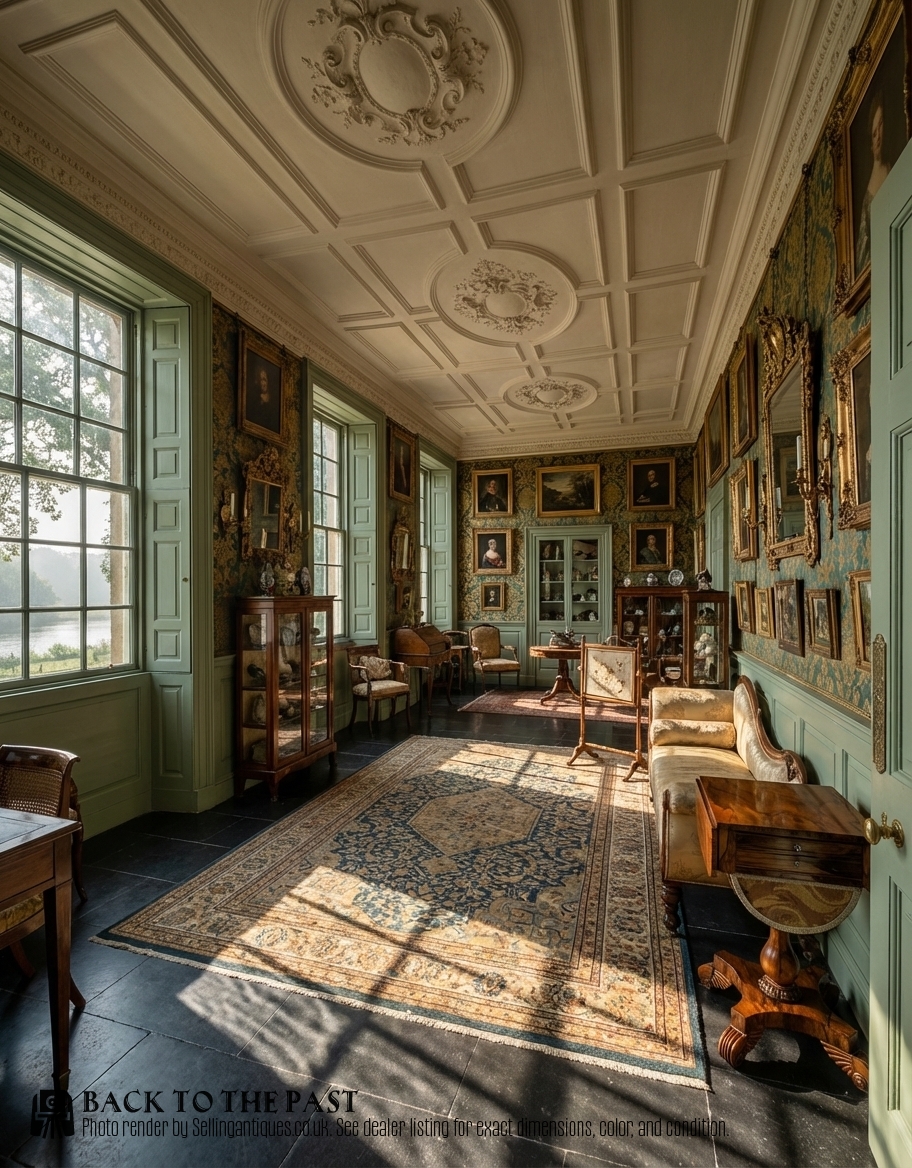
Materials and construction
Cabinet makers utilised dense hardwoods including rosewood, mahogany and walnut, frequently applying burr walnut veneers to tabletops to highlight intricate wood grain patterns. Satinwood and lacquer appeared in specific decorative works, while brass hardware provided structural hinges and functional mounts. Fabric and velvet linings were fitted inside drawers and compartments to cushion delicate needlework tools.
Joinery methods of the period relied on solid timber framing combined with carefully cut veneers for curved friezes and pedestal bases. Drop-leaf mechanisms, cradle supports and compartmentalised interiors required precise carpentry to ensure moving parts operated smoothly within compact table bodies.
Mid Victorian Work Table Retail Price Guide 2026
Typical asking prices for mid victorian work table among the pieces listed under this phrase on Sellingantiques today, from the lower quarter to the upper quarter. They describe what is for sale here now, not the wider market.
Victorian crafters hid dice and chessboards inside sewing tables so card games could commence the moment the sewing was put away.
Distinctions in quality
Quality in a mid victorian work table rests upon the choice of timber and the intricacy of the internal fittings rather than mere ornamentation. Superior examples display carefully matched burr walnut veneers across the entire top and frieze, whereas simpler pieces utilise plain mahogany or straightforward rosewood boards.
The sophistication of the interior layout also distinguishes finer pieces, particularly those featuring multiple lidded compartments, dedicated spool trays and integrated games boards or folio stands. The stability of the underframe, whether a pedestal cradle base or delicate turned legs with brass castors, dictates the physical presence and durability of the piece.
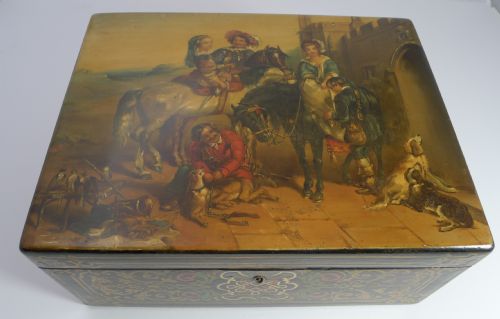
Jennens and Bettridge
The Mid Victorian Work Table Glossary
- Burr walnut
- A highly figured timber veneer sliced from walnut tree growths, prized for its swirling grain patterns on tabletops.
- Drop-leaf
- A table design featuring hinged flaps on the sides that fold down to save space or lift up to extend the surface area.
- Cradle base
- A supportive curved rocking or trestle framework holding the main table body above the floor.
- Folio stand
- An integrated vertical rack or shelf used for holding papers, prints or writing folios.
- Occasional table
- A small, movable table designed for specific, intermittent domestic tasks rather than central dining.
Mid Victorian Work Table: Frequently Asked Questions
What is a mid victorian work table?
A mid victorian work table is a nineteenth century domestic furnishing created to hold sewing equipment, writing materials and small accessories.
These pieces typically feature a top compartment or drawer with fitted interior sections designed for threads, needles and personal items.
How were work tables used?
Victorian households utilised these tables in parlours and drawing rooms as dedicated stations for needlework, embroidery and correspondence.
Many designs incorporated drop-leaves, sliding bags, or combined games boards to serve multiple functions during social evenings.
How do I style a work table?
These compact tables function effectively as side tables, lamp tables or bedside stands in contemporary rooms.
The hinged lids and internal compartments also provide discreet storage for modern desk accessories or household clutter.
How do I identify the wood types?
Walnut and rosewood dominate this period, with burr walnut displaying distinctive swirling grain patterns across the main surfaces.
Mahogany appears on simpler or earlier nineteenth century frames, while satinwood and lacquer are found on specific decorative export pieces.