

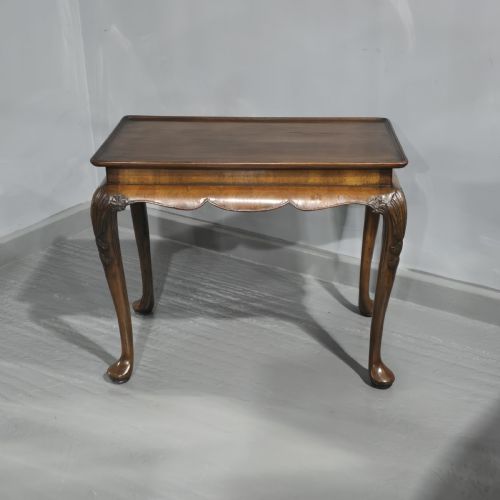


Scalloped Walnut Table
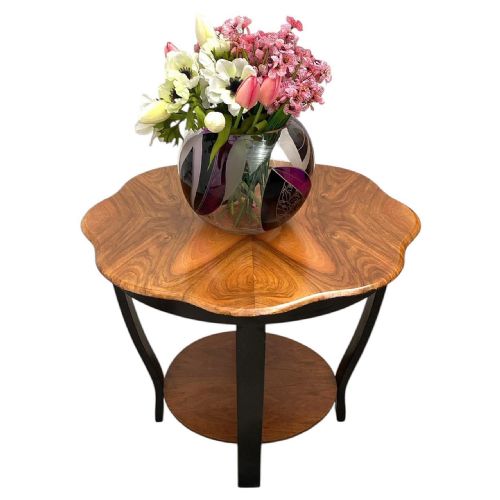
A scalloped walnut table brings warmth and distinct curved edges to a room, offering both practical surface space and fine timber grain.
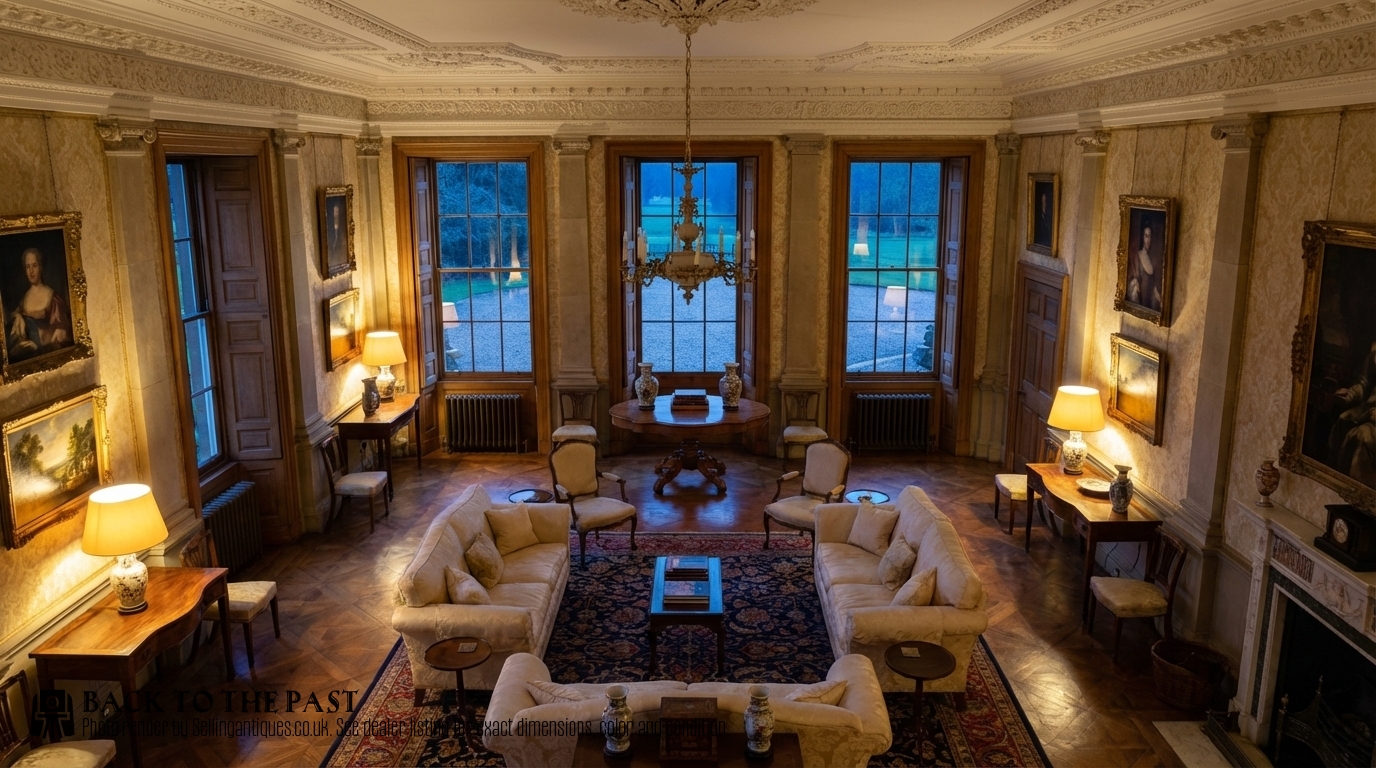
What these pieces are
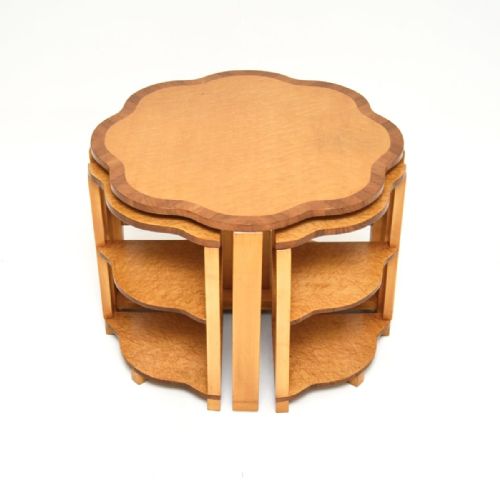
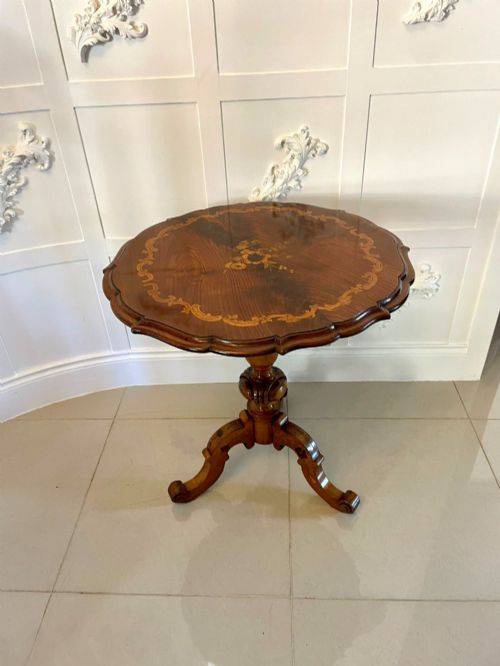
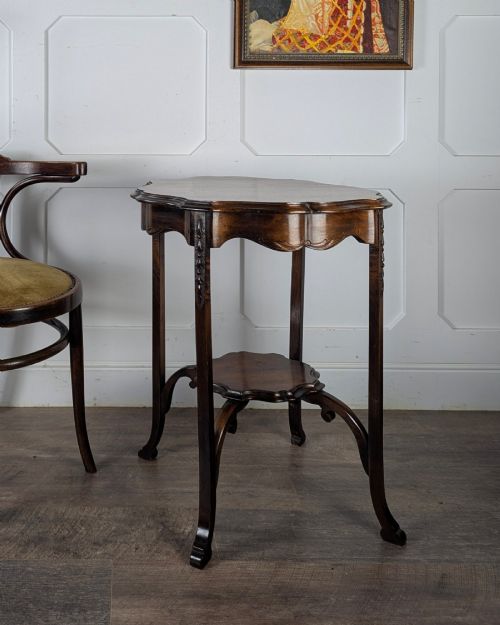
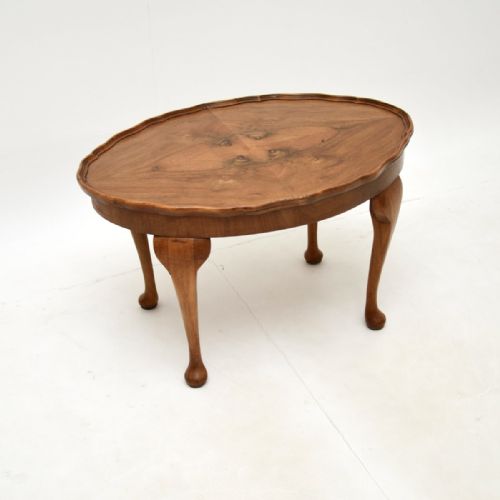
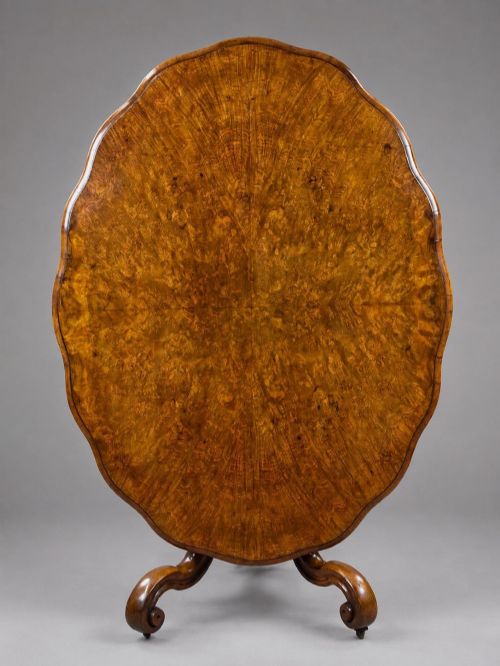
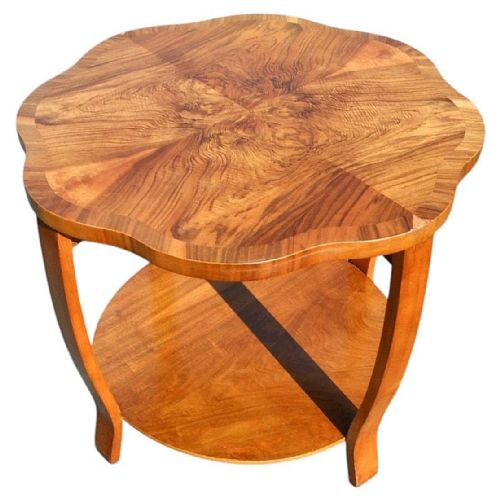
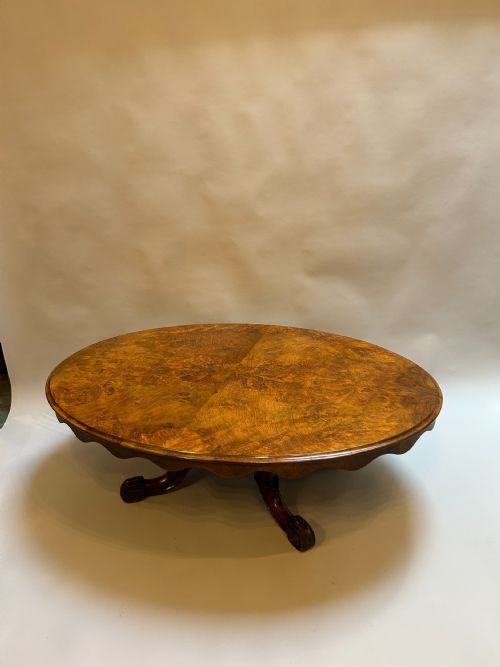
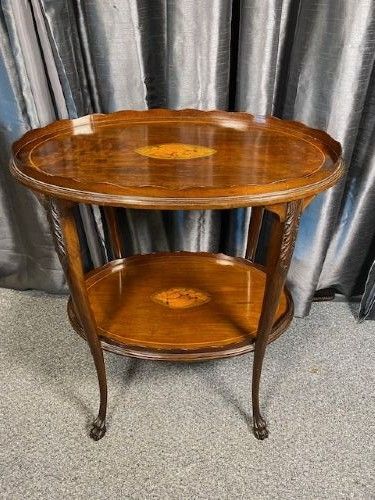
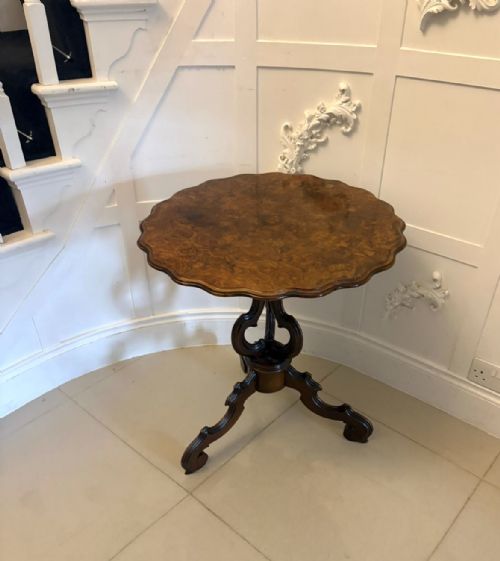
A scalloped walnut table is a surface defined by its curved or lobed edge profile and the use of walnut timber. These pieces span several decades from the Victorian era through to the Art Deco period.
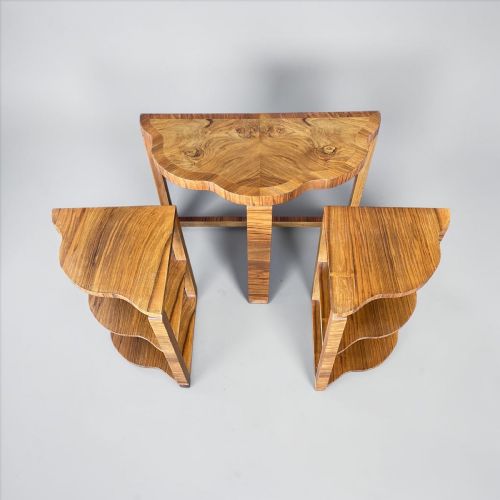
The forms on this page include centre tables, coffee tables, and occasional tables, alongside specialist items like sewing work lamp tables. Burr walnut and figured walnut feature prominently across these designs.
Victorian examples bring traditional craftsmanship and heavier silhouettes, while Art Deco pieces offer streamlined tiers and geometric influences. Edwardian tables round out the selection with lighter domestic proportions.
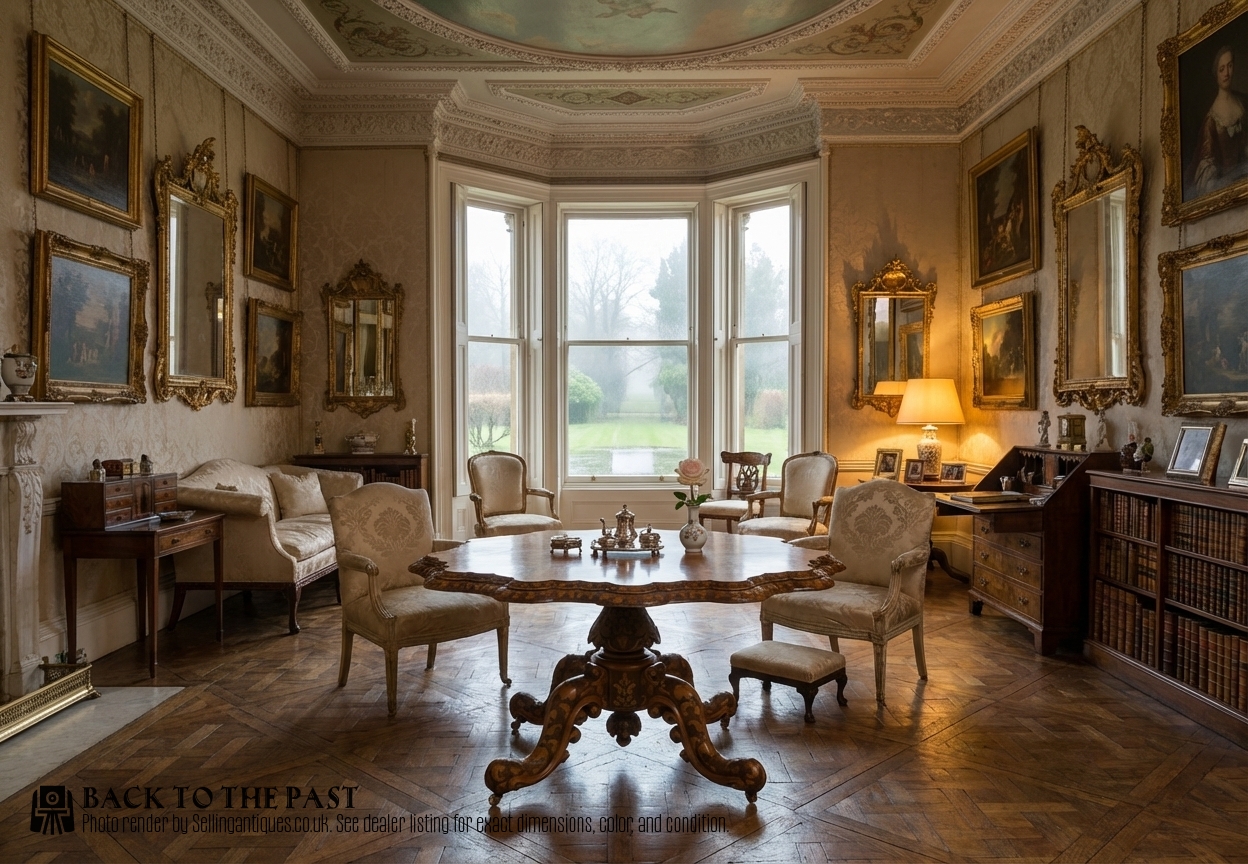
How they were made
Cabinet makers utilised solid walnut, burr walnut, and walnut veneer to achieve rich figured patterns across the tabletops. Wood inlay further embellishes the surfaces of select period examples.
Construction techniques involve shaped timber tops supported by cradle bases, multi-tiered frameworks, or fitted drawers. Fabric elements sometimes integrate into sewing and work table variants.
Retail Price Guide 2026
Typical UK retail prices for scalloped walnut table, calculated from the Sellingantiques database of over a million retail prices indexed since 2003. This retail price guide relies exclusively on Sellingantiques data; no external sources or auction records are used, so the figures do not describe the wider market.
Listings feature walnut, burr walnut, and wood inlay across Victorian, Edwardian, and Art Deco periods.
What varies in quality
Quality rests upon the selection and book-matching of the walnut veneer or the depth of figure in the solid timber. Finer pieces display careful grain alignment around the complex curves of the scalloped edge.
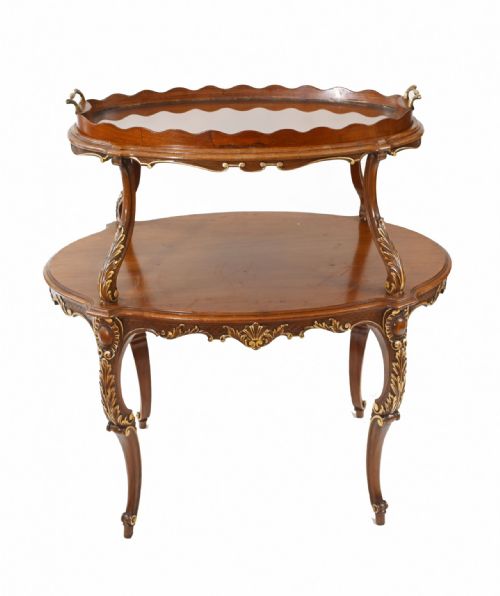
The sophistication of the underlying structure determines the tier of the piece, from simple single-surface tables to elaborate two-tier designs or multi-drawer centre tables.
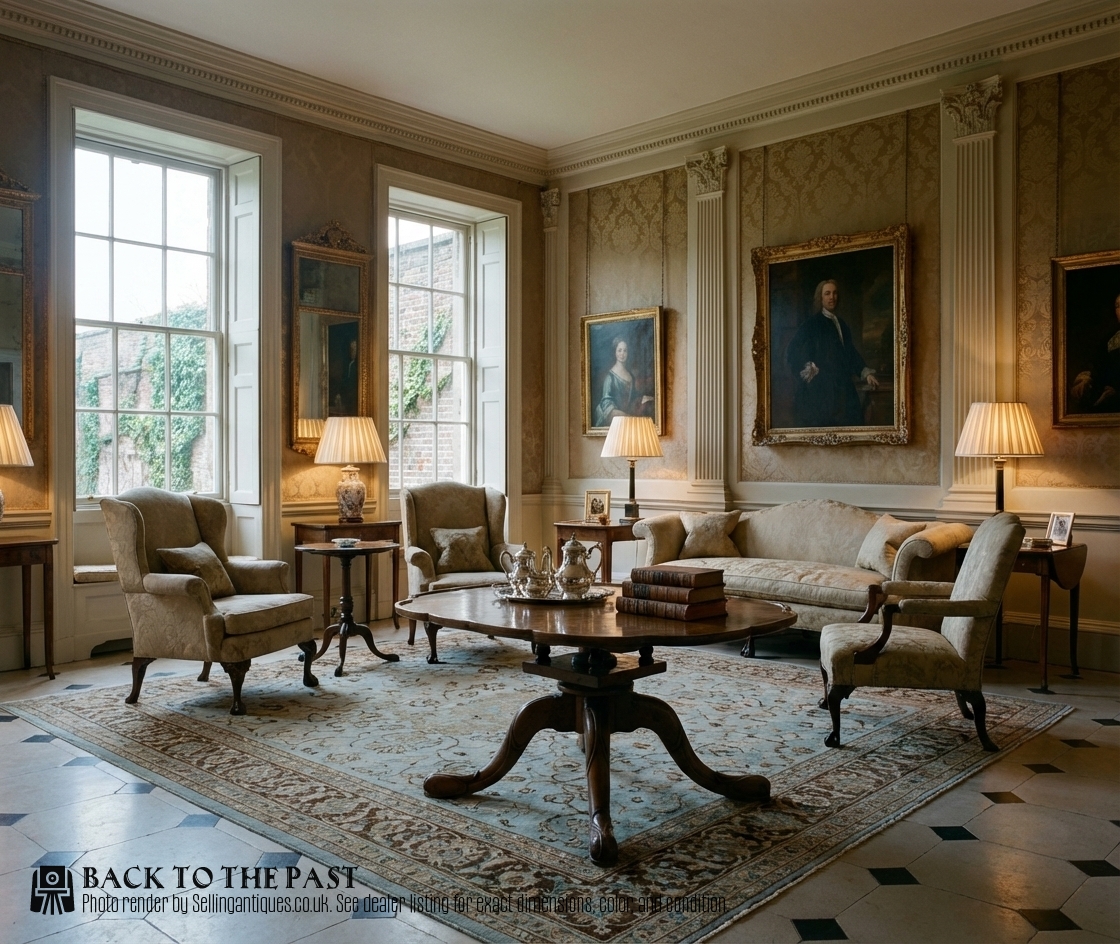
Whytock and Reid
The Scalloped Walnut Table Glossary
- Burr walnut
- A prized timber harvested from tree growths that produces intricate, swirling grain patterns. It is frequently sliced into veneers for decorative tabletops.
- Centre table
- A freestanding piece designed to be viewed from all sides, traditionally placed in the middle of a room rather than against a wall.
- Two tier
- A table design incorporating an additional lower shelf supported by pillars or uprights. This provides extra display or storage space beneath the main surface.
- Cradle base
- A supportive framework that allows a table body or work box to swing or pivot between upright supports. This form often appears on mid-Victorian sewing and work tables.
Frequently Asked Questions
How do I style a centre table?
A centre table is designed to sit away from walls, allowing light and movement around its perimeter in an open room setting.
You can utilise the surface for decorative items or lamps, while appreciating the surrounding wood grain and shaped edge from multiple angles.
How do I tell Victorian from Art Deco tables?
Victorian tables often exhibit heavier proportions, ornate details, and traditional forms like cradle bases or shaped multi-drawer structures.
Art Deco examples embrace cleaner lines, streamlined two-tier arrangements, and highly figured veneers characteristic of the twentieth century.
What maintenance does burr walnut need?
Burr walnut surfaces require protection from direct sunlight and excessive moisture to preserve the integrity of the delicate veneer.
Regular dusting with a soft cloth and occasional light conditioning will maintain the natural lustre of the timber grain.