




Needlework Table with Basket
A needlework table with basket offers a practical surface combined with a fitted textile pouch for sewing.
Needlework Table with Basket
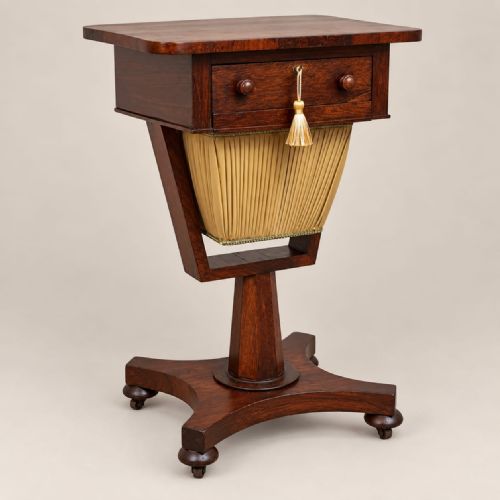
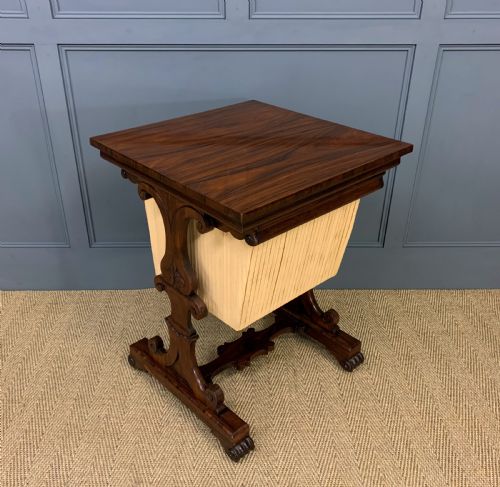
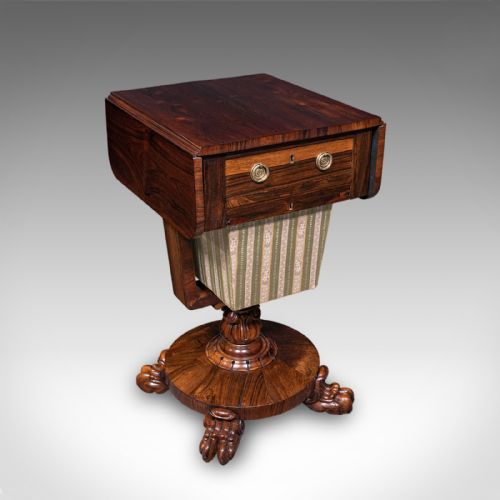
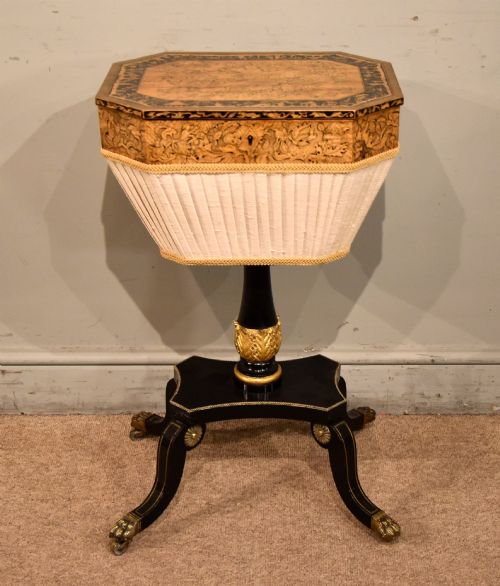
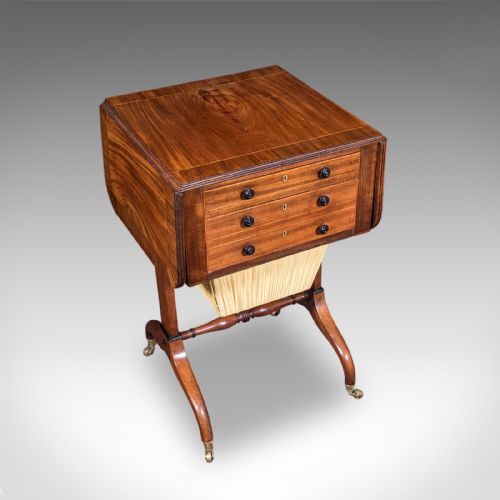
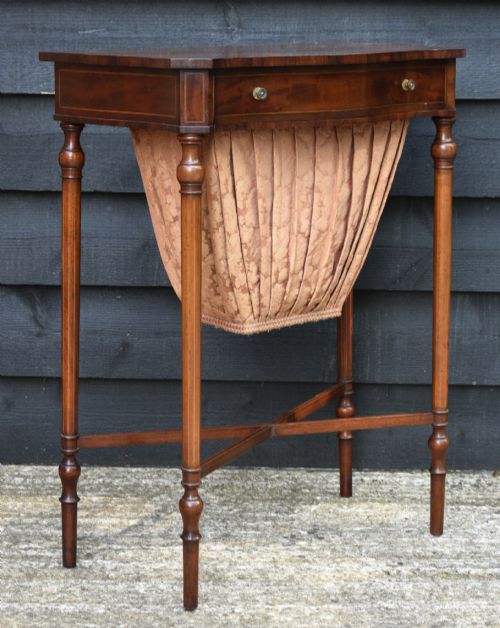
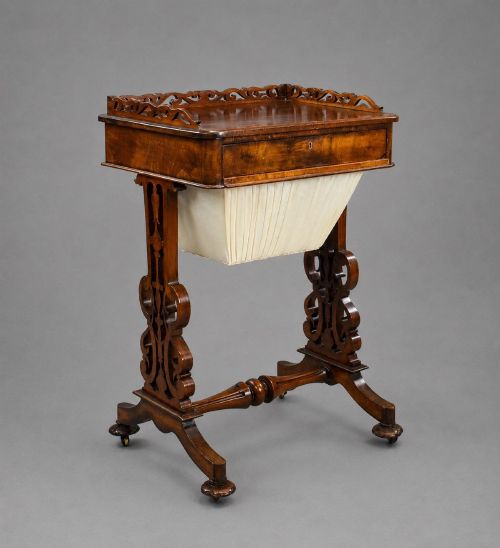
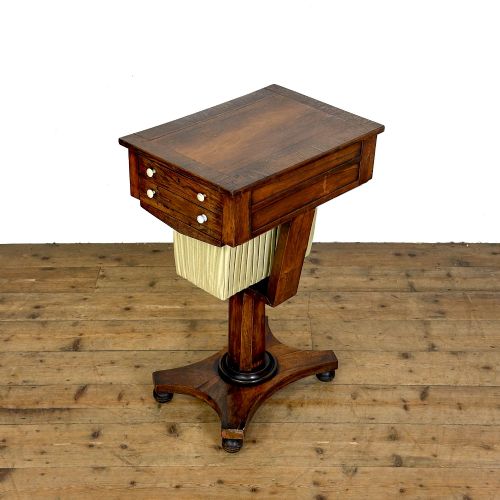
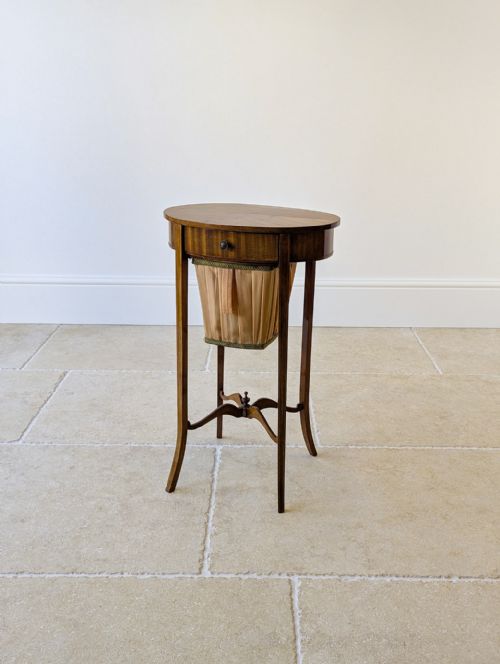
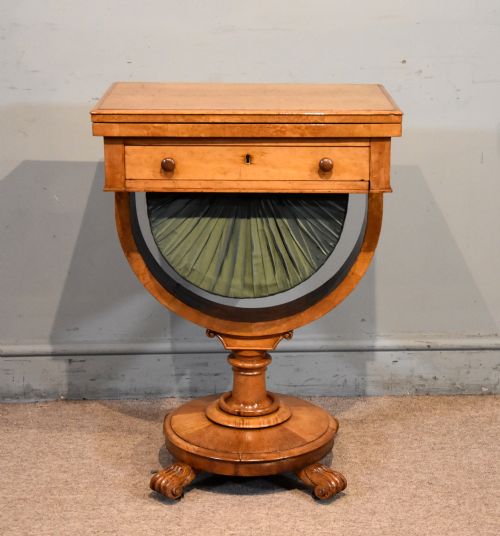
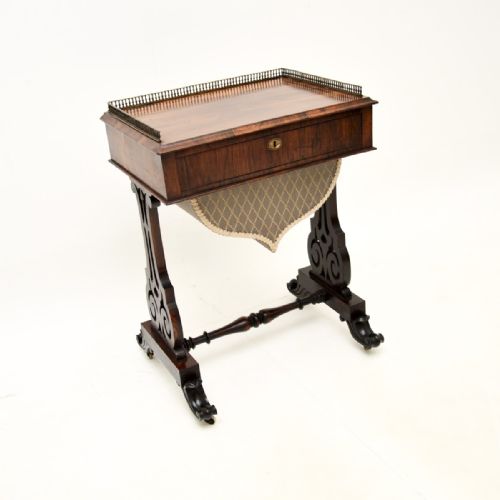
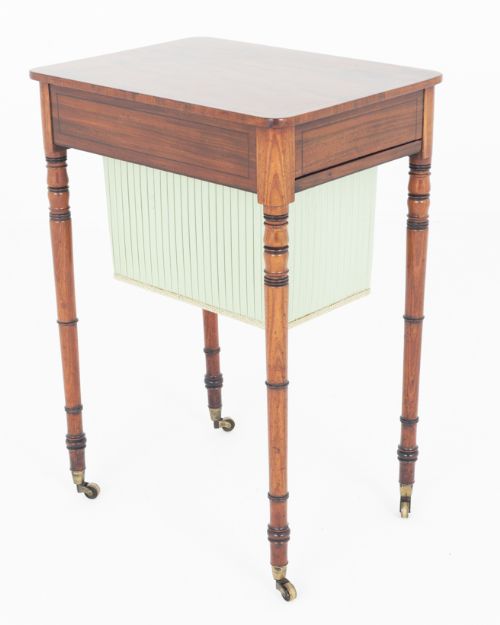
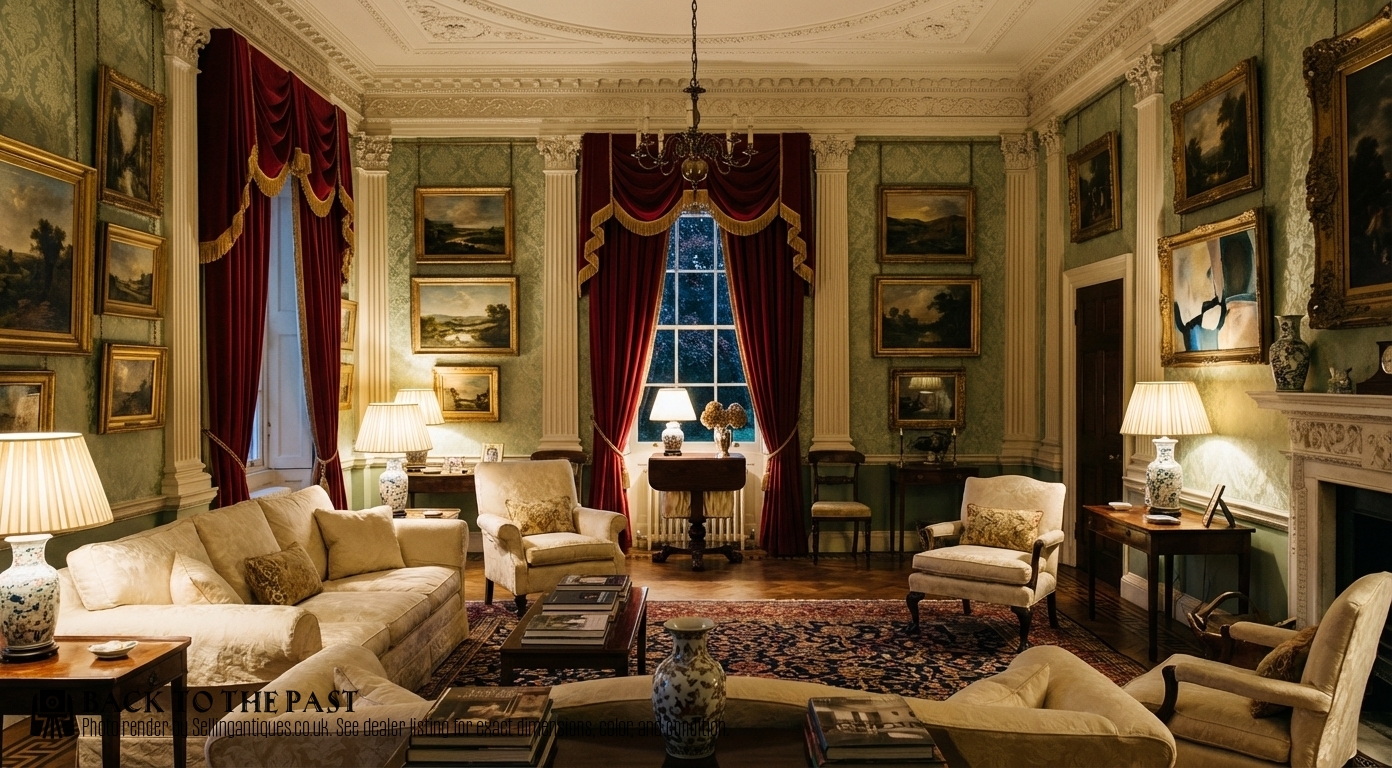
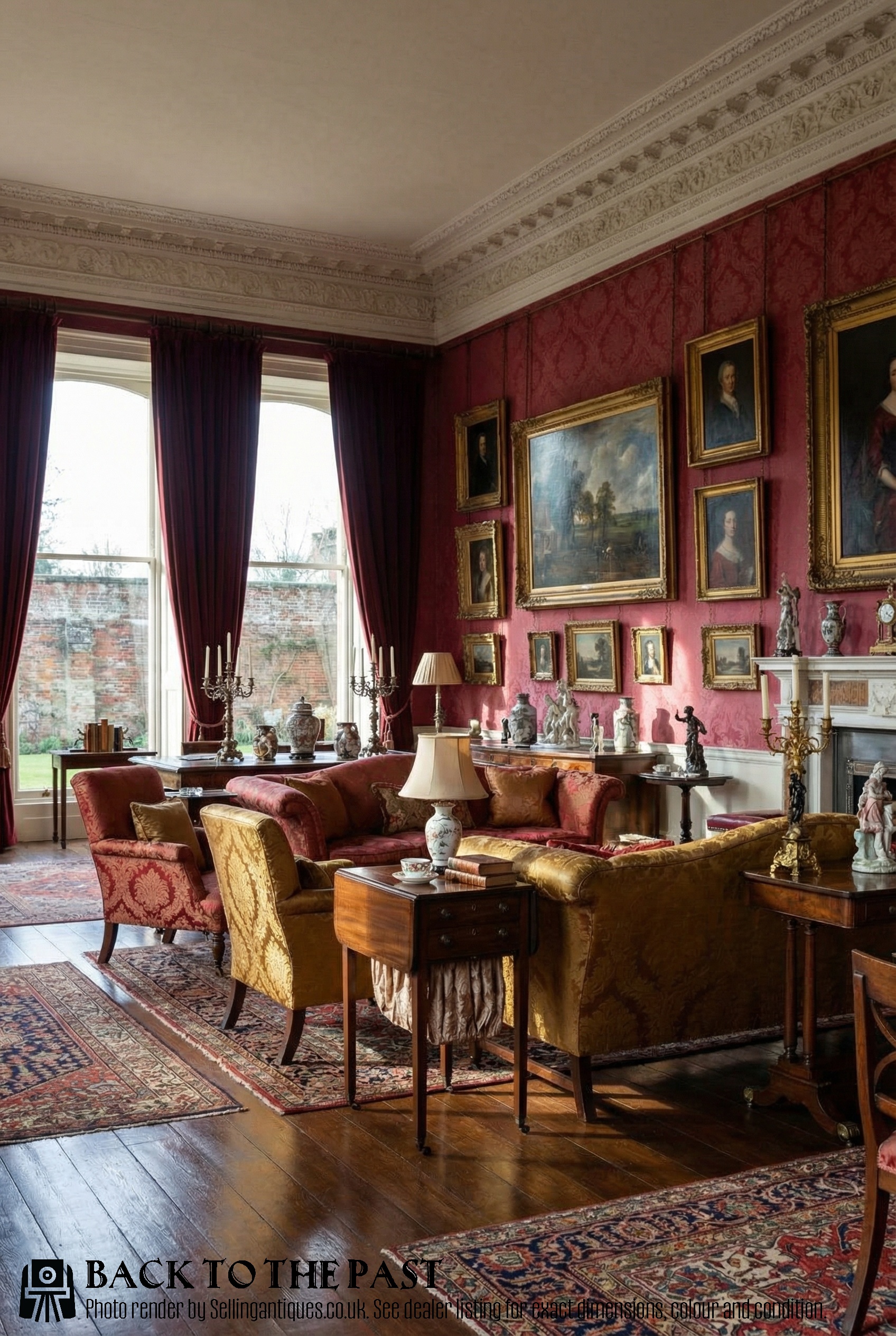
A needlework table with basket combines a compact top surface with a suspended fabric bag beneath for holding sewing materials. The pieces seen here span the nineteenth century, including Regency, Victorian, and Edwardian examples, alongside English Country House styles.
Most variations take the form of dedicated work tables or sewing tables, though occasional tables and games tables also appear. Mahogany, burr walnut, rosewood, and satinwood form the primary timbers utilised across these designs.
Buyers are most likely to encounter nineteenth-century mahogany and walnut pieces fitted with hinged lids or drop leaves. Silk and fabric bags complete the typical construction, providing the characteristic soft basket feature.
How they were made
Cabinetmakers constructed these tables using solid and veneered hardwoods like mahogany, rosewood, and burr walnut, often highlighting grain patterns with contrasting inlay. Drop leaves and hinged tops required precise joinery to ensure smooth movement.
The characteristic basket portion utilises fabric and silk suspended from a wooden or brass framework beneath the main body of the table. Brass fittings and subtle marquetry frequently accent the exterior structure.
Mahogany and walnut dominate the timber selections across these nineteenth-century listings.
What varies in quality
The choice of cabinet timber sets the baseline for quality, with burr walnut and figured mahogany representing finer production standards than plain secondary woods. Subtle details such as fine inlay work and well-executed joinery distinguish superior examples.
The integrity of the internal compartments and the execution of the suspended fabric basket influence the overall appeal. Tables that retain their original silk or fabric fittings command greater interest among collectors.
The Needlework Table with Basket Glossary
- Work table
- A small domestic table designed specifically for sewing, embroidery, and other needlecrafts. These pieces typically include interior compartments and an attached basket.
- Drop leaf
- A hinged flap on the side of a table that folds down to save space or lifts up to extend the surface area. This mechanism appears frequently on nineteenth-century sewing furniture.
- Burr walnut
- A prized timber veneer obtained from the growth excrescences of walnut trees, noted for its swirling pattern. It frequently surfaces on high-status Victorian examples.
- Marquetry
- The art of applying pieces of veneer to a structure to form decorative patterns and pictures. Geometric or floral motifs often decorate the tops of inlaid tables.
Needlework Table with Basket: Frequently Asked Questions
What is a needlework table with basket used for?
These tables served as functional furniture for storing sewing supplies, threads, and unfinished needlework projects within a parlour or sitting room. The suspended bag kept textiles clean and close at hand during handcraft sessions.
Today, they function well as compact lamp tables or occasional surfaces in living spaces while retaining their original storage utility.
How do I identify a Regency sewing table?
Regency pieces often feature clean architectural lines, dark mahogany timbers, and classical proportions dating from the early nineteenth century. They tend to rely on the natural grain of the wood rather than heavy ornamentation.
Examining the construction methods and turning on the legs helps confirm the period origin.
Are the fabric baskets usually original?
The fabric or silk baskets on these tables experience significant wear over time and frequently require replacement. Finding an example with a surviving original textile component is uncommon.
Most modern listings feature restored or replacement fabric bags that match the historical style of the piece.
Can these tables double as games tables?
Certain variations combine sewing storage with fold-over tops designed for chess, checkers, or card games. These multi-functional designs reflect the versatile room furnishings of the nineteenth century.
Such pieces provide both the characteristic under-slung basket and a dual-purpose top surface.