


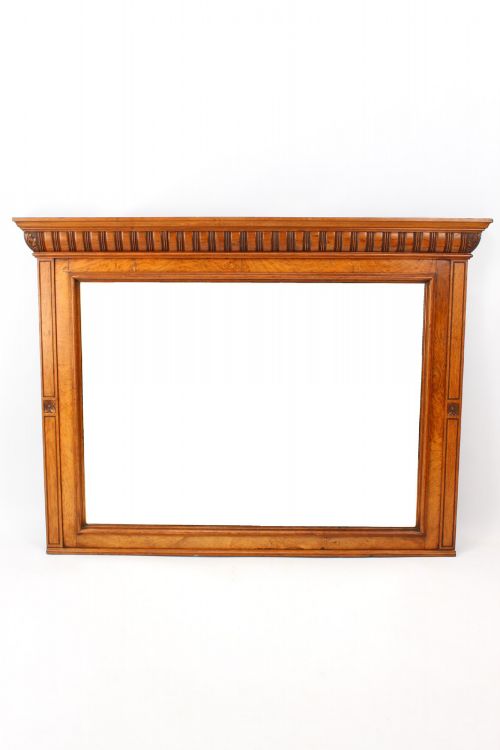

Victorian Carved Oak Frame
A victorian carved oak frame brings deep grain, heavy relief and uncompromising nineteenth-century presence to mirrors and seating alike.
Victorian Carved Oak Frame
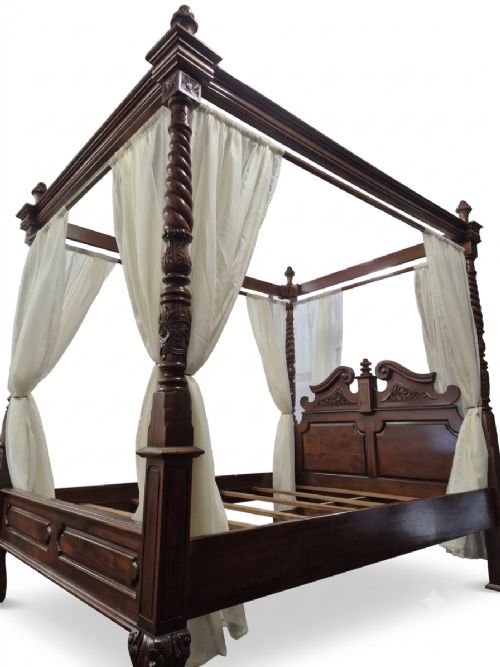
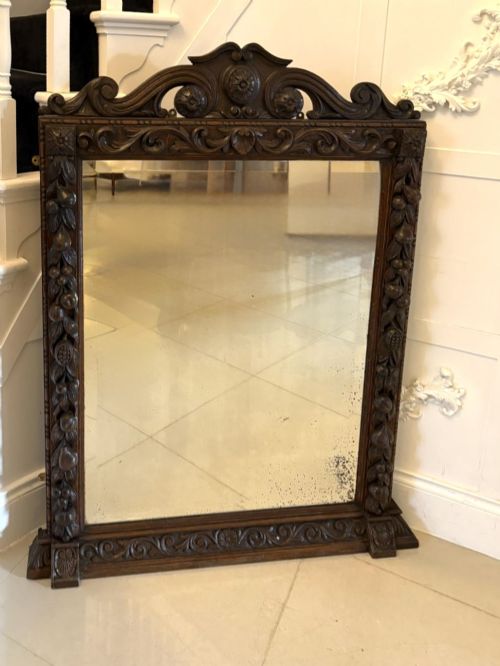
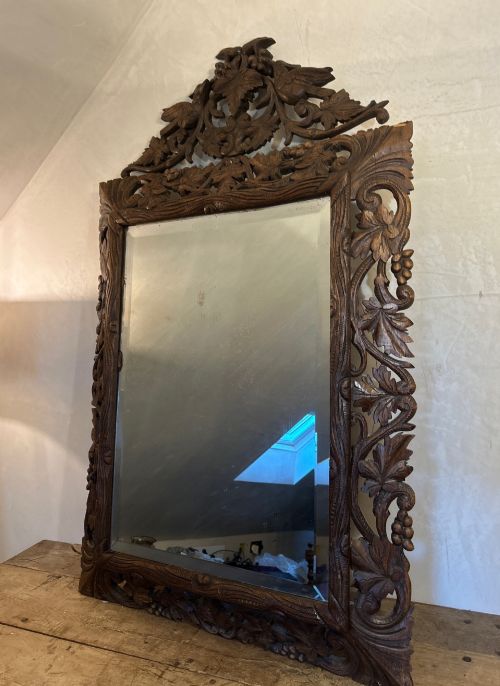
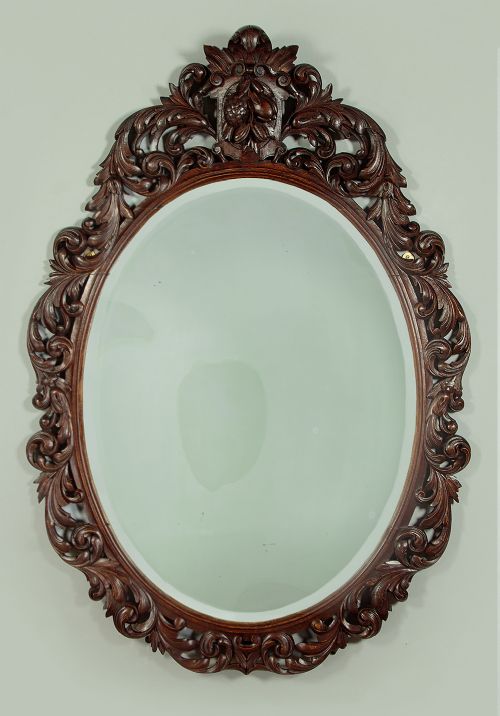
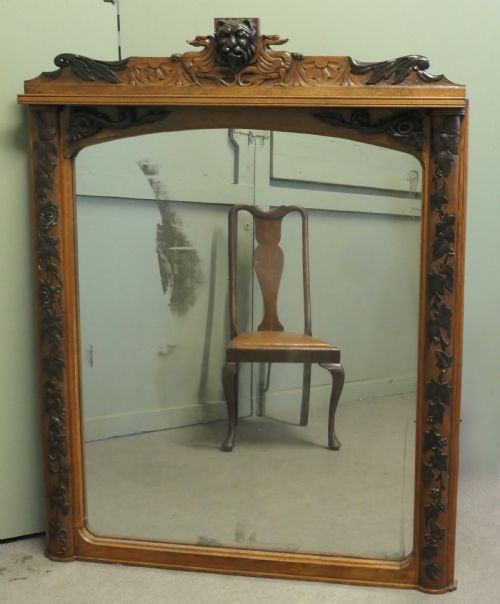
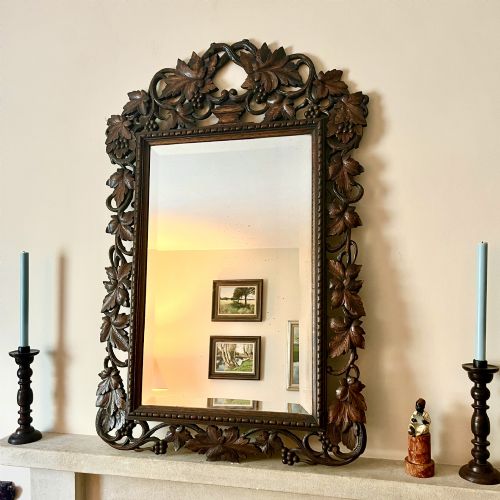
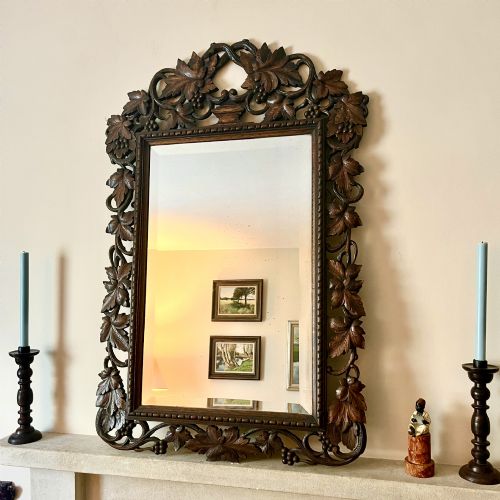
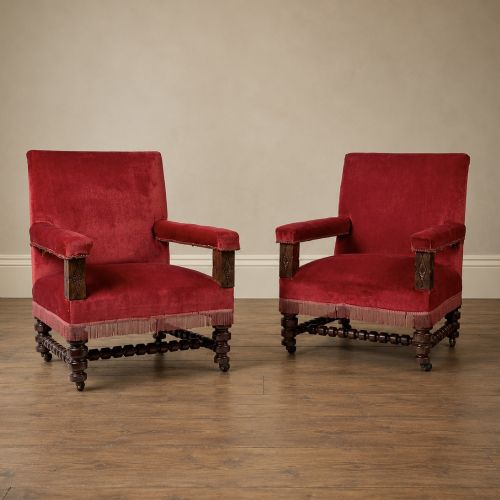
A victorian carved oak frame most frequently encounters the buyer in the form of a substantial wall mirror, overmantel or seating such as an armchair and side chair. The selection ranges across the nineteenth century, taking in Gothic Revival and Renaissance Revival forms alongside robust utility pieces.
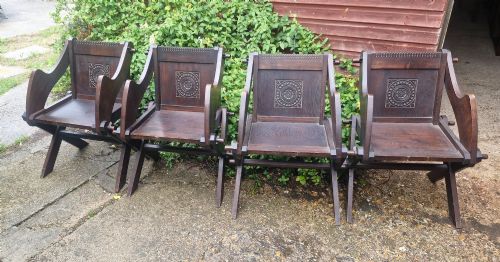
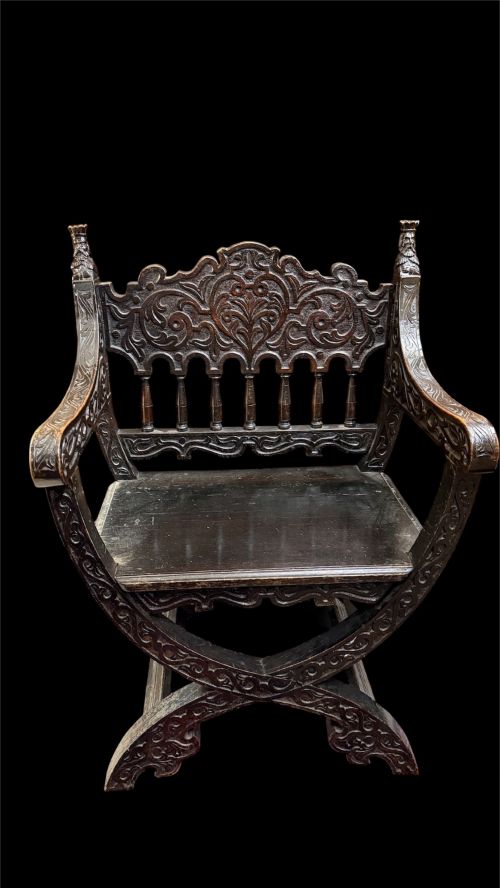
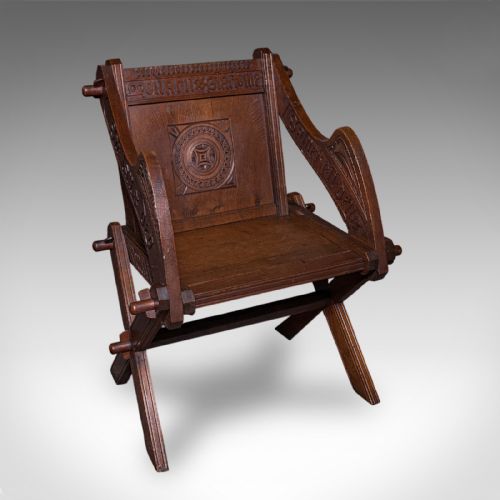
Mirrors dominate the offerings, spanning large rectangular plates, oval formats and cushion mouldings designed to anchor a room. Seating options include Glastonbury chairs, cross-frame armchairs and high-back side chairs rooted in historic English design.
The material vocabulary centres on solid oak augmented by glass, brass, leather and velvet. Pieces emerge from workshops influenced by Gothic and Carolean styles, offering functional household items with heavy decorative carving.
How they were made
Makers utilised solid oak boards, selected for dense medullary rays and stability, which were then hand-carved with deep relief foliage, strapwork and heraldic motifs. Joinery relied on traditional mortise and tenon construction to sustain the weight of large mirrors and structural seating.
Surface treatments involved careful scraping and waxing of the oak to reveal natural figuring, occasionally paired with brass hardware or upholstered inserts in leather and velvet. Mirror plates were often bevelled and secured within rebated frames behind protective wooden backs.
One hunting lodge overmantel mirror comes accompanied by the title of a Bavarian king.
What varies in quality
Quality rests upon the depth and crispness of the hand-carving, where skilled execution distinguishes deep, undercut foliage from shallow, mechanical incision. The choice of timber grain and the integrity of the original joints dictate structural endurance.
Proportion and scale separate ordinary joinery from exceptional work, particularly in overmantel mirrors and architectural frames where balanced sightlines matter. Retained original surfaces and authentic period hardware elevate a piece above later adaptations.
The Victorian Carved Oak Frame Glossary
- Overmantel mirror
- A large glass set within a decorative frame designed specifically to hang above a fireplace mantelpiece. These pieces frequently feature architectural mouldings and heavy crestings.
- Glastonbury chair
- A traditional folding armchair with X-shaped underframing and a sloping panel back, often constructed in oak and associated with Gothic Revival design. The form derives from early medieval prototypes.
- Gothic Revival
- An architectural and decorative style popular during the nineteenth century that revived medieval pointed arches, tracery and heavy carved ornamentation. It heavily influenced Victorian furniture design.
- Cushion frame
- A frame moulding rounded and puffed out in profile, resembling a stuffed cushion, which gained popularity in seventeenth-century furniture and later revivals. This profile creates strong shadow lines around a mirror plate.
- Carolean style
- A decorative aesthetic spanning the late seventeenth century marked by rich carving, scrollwork, crown motifs and twisted turning. Victorian makers frequently drew upon this idiom for hall chairs and seating.
Victorian Carved Oak Frame: Frequently Asked Questions
Where should I hang an overmantel mirror?
These large mirrors belong above a fireplace mantelpiece where their scale can anchor the room and reflect natural light. Ensure the wall structure and fixings can support the substantial weight of solid oak and glass.
Position the frame at a height that captures reflections from opposite windows rather than ceiling fixtures. This placement maximises both visual space and the impact of the carved wooden border.
How do I care for antique oak frames?
Maintain the timber by applying a microcrystalline wax sparingly and buffing with a soft bristle brush. Avoid silicone sprays and modern furniture polishes that build up sticky residues on carved surfaces.
Keep the frame away from direct heat sources and strong sunlight to prevent the oak from drying and splitting. Check hanging wires and brackets periodically to ensure safe wall attachment.
What is a Glastonbury chair?
A Glastonbury chair is a distinct nineteenth-century form featuring intersecting X-frame legs and a raked wooden back panel. Based on ancient ecclesiastical seating, it offers a sturdy and portable armchair design.
These chairs often carry carved inscriptions or linenfold panels reflecting Gothic Revival tastes. They suit studies or hallways where compact seating with historic presence is required.
How can I tell Gothic Revival from other styles?
Gothic Revival pieces display architectural motifs such as pointed arches, quatrefoils, tracery and heavy chamfered edges. The carving mimics stone cathedral details translated into solid oak.
By contrast, Renaissance Revival or Rococo pieces feature scrolling cartouches, swags and asymmetric curves. Look to the silhouette and decorative vocabulary to identify the specific nineteenth-century revival at play.